


When this restaurant owner first accepted Merchant Cash Advance funding, the goal was simple: keep the business moving forward. But as daily withdrawals increased and additional advances piled up, cash flow became harder to manage. Payroll pressure grew, vendor payments fell behind, and the business struggled to keep pace with mounting MCA obligations.
This case study shows how one restaurant owner recognized the warning signs, explored available relief options, and took action before the situation became even more difficult. The result was improved cash flow, reduced financial pressure, and a clearer path forward. For business owners facing similar challenges, this story demonstrates that MCA debt problems do not always have to define the future of the business.
Schedule Your Free Consultation
How Daily MCA Payments Began Hurting Cash Flow
At first, the restaurant owner viewed the daily MCA withdrawals as a manageable tradeoff for quick access to capital. Over time, however, those automatic payments began taking a larger bite out of the restaurant’s revenue. Cash flow tightened, payroll became more stressful, and vendor payments required constant juggling. Even on busy sales days, a significant portion of incoming revenue disappeared before the business could cover essential operating expenses. What started as a short-term funding solution gradually became a daily source of financial pressure.

Warning Signs the Restaurant Was Heading Toward Financial Trouble
The warning signs did not appear overnight. The restaurant began experiencing frequent cash flow shortages, vendor payments slipped behind schedule, and maintaining adequate inventory became more difficult. As MCA payments continued, the owner found it harder to keep up with normal operating expenses.
The biggest red flag was relying on new funding to solve existing cash flow problems. What started as occasional financial stress gradually became a constant concern. Recognizing these warning signs ultimately prompted the owner to seek help before the situation became even more difficult to manage.
The Impact of Multiple MCA Advances on the Business
The situation became significantly worse when the restaurant owner accepted additional MCA funding to cover existing cash flow gaps. Each new advance brought another payment obligation, creating a cycle that became increasingly difficult to manage. Instead of solving the problem, the stacked MCA debt accelerated the financial pressure.
The business soon faced challenges such as:
• Higher daily payment obligations
• Reduced working capital
• Greater difficulty covering payroll and vendors
• Ongoing cash flow shortages
What began as one funding solution eventually turned into multiple competing withdrawals hitting the account every day. As more revenue went toward MCA payments, less remained available to operate and grow the business. The owner realized that continuing down the same path would only make recovery more difficult.

Why the Owner Decided to Seek MCA Debt Relief
The restaurant owner decided to seek MCA debt relief after realizing that the business could no longer sustain the growing payment burden. Daily withdrawals continued to drain cash flow, and each month became more difficult than the last. Rather than wait for the situation to worsen, the owner chose to explore solutions that could reduce financial pressure, protect the business, and create a path toward long-term stability.
The MCA Relief Strategy That Was Implemented
As the financial pressure continued to grow, the restaurant owner realized the business needed professional help. After exploring available options, the owner turned to MCA Shield and chose a debt restructuring strategy designed to reduce payment pressure and improve cash flow. Rather than taking on additional funding, the focus shifted to creating more manageable payment terms that better aligned with the restaurant’s revenue and operating needs. The goal was simple: give the business room to breathe without sacrificing its ability to serve customers and grow.
The restructuring plan lowered the strain of daily MCA payments and helped create a more sustainable financial path forward. With improved cash flow and greater predictability, the owner could focus on payroll, inventory, and daily operations instead of constantly worrying about withdrawals. For the first time in months, the business had a realistic opportunity to stabilize and move forward with confidence.
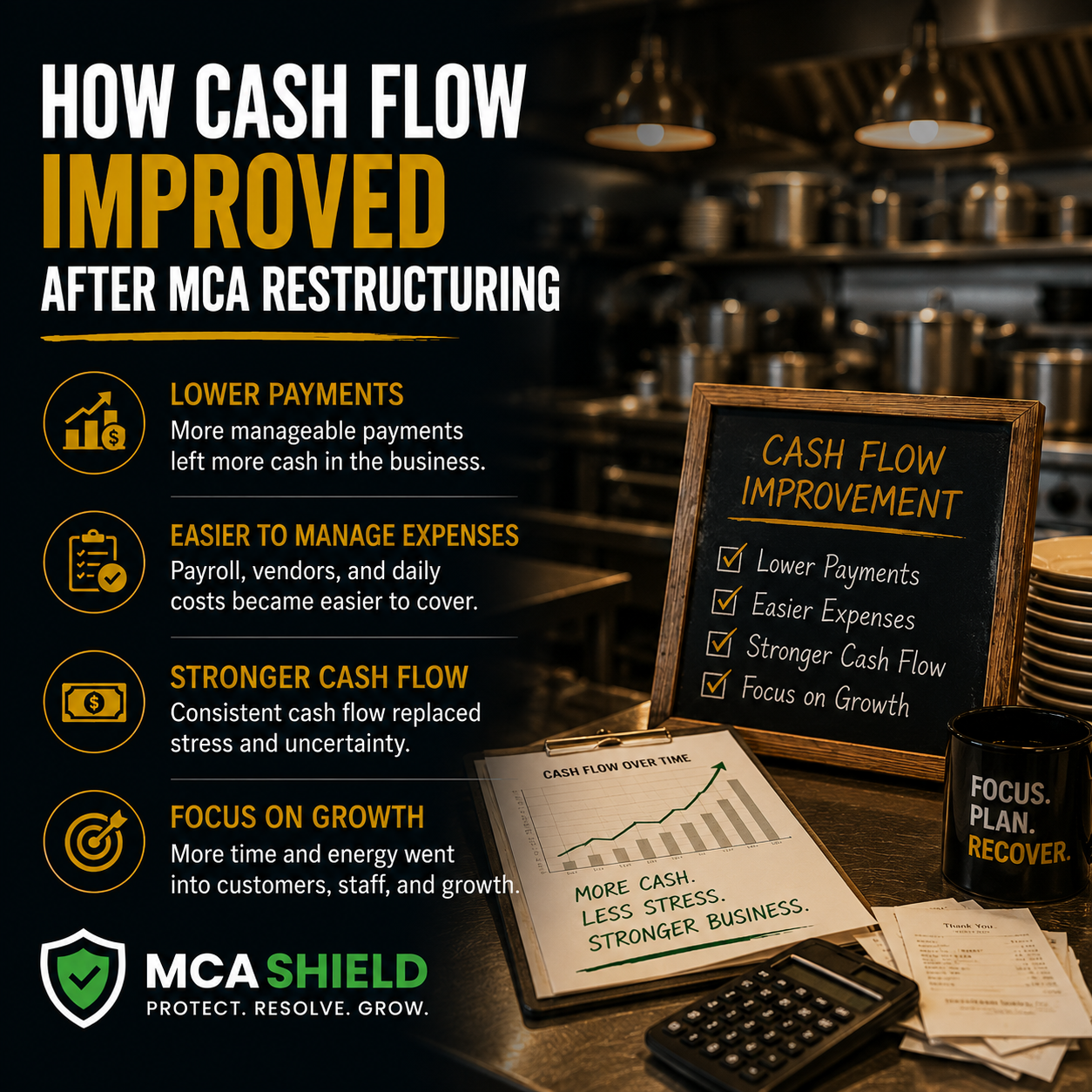
How Cash Flow Improved After MCA Restructuring
The impact of the restructuring became noticeable within a short period of time. With lower payments and more manageable terms, the restaurant was able to keep more revenue available for daily operations. Payroll became easier to manage, vendor payments became more consistent, and the constant pressure created by MCA withdrawals began to ease.
For the first time in a long time, cash flow started working for the business instead of against it. Rather than scrambling to cover expenses each week, the owner could focus on serving customers, supporting staff, and growing the restaurant with greater confidence and stability.
Key Lessons Other Business Owners Can Learn
This case study highlights an important truth: the earlier you address MCA debt, the more options you typically have. Waiting for cash flow problems to resolve on their own often allows the pressure to grow. By recognizing the warning signs and seeking help early, this restaurant owner was able to regain control before the situation became even more difficult.
Other business owners can learn several valuable lessons:
• Avoid relying on new MCA funding to solve existing debt problems
• Pay attention to early cash flow warning signs
• Explore relief options before payments become unmanageable
• Seek professional guidance when financial pressure starts affecting operations
The biggest takeaway is that MCA debt challenges do not have to define the future of your business. Taking action early can create opportunities to reduce payment pressure, improve cash flow, and build a stronger foundation for long-term success.

When to Seek MCA Relief Before Things Get Worse
The best time to seek MCA relief is before cash flow problems begin threatening the day-to-day operation of your business. If MCA payments are causing payroll concerns, vendor delays, frequent overdrafts, or the need to take on additional funding, it may be time to explore your options. Waiting too long often reduces flexibility and makes financial recovery more difficult.
Early action creates more opportunities. By addressing MCA debt before the pressure becomes overwhelming, business owners may be able to secure better terms, improve cash flow, and avoid more serious financial challenges. As this case study demonstrates, taking action early can be the difference between falling further behind and creating a path toward long-term stability.