
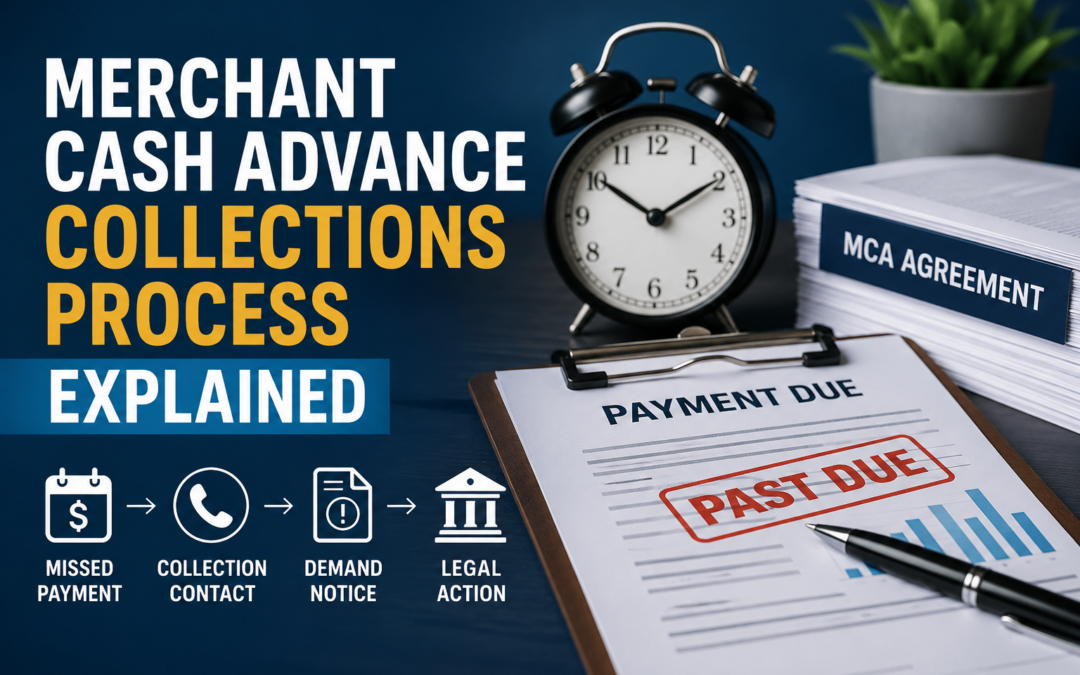
Merchant Cash Advance Collections Process refers to the steps MCA companies may take when a business falls behind on required payments. What often begins with missed ACH withdrawals or payment issues can progress to collection calls, written notices, and, in some situations, legal action. Understanding the Merchant Cash Advance Collections Process helps business owners recognize potential risks and take action before financial challenges become more difficult to manage.
This guide explains the Merchant Cash Advance Collections Process, including the typical stages of collections, common tactics used by MCA companies, and the options businesses may have to reduce financial pressure. Taking action early can often create more opportunities to protect cash flow and work toward a sustainable resolution.
Schedule Your Free Consultation
What Is the Merchant Cash Advance Collections Process?
Stages of the Merchant Cash Advance Collections Process

The Merchant Cash Advance Collections Process often follows a series of stages as payment issues continue. While every MCA agreement is different, many collection efforts begin with missed ACH withdrawals and may progress to more serious actions if the default is not resolved. Understanding each stage can help business owners respond early and explore available relief options before the situation worsens.
Missed or Returned ACH Payments
The collections process often begins when a scheduled ACH withdrawal is returned because of insufficient funds or another banking issue. Some MCA companies may contact the business immediately to discuss the missed payment and request updated banking information. Repeated returned payments can increase collection activity and place additional pressure on cash flow.
Collection Calls and Payment Demands
If payment problems continue, the MCA company may begin contacting the business by phone, email, or written correspondence. These communications often request immediate payment or discuss options for resolving the default. Responding promptly may help prevent the situation from escalating further.
Default Notices and Escalation
When missed payments remain unresolved, the MCA company may issue a formal notice of default. Depending on the agreement, additional collection efforts may follow. These actions can include attorney involvement, increased collection activity, or other contractual remedies available under the MCA agreement.
Legal Action and Judgment Collection
If collection efforts are unsuccessful, some MCA companies may pursue legal action to recover the remaining balance. The legal process varies based on the agreement, the circumstances of the default, and applicable state laws. Seeking professional guidance early may help business owners understand their options before legal issues become more complex.
Common Collection Methods Used by MCA Companies
The Merchant Cash Advance Collections Process may involve several collection methods after a business misses payments or defaults under the agreement. The specific actions depend on the contract and the circumstances of the default. Understanding these collection methods can help business owners recognize potential risks and respond before collection efforts become more serious.
Daily or Weekly ACH Withdrawals
Many MCA companies collect payments through scheduled ACH withdrawals from the business bank account. If payments continue after financial problems begin, these withdrawals can place additional pressure on cash flow and make it harder to cover operating expenses.
Phone Calls and Email Communication
Collection efforts often include phone calls, emails, and written correspondence. These communications typically request payment, discuss the status of the account, or explain the next steps if the default remains unresolved. Responding promptly may help prevent further escalation.
Attorney Demand Letters
Some MCA companies may involve attorneys after repeated missed payments or a formal default. An attorney demand letter usually requests payment and explains the possible consequences of failing to resolve the account. A careful review of the letter can help business owners understand the issues being raised.
UCC Liens and Other Collection Remedies
Depending on the terms of the agreement, an MCA company may pursue remedies permitted under the contract and applicable law. These may include enforcing a UCC lien, pursuing legal claims, or taking other actions to recover the purchased receivables. Understanding the agreement can help business owners evaluate their options before collection efforts continue.
What Happens if the Collections Process Continues?
The Merchant Cash Advance Collections Process can become more difficult if payment issues remain unresolved. As collection efforts continue, businesses may experience greater financial strain and increased operational challenges. Understanding these risks can help business owners take action before the situation becomes more serious.
Increasing Financial Pressure
Ongoing collection efforts can place additional pressure on business cash flow. Daily or weekly ACH withdrawals, combined with past-due balances, may make it harder to pay employees, vendors, rent, and other essential operating expenses. Over time, financial flexibility may continue to decline.
Potential Business Disruptions
As financial pressure increases, normal business operations may become more difficult to manage. Limited working capital can delay inventory purchases, postpone growth plans, or make it challenging to meet ongoing financial obligations. These disruptions may affect both daily operations and long-term stability.
Risks of Ignoring Collection Notices
Ignoring collection notices rarely improves the situation. Continued nonpayment may lead to additional collection efforts or other actions permitted under the MCA agreement. Responding early and reviewing available options may help business owners reduce financial pressure before the situation escalates.
Options for Businesses Facing MCA Collections
Businesses facing the Merchant Cash Advance Collections Process may have several options to reduce financial pressure. The right approach depends on the number of MCA obligations, current cash flow, and the terms of each agreement. Exploring available solutions early may provide more flexibility and improve the chances of reaching a favorable outcome.
MCA Debt Restructuring
MCA debt restructuring focuses on creating a more manageable repayment strategy. Depending on the circumstances, restructuring may create a more sustainable repayment plan that reduces financial pressure and improves cash flow.
MCA Settlement Solutions
Some businesses may qualify to negotiate settlements with one or more MCA companies. Settlement discussions typically involve resolving all or part of the outstanding obligation through mutually agreed-upon terms. Every settlement depends on the facts of the individual case and the willingness of the parties to negotiate.
Professional Negotiation Assistance
Professional assistance can help business owners understand their MCA agreements, evaluate available options, and build a strategy to reduce financial pressure. Taking action early often creates more opportunities to reduce collection pressure and work toward a sustainable resolution.
Steps to Take Before Collections Escalate
Taking action early may help reduce the impact of the Merchant Cash Advance Collections Process. Reviewing your financial situation and exploring available options before collection efforts intensify can create more opportunities to protect cash flow and maintain business operations.
Review Your MCA Agreements
Review each MCA agreement carefully to understand your payment obligations, default provisions, and other important terms. Knowing what your contracts require can help you make informed decisions as collection activity develops.
Analyze Cash Flow and Payment Obligations
Evaluate your current cash flow, operating expenses, and existing MCA payments. A clear financial picture can help identify areas of concern and determine which solutions may be appropriate for your business.
Avoid Taking Additional MCA Funding
Taking on another merchant cash advance may provide temporary relief, but it can also increase payment obligations and place additional strain on cash flow. Carefully evaluate the long-term impact before accepting new funding.
Seek Professional Guidance Early
Professional guidance may help you understand your options before collection efforts become more serious. Acting early often provides greater flexibility to explore restructuring, settlement, or other relief strategies that support long-term financial stability.
Frequently Asked Questions About the Merchant Cash Advance Collections Process
Take Action Before Merchant Cash Advance Collections Become More Serious
The Merchant Cash Advance Collections Process does not have to determine the future of your business. Taking action early may create more opportunities to reduce financial pressure, protect cash flow, and explore solutions before collection efforts become more difficult to manage.
Why Acting Early Creates More Options
Early action gives business owners more time to evaluate their MCA agreements, review their financial situation, and consider available relief strategies. Addressing collection issues before they escalate may improve flexibility and increase the likelihood of reaching a workable solution.
Schedule a Free Consultation With MCA Shield
If your business is struggling with MCA collections, MCA Shield is here to help. Our team will review your situation, explain your options, and develop a strategy tailored to your business goals. Schedule your free consultation today and take the first step toward regaining control of your cash flow.