
Many business owners don’t recognize the warning signs until their MCA is becoming dangerous and daily payments begin disrupting cash flow. Learning how to identify these early red flags can help you protect your business, avoid default, and explore debt relief options before the financial situation becomes more difficult to manage.
Schedule Your Free Consultation
What Makes a Merchant Cash Advance Become Dangerous?
A merchant cash advance can provide fast access to working capital, but it can also create significant financial pressure if payments become difficult to manage. For many business owners, an MCA is becoming dangerous when daily or weekly withdrawals consume too much revenue, leaving less cash available for payroll, inventory, rent, and other essential operating expenses.
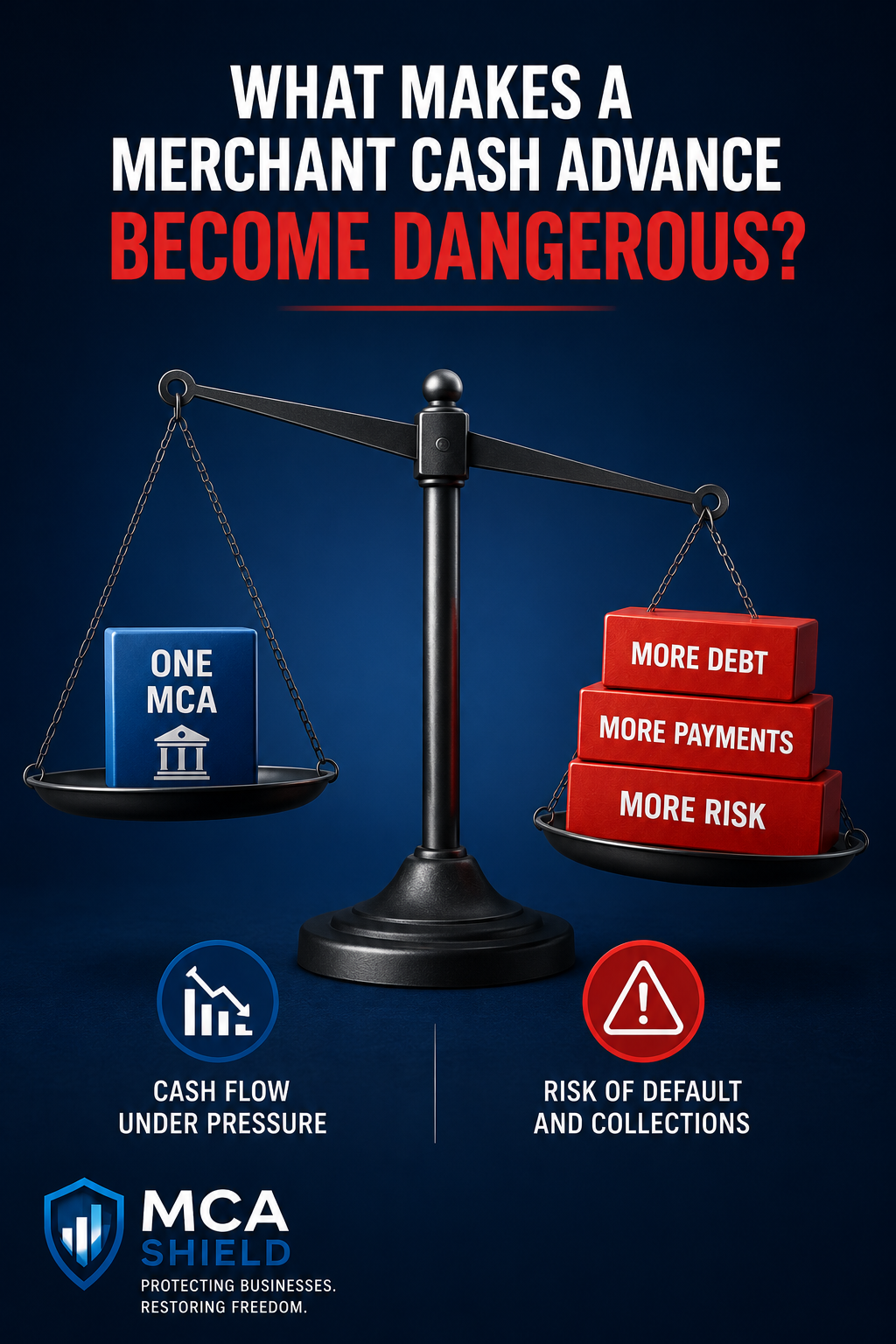
The risk often increases gradually rather than all at once. A business may continue generating sales, yet cash flow continues tightening because automatic ACH withdrawals are taking a larger share of incoming deposits. As financial pressure builds, many owners find themselves relying on credit cards, delaying vendor payments, or searching for additional financing to stay current.
Recognizing these warning signs early gives business owners more options to stabilize cash flow and avoid more serious financial consequences.
When Daily Payments Begin Controlling Cash Flow
Merchant cash advances are typically repaid through automatic ACH withdrawals from your business bank account. While these payments may seem manageable at first, they can quickly become overwhelming if revenue declines or operating expenses increase.
When daily withdrawals begin determining which bills get paid, cash flow is no longer supporting healthy business operations. Instead of reinvesting in growth, business owners often spend their time managing payment shortages, delaying purchases, and juggling essential expenses. This is one of the clearest signs that your MCA may be creating more financial risk than value.
Why One MCA Can Quickly Lead to Bigger Problems
A single merchant cash advance can become difficult to manage if business revenue changes unexpectedly. Daily payment obligations remain the same even when sales fluctuate, making it harder to maintain consistent cash flow during slower periods.
Many business owners respond by accepting another merchant cash advance to cover existing payments or operating expenses. This practice, often called MCA stacking, adds new daily withdrawals and increases overall repayment costs. As payment obligations grow, cash flow becomes even more restricted, increasing the likelihood of missed payments, collections, and default.
Understanding how these risks develop can help you recognize when an MCA is becoming dangerous and take action before the financial situation becomes much more difficult to resolve.
Early Warning Signs Your MCA Is Becoming Dangerous
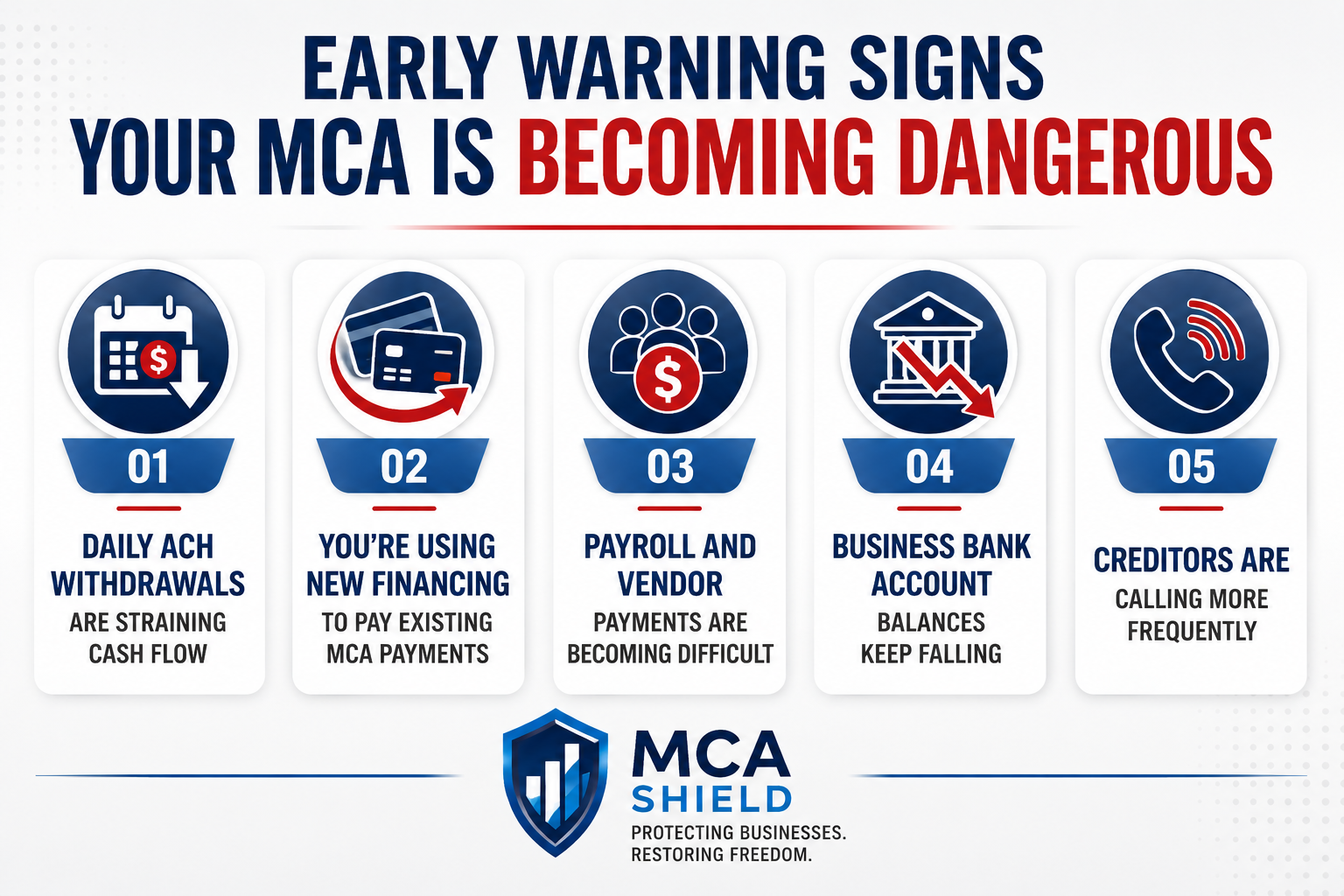
When your MCA is becoming dangerous, the warning signs often appear long before a missed payment or default. Many business owners notice growing cash flow problems but assume business will improve enough to catch up. Unfortunately, delaying action can allow financial pressure to build until daily operations become difficult to sustain.
Recognizing these early warning signs can help you protect your business and explore solutions before the situation becomes more serious.
Daily ACH Withdrawals Are Straining Cash Flow
Daily ACH withdrawals should never prevent your business from covering normal operating expenses. If automatic MCA payments are leaving your account with too little cash to pay bills, purchase inventory, or maintain healthy working capital, your financing may be placing too much strain on your business.
When daily withdrawals dictate how your business operates, your MCA may be creating more financial risk than benefit.
You’re Using New Financing to Pay Existing MCA Payments
One of the strongest warning signs is relying on new financing to make payments on an existing merchant cash advance. This often leads to MCA stacking, where multiple daily payment obligations quickly consume available cash flow.
Although additional funding may provide temporary relief, it frequently increases overall repayment costs and makes long-term financial recovery more difficult.
Payroll and Vendor Payments Are Becoming Difficult
Healthy businesses should be able to pay employees and vendors on time. If payroll is becoming stressful or supplier payments are consistently delayed because MCA withdrawals take priority, your cash flow may be reaching an unhealthy level.
Late payments can damage vendor relationships, disrupt operations, and create additional financial challenges beyond the merchant cash advance itself.
Business Bank Account Balances Keep Falling
If your business bank account rarely maintains a comfortable balance, it may indicate that cash is leaving faster than it is coming in. Many business owners begin checking their accounts several times each day, hoping enough money remains to cover automatic withdrawals and essential expenses.
Constantly operating with minimal available funds can make it difficult to manage unexpected costs and increase the risk of overdraft fees and returned payments.
Creditors Are Calling More Frequently
As cash flow tightens, businesses often fall behind on payments owed to vendors, lenders, landlords, or service providers. An increase in collection calls, payment reminders, or past-due notices often signals that financial obligations are becoming difficult to manage.
If multiple creditors are requesting payment while MCA withdrawals continue, it may be time to evaluate your debt situation and explore options before collections or legal action become more likely.
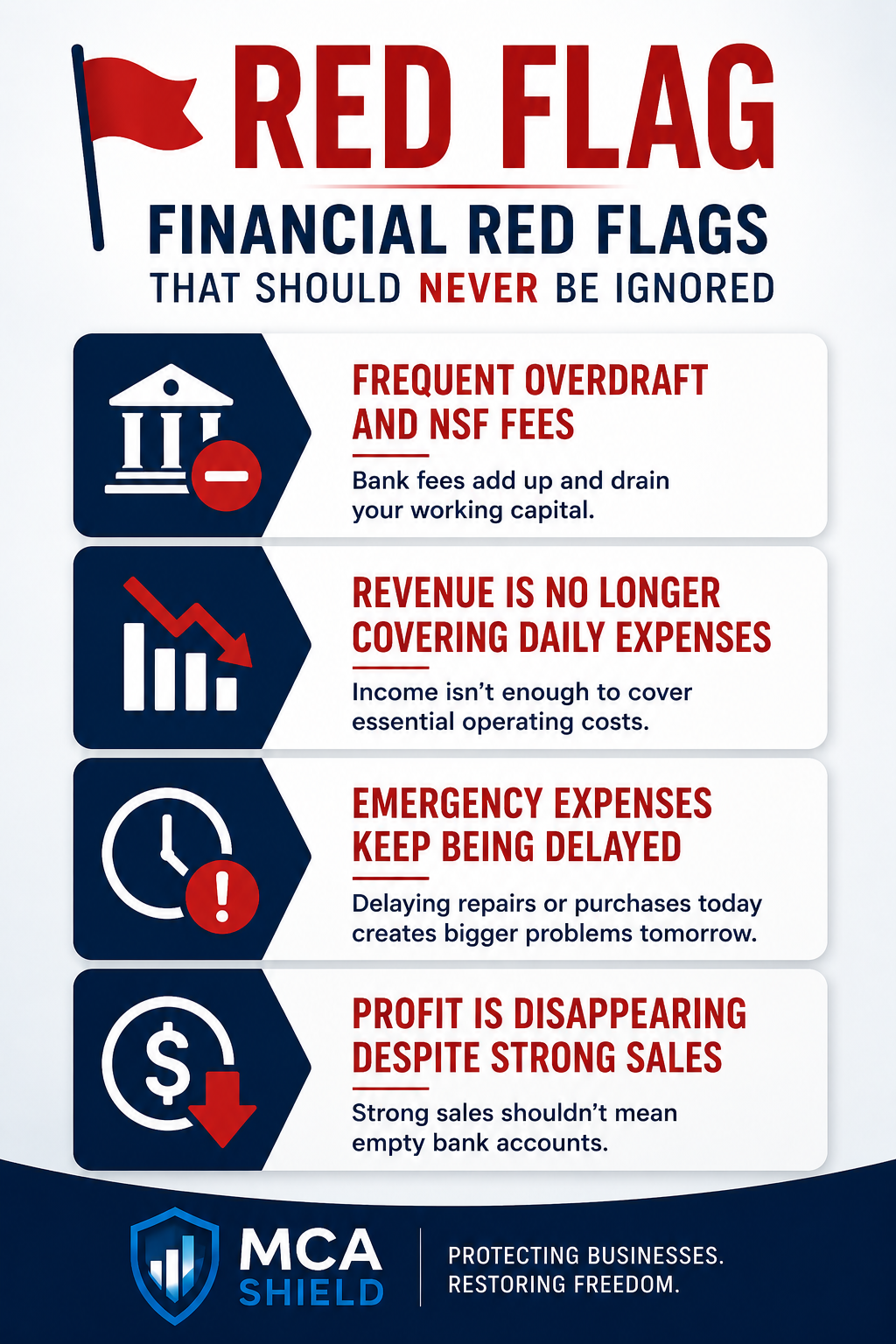
Financial Red Flags That Should Never Be Ignored
As your MCA is becoming dangerous, financial warning signs often become harder to ignore. What may have started as occasional cash flow challenges can quickly develop into ongoing financial instability that affects every part of your business.
What Happens If an MCA Continues to Get Worse?
When your MCA is becoming dangerous, the financial consequences rarely remain limited to daily cash flow problems. As payment obligations become harder to manage, the impact can spread throughout your business, affecting operations, vendor relationships, financing opportunities, and overall financial stability.
Understanding what may happen if the situation worsens can help you take action before the damage becomes more difficult to reverse.
Increased Collection Activity
When MCA payments are missed or returned, collection efforts often become more frequent. Business owners may receive additional phone calls, emails, letters, or other requests for payment from the MCA company or its representatives.
Collection activity can quickly become a distraction, taking valuable time away from running your business and increasing stress for business owners already facing cash flow challenges.
Risk of Default and Legal Action
If payment issues continue without a resolution, your business may eventually default under the terms of the merchant cash advance agreement. Depending on the specific contract and the circumstances, the MCA company may pursue legal remedies to recover the remaining balance.
Because every agreement is different, understanding your contract and seeking professional guidance early may help you identify available options before legal issues become more serious.
Damage to Business Operations
As financial pressure increases, many businesses begin delaying inventory purchases, reducing marketing, postponing equipment maintenance, or cutting other important operating expenses. These decisions may provide temporary relief, but they can also slow growth and make it more difficult to serve customers effectively.
Over time, ongoing cash flow shortages can affect employee morale, vendor relationships, customer satisfaction, and the overall stability of the business.
Greater Difficulty Qualifying for Future Financing
Businesses experiencing financial distress often find it more difficult to qualify for traditional financing. Lenders typically evaluate cash flow, existing debt obligations, and overall financial health before approving new funding.
If your business is already struggling under the weight of one or more merchant cash advances, financing options may become more limited. Taking action early to improve cash flow and reduce financial pressure can often create more opportunities than waiting until the situation reaches a crisis point.
Common Mistakes Business Owners Make
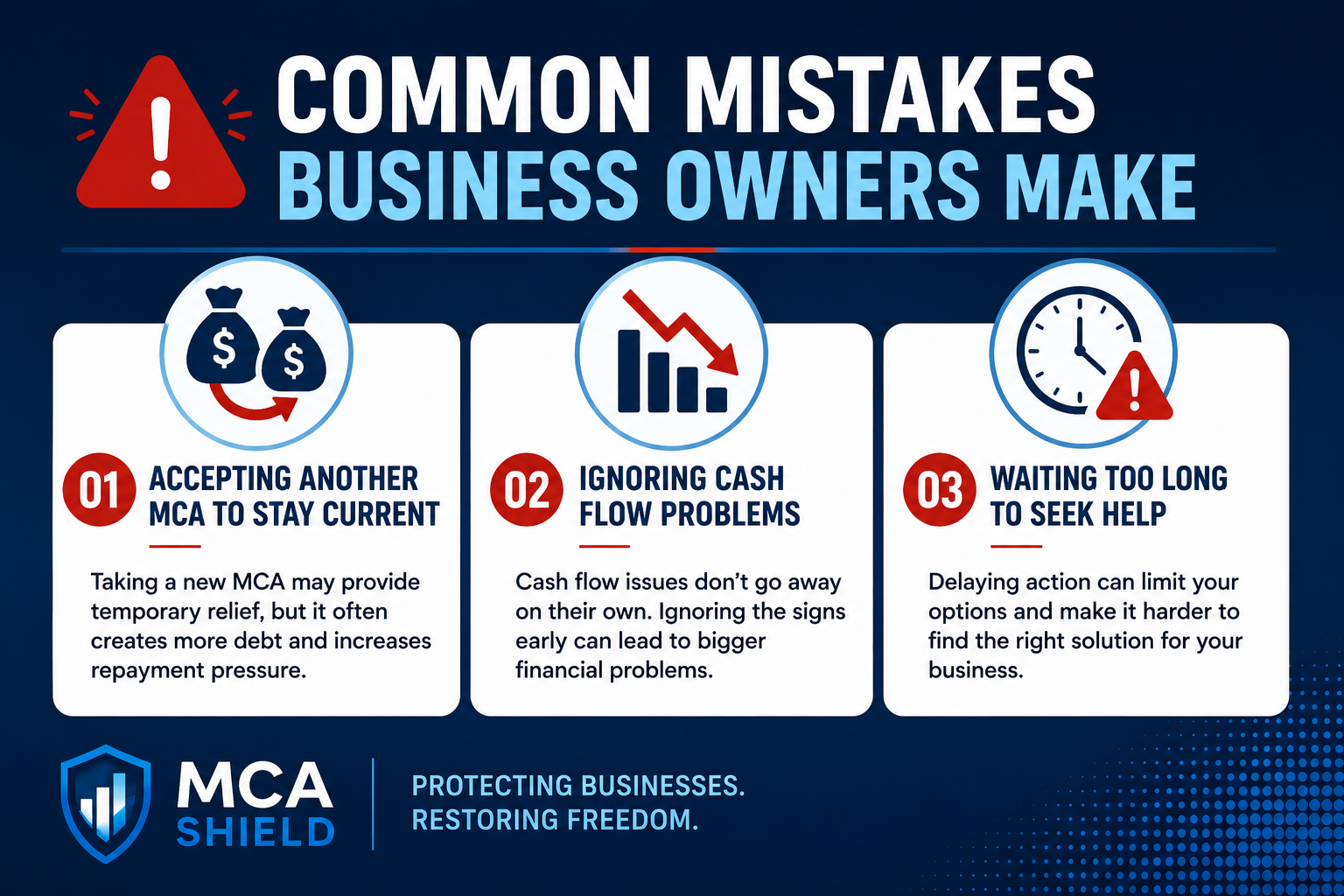
When your MCA is becoming dangerous, the decisions you make next can either improve the situation or make it much more difficult to resolve. Many business owners act with the best intentions, but certain choices can increase financial pressure and reduce the number of available solutions.
Avoiding these common mistakes can help protect your cash flow and put your business in a stronger position for recovery.
Accepting Another MCA to Stay Current
Taking out a second merchant cash advance to cover payments on an existing one may seem like a quick solution, but it often creates a larger problem. Each new MCA adds another repayment obligation, reducing the amount of cash available for daily operations.
This practice, commonly known as MCA stacking, can quickly increase repayment costs and make it harder to keep up with multiple daily ACH withdrawals. Instead of solving the problem, stacking often extends the cycle of debt.
Ignoring Cash Flow Problems
Cash flow issues rarely improve without action. If your business is struggling to cover payroll, inventory, rent, or other operating expenses after MCA payments are deducted, it is important to address the problem as early as possible.
Review your financial statements, monitor your available cash, and identify where your money is going each month. Recognizing cash flow problems early gives you more flexibility to explore solutions before financial pressure continues to grow.
Waiting Too Long to Seek Help
Many business owners wait until they have missed payments or received collection notices before looking for assistance. Unfortunately, delaying action can limit your options and make negotiations more challenging.
Seeking professional guidance early allows you to review your MCA agreements, evaluate your financial position, and develop a strategy before the situation reaches a crisis point. The sooner you address a dangerous merchant cash advance, the more opportunities you may have to improve cash flow and regain control of your business finances.
How to Respond Before the Situation Gets Worse
If your MCA is becoming dangerous, taking action early can make a significant difference. The sooner you understand your financial position, the more options you may have to reduce payment pressure and improve cash flow.
Rather than waiting until collections begin or your business falls further behind, take these practical steps to regain control of your finances.
Review Every Active MCA Agreement
Start by gathering every active merchant cash advance agreement. Review each contract carefully, including the remaining balance, payment schedule, factor rate, fees, and any default provisions.
Many business owners with multiple MCAs are surprised to discover how much they owe across all agreements. Having a complete picture of your obligations is the first step toward developing an effective debt relief strategy.
Calculate Your True Cash Flow
Next, evaluate how much money is actually available after your essential operating expenses are paid. Compare your monthly revenue with payroll, rent, inventory, utilities, taxes, insurance, and all MCA payments.
Understanding your true cash flow helps identify whether your current payment obligations are sustainable and provides a clearer picture of your business’s financial health.
Avoid Additional MCA Funding
Accepting another merchant cash advance may seem like a quick solution, but it often creates even greater financial pressure. Additional funding usually means additional daily ACH withdrawals, higher repayment costs, and less working capital available to operate your business.
Avoiding new MCA funding can help prevent the cycle of debt from becoming even more difficult to manage.
Explore Professional MCA Debt Relief Options
If your business is struggling to keep up with MCA payments, professional guidance may help you evaluate available options. Depending on your financial situation, solutions such as debt restructuring, settlement negotiations, or payment restructuring may reduce financial pressure and improve cash flow.
Seeking help early often provides more flexibility than waiting until missed payments, collections, or legal action occur. Addressing the problem now can help protect your business and position it for long-term financial stability.
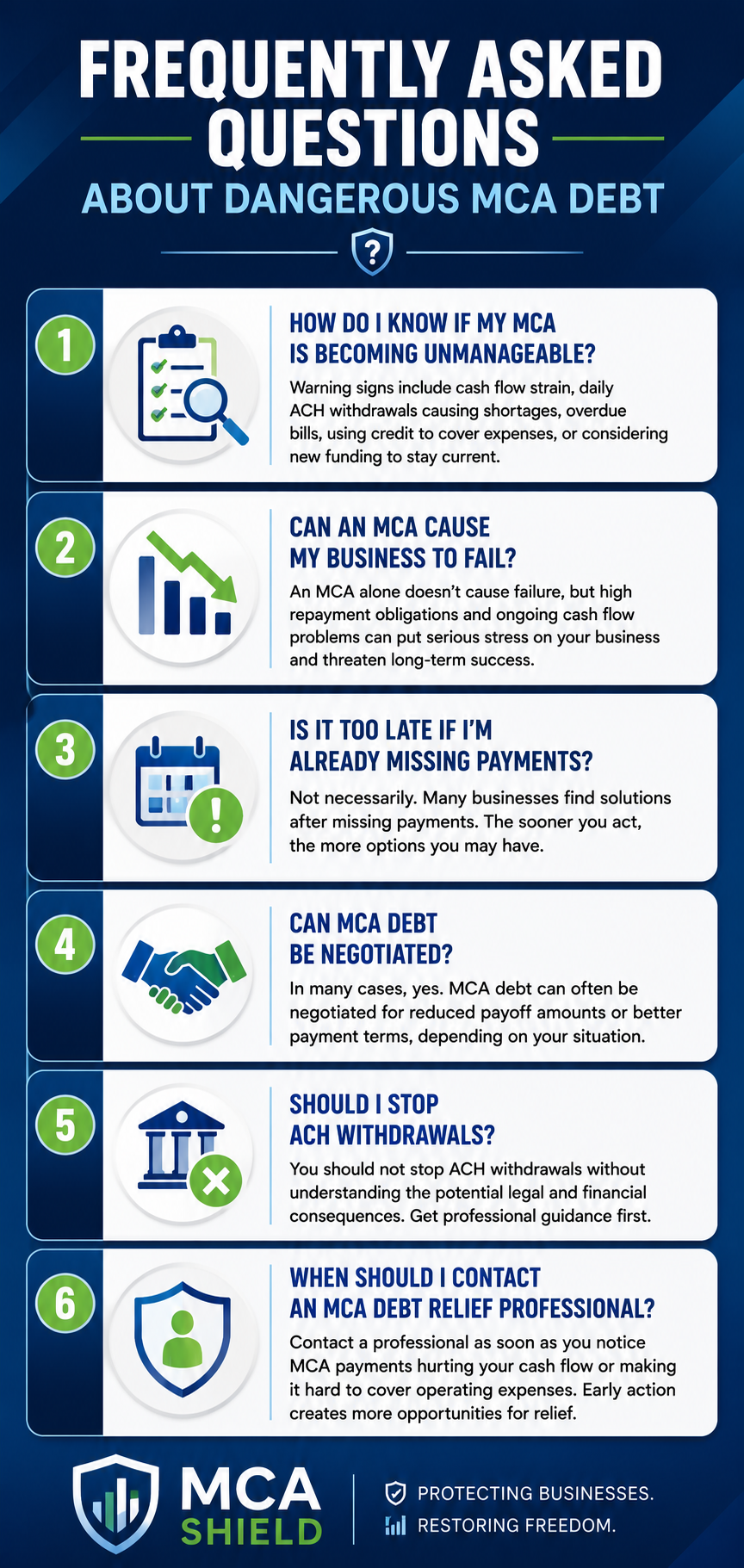
Frequently Asked Questions About Dangerous MCA Debt
If your MCA payments are creating financial stress, you’re not alone. Below are answers to some of the most common questions business owners ask when a merchant cash advance is becoming difficult to manage.
Take Action Before Your MCA Becomes a Financial Crisis
Waiting rarely makes merchant cash advance debt easier to manage. If your MCA is becoming dangerous, taking action now may help preserve cash flow, reduce financial pressure, and give your business more opportunities to recover.
Whether you’re managing one MCA or multiple stacked advances, understanding your options early can make a meaningful difference in the outcome.
Why Early Intervention Creates More Options
The earlier you address MCA debt, the more flexibility you may have. Acting before missed payments, collections, or legal action escalate can provide additional opportunities to evaluate your financial situation and explore potential debt relief solutions.
Taking proactive steps now can help protect your business operations, improve cash flow, and position your company for greater long-term financial stability.
Schedule a Free Consultation With MCA Shield
If daily MCA payments are putting your business under financial pressure, the team at MCA Shield is here to help. We work with business owners to review MCA agreements, evaluate cash flow, and develop personalized strategies designed to reduce payment pressure and support long-term financial recovery.