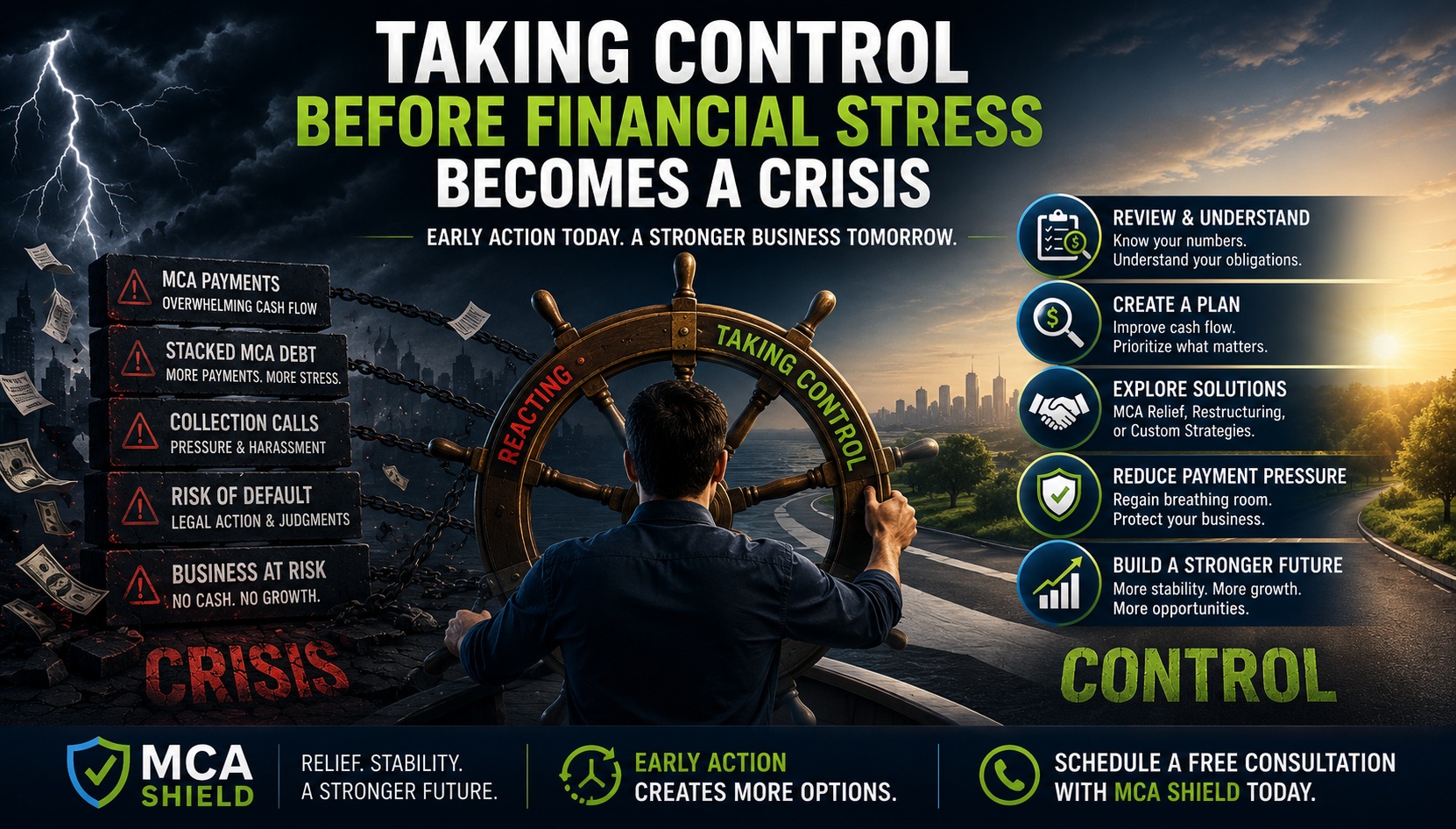
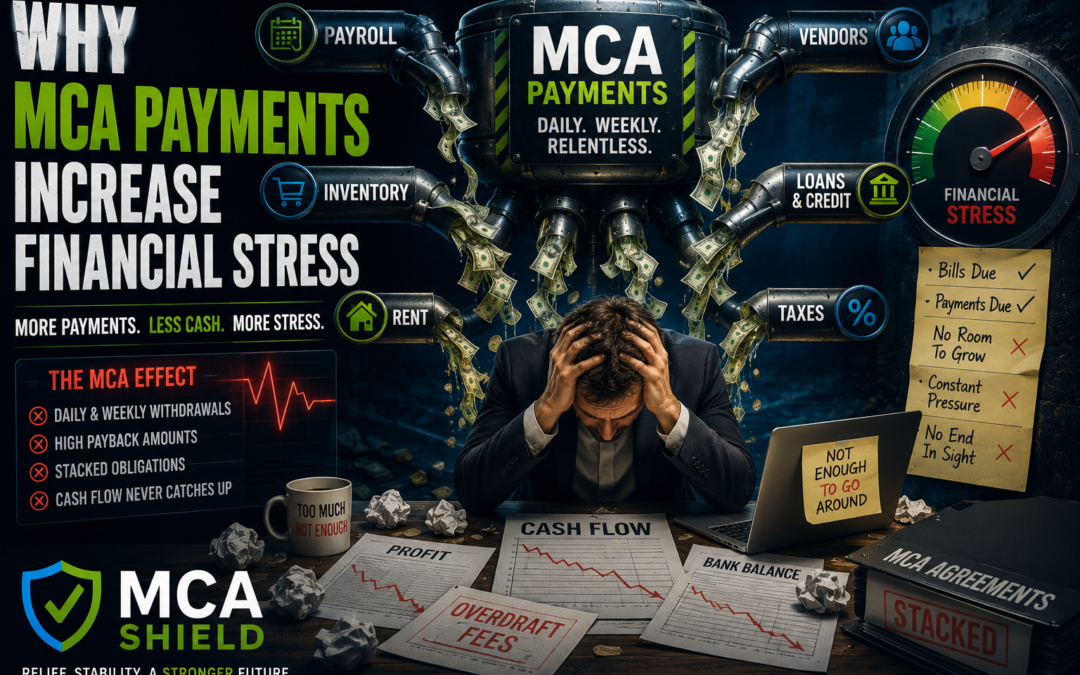
How Daily MCA Payments Create Cash Flow Pressure
Daily MCA payments can quickly turn healthy revenue into constant financial pressure. Instead of allowing your business to build cash reserves throughout the week, automatic withdrawals reduce your available working capital every business day. Even when sales remain strong, those daily deductions can make it difficult to cover payroll, replenish inventory, pay vendors, and handle unexpected expenses. Over time, many business owners find themselves working harder while having less cash available to operate, grow, and strengthen their business.
The pressure often becomes even greater when multiple Merchant Cash Advances are involved. Each new payment further reduces available cash and limits your financial flexibility. As cash flow tightens, some businesses rely on additional funding simply to keep up with existing obligations. That cycle can become difficult to escape without exploring options such as MCA Relief, MCA Consolidation, or MCA Settlement. For many owners searching for How to Get Out of MCA Loans, understanding the true impact of daily withdrawals is the first step toward finding a lasting solution.
Common effects of daily MCA payments include:
- Reduced working capital
- Difficulty covering payroll and operating expenses
- Delayed vendor and supplier payments
- Limited ability to invest in business growth
- Greater financial stress and uncertainty
The good news is that daily MCA payment pressure does not have to become permanent. By recognizing the warning signs early and exploring the right relief strategy, many businesses improve cash flow, regain financial stability, and focus on building a stronger future instead of constantly reacting to daily withdrawals.
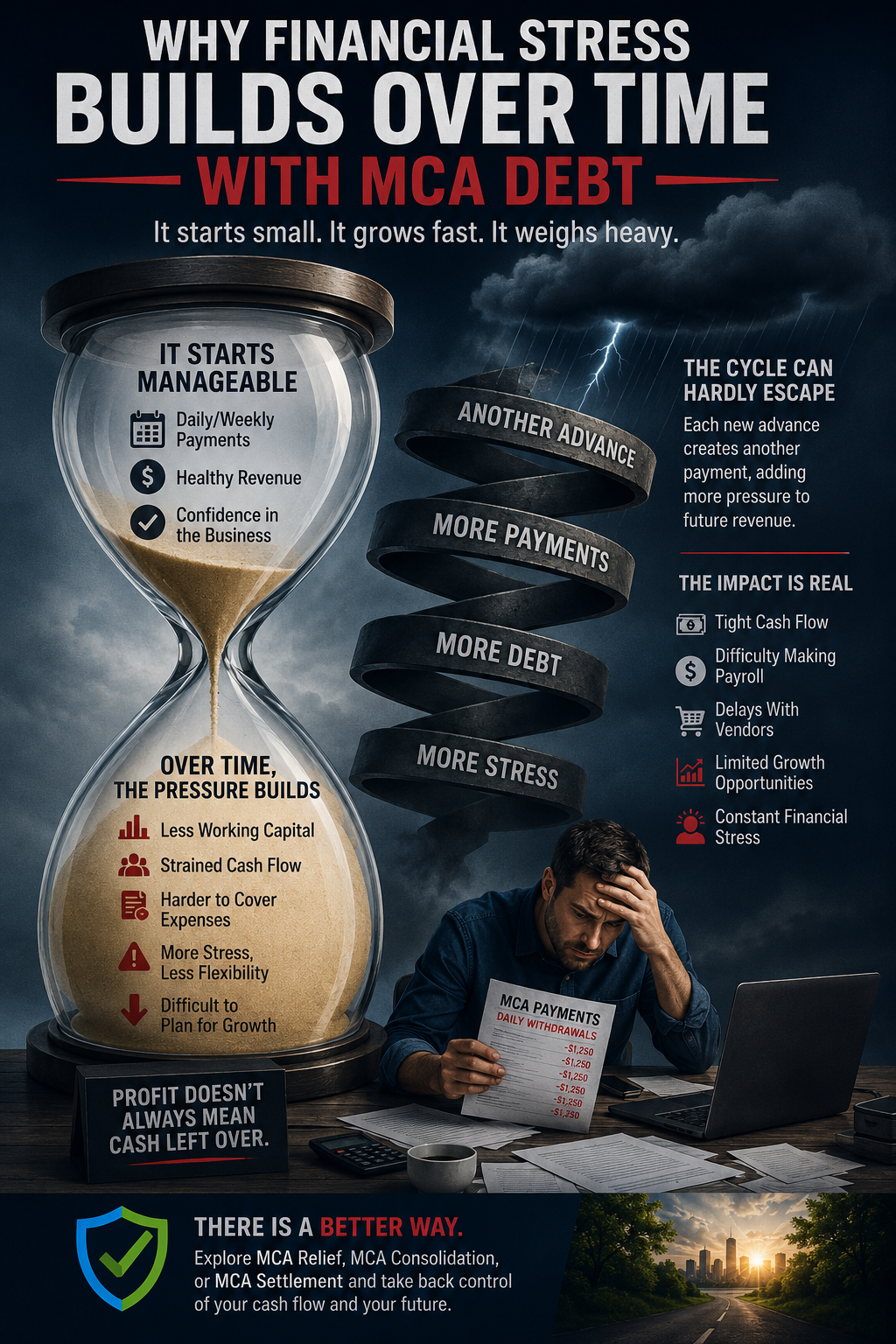
Why Financial Stress Builds Over Time With MCA Debt
Financial stress rarely appears overnight. For many businesses, it grows one payment at a time as daily or weekly Merchant Cash Advance withdrawals continue reducing available cash. At first, the impact may seem manageable. Over time, however, less money remains for payroll, inventory, rent, vendor payments, marketing, and other essential expenses. As working capital shrinks, even a profitable business can struggle to keep pace with its financial obligations.
The situation often becomes more serious when business owners rely on additional funding to solve short-term cash flow problems. Taking on another advance may provide temporary relief, but it also creates another payment obligation that places even more pressure on future revenue. This cycle can leave owners searching for How to Get Out of MCA Loans while juggling multiple withdrawals each week. Exploring options such as MCA Relief, MCA Consolidation, or MCA Settlement before the problem escalates can provide a more sustainable path forward than continuing to add new debt.
Financial stress also affects more than your bank account. Constant payment pressure can make it harder to plan for growth, respond to unexpected expenses, and make confident business decisions. Instead of investing in the future, many owners spend their time reacting to immediate financial demands. Recognizing how MCA debt creates long-term financial stress is the first step toward protecting your cash flow, strengthening your business, and building a healthier financial future.
The Impact of MCA Payments on Payroll, Vendors, and Operations
Merchant Cash Advance payments affect much more than your bank balance. As daily or weekly withdrawals continue, they reduce the cash available to run your business. Many owners begin delaying purchases, postponing equipment repairs, or cutting back on essential expenses just to stay current on MCA payments. When cash flow becomes unpredictable, even routine business decisions become more difficult.
Payroll often becomes one of the biggest concerns. Employees depend on timely paychecks, and vendors rely on consistent payments to keep products and services flowing. When revenue goes toward MCA withdrawals first, businesses may struggle to meet those commitments. Late vendor payments can damage long-term relationships, while delayed payroll can hurt employee morale and productivity. If the financial pressure continues, normal operations can suffer, making it harder to serve customers and generate new revenue.
The longer this cycle continues, the greater the risk to your business. Some owners respond by taking on additional advances, hoping to create temporary breathing room. Unfortunately, that often leads to even greater payment obligations. Instead, exploring options such as MCA Relief, MCA Consolidation, or MCA Settlement may provide a more sustainable solution. For businesses searching for How to Get Out of MCA Loans, addressing payment pressure early often creates more options and better long-term results. Protecting your cash flow today helps protect your employees, your vendor relationships, and the future of your business.
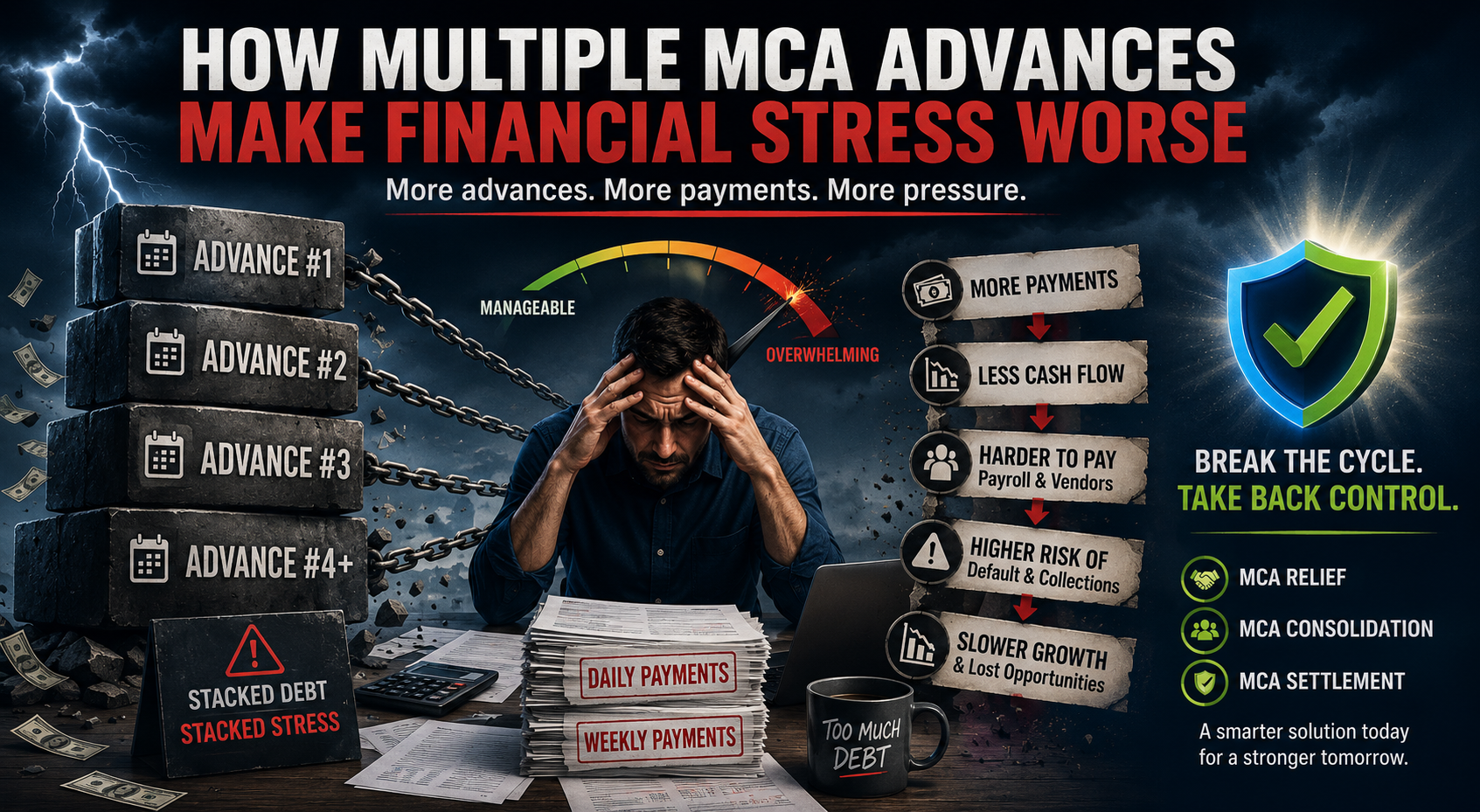
How Multiple MCA Advances Make Financial Stress Worse
Taking on a second or third Merchant Cash Advance may seem like a quick way to solve a cash flow problem. In reality, multiple MCA advances often create even greater financial stress. Every new advance adds another daily or weekly payment, leaving less working capital available for payroll, inventory, rent, and other essential expenses. Instead of solving the problem, stacked MCA debt often accelerates it.
As payment obligations grow, business owners frequently spend more time managing debt than running their companies. Cash flow becomes harder to predict, and unexpected expenses become more difficult to absorb. Many businesses caught in this cycle experience:
- Increasing daily or weekly payment obligations
- Reduced working capital for day-to-day operations
- Greater reliance on short-term financing
- Higher risk of missed payments or defaults
- More collection activity and financial pressure
- Fewer opportunities to invest in business growth
The longer multiple MCA advances remain in place, the harder they become to manage. Instead of taking on additional funding, many businesses benefit from exploring MCA Relief, MCA Consolidation, or MCA Settlement before the situation becomes more severe. For owners searching How to Get Out of MCA Loans, these solutions may offer a path toward restoring financial stability and regaining control of cash flow. Taking action early often creates more options, reduces payment pressure, and positions your business for long-term success.
Common Mistakes Business Owners Make When Under MCA Pressure
When MCA payments begin overwhelming your cash flow, it’s easy to make decisions based on urgency instead of strategy. Many business owners simply want immediate relief, but quick fixes often create bigger financial problems down the road. The pressure to cover payroll, pay vendors, and keep the doors open can make another Merchant Cash Advance seem like the only option. Unfortunately, that decision often adds another daily or weekly payment and increases financial stress instead of reducing it.
Some of the most common mistakes include:
- Taking out another MCA to cover existing MCA payments
- Ignoring declining cash flow until the problem becomes severe
- Delaying conversations with lenders or financial professionals
- Falling behind on vendor or payroll obligations
- Failing to review every Merchant Cash Advance agreement
- Waiting too long to explore available debt relief options
The sooner you recognize these warning signs, the more options you typically have. Many businesses improve their financial outlook by taking a proactive approach instead of reacting to each payment withdrawal. Reviewing your financial position early can help identify practical solutions before collection activity increases or cash flow deteriorates further.
Rather than continuing the cycle of short-term borrowing, consider evaluating strategies that address the root cause of the problem. The right plan can reduce financial pressure, improve cash flow, and help protect the future of your business. Acting early often creates better opportunities to regain stability and avoid the costly mistakes that keep many businesses trapped in long-term MCA debt.
Strategies That Can Help Reduce MCA Payment Pressure
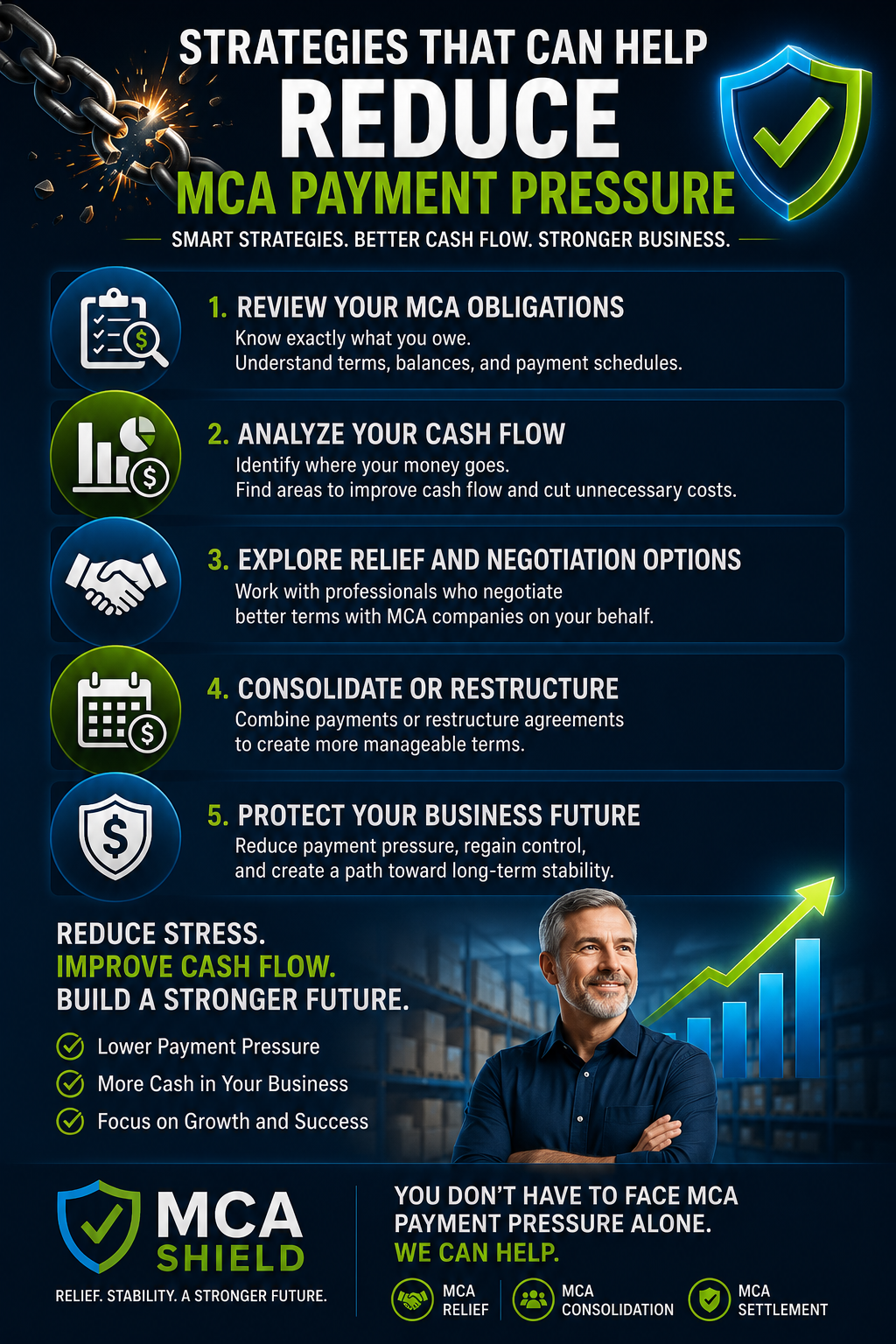
Building a Stronger Financial Recovery Plan
Taking Control Before Financial Stress Becomes a Crisis