MCA Debt Recovery Strategies can help business owners regain control when merchant cash advance payments begin creating financial pressure. While MCAs may provide quick access to funding, daily or weekly repayment schedules can strain cash flow and make it difficult to cover operating expenses.
When payments become overwhelming, having a clear recovery plan matters. The right approach focuses on understanding current obligations, exploring available options, reducing financial pressure, and creating a more stable path forward.
Every business situation is different, but waiting too long can limit flexibility. By recognizing the warning signs early and developing a strategy, business owners can take steps to rebuild cash flow and protect the future of their company.
Schedule Your Free Consultation
What Are MCA Debt Recovery Strategies?
MCA Debt Recovery Strategies are plans designed to help businesses address overwhelming merchant cash advance obligations, improve cash flow, and work toward long-term financial stability. Instead of focusing only on short-term payment problems, a recovery strategy looks at the bigger financial picture.
Many business owners turn to merchant cash advances during periods when they need fast working capital. However, when repayment obligations become difficult to maintain, businesses may need a structured approach to reduce financial strain and regain control.
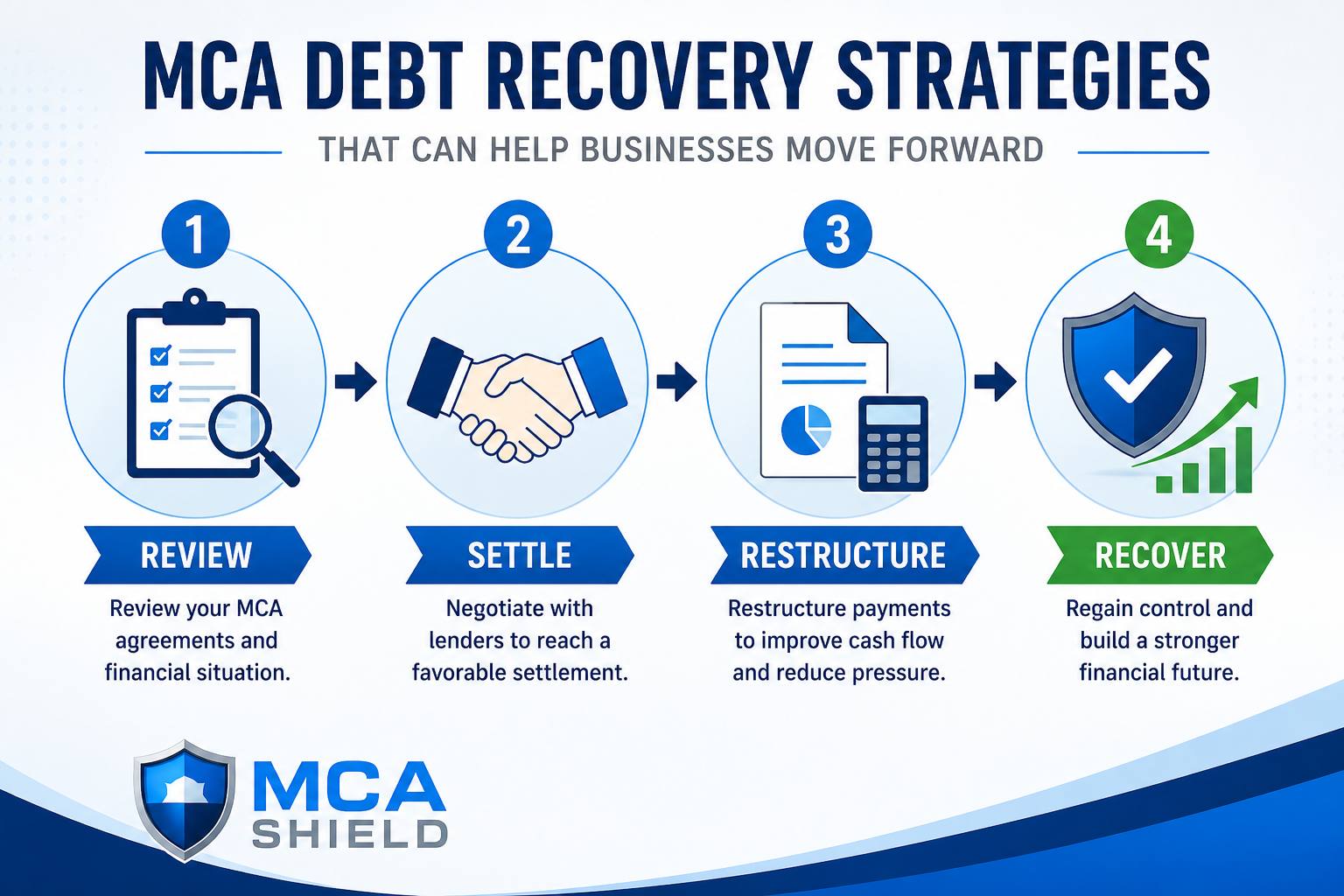
An effective recovery strategy may involve reviewing current MCA agreements, analyzing cash flow, exploring restructuring or settlement options, and designing a plan that supports daily operations.
Why Merchant Cash Advances Become Difficult to Manage
Merchant cash advances can be challenging because their repayment structures can create additional cash flow demands compared to traditional financing options. Instead of predictable monthly payments, many MCAs require frequent withdrawals determined by the agreement terms.
For some businesses, this creates problems when revenue changes. A payment amount that was manageable during strong sales periods may become difficult during slower months or unexpected challenges.
Common issues that can create MCA pressure include:
- Multiple advances are being paid at the same time
- Daily or weekly withdrawals reduce available cash
- Limited funds remaining for payroll, inventory, or vendors
- Taking additional advances to cover existing obligations
Over time, these challenges can create a cycle in which more revenue goes toward MCA payments instead of supporting business growth.
How the Right Strategy Can Help Restore Financial Stability
The goal of MCA debt recovery is not only to address current payments. It is about creating a realistic path that allows the business to operate, recover, and plan for the future.
A strong strategy starts with understanding the full financial situation. This includes reviewing balances, payment schedules, business revenue, and available options before making decisions.
With the right plan, businesses may reduce financial pressure, improve cash flow management, and create a foundation for greater stability. Taking action early can provide more opportunities to explore solutions before MCA challenges become more difficult to manage.
Signs Your Business Needs an MCA Debt Recovery Strategy
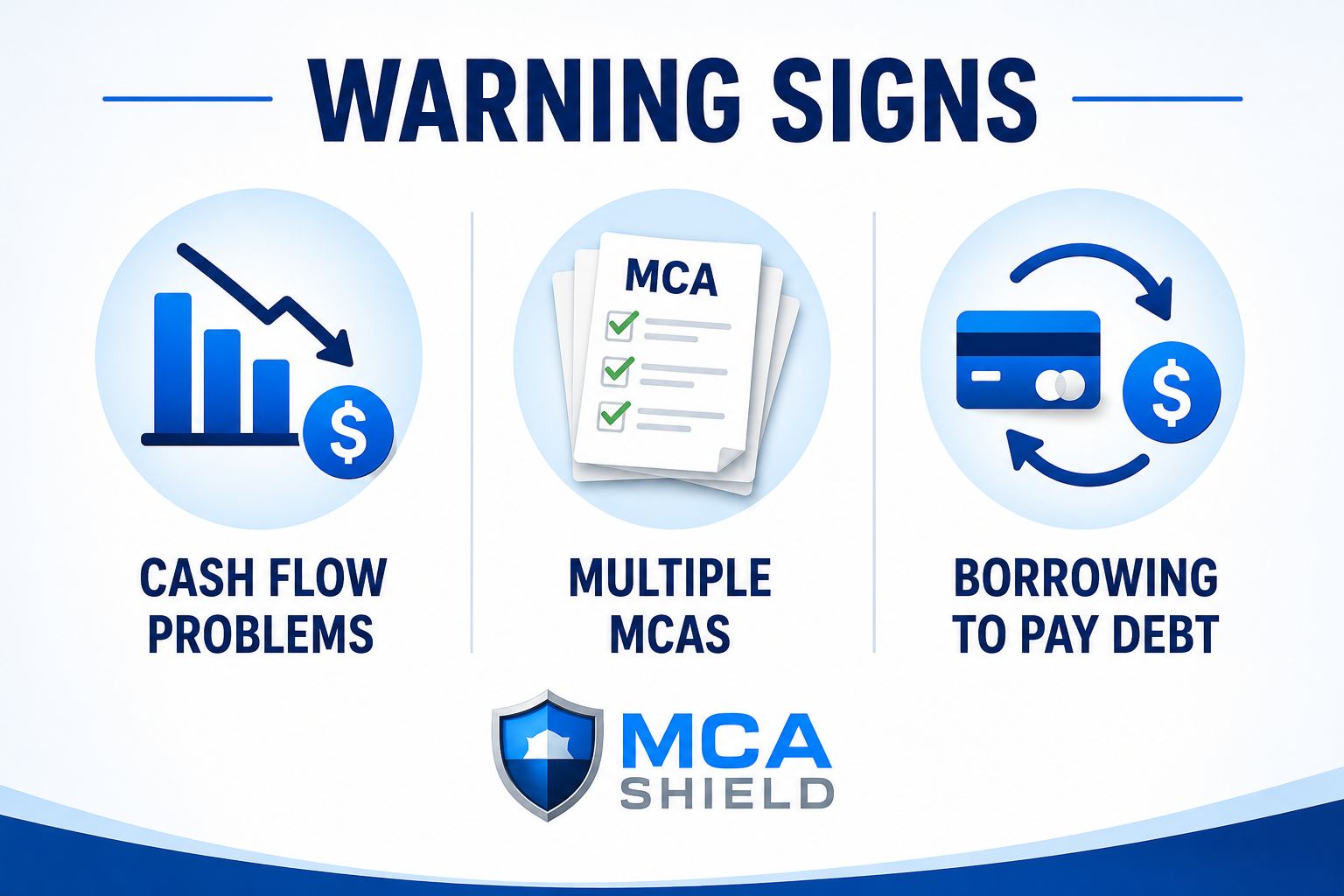
Recognizing financial warning signs early can make a significant difference when dealing with merchant cash advance challenges. Many business owners try to manage increasing payment pressure on their own, but waiting until the situation becomes critical may reduce available options.
An MCA debt recovery strategy helps identify the source of financial pressure and creates a plan focused on improving cash flow, addressing repayment challenges, and supporting long-term business stability.
Daily or Weekly Payments Are Creating Cash Flow Problems
One of the biggest warning signs of MCA trouble is when frequent payments begin affecting normal business operations. Daily or weekly withdrawals can quickly reduce available working capital, especially during periods when revenue slows down.
Business owners may notice they have less flexibility to cover important expenses, including:
- Payroll
- Inventory
- Vendor payments
- Rent or operating costs
- Unexpected business expenses
When a large portion of incoming revenue is immediately going toward MCA payments, it may become harder for the business to maintain stability and prepare for future growth.
Multiple MCA Payments Are Becoming Hard to Manage
Managing one merchant cash advance can be challenging. Managing several at the same time can create even more financial pressure.
Businesses with multiple MCAs may face different payment schedules, repayment amounts, and obligations happening simultaneously. As more cash flow goes toward satisfying these payments, fewer resources may be available for everyday operations.
This situation is often referred to as MCA stacking. Without a clear recovery plan, stacked advances can make it increasingly difficult to break the cycle and regain financial control.
New Funding Is Being Used to Cover Old Debt
A major warning sign that a business needs an MCA debt recovery strategy is relying on new funding to meet existing obligations.
While another advance may provide temporary relief, it often does not solve the underlying cash flow problem. Adding new repayment obligations can increase financial pressure and make recovery more challenging.
Creating a strategy before taking on additional funding allows business owners to review their options, understand their current obligations, and focus on solutions designed for long-term stability instead of short-term survival.
Why MCA Debt Problems Can Become Harder Over Time
MCA debt problems often become more difficult when businesses continue operating without a clear recovery plan. What begins as a temporary cash flow challenge can gradually evolve into ongoing financial pressure as repayment obligations compete with everyday business expenses.
Many business owners wait, anticipating that revenue will increase or the situation will improve on its own. However, understanding the warning signs and exploring MCA debt recovery strategies early can help businesses identify solutions before financial challenges become more complicated.
Stacked Merchant Cash Advances Increase Payment Pressure
Stacked merchant cash advances occur when a business takes on multiple MCAs at the same time. While additional funding may provide short-term relief, multiple repayment obligations can quickly reduce available cash flow.
Each new advance may add another payment schedule, creating more pressure on the money coming into the business. Over time, owners may find themselves using a larger portion of revenue to manage MCA payments rather than investing in operations, employees, inventory, or growth.
Without a strategy to address stacked MCA debt, the cycle can become harder to break.
High Repayment Obligations Limit Business Flexibility
Healthy businesses need flexibility. They need available cash to adjust during slower periods, respond to unexpected expenses, and invest in future opportunities.
When MCA payments consume too much working capital, owners may have fewer options when making important business decisions. Even profitable businesses can experience financial stress if too much revenue is directed toward repayment obligations.
An effective MCA debt recovery strategy focuses on creating a more manageable financial structure that supports both immediate needs and long-term stability.
Delaying Action Can Reduce Available Options
Waiting too long to address MCA problems may create additional challenges. Cash flow shortages, missed payments, collection pressure, and legal concerns can create additional challenges during the recovery process.
Taking action early gives business owners time to understand their agreements, evaluate possible solutions, and create a plan before the situation becomes more difficult.
MCA debt recovery is not just about resolving current financial pressure. It is about helping businesses regain control and build a stronger foundation moving forward.
Many Borrowers Don't Fully Understand Their MCA Agreement
Finding the right path forward starts with understanding the full financial picture. MCA debt recovery strategies are not one-size-fits-all solutions. Each business has different revenue patterns, obligations, challenges, and goals that should be reviewed before creating a recovery plan.
The most effective strategies focus on reducing immediate financial pressure while helping the business create a stronger foundation for the future.
Review Your MCA Agreements and Current Obligations
The first step in creating an MCA debt recovery strategy is understanding exactly where the business stands. This includes reviewing MCA agreements, payment structures, remaining balances, and any terms that may affect available options.
A complete review can help identify important details such as:
- Current repayment obligations
- Payment frequency and amounts
- Total outstanding balances
- Contract terms that may impact negotiations
Without a clear understanding of existing obligations, it can be difficult to determine the best approach for moving forward.
Explore MCA Debt Settlement Opportunities
For some businesses, MCA debt settlement may be an option to address overwhelming repayment obligations. Settlement discussions typically focus on finding a possible resolution between the business and MCA provider.
The goal is to create a strategy that considers the company’s current financial position while working toward a more manageable path forward.
Every situation is different. Factors such as account status, financial hardship, lender cooperation, and available resources may influence potential settlement opportunities.
Restructure Payments to Improve Cash Flow
When MCA payments are causing ongoing pressure, restructuring options may help businesses create more manageable payment arrangements.
Improving cash flow is a critical part of the recovery process. Businesses need enough available working capital to cover daily operations, support employees, maintain vendor relationships, and prepare for future growth.
A structured recovery approach focuses on providing realistic solutions instead of temporary fixes that may lead to additional financial challenges.
Build a Long-Term Business Recovery Plan
True MCA debt recovery involves more than solving immediate payment problems. A successful plan also focuses on helping the business avoid similar challenges in the future.
A long-term recovery strategy may include improving cash flow management, reducing reliance on short-term funding, reviewing expenses, and creating healthier financial systems.
With the right strategy in place, business owners can move beyond constant financial pressure and focus on rebuilding stability, confidence, and control.
Mistakes to Avoid During MCA Debt Recovery
When businesses are under financial pressure, it can be tempting to make quick decisions focused only on immediate relief. However, certain choices may create additional challenges and make long-term recovery more difficult.
Successful MCA debt recovery strategies focus on identifying the cause of financial pressure, reviewing available solutions, and creating a plan designed to support lasting stability.
Taking Another MCA Without Solving the Core Problem
When cash flow becomes tight, another merchant cash advance may seem like a fast way to relieve immediate pressure. However, additional funding does not always address the underlying issue causing financial stress.
Adding another MCA can create more repayment obligations and reduce future cash flow flexibility. Before taking on new funding, business owners should review whether the current financial structure is sustainable and explore other possible solutions.
A recovery plan should focus on correcting the problem instead of creating a temporary solution that may extend the cycle.
Ignoring Payment Problems or Collection Pressure
Avoiding MCA problems rarely makes them disappear. Missed payments, returned withdrawals, and collection communication often become more complicated when no strategy is in place.
Addressing concerns early gives business owners a better opportunity to review agreements, understand potential outcomes, and determine the next steps.
Taking a proactive approach can help create a clearer path forward instead of reacting only after financial pressure increases.
Making Decisions Without Understanding Your Options
Every business situation is different, and making decisions without a complete financial review can lead to choices that may not support long-term recovery.
Before agreeing to new terms, taking additional funding, or changing payment strategies, business owners should understand their obligations and available options.
The right MCA debt recovery strategy provides direction. It helps businesses make informed decisions focused on reducing pressure, improving cash flow, and creating a stronger foundation for the future.
How MCA Debt Recovery Strategies Help Businesses Regain Control
Financial challenges caused by merchant cash advances can affect more than daily cash flow. They can impact decision-making, growth opportunities, and the ability to plan for the future with confidence.
The goal of effective MCA debt recovery strategies is to help businesses move away from constant financial pressure and create a clearer path toward stability. By addressing current challenges and developing a realistic plan, business owners can focus on running their company rather than only managing debt.
Reducing Financial Pressure
When MCA payments consume a significant portion of revenue, business owners may feel like they are constantly reacting to the next payment deadline. Reducing financial pressure starts with understanding existing obligations and identifying solutions that support the company’s current situation.
A recovery strategy can help create a more organized approach by reviewing payment challenges, evaluating options, and developing a plan designed to improve financial flexibility.
Rebuilding Cash Flow Stability
Consistent cash flow is one of the most important parts of a healthy business. Without available working capital, even successful companies can struggle to cover expenses, manage operations, and prepare for growth.
MCA debt recovery strategies focus on helping businesses create a better balance between financial obligations and operational needs. Improving cash flow stability gives owners more room to make decisions that support long-term success.
Creating a More Sustainable Path Forward
Recovering from MCA debt is not just about solving today’s financial challenges. It is about building a stronger foundation to support the business’s future.
A sustainable recovery plan reduces dependence on short-term solutions, improves financial organization, and develops strategies that align with long-term goals.
With the right plan, business owners can move forward with greater clarity, confidence, and control.
How MCA Shield Helps Create an MCA Debt Recovery Strategy
Every business faces unique financial challenges, which is why an effective recovery strategy begins with understanding the complete picture. Rather than offering a one-size-fits-all approach, MCA Shield works with business owners to evaluate their current situation and develop a strategy aligned with their financial goals.
Whether a business is managing one merchant cash advance or multiple repayment obligations, the objective is the same: reduce financial pressure, improve cash flow, and create a path toward long-term stability.
Reviewing Your MCA Agreements and Financial Situation
The first step is gaining a clear understanding of your current obligations. MCA Shield reviews your merchant cash advance agreements, repayment schedules, outstanding balances, and overall financial situation to identify the factors contributing to cash flow challenges.
This review provides the foundation for developing a strategy that reflects your business’s current needs and future objectives.
Creating a Customized Resolution Plan
No two businesses have the same financial circumstances. MCA Shield develops a customized resolution plan built around your company’s cash flow, repayment obligations, and long-term goals.
Depending on your situation, the strategy may include reviewing settlement opportunities, exploring payment restructuring options, or identifying practical steps to help relieve financial pressure while supporting ongoing business operations.
Helping Your Business Move Toward Stability
Recovering from MCA debt is about more than addressing today’s financial challenges. It is about helping your business build a stronger financial foundation for the future.
MCA Shield works with business owners to create practical, realistic strategies that support cash flow management, reduce financial stress, and restore confidence in the future of the business.
If MCA debt is holding your business back, now is the time to explore your options. Taking action early may create more opportunities to regain control and build lasting financial stability.
Frequently Asked Questions About MCA Debt Recovery Strategies
🔹 How Do You Recover From MCA Debt?
Recovering from MCA debt typically begins with reviewing your merchant cash advance agreements, evaluating your current cash flow, and understanding your repayment obligations. From there, businesses can explore options such as restructuring payments, negotiating settlements, or creating a long-term recovery plan designed to improve financial stability.
🔹 Can Merchant Cash Advance Payments Be Reduced?
In some situations, businesses may be able to explore solutions that reduce immediate payment pressure. Available options depend on factors such as the terms of the MCA agreement, the business’s financial circumstances, and the willingness of the MCA provider to negotiate.
🔹 Can MCA Debt Be Negotiated?
Yes. Depending on the circumstances, some merchant cash advance obligations may be negotiated. Every situation is different, and potential outcomes can vary based on the agreement, payment history, and overall financial condition of the business.
🔹 What Happens If You Cannot Keep Up With MCA Payments?
Difficulty making MCA payments can lead to increased financial pressure, collection activity, additional fees, or legal action, depending on the terms of the agreement. Taking action early may provide more opportunities to review available options before the situation becomes more complicated.
🔹 When Should a Business Get Help With MCA Debt Recovery?
The best time to seek help is when MCA payments begin affecting cash flow, payroll, vendor relationships, or day-to-day operations. Addressing financial challenges early may provide more flexibility and allow businesses to evaluate recovery strategies before problems escalate.
Take Control With the Right MCA Debt Recovery Strategy
Recovering from MCA debt begins with taking the first step. Whether your business is managing one merchant cash advance or multiple repayment obligations, acting early may allow more opportunities to reduce financial pressure and build a path toward long-term stability.
You do not have to navigate the process alone. A well-planned recovery strategy can help you better understand your options and make informed decisions that support the future of your business.
Why Taking Action Early Creates More Options
Financial challenges rarely improve by waiting. As repayment obligations grow and cash flow becomes more strained, businesses may face fewer opportunities to address the situation before it becomes more complicated.
Taking action early allows you to review your MCA agreements, evaluate potential solutions, and create a strategy before collection activity or additional financial pressure limits your flexibility.
Schedule a Free Consultation With MCA Shield
If MCA debt is holding your business back, MCA Shield is ready to help. Our team works with business owners to review their financial situation, evaluate available options, and develop customized MCA debt recovery strategiesthat help reduce financial pressure and support long-term business stability.
Schedule your free consultation today and take the first step toward regaining control of your cash flow and building a stronger financial future.