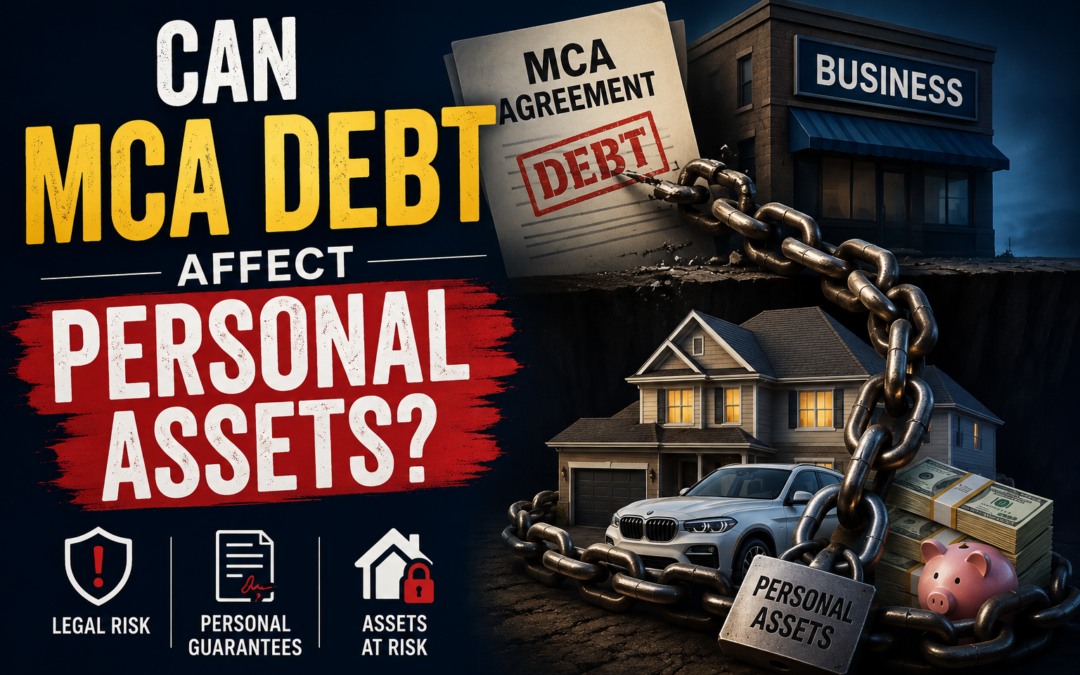
Can MCA debt affect personal assets? Many business owners ask this question after taking a merchant cash advance. The answer depends on your agreement, your business structure, and whether you signed a personal guarantee.
Understanding the risks can help you make informed decisions before financial pressure grows. In this guide, you’ll learn when personal assets may be at risk, what warning signs to watch for, and what options may help protect both your business and your finances.
Schedule Your Free Consultation
Understanding the Difference Between Business Debt and Personal Liability
Many business owners assume that business debt can never affect their personal finances. While that is often true for many business obligations, merchant cash advances (MCAs) can be different. The specific terms of your agreement play a major role in determining your level of risk.
Understanding how MCAs are structured and when personal liability may apply can help you make informed decisions before financial pressure increases.
How Merchant Cash Advances Are Structured
A merchant cash advance is not a traditional business loan. Instead, the funding company purchases a portion of your business’s future receivables at a discount. In return, your business agrees to repay a fixed amount through daily or weekly ACH withdrawals or a percentage of future sales.
Because MCAs are structured as purchases of future revenue rather than loans, the agreements often contain different terms than conventional financing. They may also include provisions that many business owners do not fully understand until repayment becomes difficult.
Why MCA Debt Is Different From Traditional Business Loans
Traditional business loans typically have fixed monthly payments, interest rates, and repayment schedules regulated by lending laws. Merchant cash advances work differently.
Instead of charging interest, MCA providers use a factor rate to determine the total repayment amount. Payments are usually collected every business day, which can create cash flow challenges if revenue slows. Some agreements also contain legal language regarding defaults, personal guarantees, or business owner responsibilities that differ from standard loan contracts.
These differences make it important to review every agreement carefully before signing and whenever financial challenges arise.
When Business Owners Become Personally Responsible
Whether your personal assets could be affected depends on the terms of your MCA agreement. Some contracts include a personal guarantee, which may allow the funding company to pursue the business owner under certain circumstances if the business cannot meet its obligations.
Other situations, such as fraud, intentional misrepresentation, or violating key terms of the agreement, may also increase personal exposure. However, not every MCA agreement creates the same level of risk, and many factors influence what rights a funding company may have.
If you’re unsure what your agreement says, having it reviewed by a professional can help you understand your options before financial pressure becomes a legal issue.
Can an MCA Company Go After Personal Assets?

One of the most common questions business owners ask is whether an MCA company can pursue their personal assets if the business falls behind on payments. The answer depends on several factors, including the terms of your agreement, whether you signed a personal guarantee, and the circumstances surrounding the default.
Not every merchant cash advance creates the same level of personal risk. However, understanding what can trigger that risk allows you to take action before the situation becomes more difficult.
The Role of Personal Guarantees
Many merchant cash advance agreements include a personal guarantee. By signing one, a business owner agrees to accept personal responsibility under specific conditions if the business cannot meet its obligations.
A personal guarantee does not automatically mean your personal assets will be seized if you miss a payment. Instead, it gives the funding company additional legal options if the agreement is breached or the debt remains unresolved. The exact language varies from one contract to another, making it important to understand what you signed.
What Happens if You Default on an MCA
Defaulting on an MCA does not always lead to immediate legal action. In many cases, the funding company first attempts to collect the outstanding balance through continued withdrawals, collection efforts, or negotiations.
If the default cannot be resolved, the company may pursue legal remedies allowed under the agreement. Depending on the contract and the facts of the case, this could include filing a lawsuit or seeking to enforce a personal guarantee. Acting early often provides more opportunities to negotiate a resolution before legal costs and financial pressure increase.
When Personal Assets May Be at Risk
Personal assets are generally at greater risk when an enforceable personal guarantee exists or when the agreement allows the funding company to pursue the business owner personally. Claims involving fraud, intentional misrepresentation, or other serious violations of the contract may also increase personal exposure.
Every situation is different. The wording of the agreement, your business structure, and the events leading to the default all play a role. If you’re struggling to keep up with MCA payments, reviewing your contracts and exploring available options early may help reduce both business and personal financial risk.
Factors That Can Increase Personal Risk
Not every business owner faces the same level of personal financial risk when dealing with MCA debt. Several factors can increase the likelihood that a funding company may pursue the business owner instead of limiting collection efforts to the business itself.
Knowing what these factors are can help you avoid costly mistakes and recognize when it’s time to seek professional guidance.
Signing a Personal Guarantee
One of the biggest factors that can increase personal risk is signing a personal guarantee. Many merchant cash advance agreements include one, often as part of the standard contract.
A personal guarantee gives the funding company the ability to pursue the business owner personally if certain conditions are met. Every agreement is different, so it’s important to understand exactly what your guarantee covers. Reviewing the contract before signing—or before financial problems develop—can help you understand your rights and responsibilities.
Fraud or Misrepresentation Claims
Some MCA agreements include provisions that allow the funding company to pursue additional legal remedies if fraud or intentional misrepresentation is alleged.
Examples may include providing false financial information, hiding business revenue, or intentionally transferring assets to avoid repayment. These situations are very different from simply struggling with cash flow. A business experiencing legitimate financial hardship is not automatically committing fraud.
If questions arise about your agreement or your obligations, addressing the issue early is often the best way to reduce legal and financial risk.
Mixing Personal and Business Finances
Keeping business and personal finances separate is an important part of protecting yourself. Using personal accounts for business transactions, paying personal expenses from business funds, or failing to maintain clear financial records can create unnecessary complications.
Although every situation is unique, separating your finances helps demonstrate that your business operates independently. Good bookkeeping, separate bank accounts, and organized financial records also make it easier to evaluate your options if MCA payments become difficult to manage.
The earlier you address financial challenges, the more opportunities you may have to protect both your business and your personal finances.
Warning Signs You Should Not Ignore
Financial problems caused by merchant cash advances rarely happen overnight. They often begin with small cash flow issues that grow into larger challenges over time. Recognizing the warning signs early can give you more options and may help reduce both business and personal financial risk.
If any of the following situations sound familiar, it may be time to review your MCA agreements and explore your available options.
Daily Payments Are Becoming Unmanageable
Daily ACH withdrawals can put significant pressure on your cash flow, especially during slower sales periods. What once seemed like a manageable payment can quickly become difficult when revenue declines or unexpected expenses arise.
If you’re delaying vendor payments, struggling to cover payroll, or constantly checking your bank balance before each withdrawal, your current payment structure may no longer be sustainable.
You’re Using New Funding to Pay Existing MCAs
Taking out one merchant cash advance to pay another is one of the clearest warning signs that debt is becoming difficult to manage. While additional funding may provide temporary relief, it often increases the total amount owed and creates even greater pressure on future cash flow.
As multiple MCA payments stack up, it becomes harder to invest in inventory, marketing, equipment, or business growth. Breaking this cycle early usually creates more financial options than waiting until the situation becomes critical.
Legal Notices or Collection Activity Has Started
Receiving collection calls, demand letters, notices from attorneys, or court documents should never be ignored. These communications may indicate that the funding company is pursuing additional collection efforts or preparing to enforce the terms of your agreement.
Responding early does not guarantee a specific outcome, but it often creates more opportunities to review your options before legal expenses and financial pressure continue to grow. Waiting until legal action is well underway can significantly reduce the number of available solutions.
Ways to Protect Your Business and Personal Finances
If MCA payments are putting pressure on your business, waiting rarely improves the situation. Taking action early can provide more opportunities to reduce financial stress, preserve cash flow, and better protect both your business and your personal finances.
The right solution depends on your agreements, your financial situation, and your long-term business goals.
Reviewing Your MCA Agreements
The first step is understanding exactly what you’ve signed. Merchant cash advance contracts often contain provisions related to repayment, defaults, personal guarantees, and legal remedies that many business owners never fully review.
A careful review of each agreement can identify important terms, clarify your obligations, and help you understand what options may be available before the situation becomes more serious.
Exploring Debt Settlement or Restructuring
If current payments are no longer sustainable, debt settlement or restructuring may be worth exploring. Depending on your circumstances, these approaches may help reduce payment pressure, improve cash flow, or resolve outstanding balances without taking on additional funding.
Every business is different, so there is no one-size-fits-all solution. Reviewing your financial situation early allows you to evaluate available options before financial challenges continue to grow.
Acting Before Legal Action Begins
Many business owners wait until they receive collection notices or court documents before asking for help. Unfortunately, waiting often limits the number of available options.
Addressing MCA debt while negotiations are still possible may improve the likelihood of reaching a workable solution. It can also help reduce legal expenses, protect business operations, and provide more flexibility than waiting until legal action is already underway.
The sooner you begin evaluating your options, the greater your opportunity to regain financial stability and focus on growing your business again.
How MCA Shield Helps Businesses Reduce Financial Risk
When MCA debt begins affecting cash flow, every decision matters. The earlier you understand your options, the more opportunities you may have to reduce financial pressure and avoid unnecessary risk. MCA Shield works with business owners to evaluate their situation, identify practical solutions, and create a path toward long-term financial stability.
Reviewing Existing MCA Contracts
Every merchant cash advance agreement is different. Our team carefully reviews your existing MCA contracts to identify important terms, repayment obligations, personal guarantees, and other provisions that may affect your available options.
By understanding the details of your agreements, we can better evaluate your current situation and help you make informed decisions about the next steps.
Developing a Customized Debt Resolution Strategy
No two businesses face the same financial challenges. That’s why MCA Shield develops a strategy tailored to your business, your cash flow, and your goals.
Depending on your circumstances, that strategy may include debt restructuring, settlement negotiations, or other solutions designed to reduce payment pressure and improve cash flow. Our objective is to help you move toward a more sustainable financial position without relying on additional merchant cash advances.
Helping Restore Financial Stability
Reducing MCA debt is only part of the solution. Long-term success comes from creating the financial flexibility needed to operate with confidence again.
As payment pressure decreases, many businesses are better positioned to strengthen cash flow, pay employees and vendors on time, rebuild working capital, and focus on future growth. Throughout the process, MCA Shield works alongside you to help restore financial stability and put your business in a stronger position for the future.
Frequently Asked Questions About MCA Debt and Personal Assets
Below are answers to some of the most common questions business owners ask about MCA debt and personal assets.
Can an MCA Company Take My House?
It depends on your specific circumstances. An MCA company cannot automatically take your home simply because your business falls behind on payments. However, if you signed an enforceable personal guarantee or a court enters a judgment that allows collection against personal assets, your personal finances could become part of the legal process. Because every agreement is different, reviewing your contract is the best way to understand your potential risk.
Does an LLC Protect My Personal Assets From MCA Debt?
An LLC often provides a layer of protection by separating business liabilities from personal assets. However, that protection is not absolute. If you signed a personal guarantee or certain legal claims apply, your personal liability may increase despite operating as an LLC. The protections available depend on your business structure, your agreements, and the facts of your situation.
What Is a Personal Guarantee?
A personal guarantee is a contractual promise that a business owner will accept personal responsibility if specific obligations under the agreement are not met. Many merchant cash advance agreements include personal guarantees, although the terms vary from one contract to another. Understanding whether you signed one is an important step in evaluating your financial risk.
Can MCA Payments Be Reduced?
In some situations, yes. Depending on your financial circumstances and the terms of your agreements, options such as debt restructuring or settlement negotiations may help reduce payment pressure or resolve outstanding balances. The earlier you explore your options, the more flexibility you may have.
Should I Wait Until I’m Sued Before Getting Help?
No. Waiting until legal action begins often limits your available options. Seeking help as soon as MCA payments become difficult may create more opportunities to negotiate a solution, reduce financial stress, and protect both your business and your personal finances before the situation becomes more complicated.
Protect Your Business Before Financial Pressure Reaches Your Personal Finances
MCA debt does not have to determine the future of your business. If daily payments are creating cash flow problems or you’re concerned about how your agreements could affect your personal finances, now is the time to take action.
Understanding your options early can help you reduce financial pressure, protect your business, and move forward with greater confidence.
Why Acting Early Creates More Financial Options
The sooner you address MCA debt, the more flexibility you typically have. Early action may create opportunities to negotiate with funding companies, explore debt settlement or restructuring, and reduce payment pressure before financial challenges continue to grow.
Waiting until payments are missed or legal action begins can limit your available options and increase both financial and emotional stress. Taking action early puts you in a stronger position to protect your business and your personal finances.
Schedule a Free Consultation With MCA Shield
If you’re worried that MCA debt could affect your personal assets, you don’t have to face the situation alone. MCA Shield works with business owners every day to review MCA agreements, evaluate available options, and develop customized debt resolution strategies.
Schedule a free, no-obligation consultation with MCA Shield today. Together, we’ll review your situation, answer your questions, and help you find a path toward improved cash flow, reduced financial pressure, and greater peace of mind.