
ClickCease

Merchant cash advances can provide quick access to funding, but they also come with risks that every business owner should understand before signing an agreement. Merchant cash advances can provide quick access to funding, but they also come with risks that every business owner should understand before signing an agreement. Merchant cash advance risk factors can affect your cash flow, limit financial flexibility, and create serious financial challenges when they aren’t fully understood.

Knowing how to recognize these warning signs allows you to make informed financial decisions and protect your business from unnecessary debt. In this guide, we’ll explain the most common merchant cash advance risk factors, how they can affect your business, and the practical steps you can take to reduce financial risk and regain control of your cash flow.

Get an Instant Payment Reduction Quote

What Are MCA Risk Factors?

Understanding merchant cash advance risk factors is essential before accepting this type of financing. While a merchant cash advance (MCA) can provide quick access to working capital, it also introduces financial obligations that may affect your business if they are not carefully evaluated. Every business has unique financial circumstances, and recognizing potential risks early can help you make more informed decisions and avoid unnecessary financial pressure.

Understanding Merchant Cash Advance Risk

A merchant cash advance is not a traditional business loan. Instead, a financing company purchases a portion of your future receivables and collects repayment through daily or weekly withdrawals from your business bank account. Because payments occur frequently, your available cash flow can change quickly if sales decline or unexpected expenses arise.

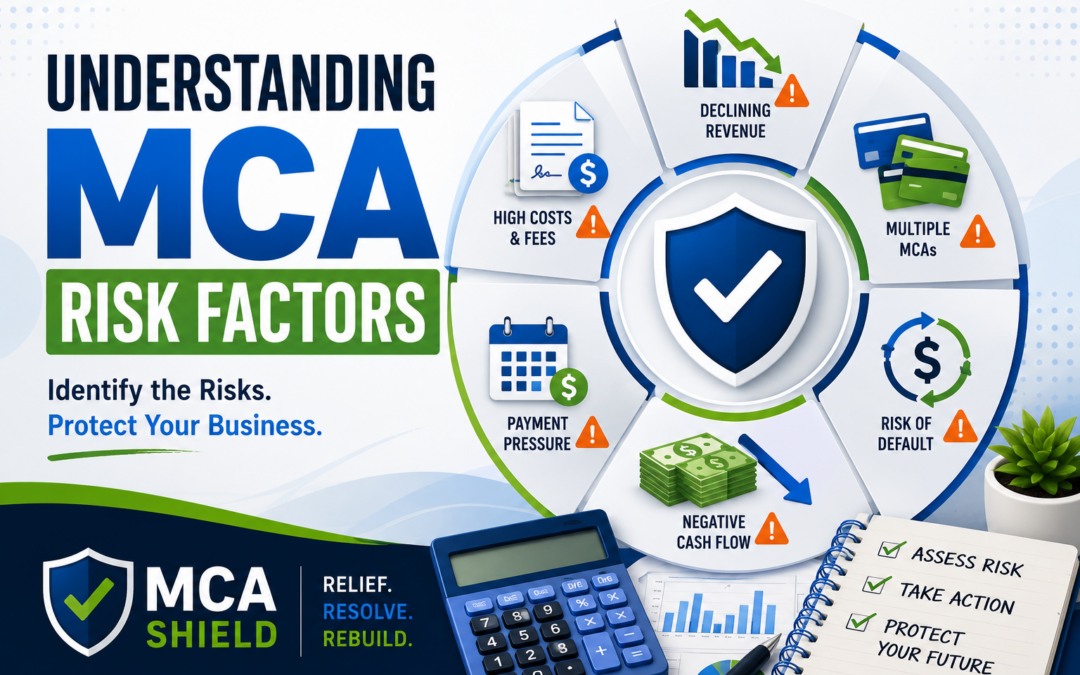
Several merchant cash advance risk factors can increase the likelihood of financial challenges, including:

  • Declining business revenue
  • Multiple merchant cash advances (MCA stacking)
  • High repayment obligations
  • Negative cash flow
  • Seasonal fluctuations in sales
  • Unexpected business expenses

Individually, these factors may be manageable. When several occur simultaneously, however, they can place significant strain on your business’s finances.

Why Risk Factors Matter Before Accepting an MCA

Understanding merchant cash advance risk factors before signing an agreement helps you evaluate whether an MCA is the right financing solution for your business. Many business owners focus on receiving funds quickly without fully considering how daily or weekly repayments may affect future operations.

Evaluating these risks in advance can help you:

  • Protect your business cash flow
  • Avoid taking on more debt than your business can support
  • Reduce the likelihood of payment difficulties
  • Identify warning signs before financial problems become more serious
  • Make informed financing decisions that support long-term stability

Taking the time to understand these risks before accepting a merchant cash advance can help position your business for healthier financial growth. If your business already has one or more MCAs, recognizing these risk factors early may also create more opportunities to explore merchant cash advance debt relief, restructuring, or settlement before financial pressure becomes more difficult to manage.

The Most Common MCA Risk Factors

Not every business that accepts a merchant cash advance experiences financial difficulty. However, certain merchant cash advance risk factors can significantly increase the likelihood of cash flow problems and repayment challenges. Understanding these common risks allows business owners to identify potential issues early and take steps to protect their financial stability.

Below are three of the most common merchant cash advance risk factors that affect businesses across many industries.

Declining Business Revenue

A declining revenue stream is one of the biggest risk factors associated with a merchant cash advance. Because most MCAs are repaid through daily or weekly withdrawals, lower sales can quickly make those payments more difficult to manage.

Revenue may decline for many reasons, including:

  • Seasonal fluctuations
  • Economic uncertainty
  • Loss of major customers
  • Supply chain disruptions
  • Changing market conditions

When revenue decreases while repayment obligations remain the same, businesses often have less cash available for payroll, inventory, rent, marketing, and other essential operating expenses. Over time, this financial pressure can affect both short-term operations and long-term growth.

Multiple Merchant Cash Advances

Taking out multiple merchant cash advances, often called MCA stacking, can dramatically increase financial risk. Many businesses obtain a second or third advance to cover existing repayment obligations or address ongoing cash flow shortages. Although this may provide temporary relief, it often creates a cycle of increasing debt.

With multiple MCAs, businesses may face:

  • Several daily or weekly withdrawals
  • Higher overall repayment obligations
  • Reduced operating cash
  • Greater financial complexity
  • An increased likelihood of default

As repayment obligations grow, it becomes more difficult to maintain healthy cash flow. Instead of supporting business growth, stacked merchant cash advances can limit financial flexibility and reduce the resources available for everyday operations.

Daily or Weekly Payment Pressure

Unlike traditional business loans with monthly payments, merchant cash advances typically require daily or weekly repayments. While smaller, more frequent payments may appear manageable at first, they can steadily reduce the cash available to operate your business.

Frequent withdrawals can make it more challenging to:

  • Cover payroll on time
  • Purchase inventory
  • Pay vendors and suppliers
  • Manage unexpected expenses
  • Maintain a healthy cash reserve

When combined with declining revenue or multiple merchant cash advances, daily or weekly payment obligations can create significant financial strain. Recognizing this pressure early gives business owners more time to explore solutions, improve cash flow, and reduce the risk of long-term financial challenges.

Infographic showing the three biggest merchant cash advance risk factors: declining revenue, stacked merchant cash advances, and daily repayment withdrawals with MCA Shield branding

Financial Warning Signs That Increase MCA Risk

Infographic highlighting financial warning signs that increase merchant cash advance risk, including negative cash flow, missed payments, and the debt cycle of using new MCAs to repay existing advances.

Recognizing financial warning signs early can help prevent a manageable situation from becoming a serious financial challenge. Many businesses experience temporary cash flow fluctuations, but when these issues become consistent, they may indicate that your current merchant cash advance repayment obligations are no longer sustainable. Understanding these warning signs allows you to take action before your financial options become more limited.

Negative Cash Flow

Negative cash flow occurs when your business expenses consistently exceed your incoming revenue. Even profitable businesses can experience cash flow shortages if daily or weekly MCA payments consume a significant portion of incoming revenue.

Common signs of negative cash flow include:

  • Business bank balances continue to decline
  • Difficulty covering routine operating expenses
  • Delayed purchases of inventory or supplies
  • Reduced emergency cash reserves
  • Reliance on short-term financing to stay current

When negative cash flow continues over time, it becomes increasingly difficult to invest in growth, respond to unexpected expenses, or maintain financial stability.

Missed Vendor or Payroll Payments

Another important merchant cash advance risk factor is falling behind on payments to vendors, suppliers, or employees. These missed payments often indicate that cash flow is under significant pressure.

Warning signs include:

  • Paying vendors later than agreed
  • Struggling to meet payroll deadlines
  • Delaying rent or utility payments
  • Extending payment terms with suppliers
  • Receiving collection notices from creditors

Missing these essential payments can affect supplier relationships, employee morale, and your business’s overall financial health. Addressing the underlying cash flow problem early can help prevent additional financial complications.

Using New MCAs to Pay Existing MCAs

Perhaps the strongest warning sign is taking out a new merchant cash advance to repay an existing one. While this may temporarily relieve immediate financial pressure, it often increases your overall repayment obligations and places additional strain on future cash flow.

This cycle can lead to:

  • Higher daily or weekly withdrawals
  • Multiple overlapping repayment schedules
  • Less cash available for business operations
  • Growing financial pressure
  • Fewer debt resolution options over time

If your business relies on new funding to keep up

How MCA Risk Factors Affect Your Business

Every business responds differently to financial challenges, but merchant cash advance risk factors often produce similar outcomes. As repayment obligations increase and cash flow becomes tighter, it becomes more difficult to operate efficiently, invest in growth, and maintain long-term financial stability. Understanding these potential effects can help you recognize when it’s time to explore solutions before financial challenges become more difficult to resolve.

Reduced Cash Flow

One of the most immediate effects of merchant cash advance risk factors is reduced cash flow. Daily or weekly repayments reduce the money available to cover normal operating expenses, especially during slower sales periods.

Reduced cash flow can make it more difficult to:

  • Pay employees and vendors on time
  • Purchase inventory or equipment
  • Cover rent, utilities, and other overhead expenses
  • Respond to unexpected business costs
  • Maintain a healthy financial reserve

When cash flow remains under pressure for an extended period, even routine business operations can become increasingly difficult to manage.

Limited Growth Opportunities

Healthy businesses rely on available cash to invest in future growth. When a significant portion of revenue is committed to MCA repayments, there may be fewer resources available to expand the business.

Limited cash flow can delay opportunities such as:

  • Hiring additional employees
  • Purchasing new equipment
  • Expanding products or services
  • Opening new locations
  • Increasing marketing and advertising efforts

Instead of investing in long-term success, many business owners must prioritize meeting daily repayment obligations. This shift can slow business growth and make it more difficult to remain competitive.

Greater Risk of Default

As financial pressure increases, so does the risk of default. Businesses experiencing declining revenue, multiple merchant cash advances, or ongoing cash flow shortages may eventually struggle to meet their repayment obligations.

A default can lead to additional challenges, including:

  • Collection efforts from MCA providers
  • Additional fees and penalties
  • Legal action, depending on the terms of the agreement
  • Further strain on business finances
  • Reduced flexibility when seeking financial solutions

Recognizing these warning signs early provides an opportunity to explore merchant cash advance debt relief, restructuring, or settlement before the situation becomes more serious. Taking action sooner often creates more options for restoring cash flow and helping your business regain financial stability.

Practical Steps to Reduce MCA Risk

Infographic illustrating three steps to reduce merchant cash advance risk: review cash flow, avoid merchant cash advance stacking, and explore debt relief with MCA Shield.

Understanding merchant cash advance risk factors is only the first step. Taking proactive measures can help protect your business from unnecessary financial pressure and improve your ability to manage repayment obligations. Whether you’re considering a new merchant cash advance or already have one in place, these practical steps can help reduce risk and strengthen your financial position.

Review Your Cash Flow Carefully

Before accepting a merchant cash advance, take a close look at your business cash flow. Understanding how much money enters and leaves your business each month will help you determine whether your business can comfortably manage daily or weekly repayments.

As you review your cash flow, consider:

  • Average monthly revenue
  • Regular operating expenses
  • Seasonal changes in income
  • Existing debt obligations
  • Available cash reserves

A clear understanding of your finances can help you make informed borrowing decisions and reduce the likelihood of future cash flow challenges.

Avoid Stacking Merchant Cash Advances

Taking out another merchant cash advance to cover an existing one can significantly increase financial risk. While additional funding may provide temporary relief, it often results in higher repayment obligations, reduced cash flow, and greater financial pressure.

Before accepting another MCA, ask yourself:

  • Can my business realistically manage another repayment obligation?
  • Will this improve my long-term financial position or only provide short-term relief?
  • Are there alternative solutions available?

Avoiding merchant cash advance stacking can help preserve cash flow and prevent debt from becoming increasingly difficult to manage.

Explore Debt Relief Before Problems Escalate

If your business is struggling to keep up with MCA payments, don’t wait until the situation becomes overwhelming. Exploring merchant cash advance debt relief early may provide more options for improving your financial outlook.

Seeking professional guidance before financial challenges worsen may help you:

  • Reduce repayment pressure
  • Improve business cash flow
  • Evaluate restructuring or settlement options
  • Develop a customized financial strategy
  • Restore long-term financial stability

Taking action early often creates more opportunities to resolve MCA debt while protecting the future of your business. The sooner you address potential problems, the more flexibility you may have to choose a solution that supports your long-term goals.

How MCA Shield Helps Businesses Reduce MCA Risk

Reducing merchant cash advance risk starts with understanding your business’s financial situation and identifying the best path forward. Every business faces unique challenges, which is why a one-size-fits-all approach rarely produces lasting results. At MCA Shield, we work closely with business owners to evaluate their existing obligations, explain available debt relief options, and develop practical strategies to support long-term financial stability. Our goal is to help businesses reduce financial pressure, improve cash flow, and regain control of their future.

Reviewing Existing Merchant Cash Advance Agreements

Every merchant cash advance agreement contains terms that can affect your available debt relief options. Our team carefully reviews your existing agreements to gain a complete understanding of your repayment obligations and overall financial position.

During this review, we evaluate important details such as:

  • Outstanding balances
  • Repayment schedules
  • Multiple merchant cash advances
  • Contract terms that may affect negotiations
  • Potential opportunities for debt resolution

A thorough review provides the foundation for developing a strategy that aligns with your business’s financial goals.

Developing a Customized Debt Relief Strategy

No two businesses have the same financial circumstances. After reviewing your merchant cash advance agreements, we develop a customized debt relief strategy designed to address your specific challenges and objectives.

Depending on your situation, your strategy may include:

Our focus is on identifying practical solutions that reduce financial pressure while supporting the continued operation and growth of your business.

Helping Businesses Regain Financial Stability

Resolving merchant cash advance debt is about more than reducing payments. It’s about helping your business restore financial control and build a stronger foundation for the future.

By addressing merchant cash advance risk factors early, businesses are often better positioned to:

  • Improve cash flow
  • Reduce financial stress
  • Strengthen day-to-day operations
  • Focus on business growth
  • Move forward with greater financial confidence

At MCA Shield, we’re committed to helping business owners navigate complex merchant cash advance challenges with experienced guidance and personalized solutions. If your business is experiencing financial pressure from one or more MCAs, our team can help you evaluate your options and develop a strategy designed to restore long-term financial stability.

Frequently Asked Questions About MCA Risk Factors

Understanding merchant cash advance risk factors can help you make better financial decisions and recognize when it’s time to seek assistance. Below are answers to some of the questions business owners ask most often.


❓ What Is the Biggest Risk of a Merchant Cash Advance?

The biggest risk is cash flow pressure. Because most merchant cash advances require daily or weekly repayments, your business has less available cash to cover payroll, inventory, rent, and other operating expenses. If revenue declines, those frequent payments can become increasingly difficult to manage.


❓ Can Having Multiple MCAs Hurt My Business?

Yes. Taking on multiple merchant cash advances—often called MCA stacking—can significantly increase your financial risk. Multiple repayment obligations reduce available cash flow, increase overall debt, and may make it harder to meet your day-to-day business expenses. Businesses with stacked MCAs often have fewer financial options if cash flow continues to decline.


❓ How Do I Know if My Business Is at Risk?

Your business may be experiencing increased merchant cash advance risk if you notice any of these warning signs:

Cash flow continues to decline

Daily or weekly payments are difficult to manage

Vendor or payroll payments are delayed

You’re considering another MCA to cover existing debt

You’re relying on short-term financing to stay current

Recognizing these signs early can help you explore solutions before financial challenges become more difficult to resolve.


❓ Can MCA Risk Be Reduced?

Absolutely. While every business faces unique circumstances, there are several ways to reduce risk:

  • Review your cash flow regularly
  • Avoid stacking multiple merchant cash advances
  • Understand every repayment obligation before signing an agreement
  • Seek professional guidance if financial pressure begins to increase
  • Explore restructuring or debt relief options early

Taking proactive steps often creates more opportunities to improve your financial position.


❓ When Should I Seek Professional Help?

You should consider speaking with an MCA professional as soon as repayment obligations begin affecting your business operations. Waiting until payments are missed or cash flow becomes severely restricted can limit your available options.

Seeking guidance early may help you:

Reduce financial pressure

Improve business cash flow

Evaluate settlement or restructuring options

Develop a customized debt relief strategy

Restore long-term financial stability

The earlier you address merchant cash advance risk factors, the more flexibility you may have to protect your business and move toward a stronger financial future.

Protect Your Business Before MCA Risk Becomes a Crisis

Split-screen infographic comparing the benefits of acting early versus waiting too long to address merchant cash advance risk, featuring improved cash flow, growing debt, financial stress, and MCA Shield branding.

Ignoring merchant cash advance risk factors rarely makes them disappear. In many cases, financial pressure builds gradually until daily repayments begin affecting payroll, vendor relationships, inventory purchases, and overall business operations. Taking action at the first signs of trouble gives you more control over the outcome and increases the likelihood of finding a solution that supports your long-term success.

Why Acting Early Creates More Resolution Options

The sooner you address merchant cash advance challenges, the more flexibility you typically have to improve your financial situation. Waiting until cash flow problems become severe or payments are missed can reduce your available options and increase financial stress.

Acting early may help you:

  • Improve business cash flow
  • Reduce repayment pressure
  • Avoid additional merchant cash advances
  • Explore restructuring or settlement opportunities
  • Protect your business’s long-term financial health

Even if your business is currently meeting its payment obligations, reviewing your financial position now can help identify potential risks before they become larger problems. Early action often leads to better outcomes and provides greater confidence as you plan for the future.

Schedule a Free Consultation With MCA Shield

If your business is experiencing financial pressure from one or more merchant cash advances, MCA Shield is here to help. Our experienced team works with business owners to evaluate their existing agreements, explain available debt relief options, and develop personalized strategies which support long-term financial stability.

During your free consultation, we’ll help you:

  • Review your current merchant cash advance agreements
  • Identify financial risks affecting your business
  • Discuss settlement and restructuring options
  • Develop a customized plan to improve cash flow
  • Answer your questions with straightforward, experienced guidance

You don’t have to navigate merchant cash advance challenges alone. Schedule your free consultation with MCA Shield today and take the first step toward reducing financial pressure, restoring cash flow, and protecting your business’s future.

Get an Instant Payment Reduction Quote