ClickCease

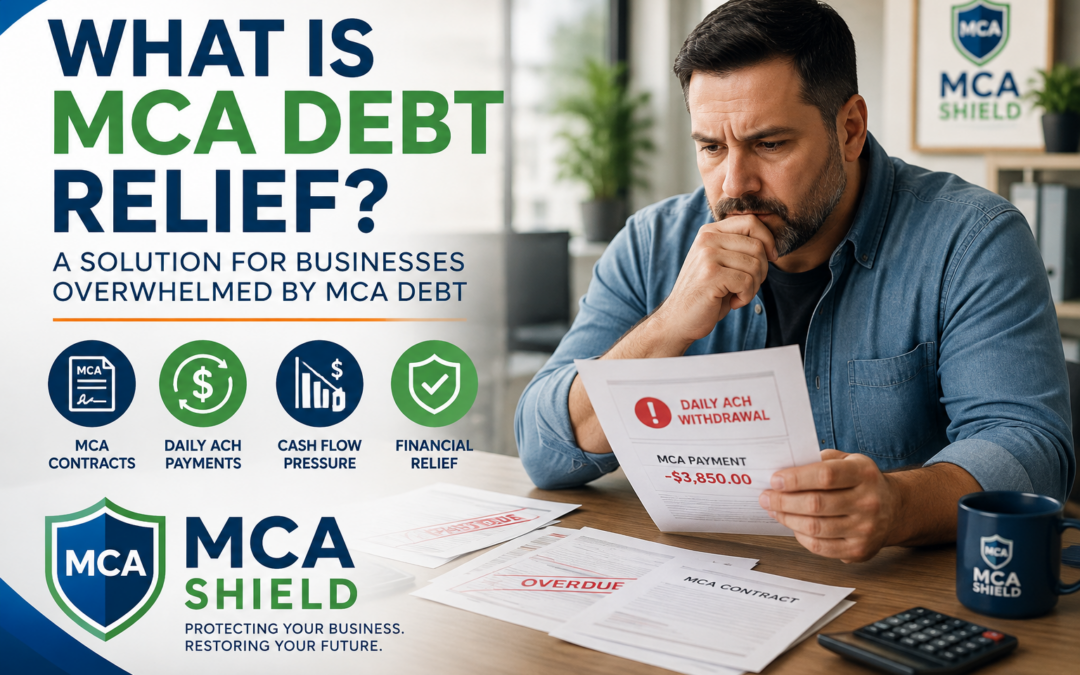
Running a business is challenging enough without the added pressure of overwhelming funding payments. If daily ACH withdrawals are straining your cash flow, MCA debt relief may provide a path toward greater financial stability and more manageable operations.

Understanding how MCA debt relief works is the first step toward making informed financial decisions. In this guide, you’ll learn what MCA debt relief is, how it can help businesses facing Merchant Cash Advance obligations, the options that may be available, and how acting early can create more opportunities to regain control of your business finances.

Get an Instant Payment Reduction Quote

What Is MCA Debt Relief?

Understanding Merchant Cash Advance Debt Relief

MCA debt relief refers to strategies that help businesses address the financial burden created by one or more Merchant Cash Advances (MCAs). While every situation is unique, the goal is to improve cash flow, reduce financial pressure, and create a realistic path toward long-term stability.

Unlike a traditional business loan, a Merchant Cash Advance is typically repaid through daily or weekly ACH withdrawals based on future business revenue. Although this funding can provide quick access to capital, the repayment structure can become difficult to manage when sales decline, expenses increase, or multiple MCAs are active at the same time.

Depending on a business’s financial circumstances, MCA debt relief may involve reviewing existing agreements, negotiating with MCA providers, restructuring repayment terms, or developing a customized resolution strategy. Every business has different financial goals, which is why a personalized approach is often the most effective.

Why Businesses Seek MCA Debt Relief

Many business owners begin exploring MCA debt relief after noticing that daily payments are consuming too much of their available cash. As a result, it may become more difficult to cover payroll, purchase inventory, pay vendors on time, or invest in future growth.

Businesses often seek MCA debt relief when they experience:

  • Daily ACH withdrawals that significantly reduce operating cash
  • Multiple Merchant Cash Advances with overlapping payment schedules
  • Difficulty paying vendors, rent, or employee wages
  • Declining profit margins despite steady sales
  • Ongoing cash flow shortages that make financial planning difficult

Seeking help early often provides more financial options than waiting until the situation becomes severe. By understanding your current obligations and exploring available solutions, you can make informed decisions that support both your business’s immediate needs and its long-term financial health.

Infographic explaining how MCA debt relief helps businesses improve cash flow, review merchant cash advance obligations, and achieve long-term financial stability.

How Merchant Cash Advances Create Financial Pressure

how-mca-debt-creates-financial-pressure-infographic.

Daily ACH Payments and Cash Flow Challenges

One of the biggest reasons businesses begin searching for MCA debt relief is the impact of daily ACH payments. Unlike traditional loans with monthly payments, Merchant Cash Advances often require automatic withdrawals every business day. While those payments may seem manageable at first, they can quickly reduce the cash available for normal operations.

As revenue fluctuates, daily withdrawals remain a constant demand on your bank account. Consequently, many business owners find themselves making difficult financial decisions, such as delaying vendor payments, postponing equipment repairs, reducing inventory purchases, or limiting marketing efforts. Over time, these challenges can make it harder to grow the business and maintain healthy cash flow.

The Risks of Multiple MCA Obligations

Some businesses respond to cash flow shortages by taking another Merchant Cash Advance to cover existing obligations. Although this may provide temporary financial relief, it can also create a cycle of increasing debt and larger daily payment obligations.

With multiple MCAs, businesses may face:

  • Several daily ACH withdrawals from different funding providers
  • Reduced working capital for payroll and operating expenses
  • Greater difficulty paying vendors and suppliers on time
  • Higher financial stress during slower sales periods
  • Less flexibility to invest in business growth

As repayment obligations continue to grow, the business may spend more time reacting to financial pressure than planning for future success. This is often the point when many owners begin exploring MCA debt relief options.

Warning Signs Your Business May Need Relief

Financial challenges rarely appear overnight. Instead, they usually develop gradually before becoming more serious. Recognizing the warning signs early can create more opportunities to improve your financial situation before additional problems arise.

You may benefit from MCA debt relief if you notice:

  • Cash flow continues to decline despite steady sales.
  • Daily ACH withdrawals leave little money for operating expenses.
  • You regularly struggle to make payroll or pay vendors.
  • Creditors or MCA providers are contacting you about missed payments.
  • You are considering another MCA simply to cover existing obligations.
  • Financial stress is preventing you from focusing on growing your business.

The earlier you recognize these warning signs, the more potential solutions may be available. Taking action before financial pressure escalates can help protect your business, improve cash flow, and support long-term financial stability.

Common MCA Debt Relief Options

Roadmap infographic illustrating three paths to MCA debt relief through agreement review, negotiated resolutions, and long-term recovery strategies leading to healthy business cash flow.

Every business faces different financial challenges, which means there is no one-size-fits-all solution for MCA debt relief. The best approach depends on factors such as your cash flow, the number of Merchant Cash Advances you have, your repayment obligations, and your overall financial goals. Understanding the available options can help you make informed decisions before financial pressure continues to grow.

Negotiating With MCA Providers

In some situations, businesses may be able to negotiate directly with their MCA providers. Depending on the circumstances, negotiations may focus on creating an arrangement that is more manageable while helping the business remain operational.

Successful negotiations often begin with a thorough review of each Merchant Cash Advance agreement. By understanding the repayment terms, outstanding balances, and current cash flow, business owners can better evaluate their options and determine whether adjustments may be possible.

Because every agreement is different, professional guidance can help identify opportunities that may not be immediately obvious.

Debt Restructuring and Settlement Strategies

For businesses facing significant financial pressure, debt restructuring or settlement strategies may offer another path toward MCA debt relief.

Debt restructuring generally focuses on creating a more sustainable repayment plan by evaluating existing obligations and developing a strategy that better aligns with the business’s current financial position. Settlement strategies, when appropriate, may involve negotiating an agreement that resolves outstanding obligations under mutually acceptable terms.

The right solution depends on each business’s financial circumstances. Rather than relying on temporary fixes or additional funding, many businesses benefit from a comprehensive strategy designed to improve both immediate cash flow and long-term financial stability.

Creating a Long-Term Financial Recovery Plan

Effective MCA debt relief is about more than resolving today’s financial challenges. It should also help position your business for future success.

A long-term recovery plan may include:

  • Reviewing every Merchant Cash Advance agreement
  • Improving cash flow management
  • Prioritizing essential operating expenses
  • Reducing unnecessary financial risk
  • Developing a sustainable financial strategy for future growth

By addressing both current obligations and long-term financial planning, businesses can build a stronger foundation for continued success. Taking action early often creates more resolution options, allowing business owners to regain confidence, restore financial stability, and focus on growing their business instead of managing constant financial pressure.

How MCA Shield Helps Businesses Find Debt Relief

Before-and-after infographic showing how MCA debt relief can transform a business from daily ACH withdrawals and cash flow struggles to financial stability, healthy cash flow, and business growth.

Frequently Asked Questions About MCA Debt Relief

Take the First Step Toward MCA Debt Relief

Business owner standing confidently outside a thriving business with a financial recovery plan, symbolizing MCA debt relief, improved cash flow, and long-term financial stability.