
Schedule Your Free Consultation
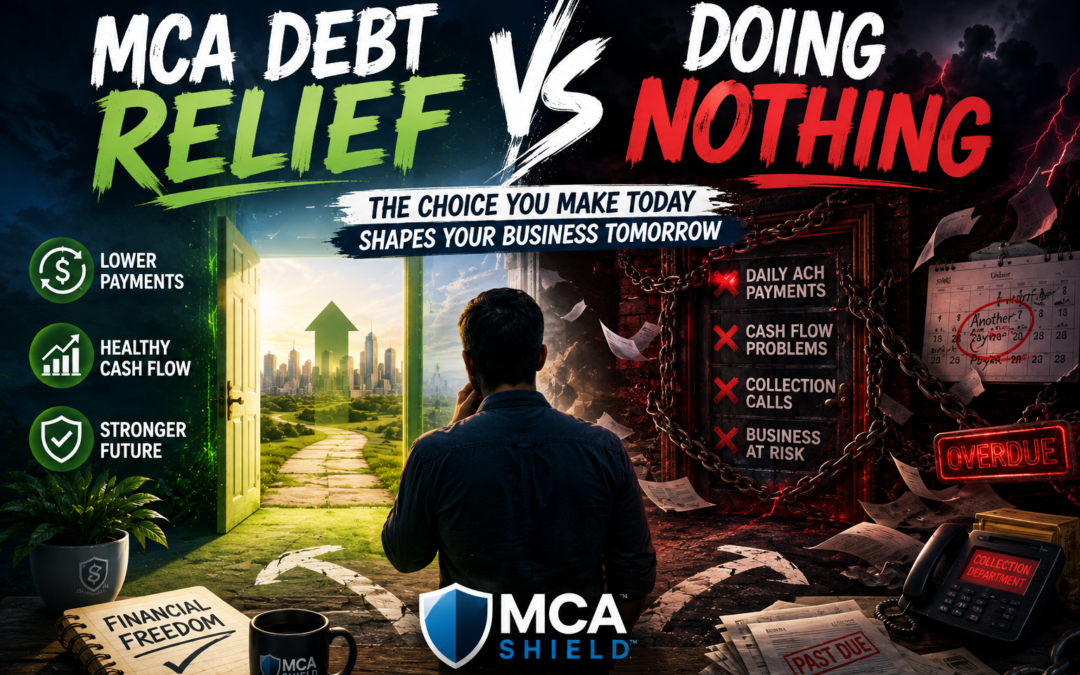
Merchant Cash Advance debt can place tremendous pressure on a business, especially when daily ACH payments continue to reduce cash flow. When financial challenges begin to build, many business owners face an important decision: pursue MCA debt relief or hope the situation improves on its own. Understanding the difference between MCA debt relief vs doing nothing can help you make a more informed decision before your options become more limited.
Choosing MCA debt relief does not automatically mean your business is failing. In many cases, taking action early may create more financial options, improve cash flow, and provide a clearer path toward long-term stability. By contrast, doing nothing can allow financial pressure to continue growing, making it more difficult to manage daily operations and plan for the future.
In this guide, you’ll learn the key differences between MCA debt relief vs doing nothing, what each path may mean for your business, and how MCA Shield helps businesses evaluate their options and work toward restoring financial stability.
What Does "MCA Debt Relief vs Doing Nothing" Really Mean?
What Happens When You Do Nothing About MCA Debt?

Choosing to do nothing about Merchant Cash Advance (MCA) debt may feel like the easiest option, especially when you’re focused on keeping your business running. However, MCA debt relief vs doing nothing is not simply a matter of waiting. In many cases, delaying action allows financial challenges to continue building over time. As cash flow becomes tighter, it may become increasingly difficult to meet everyday operating expenses and plan for future growth.
Daily ACH Payments Continue
One of the biggest challenges with MCA debt is that daily ACH payments typically continue according to the terms of the agreement. Whether your business has a profitable day or a slow one, these withdrawals may still be taken from your bank account.
As a result, there may be less cash available for payroll, inventory, utilities, rent, and other essential business expenses. Over time, these ongoing withdrawals can make it more difficult to maintain healthy working capital and respond to unexpected financial needs.
Cash Flow Becomes More Difficult to Manage
When daily ACH payments reduce available funds each business day, managing cash flow often becomes more challenging. Even businesses with steady revenue can experience financial strain when a significant portion of incoming funds is committed to MCA repayments.
Limited cash flow may force business owners to delay purchases, postpone growth initiatives, or rely on additional financing to cover operating costs. Instead of strengthening the business, these decisions can make long-term financial planning more difficult.
Financial Pressure Can Continue to Grow
Doing nothing does not usually reduce the impact of MCA debt. Instead, financial pressure may continue to increase as cash flow remains constrained and business obligations continue to accumulate. Without a proactive plan, owners may find themselves spending more time responding to financial challenges than focusing on growing their business.
Comparing MCA debt relief vs doing nothing makes one thing clear: early action often creates more financial options. Addressing concerns before they become more severe may provide greater flexibility, improve financial visibility, and help position your business for long-term financial stability.
Comparing MCA Debt Relief vs Doing Nothing
When evaluating MCA debt relief vs doing nothing, the difference often comes down to whether you take control of your financial situation or allow it to continue without a plan. While every business is unique, comparing these two paths can help you better understand how today’s decisions may influence tomorrow’s opportunities. Taking action early often provides greater financial flexibility, while delaying action may allow financial challenges to become more difficult to manage.
Cash Flow
Healthy cash flow is essential for every business. Choosing MCA debt relief may provide an opportunity to evaluate your current obligations and develop a strategy that better supports your financial goals. Improving cash flow can make it easier to manage payroll, purchase inventory, invest in marketing, and cover other day-to-day operating expenses.
By comparison, doing nothing typically means daily ACH payments continue according to the existing agreement. As these withdrawals persist, available working capital may continue to shrink, making it more difficult to maintain normal business operations and respond to unexpected expenses.
Business Stability
Businesses that take proactive steps often have more opportunities to improve financial stability. Exploring MCA debt relief allows owners to better understand their options and create a plan designed to support long-term success rather than simply reacting to ongoing financial pressure.
Doing nothing may increase uncertainty. As cash flow remains constrained, business owners may postpone important decisions, delay investments, or struggle to keep pace with operating expenses. Over time, this uncertainty can make it more difficult to focus on serving customers and growing the business.
Long-Term Financial Outlook
The long-term difference between MCA debt relief vs doing nothing often becomes more noticeable over time. Businesses that address financial concerns early may have more flexibility, improved financial visibility, and additional opportunities to strengthen their operations.
Waiting for the situation to improve without a strategy can limit future options. Instead of allowing financial pressure to continue building, taking action early may help your business restore financial stability, regain confidence, and focus on sustainable growth. When comparing MCA debt relief vs doing nothing, choosing a proactive path often creates the strongest foundation for the future.
Benefits of Choosing MCA Debt Relief Early
How MCA Shield Helps Businesses Compare Their Options
How MCA Shield Helps Businesses Create an Exit Strategy
Every business’s financial situation is different, which means there is no universal solution for getting out of MCA loans. That’s why MCA Shield focuses on understanding your business first. By reviewing your existing obligations, evaluating your financial position, and developing a strategy tailored to your goals, MCA Shield helps businesses move toward greater financial clarity and long-term stability.
Reviewing Existing MCA Agreements
An effective exit strategy begins with understanding exactly what your business owes. MCA Shield carefully reviews each merchant cash advance agreement to identify important details that may influence your available options.
This review typically includes:
- Outstanding balances
- Daily or weekly ACH withdrawal amounts
- Repayment schedules
- The number of active MCA agreements
- Contract terms that may affect your strategy
A thorough review provides a clear picture of your current obligations and establishes the foundation for creating a practical plan to get out of MCA loans.
Building a Customized Resolution Plan
No two businesses experience financial challenges in exactly the same way. For that reason, MCA Shield develops a customized resolution plan based on your company’s financial condition, cash flow, and long-term objectives.
Rather than relying on a one-size-fits-all approach, the goal is to identify strategies that help reduce financial pressure, improve cash flow, and support healthier day-to-day business operations. Every recommendation is designed to reflect your unique circumstances and move your business toward a stronger financial future.
Supporting Long-Term Business Stability
Successfully getting out of MCA loans is only one part of the journey. Long-term success is built on a stronger financial foundation that empowers your business to operate with confidence, adapt to challenges, and pursue sustainable growth.
MCA Shield works with businesses to support lasting financial stability by encouraging proactive planning, stronger cash flow management, and informed financial decisions. With a clear strategy in place, many business owners are better positioned to focus on serving customers, growing their business, and pursuing future opportunities rather than constantly reacting to financial pressure.
The ultimate goal is simple: help businesses regain control of their finances, protect what they have built, and move forward with greater confidence.
Frequently Asked Questions About MCA Debt Relief vs Doing Nothing
Choose Action Before Financial Pressure Increases