

Falling behind on Merchant Cash Advance payments can be stressful, especially when you start worrying about legal action. The reality is that MCA companies may have the ability to sue a business under certain circumstances. However, a lawsuit is often not the first step. Many funders pursue collection efforts, payment negotiations, or other remedies before taking legal action.
The most important thing is not to ignore the problem. Business owners often have more options than they realize, especially when they act early. Understanding your rights, your MCA agreement, and the solutions available can help you reduce risk, protect your business, and make informed decisions before the situation becomes more serious.

Schedule Your Free Consultation
When Can an MCA Company Sue Your Business?
An MCA company may consider legal action when a business defaults under the terms of the agreement. Missed payments, failed ACH withdrawals, or other contract violations can increase the risk of a lawsuit. However, legal action does not always happen immediately. Many funders attempt collection efforts or seek other remedies before filing a case.
The sooner you address the problem, the more options you typically have. Ignoring missed payments can make the situation worse and reduce your flexibility. Business owners who act early often have opportunities to negotiate, restructure debt, or explore other relief solutions before legal action becomes a serious concern.
What Happens Before an MCA Lawsuit Is Filed?
Before an MCA company files a lawsuit, there is often a period of escalating pressure. Many funders begin with collection calls, emails, demand letters, and repeated attempts to collect payments. If ACH withdrawals fail or payments stop, those efforts may become more aggressive over time.
As the situation progresses, some funders may issue formal notices of default or demand immediate repayment of the remaining balance. These warning signs should not be ignored. They often indicate that the funder is preparing to pursue stronger collection measures if the issue remains unresolved.
This is often the best time to take action. Waiting and hoping the problem will go away rarely improves the situation. Business owners who respond early may have opportunities to negotiate, restructure their obligations, or explore mca debt relief solutions before legal action becomes a real possibility.
Common Reasons MCA Companies Take Legal Action
MCA companies typically pursue legal action when they believe a business has violated the terms of the agreement. Missed payments are only one possible trigger. In many cases, funders may act after repeated failed withdrawals, prolonged non-payment, or other events they view as a default.
Common reasons MCA companies may take legal action include:
• Missed or stopped payments
• Repeated ACH withdrawal failures
• Defaulting under the agreement
• Providing inaccurate financial information
• Violating specific contract terms
The earlier you address these issues, the better your chances of avoiding a lawsuit. Many business owners have opportunities to negotiate, restructure debt, or explore relief options before legal action becomes necessary.
Can You Be Sued for Defaulting on a Merchant Cash Advance?
Yes, an MCA company may sue a business after a default, depending on the terms of the agreement. Missed payments, repeated ACH failures, or other contract violations can increase the risk of legal action.
However, a lawsuit is not always the first step. Many funders start with collection efforts and demand letters before filing a case. Taking action early can help you explore restructuring, settlement, or consolidation options before the situation becomes more serious.

What Legal Remedies Do MCA Funders Typically Pursue?
When a business defaults on a Merchant Cash Advance, funders may pursue several legal remedies to recover the balance they believe is owed. The specific actions available often depend on the terms of the agreement and the circumstances of the default. Not every case results in a lawsuit, but legal pressure can increase if the issue remains unresolved.
Common remedies MCA funders may pursue include:
• Collection efforts and demand letters
• Lawsuits seeking repayment of the balance
• Judgments against the business
• Enforcement of personal guarantees, if applicable
• Other contractual remedies outlined in the agreement
The best defense is often early action. Many business owners can reduce risk by addressing problems before they escalate. Exploring options such as restructuring, settlement, or mca consolidation may help resolve the situation before legal remedies become more aggressive.
How to Respond If an MCA Company Threatens Legal Action
Receiving a threat of legal action from an MCA company can be intimidating, but ignoring it is usually the worst thing you can do. The first step is to carefully review the communication and understand what the funder is claiming. Taking the situation seriously and responding promptly can help you preserve options and avoid unnecessary complications.
Do not assume a lawsuit is unavoidable. Many business owners still have opportunities to negotiate MCAs, restructure payments, pursue a settlement, or explore debt consolidation solutions before legal action moves forward. The sooner you seek guidance and develop a strategy, the more control you typically have over the outcome and the better your chances of protecting your business.
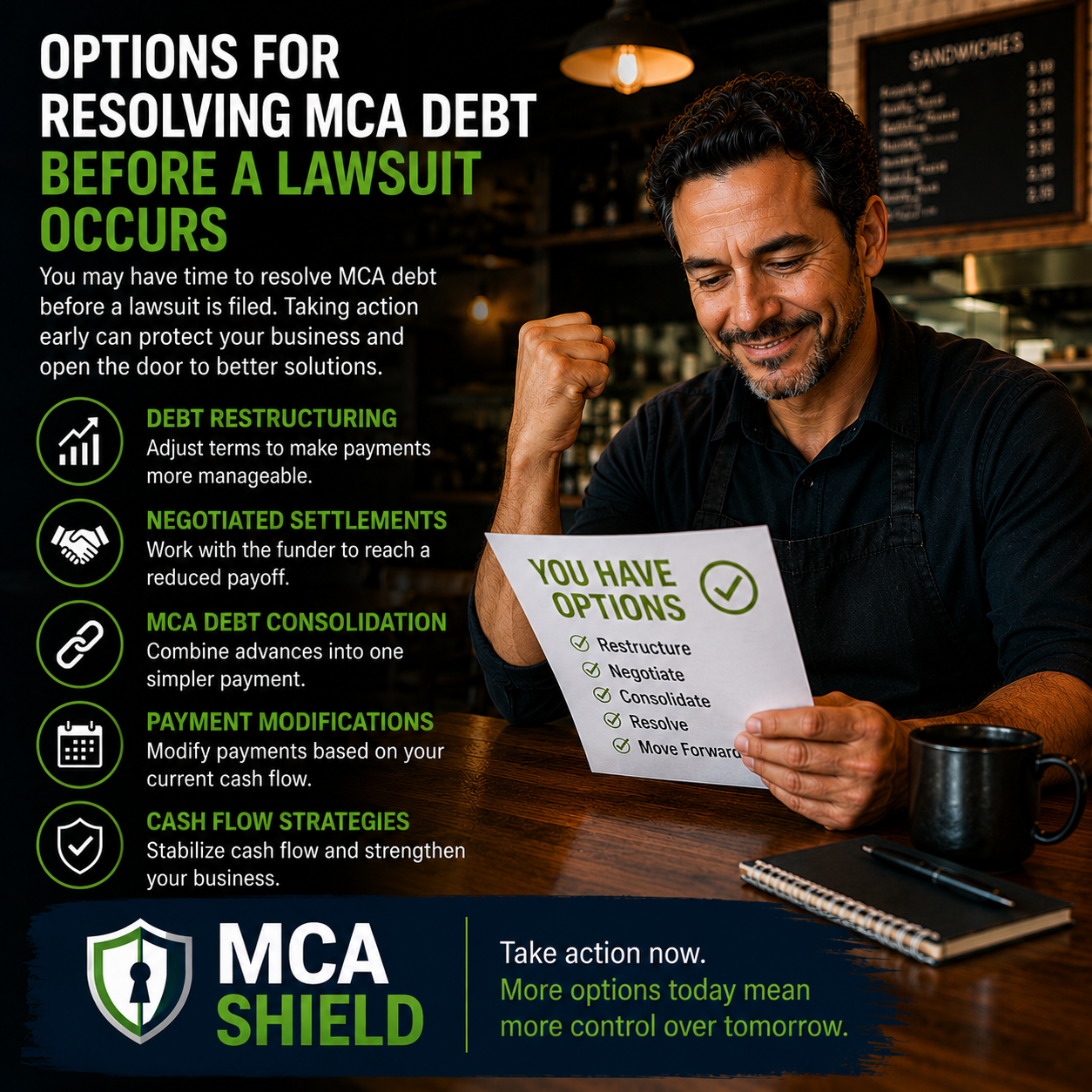
Options for Resolving MCA Debt Before a Lawsuit Occurs
If an MCA company has not filed a lawsuit, you may still have time to take control of the situation. The earlier you act, the more options you typically have available. Waiting too long can increase financial pressure and make it harder to negotiate a favorable outcome.
Common solutions business owners explore include:
• Debt Restructuring
• Negotiated Settlements
• MCA Debt Consolidation
• Payment Modifications
• Cash Flow Stabilization Strategies
Not every solution works for every business. The right approach depends on your cash flow, the number of advances involved, and the terms of your agreements. Many business owners find that addressing the problem early helps reduce risk, protect operations, and avoid more serious legal and financial consequences down the road.
How MCA Debt Consolidation Can Help Avoid Legal Problems
When MCA payments become difficult to manage, legal problems often begin to surface. MCA debt consolidation can help reduce that risk by creating a more manageable payment structure and relieving pressure on your cash flow. Instead of juggling multiple daily or weekly withdrawals, businesses can often simplify their obligations and regain greater financial stability.
Debt consolidation may help businesses:
• Reduce payment pressure
• Improve cash flow management
• Avoid additional defaults
• Create a more organized repayment strategy
• Focus on business operations instead of constant financial stress
The goal is not just to combine debt. The goal is to create breathing room before the situation escalates. For many business owners, taking action early through consolidation can help prevent collection issues, reduce the risk of legal action, and provide a clearer path toward long-term recovery.