
Construction companies often face unique cash flow challenges. Delayed customer payments, rising material costs, labor expenses, and seasonal fluctuations can create financial pressure even when projects remain active. In this Construction Company Debt Recovery case study, we examine how one contractor found itself struggling with mounting debt and increasing cash flow demands despite maintaining a steady workload.
As financial obligations grew, daily business operations became more difficult to manage. Payroll, vendor payments, equipment expenses, and project costs all competed for limited cash flow. What began as a short-term funding solution eventually created long-term financial strain. By taking action and exploring available MCA debt relief options, the company developed a recovery strategy that helped reduce pressure, improve financial stability, and create a stronger foundation for future growth.
This case study highlights the challenges many construction businesses face and the practical steps that can help address overwhelming debt. The lessons learned may help other contractors recognize warning signs early and explore solutions before financial problems become more difficult to overcome.
Schedule Your Free Consultation
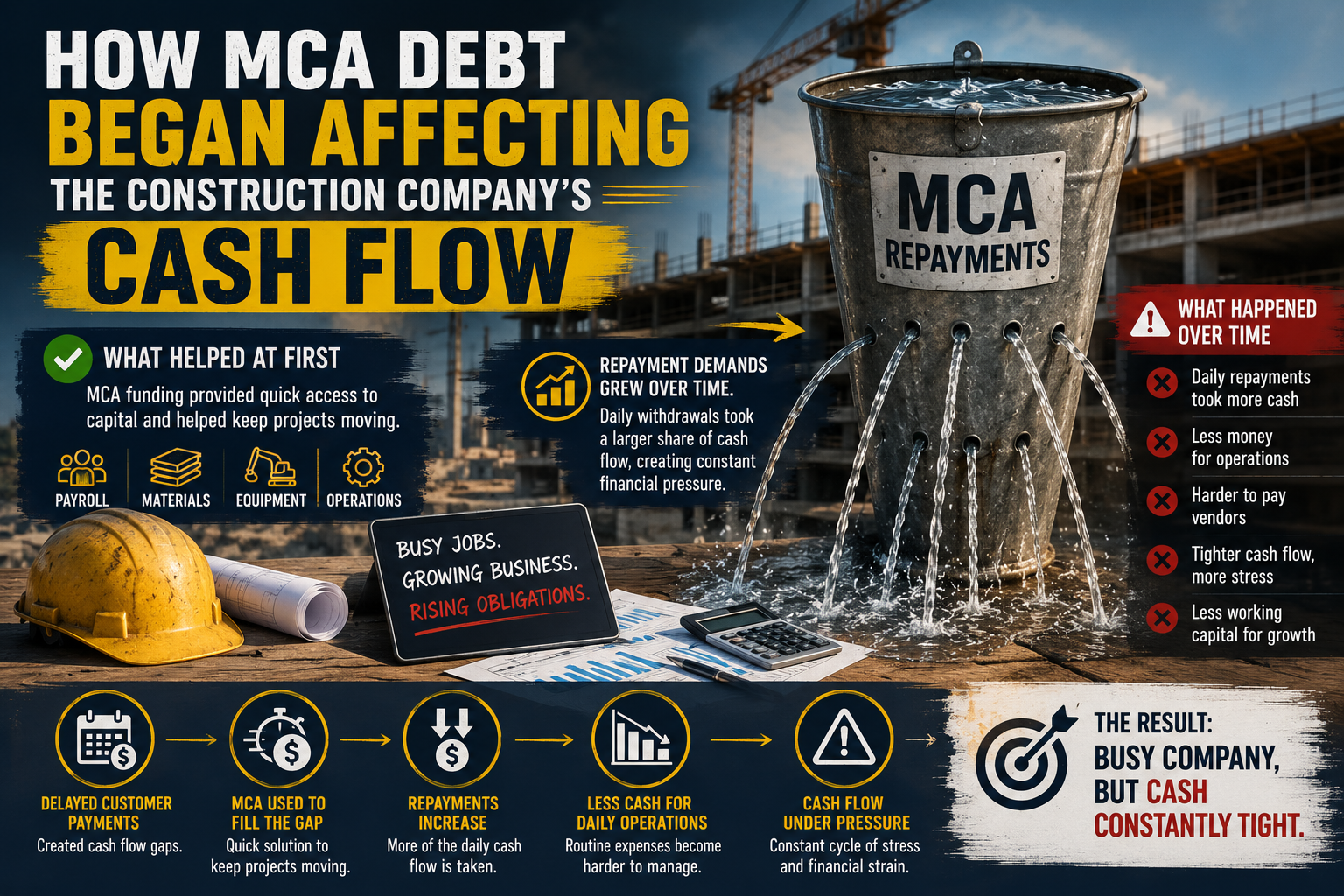
How MCA Debt Began Affecting the Construction Company's Cash Flow
At first, the construction company used MCA funding to address short-term cash flow needs and keep projects moving forward. The additional capital helped cover payroll, materials, equipment expenses, and other operational costs while the company waited for customer payments. However, as repayment obligations increased, the daily withdrawals began taking a larger share of available cash flow. What initially provided financial flexibility gradually became a source of financial pressure.
As cash flow tightened, the company faced growing challenges managing routine expenses. Vendor payments became harder to schedule, project costs required closer monitoring, and maintaining working capital became increasingly difficult. The business remained busy, but the constant repayment demands left less cash available to support day-to-day operations. This imbalance created a cycle where financial obligations continued to grow while available cash flow struggled to keep pace.
Warning Signs the Business Was Heading Toward Financial Trouble
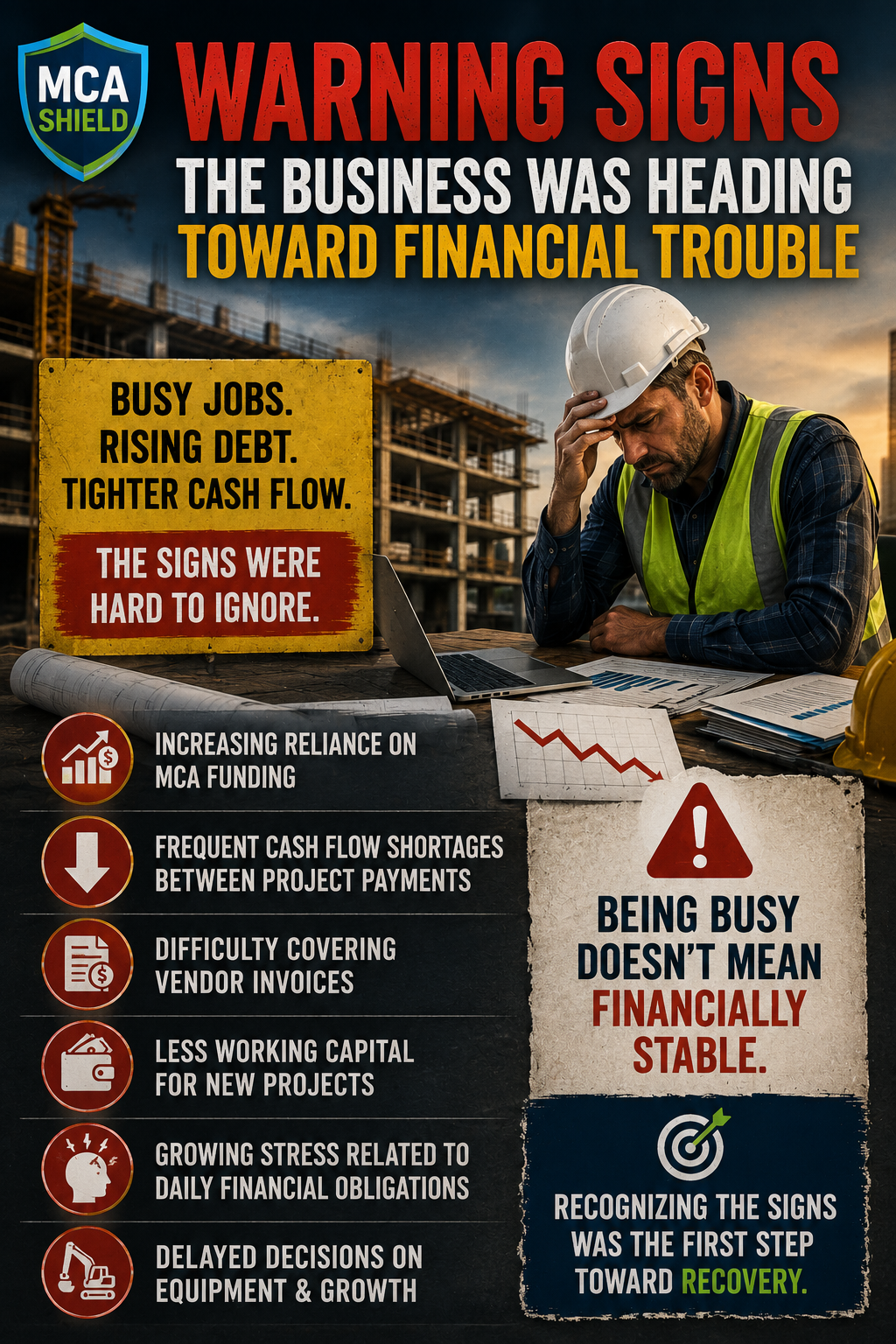
The construction company did not run into serious financial problems overnight. As cash flow tightened and repayment obligations grew, warning signs began appearing across the business. Increasing reliance on MCA funding, frequent cash shortages between project payments, difficulty paying vendors, and reduced working capital all pointed to growing financial strain.
Although the company maintained a strong project pipeline, management spent more time managing cash flow than focusing on growth. Being busy did not guarantee financial stability. As payment pressure increased, the company recognized that early action was necessary to avoid more serious financial challenges and begin the recovery process.
The Impact of Multiple MCA Obligations on Daily Operations
As the construction company added additional MCA funding, the financial pressure intensified. Each new obligation introduced another repayment schedule, which reduced the amount of cash available for daily operations. What started as a solution to short-term cash flow challenges gradually became a major obstacle to financial stability.
The growing repayment burden affected nearly every area of the business. Management had less flexibility to handle unexpected expenses, invest in new opportunities, or maintain healthy cash reserves. Daily financial decisions became increasingly difficult as more revenue went toward servicing debt.
The company began experiencing:
- Less cash available for payroll and labor costs
- Greater pressure on vendor and supplier payments
- Reduced working capital for active projects
- Difficulty planning for future growth
- Increased stress related to ongoing financial obligations
Multiple MCA obligations created a cycle that became harder to manage with each passing month. Although projects continued moving forward, the company’s cash flow struggled to keep pace with its repayment commitments. Recognizing the impact of these obligations became a critical step toward finding a long-term solution.
Why the Company Decided to Seek MCA Debt Relief with MCA Shield
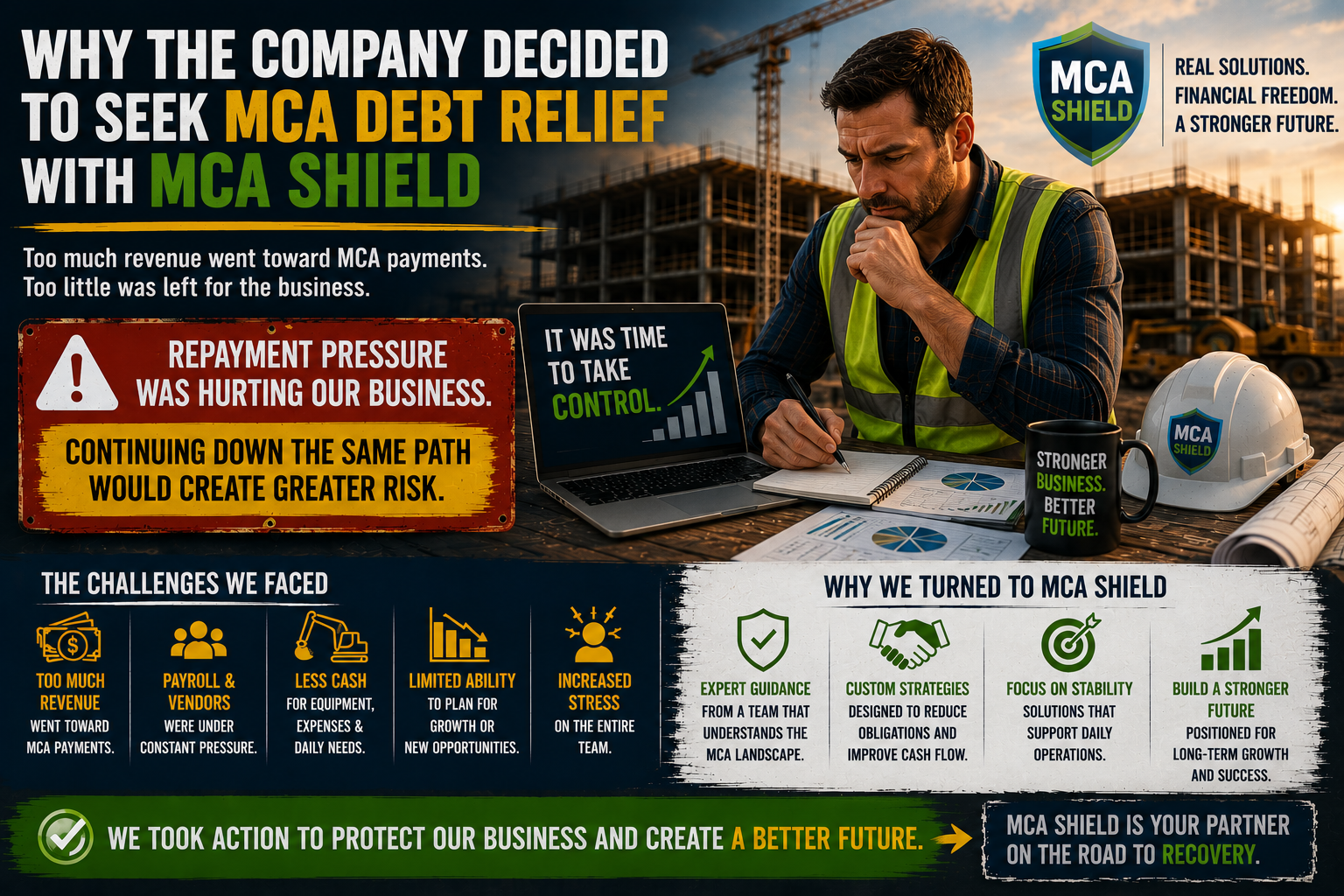
As repayment obligations continued to grow, the construction company’s leadership realized the problem would not resolve itself. Despite maintaining an active project schedule, cash flow remained under constant pressure. Too much revenue flowed toward MCA payments, leaving too little available for payroll, vendors, equipment expenses, and future growth. Management recognized that continuing down the same path could place the business at even greater financial risk.
The company decided to seek MCA debt relief with MCA Shield after exploring its available options and evaluating the long-term impact of its current obligations. The goal was not simply to reduce immediate pressure. The goal was to create a sustainable strategy that could improve cash flow and help stabilize the business. By taking action before the situation worsened, the company positioned itself to pursue solutions that supported both short-term operations and long-term recovery.
The Debt Recovery Strategy That Was Implemented
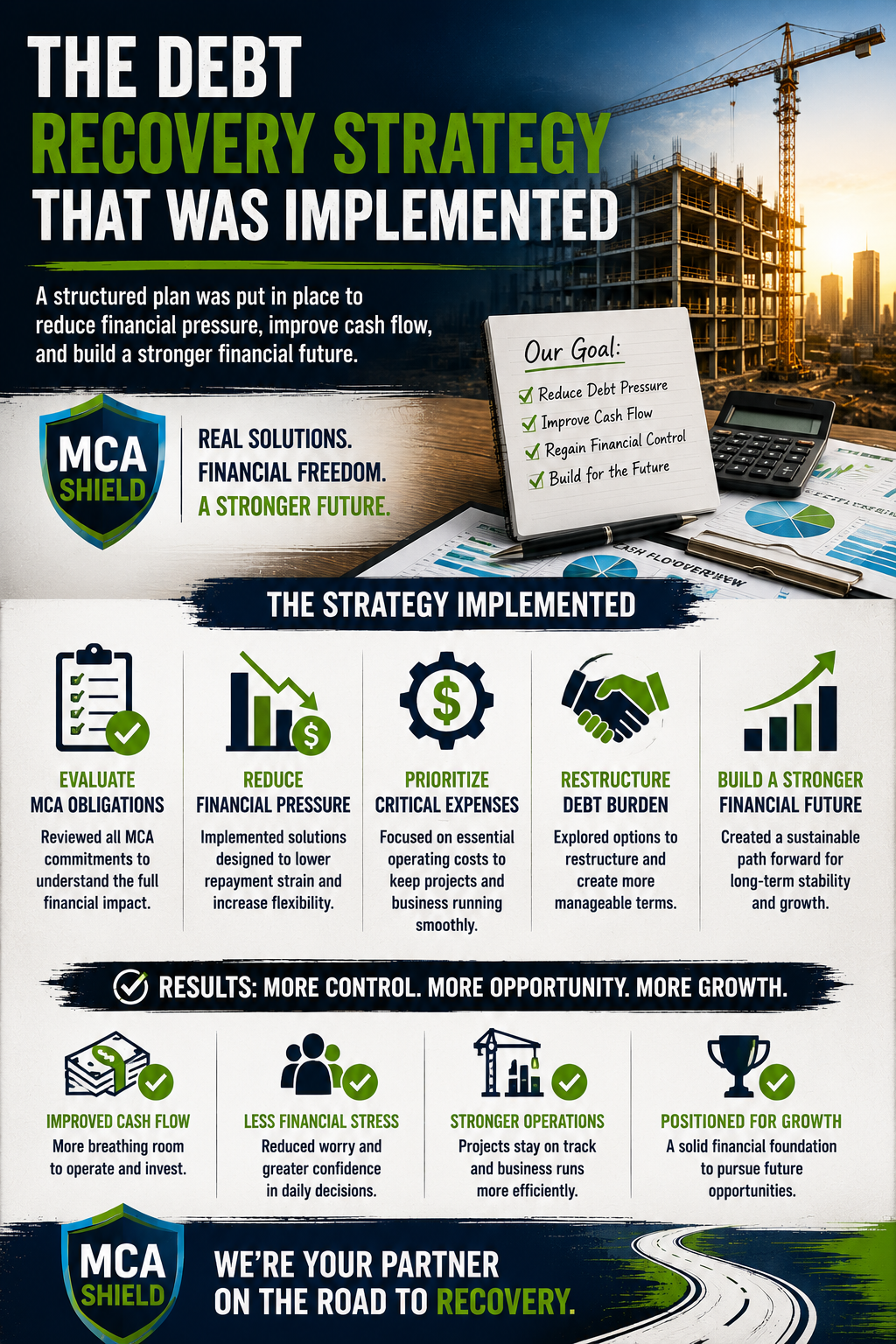
After reviewing the company’s cash flow and MCA obligations, a structured debt recovery strategy was put in place. The focus was on reducing financial pressure, improving cash flow stability, and creating a sustainable path forward. The goal was to help the business regain control of its finances while continuing normal operations.
By addressing repayment challenges and prioritizing essential business expenses, the company gained greater financial flexibility. With a clear plan in place, management could focus less on financial stress and more on running and growing the business.
How Cash Flow Improved After MCA Debt Restructuring
The company’s financial situation did not change overnight, but MCA debt restructuring created the breathing room it needed to regain control. As repayment pressure eased, more revenue remained available for daily operations. This allowed management to focus less on short-term cash shortages and more on running the business effectively.
With improved cash flow, the company could better manage payroll, vendor payments, equipment expenses, and active projects. Financial decisions became less reactive and more strategic. Instead of constantly working around repayment demands, management gained greater flexibility to plan ahead and support business growth.
The restructuring strategy also helped reduce financial stress across the organization. Vendor relationships improved, project timelines became easier to manage, and the company rebuilt confidence in its financial future. By improving cash flow stability, the business created a stronger foundation for long-term growth and recovery.
Key Lessons Other Construction Business Owners Can Learn
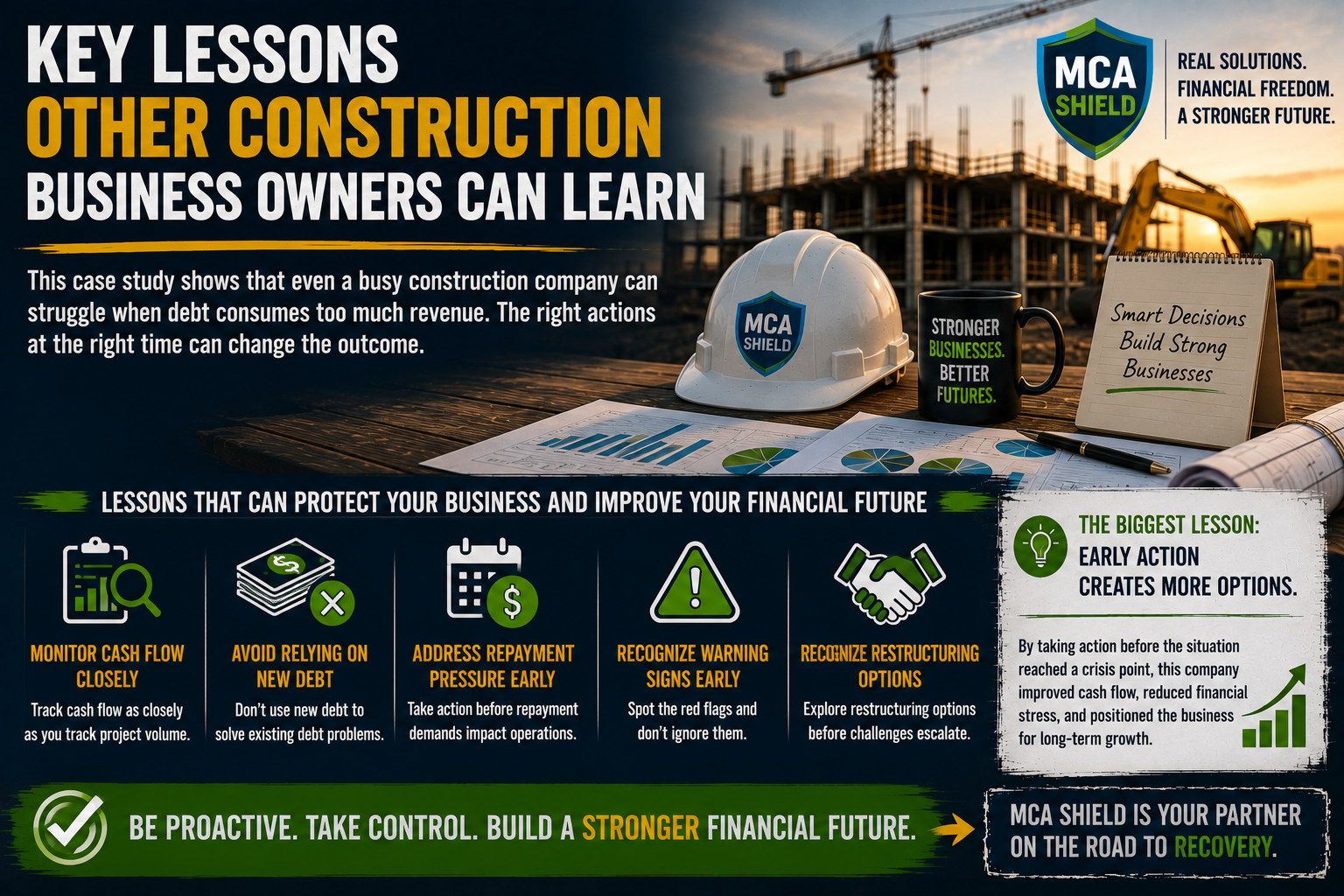
This case study demonstrates that financial trouble can develop even when a construction company remains busy. Strong project demand does not always translate into healthy cash flow. When debt obligations begin consuming too much revenue, business owners must recognize the warning signs and take action before the situation worsens.
Several important lessons emerged from this company’s experience:
- Monitor cash flow as closely as project volume
- Avoid relying on new debt to solve existing debt problems
- Address repayment pressure before it affects operations
- Recognize warning signs early and act quickly
- Explore restructuring options before financial challenges escalate
Perhaps the most important lesson is that early action creates more options. By seeking help before the situation reached a crisis point, the company was able to pursue a recovery strategy that improved cash flow, reduced financial stress, and positioned the business for future growth. Other construction business owners facing similar challenges can benefit from taking a proactive approach before debt begins controlling the direction of their business.
When to Seek Professional Help Before MCA Debt Gets Worse
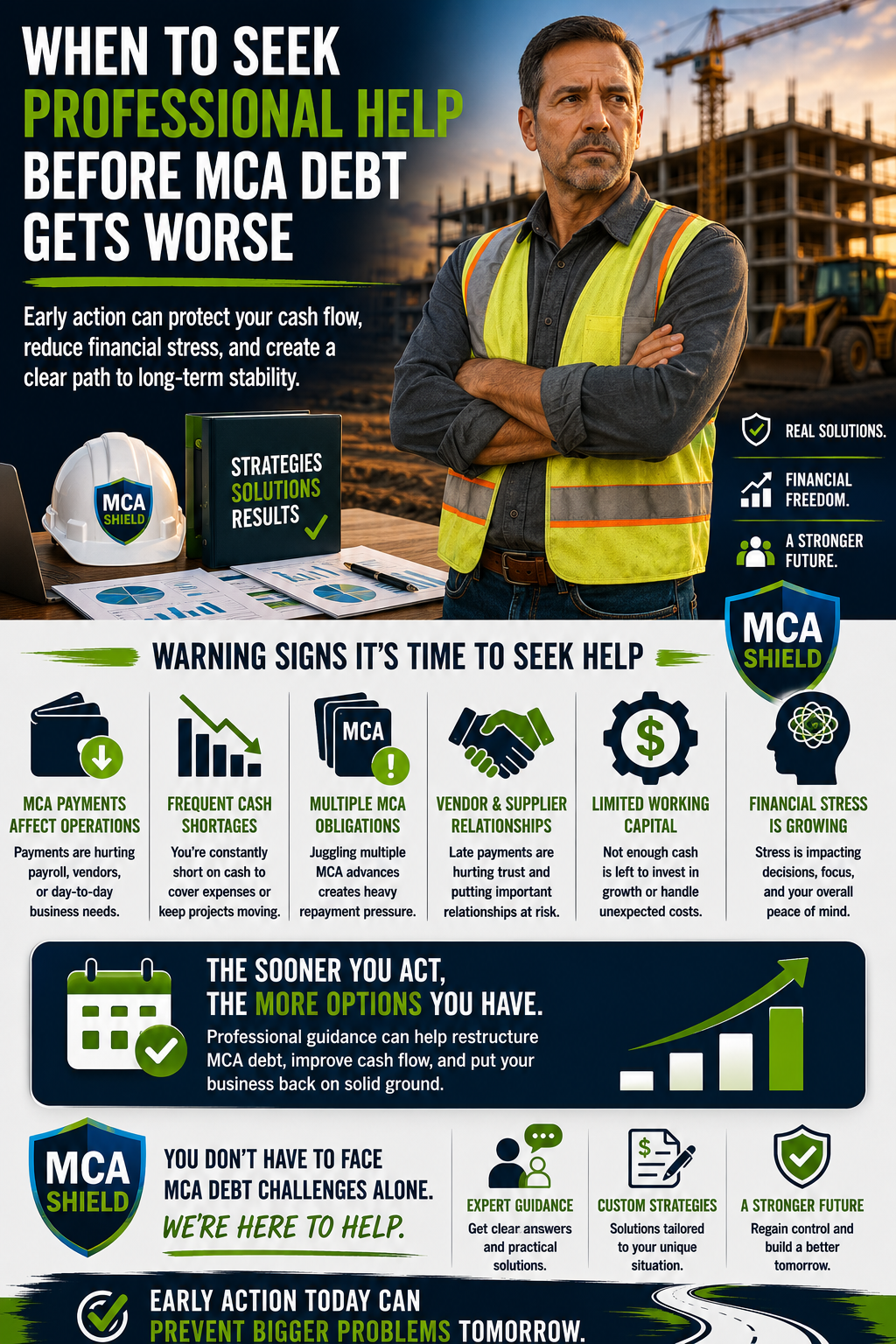
Many business owners wait too long before seeking help with MCA debt problems. They often hope future revenue, new projects, or improved cash flow will solve the issue. However, repayment pressure rarely improves on its own. The earlier a business addresses MCA debt challenges, the more options it typically has available.
Professional help may be worth considering when MCA payments begin affecting payroll, vendor relationships, working capital, or day-to-day operations. Frequent cash shortages, multiple MCA obligations, and growing financial stress often signal that action is needed. Seeking guidance before the situation reaches a crisis point can help protect cash flow, reduce financial pressure, and create a clearer path toward long-term stability.