
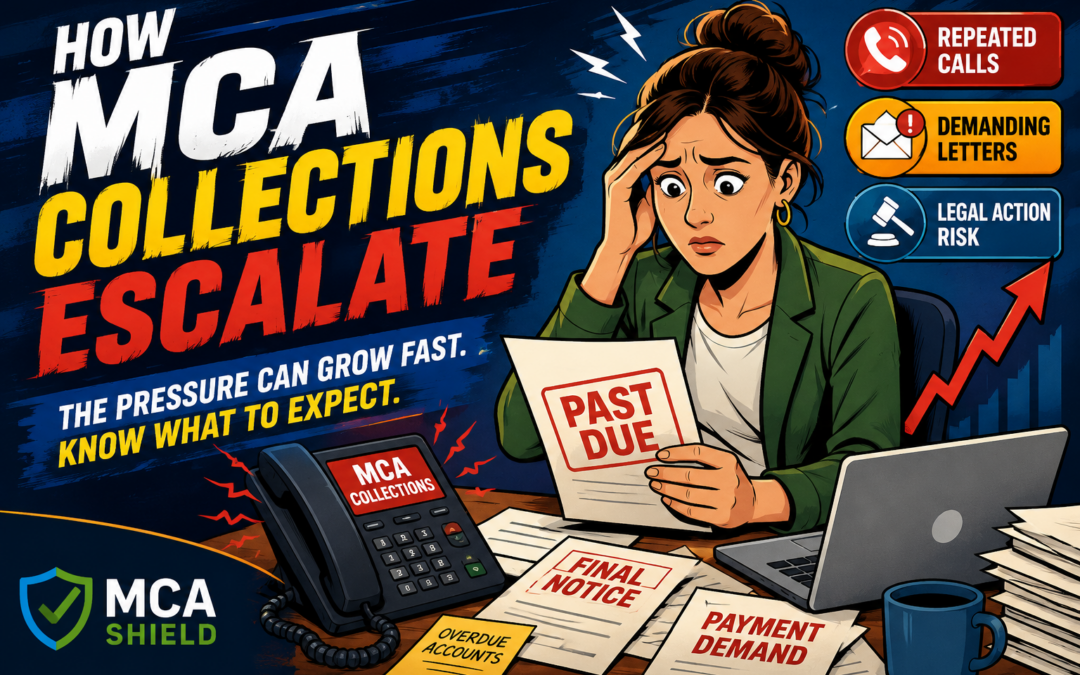
MCA collections can move quickly when a business begins falling behind on payments. What may start as a missed withdrawal or cash flow shortage can soon turn into increased calls, payment demands, and added financial pressure.
Many business owners do not realize how fast the situation can change. Understanding how MCA collections escalate helps you recognize potential problems early and explore solutions before your options become limited.
At MCA Shield, we help businesses dealing with overwhelming MCA debt review their situation, restructure payments, and work toward a more manageable path forward. Taking action early can help protect cash flow, reduce stress, and create a stronger recovery plan.
What Triggers MCA Collection Activity?
MCA collection activity often begins when a business can no longer keep up with the repayment terms outlined in its agreement. Since many merchant cash advances rely on daily or weekly withdrawals, even a short-term cash flow problem can quickly create payment issues.
Unlike traditional financing, MCA payments are usually connected directly to business revenue and bank activity. When problems appear, MCA companies may increase communication and begin collection efforts.
Common triggers for MCA collections include:
- Failed ACH withdrawals due to insufficient funds
- Missed or reduced payments outside the original agreement
- Closed or changed business bank accounts
- Declining revenue that impacts repayment ability
- Lack of communication with the MCA provider
- Multiple stacked MCA obligations creating cash flow strain
Many business owners do not intend to fall behind. The problem often starts when daily withdrawals become larger than the business can comfortably support.
Recognizing these triggers early can make a significant difference. Reviewing your MCA agreements and exploring available options before collection pressure increases may help your business regain control.
The Early Stages of MCA Collections
The early stages of MCA collections usually begin with increased contact from the MCA company. A missed payment or failed ACH withdrawal may lead to calls, emails, and requests for immediate updates about the business.
At first, the goal is often to resolve the payment issue quickly. However, ignoring the situation can cause collection pressure to increase. Small cash flow problems can become larger financial challenges when they are not addressed early.
During the beginning stages of MCA collections, business owners may experience:
- Frequent phone calls or emails about missed payments
- Requests to catch up on overdue balances
- Additional payment demands
- Questions about business revenue and bank activity
- Pressure to agree to repayment terms that may still strain cash flow
For many businesses, this stage is a critical turning point. Taking on another advance to solve the problem may only create additional debt and make recovery more difficult.
Reviewing your options early can help reduce financial pressure and create a more realistic path forward. A structured approach can help protect cash flow while working toward a long-term solution.

How MCA Collections Escalate Over Time
MCA collections often start with simple communication attempts, but the situation can become more serious if payment problems remain unresolved. As missed payments continue, MCA companies may increase their efforts to recover the outstanding balance.
More Aggressive Collection Attempts
During the early stages, MCA collections may involve phone calls, emails, and requests for updated payment information. Over time, these attempts may become more frequent as the MCA company looks for a resolution.
Business owners may feel pressured to make fast decisions. However, it is important to review the situation carefully and understand all available options before agreeing to new payment terms.
Increased Payment Demands
As MCA collections escalate, businesses may face requests for larger payments or faster repayment solutions. These demands can create additional pressure when a company is already dealing with limited cash flow.
Without a clear strategy, some business owners accept another cash advance to solve the immediate problem. Unfortunately, this can increase overall debt and make future payments even harder to manage.
Limited Time to Resolve the Situation
The longer MCA collections continue, the fewer options a business may have. Collection activity, financial stress, and operational challenges can become harder to address without a structured plan.
Taking action early gives business owners more opportunities to explore solutions, reduce payment pressure, and work toward long-term financial stability.
Advanced MCA Collection Actions Business Owners May Face
When MCA collections continue without a resolution, the process may move into more advanced stages. At this point, business owners may experience increased pressure that can affect daily operations, cash flow, and future decisions.
Understanding possible collection actions can help you prepare and explore solutions before the situation becomes more difficult.
Third-Party Collection Involvement
Some MCA companies may transfer accounts to outside collection agencies or other representatives when payment issues continue. This can result in additional communication and stronger efforts to recover the remaining balance.
Business owners should avoid ignoring collection activity. Reviewing the details of the MCA agreement and creating a response strategy can help prevent unnecessary financial pressure.
Legal Pressure and Potential Claims
In some cases, unresolved MCA collections may lead to legal action. The options available to the MCA company often depend on the specific agreement, business structure, and circumstances surrounding the account.
Legal concerns can add stress to an already challenging situation. Addressing MCA problems early may provide more opportunities to explore repayment, settlement, or restructuring solutions.
Increased Stress on Daily Operations
Advanced MCA collections can create challenges beyond the outstanding balance. Business owners may struggle with managing payroll, inventory, vendor relationships, and other important expenses.
A clear recovery plan can help businesses regain control and focus on operations instead of constantly reacting to collection pressure.
Common Mistakes That Make MCA Collections Worse
When MCA collections begin, business owners often feel pressure to solve the problem quickly. While fast action is important, the wrong decision can create more financial stress and limit future options.
Avoiding these common mistakes can help protect cash flow and give your business a better opportunity to find a long-term solution.
Ignoring Communication Attempts
Ignoring MCA collections usually does not make the problem disappear. In many cases, missed communication can increase pressure and make it harder to create a manageable resolution plan.
Business owners should review their situation, understand their financial obligations, and explore available options before collection activity becomes more serious.
Taking Another MCA to Cover Payments
Some businesses accept another merchant cash advance to keep up with existing payments. Although this may provide short-term relief, it can create a cycle of additional debt.
Adding another MCA often means more withdrawals, higher repayment obligations, and increased pressure on future revenue. Addressing the original problem is usually a better path than adding more financial strain.
Waiting Until Options Become Limited
One of the biggest mistakes businesses make is waiting too long before seeking help. As MCA collections continue, cash flow problems may become harder to manage.
Taking action early gives business owners more time to evaluate solutions, negotiate options, and create a plan focused on financial recovery.
Options When MCA Collections Become Difficult to Manage
When MCA collections become overwhelming, many business owners believe they have limited options. However, there may be solutions available that can help reduce financial pressure and create a more manageable path forward.
The first step is understanding the complete financial picture. Reviewing MCA agreements, repayment terms, balances, and daily or weekly payment obligations can help identify the best approach for your business.
Some companies may benefit from exploring MCA debt settlement or restructuring options. These solutions may help address existing obligations without relying on additional advances that could increase financial stress.
Creating a realistic recovery strategy is also important. A strong plan focuses on improving cash flow, managing current obligations, and helping the business move toward long-term stability.
Every situation is different, so business owners should evaluate their options carefully before making decisions. Taking action early during MCA collections can provide more opportunities to regain control and protect the future of the business.
How MCA Shield Helps Businesses Facing MCA Collections
When facing MCA collections, it can be difficult for business owners to know what steps to take next. Without a clear plan, collection pressure, payment demands, and cash flow problems may continue to grow.
MCA Shield helps businesses review their current situation and better understand their available options. This process includes evaluating MCA agreements, outstanding balances, payment structures, and the overall impact on business cash flow.
Instead of relying on additional funding that may increase financial stress, MCA Shield focuses on creating a customized debt relief strategy based on your specific circumstances. The goal is to reduce pressure and help your business move toward a more stable financial position.
Through experience with merchant cash advance challenges, MCA Shield helps business owners explore solutions that may include MCA debt settlement, restructuring options, and improved payment strategies.
If MCA collections are affecting your business, taking action early can make a significant difference. A proactive approach can help you regain control, protect daily operations, and start building a stronger financial future.
Frequently Asked Questions About MCA Collections
What happens when an MCA goes into collections?
When an MCA goes into collections, the funding company may begin contacting the business about missed payments or unresolved balances. MCA collections can include increased communication, repayment requests, and additional collection efforts if the issue is not addressed.
How quickly can MCA collections escalate?
The timeline can vary depending on the MCA company, agreement terms, and payment history. In some situations, collection activity may increase quickly after missed payments or failed ACH withdrawals occur.
Can MCA companies take legal action?
Some MCA companies may pursue legal action if payment issues remain unresolved. The specific options available depend on the agreement, business details, and circumstances surrounding the account.
Can MCA debt be negotiated during collections?
Yes, some businesses may have options to negotiate MCA debt settlement, payment adjustments, or other solutions. Reviewing your agreement and financial situation can help determine the best path forward.
Should I take another MCA to stop collections?
Taking another merchant cash advance may provide temporary relief, but it can also increase total debt and create additional payment pressure. Exploring other solutions may help address the original financial problem.
When should I contact an MCA debt relief company?
Business owners should consider seeking help when MCA payments become difficult to manage, collection pressure increases, or cash flow problems begin affecting daily operations. Acting early may provide more options to regain financial stability.