
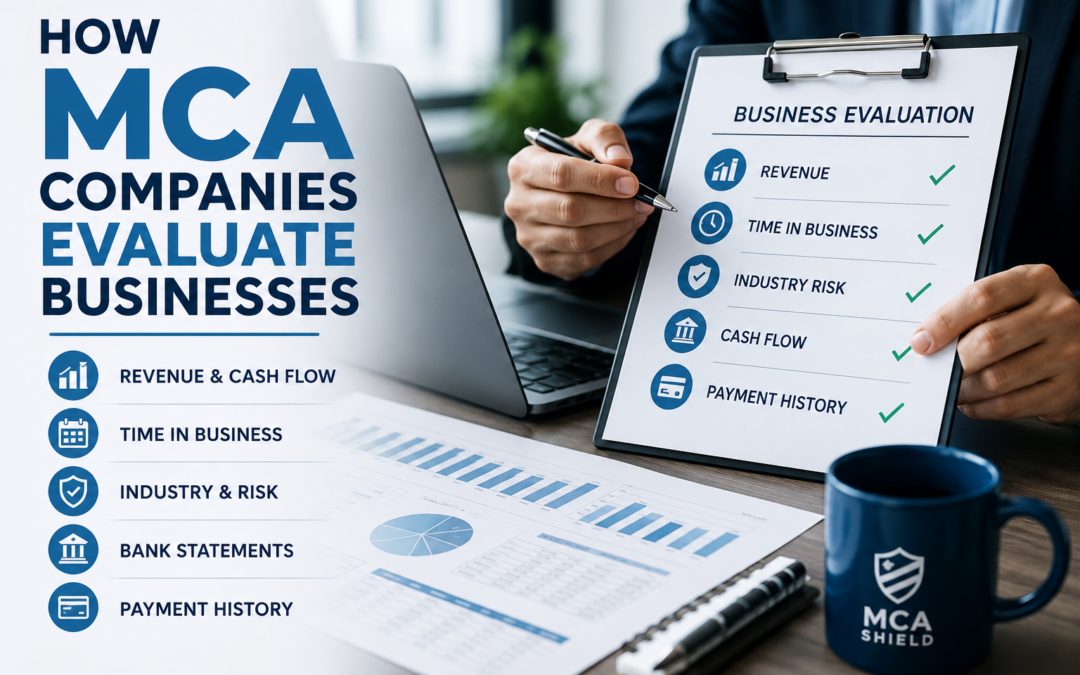
Merchant cash advance companies evaluate businesses differently than traditional banks. Instead of focusing primarily on credit scores, they often examine cash flow, monthly revenue, time in business, industry risk, and existing financial obligations to determine whether a business qualifies for funding.
Understanding how MCA companies evaluate businesses can help you prepare for the application process, avoid costly surprises, and make more informed financing decisions. In this guide, you’ll learn the key factors MCA providers review, the documents they typically require, and the warning signs that can affect approval or increase the cost of financing.
Schedule Your Free Consultation
Why MCA Companies Evaluate Businesses Differently Than Banks
Traditional banks and merchant cash advance (MCA) companies both want to reduce lending risk, but they evaluate businesses in very different ways. Banks often rely on credit scores, collateral, tax returns, and years of financial history before approving a loan. MCA providers, on the other hand, are primarily interested in whether your business is generating enough revenue to support frequent repayments.
Because merchant cash advances are based on future sales rather than traditional lending standards, the approval process is usually much faster. That speed can make MCA funding attractive to businesses that need immediate working capital, but it also means MCA companies place greater emphasis on current cash flow and business performance.
Merchant Cash Advances Focus on Revenue Instead of Credit Scores
One of the biggest differences between an MCA and a bank loan is the role of business revenue. While your credit history may still be reviewed, many MCA companies place far more weight on consistent monthly deposits and ongoing sales than on your credit score alone.
Businesses with healthy revenue may qualify even if they have experienced credit challenges in the past. However, unstable or declining revenue can make approval more difficult or result in higher costs.
MCA providers commonly review:
- Average monthly revenue
- Recent bank deposits
- Credit card sales or receivables
- Revenue consistency over several months
The stronger and more predictable your revenue, the more confidence an MCA company may have in your ability to repay the advance.
Why Daily Cash Flow Matters More Than Traditional Financial Ratios
Unlike banks that often analyze debt-to-income ratios, balance sheets, and long-term profitability, MCA companies usually focus on daily cash flow.
This is because many merchant cash advances are repaid through daily or weekly withdrawals from your business bank account. If your business experiences frequent cash shortages, those withdrawals can quickly become difficult to manage.
MCA companies often evaluate:
- Daily account balances
- Cash flow consistency
- Seasonal revenue fluctuations
- Frequency of deposits
- Available operating cash
A business with strong daily cash flow may appear less risky than one with higher annual revenue but unpredictable cash availability.
How Risk Is Measured in MCA Funding Decisions
Every merchant cash advance company has its own underwriting process, but most assess a similar group of risk factors before approving funding.
Some of the most common factors include:
- Time in business
- Industry type and overall business risk
- Existing merchant cash advance debt
- Recent overdrafts or NSF activity
- Open tax liens or judgments
- Overall financial stability
Businesses with multiple merchant cash advances or clear signs of financial stress are often viewed as higher-risk applicants. In these situations, an MCA company may charge higher fees, reduce the amount of funding offered, or decline the application altogether.
Understanding how MCA companies evaluate businesses gives business owners a clearer picture of what lenders are looking for and can help them prepare before seeking additional funding. More importantly, it can help businesses recognize when taking on another merchant cash advance may create greater financial pressure instead of solving cash flow problems.
The Main Factors MCA Companies Evaluate Before Approval

Documents MCA Companies Review During Underwriting
r finances, protect your employees, and position your business for sustainable success.
Warning Signs That Can Lead to Higher MCA Costs or Denial
How Merchant Cash Advance Evaluations Can Affect Long-Term Business Health
A fast approval may solve an immediate cash flow problem, but it does not always mean the financing is the right fit for your business. While merchant cash advances (MCAs) can provide quick access to working capital, they can also create long-term financial challenges if business owners focus only on receiving funds instead of understanding the full impact of repayment.
Knowing how MCA companies evaluate businesses can help you look beyond the approval decision and consider how an advance may affect your company’s financial health in the months ahead.
Why Fast Approvals Can Hide Significant Financial Risks
One of the biggest advantages of a merchant cash advance is speed. Many businesses receive funding decisions within days, making MCAs attractive when payroll, inventory, or unexpected expenses cannot wait.
However, a fast approval process may also mean there is less emphasis on determining whether the repayment structure is sustainable for your business.
Before accepting funding, ask yourself:
- Will daily or weekly payments strain cash flow?
- Can my business comfortably manage repayment during slower months?
- Will this advance solve the problem or simply delay it?
- Could additional financing become necessary in a few months?
Quick funding can provide temporary relief, but accepting financing without a long-term plan can increase financial pressure over time.
The Importance of Understanding Total Repayment Costs
Many business owners focus on the amount of money they receive instead of the total amount they will repay.
Merchant cash advances typically use a factor rate rather than a traditional interest rate. This means the total repayment amount is determined when the agreement is signed, regardless of how quickly the advance is repaid.
Before signing any agreement, understand:
- The total repayment obligation
- The factor rate
- Daily or weekly payment amounts
- Any additional fees or charges
- How repayment affects operating cash flow
Reviewing the full cost of financing helps business owners make informed decisions rather than focusing solely on immediate funding needs.
Avoiding a Cycle of Repeated MCA Funding
One of the greatest long-term risks associated with merchant cash advances is becoming dependent on them to solve recurring cash flow problems.
As repayment reduces available working capital, some businesses take out another MCA to cover operating expenses or repay an existing advance. This practice, often called MCA stacking, can quickly increase repayment obligations and reduce financial flexibility.
Warning signs that your business may be entering this cycle include:
- Using one MCA to repay another
- Needing new funding every few months
- Struggling to cover routine operating expenses
- Relying on financing instead of business revenue
Breaking this pattern often requires more than additional funding. It may involve improving cash flow management, reducing debt obligations, or exploring merchant cash advance debt relief before financial pressure becomes unmanageable.
Understanding how MCA companies evaluate businesses is valuable, but understanding how MCA funding can affect your business over the long term is even more important. Taking time to evaluate the full financial impact before accepting an advance can help protect your cash flow, preserve business stability, and reduce the risk of long-term debt problems.
Practical Steps Before Applying for a Merchant Cash Advance
Before applying for a merchant cash advance (MCA), take time to evaluate your business’s financial position. A few simple steps can help you understand whether an MCA is the right solution, improve your chances of approval, and reduce the risk of creating long-term cash flow problems.
Preparing before you apply also gives you a better understanding of how MCA companies evaluate businesses and allows you to identify potential issues before they affect your funding options.
Review Your Business Cash Flow
Cash flow is one of the most important factors in the MCA approval process. Before submitting an application, review your recent financial activity to determine whether your business can comfortably manage additional repayment obligations.
Ask yourself:
- Is revenue consistent from month to month?
- Can my business support daily or weekly payments?
- Are there seasonal fluctuations that could affect repayment?
- Do I have enough working capital to cover operating expenses?
Understanding your cash flow before applying can help you avoid accepting financing that places unnecessary strain on your business.
Organize Financial Documents
Having accurate financial records ready can make the underwriting process faster and reduce delays.
Most MCA companies request documents such as:
- Three to six months of business bank statements
- Credit card processing reports
- Business license or formation documents
- Government-issued identification
- Proof of business ownership
Review these documents before submitting them to ensure they are complete and accurately reflect your business’s current financial condition.
Understand Existing MCA Obligations
If your business already has a merchant cash advance, carefully review the terms before applying for additional funding.
Pay close attention to:
- Outstanding balances
- Daily or weekly payment amounts
- Remaining repayment period
- Total repayment obligations
- Available cash flow after payments
Understanding your current obligations can help determine whether another MCA is truly necessary or whether it could increase financial pressure.
Compare All Funding Options Before Signing
A merchant cash advance may not always be the best financing solution. Before signing an agreement, compare all available options to ensure you choose the one that best supports your business goals.
Depending on your situation, alternatives may include:
- Traditional small business loans
- Business lines of credit
- SBA financing
- Equipment financing
- Merchant cash advance debt relief if existing MCA payments have become unmanageable
Taking time to compare funding options can help you avoid unnecessary costs and select a solution that supports long-term financial stability rather than short-term relief.
By preparing before you apply, you place your business in a stronger financial position and make better-informed decisions. Understanding how MCA companies evaluate businesses allows you to approach the funding process with greater confidence while reducing the risk of taking on financing that could create future cash flow challenges.