
MCA Collections Calls can become a major source of stress for business owners struggling to keep up with merchant cash advance payments. As payment issues develop, collection representatives may begin contacting businesses more frequently to discuss missed payments, account status, repayment options, or possible next steps. Understanding the reasons behind MCA collection calls can help business owners assess their situation, explore available solutions, and take action before collection activity escalates.
Merchant cash advance collections often begin when payments are missed, ACH withdrawals are returned, or multiple MCA obligations create ongoing cash flow challenges. In some cases, collection activity may increase as lenders attempt to recover outstanding balances. For businesses already dealing with tight cash flow, these calls can add additional pressure and uncertainty.
This guide explains what business owners should know about MCA Collections Calls, why they happen, how they may affect business operations, and what options may be available to reduce financial strain before the situation becomes more difficult to manage.
What Are MCA Collections Calls?
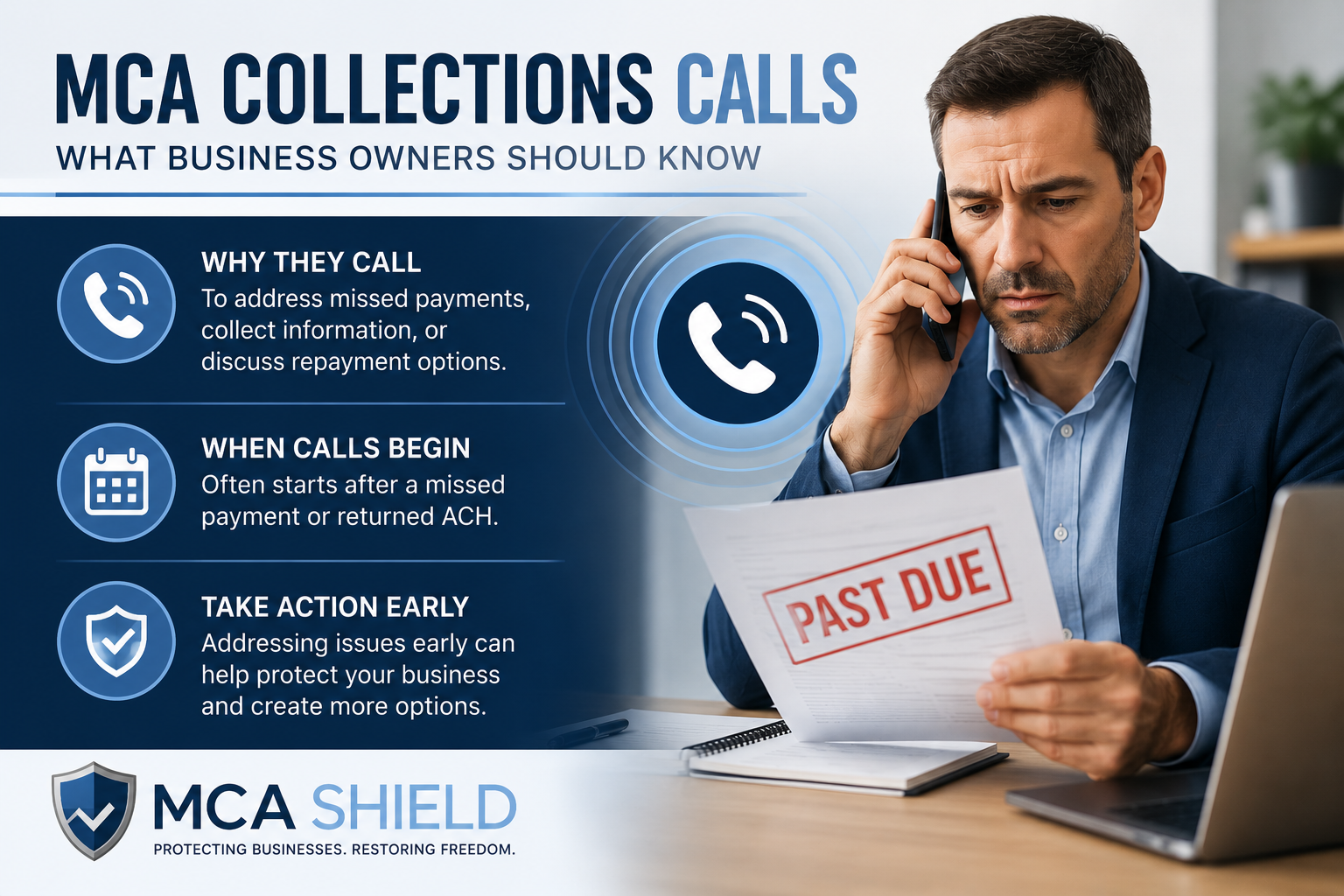
MCA Collections Calls are communications from a merchant cash advance company or its representatives regarding an outstanding MCA balance. These calls often occur when payments are missed, ACH withdrawals are returned, or the lender believes there is a risk that future payments may not be made as agreed.
The purpose of these calls is typically to discuss the status of the account, request payment, gather information about the business’s financial situation, or explore possible repayment arrangements. While collection activity can create stress for business owners, understanding why these calls occur can make it easier to evaluate available options and respond appropriately.
Why Merchant Cash Advance Companies Contact Businesses
Merchant cash advance companies generally contact businesses when they believe there is a problem with the repayment process. In many cases, collection calls begin after a missed payment, a returned ACH withdrawal, or a series of payment disruptions caused by cash flow challenges.
Lenders may also reach out when they notice signs of financial distress, such as frequent overdrafts, inconsistent deposits, or reduced business revenue. Their goal is often to determine whether payments can resume, discuss potential solutions, or protect their ability to recover the remaining balance.
For businesses with multiple MCA obligations, collection calls may become more frequent as payment pressure increases. This is especially common when MCA loan stacking has reduced available working capital and made it difficult to keep up with daily or weekly withdrawals.
When Collection Calls Typically Begin
The timing of MCA Collections Calls can vary depending on the lender and the terms of the agreement. Some MCA companies may attempt contact shortly after a payment is missed or an ACH withdrawal is returned. Others may wait until multiple payment issues occur before increasing collection activity.
Collection calls often become more frequent when account balances remain unpaid for an extended period. As payment problems continue, businesses may also begin receiving emails, written notices, or requests for updated financial information.
Because every situation is different, there is no single timeline that applies to all MCA agreements. However, business owners who experience payment difficulties should be aware that collection activity often increases as repayment issues remain unresolved. Taking action early may help create more options before collection efforts become more aggressive.
Common Reasons MCA Collection Calls Increase
MCA collection calls often become more frequent when a business begins experiencing payment difficulties. While every situation is different, collection activity typically increases when lenders believe there is a greater risk of missed payments or default. Understanding the factors that commonly trigger additional collection efforts can help business owners recognize potential warning signs and take action before the situation becomes more difficult to manage.
Missed or Returned ACH Payments
One of the most common reasons MCA collection calls increase is a missed or returned ACH payment. Most merchant cash advance agreements rely on automatic daily or weekly withdrawals from a business bank account. If sufficient funds are not available at the time of withdrawal, the payment may be returned.
A single returned payment may trigger a call from the MCA company to determine what happened and when payments can resume. If multiple ACH withdrawals are returned, collection representatives often increase communication efforts to discuss the account and seek repayment.
Businesses experiencing recurring ACH issues may also incur additional fees, cash-flow pressure, and increased collection activity as lenders attempt to recover the outstanding balance.
MCA Default and Delinquent Accounts
Collection calls frequently increase when an account becomes delinquent or enters default. Delinquency generally occurs when payments are missed, or account obligations are not being met according to the agreement. If the situation continues, the MCA company may consider the account to be in default.
As an account progresses toward default, collection representatives may make more frequent contact to discuss payment status, request financial information, or explore potential repayment arrangements. Businesses may also begin receiving collection emails, written notices, or other communications related to the outstanding balance.
Because default can create additional financial and legal concerns, many business owners choose to explore MCA relief options before collection efforts escalate further.
Multiple MCA Obligations and Loan Stacking
Businesses with multiple merchant cash advances often experience a significant increase in collection calls. When multiple MCA payments are deducted simultaneously, it can become difficult to maintain consistent payments across all obligations.
MCA loan stacking occurs when a business obtains additional funding before existing advances have been repaid. While this may provide short-term access to capital, it often creates additional payment pressure by adding more daily or weekly withdrawals.
As cash flow becomes strained, missed payments and returned ACH transactions may become more common. This can result in collection calls from multiple MCA companies simultaneously, making it even more challenging for business owners to manage their financial obligations and maintain normal business operations.
What MCA Collection Representatives May Discuss
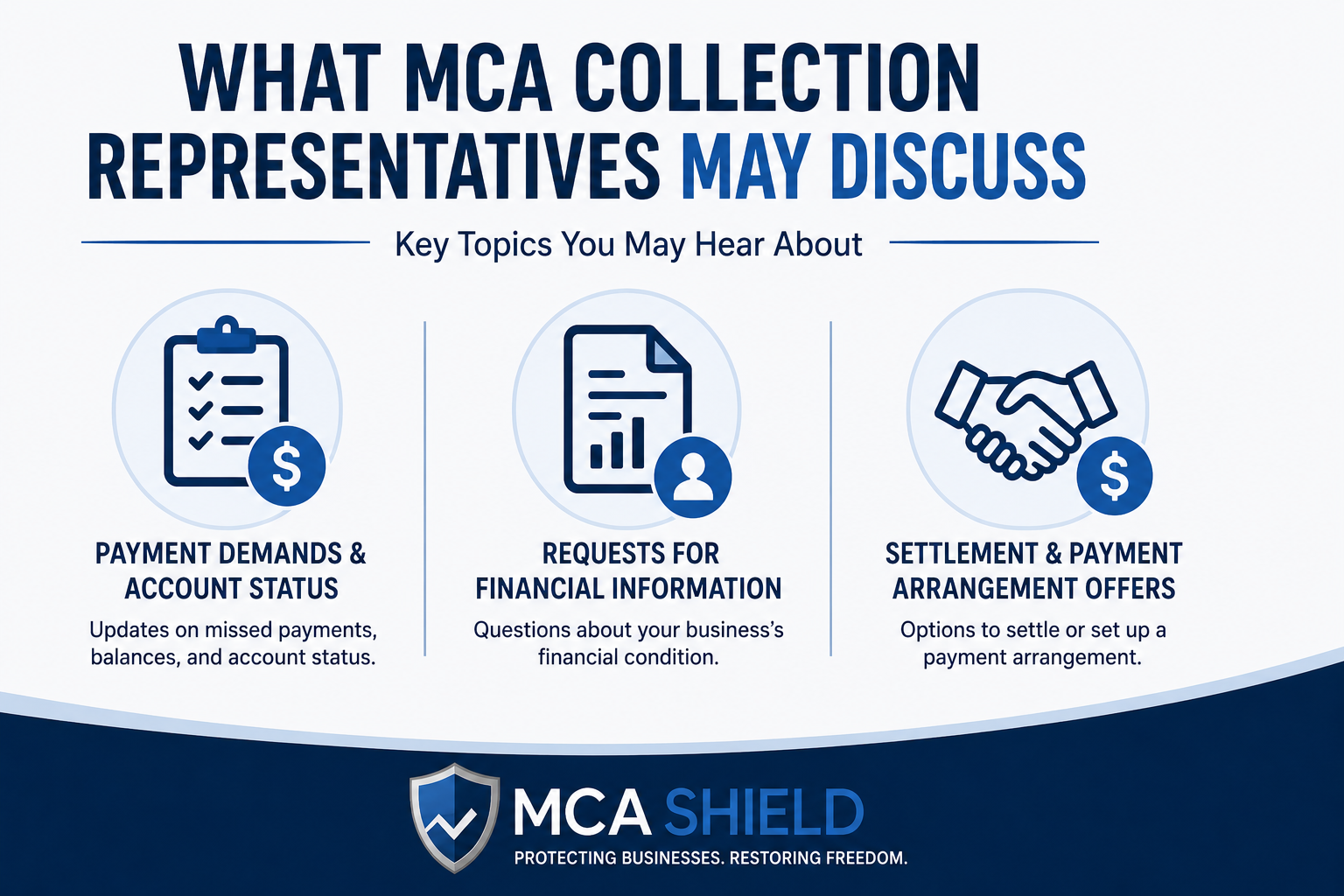
When MCA collection representatives contact a business, the conversation often focuses on the account status and the company’s ability to continue making payments. While every situation is different, most collection calls involve discussions about outstanding balances, payment history, financial conditions, or potential resolution options.
Understanding the topics commonly discussed during MCA collection calls can help business owners prepare for these conversations and better evaluate their available options.
Payment Demands and Account Status Updates
One of the most common purposes of an MCA collection call is to discuss the current account status. Collection representatives may provide updates regarding missed payments, returned ACH transactions, outstanding balances, or other issues affecting the agreement.
In some cases, the representative may request immediate payment or ask when the business expects to resume making payments. Businesses that have fallen behind may experience increased collection activity as lenders attempt to recover the remaining balance.
The specific details discussed often depend on the payment history and the terms of the merchant cash advance agreement.
Requests for Financial Information
Collection representatives may also request information about the business’s current financial condition. This can include questions about revenue trends, cash flow challenges, bank account activity, or other factors affecting the company’s ability to make payments.
The purpose of these discussions is often to help the MCA company understand the circumstances behind missed payments and evaluate whether alternative arrangements are possible.
Business owners should carefully review any requests for financial information and understand how that information may be used during future collection or negotiation discussions.
Settlement and Payment Arrangement Offers
In some situations, MCA collection representatives may discuss potential settlement opportunities or temporary payment arrangements. These conversations often occur when a business is experiencing ongoing financial hardship and cannot maintain its existing payment schedule.
A payment arrangement may involve modified payment terms designed to make obligations more manageable for a period of time. In other cases, the MCA company may be willing to discuss settlement options to resolve all or a portion of the outstanding balance.
Because every MCA agreement and financial situation is different, available options can vary significantly. Businesses considering settlement discussions or payment arrangements often benefit from carefully reviewing the long-term impact of any proposed agreement before making a decision.
How MCA Collection Calls Can Affect Business Operations
MCA collection calls can impact more than just a business’s outstanding debt obligations. Frequent collection calls can divert time and attention away from daily operations as business owners work to address payment issues and financial uncertainty. These distractions can make it more difficult to focus on daily operations and long-term business goals.
While the effect varies from one business to another, frequent collection calls often create operational challenges that extend beyond the immediate repayment concerns.
Disruptions to Daily Business Activities
Collection calls can interrupt the normal flow of business operations. Owners and managers may need to pause meetings, customer interactions, or other responsibilities to respond to lenders and discuss account issues.
As collection activity becomes more frequent, valuable time and attention may be redirected away from revenue-generating activities. For businesses already operating with limited staff or resources, these disruptions can place additional strain on day-to-day operations.
The more time spent managing collection-related issues, the less time may be available to focus on customers, employees, inventory management, marketing, and business growth.
Increased Stress for Business Owners
Frequent collection calls can create significant stress for business owners who are already dealing with cash flow challenges. Uncertainty about future payments, ongoing communication from lenders, and concerns about potential consequences may increase financial pressure.
Over time, this stress can affect decision-making and make it more difficult to evaluate options objectively. Many business owners find themselves constantly reacting to immediate financial demands instead of focusing on long-term solutions.
Addressing financial challenges early often helps reduce uncertainty and creates opportunities to develop a more structured plan for moving forward.
Impact on Cash Flow Decision-Making
Frequent collection calls can create pressure to make quick financial decisions aimed at resolving immediate payment concerns. In some cases, this can lead to choices that provide temporary relief but create additional challenges later.
For example, some businesses may delay important operating expenses, postpone vendor payments, or seek additional funding to remain current on existing MCA obligations. While these actions may help in the short term, they can sometimes increase financial pressure over time.
A careful review of cash flow, outstanding obligations, and available relief options can help business owners make more informed decisions and avoid actions that may worsen financial challenges.
Warning Signs That MCA Debt Is Becoming More Serious
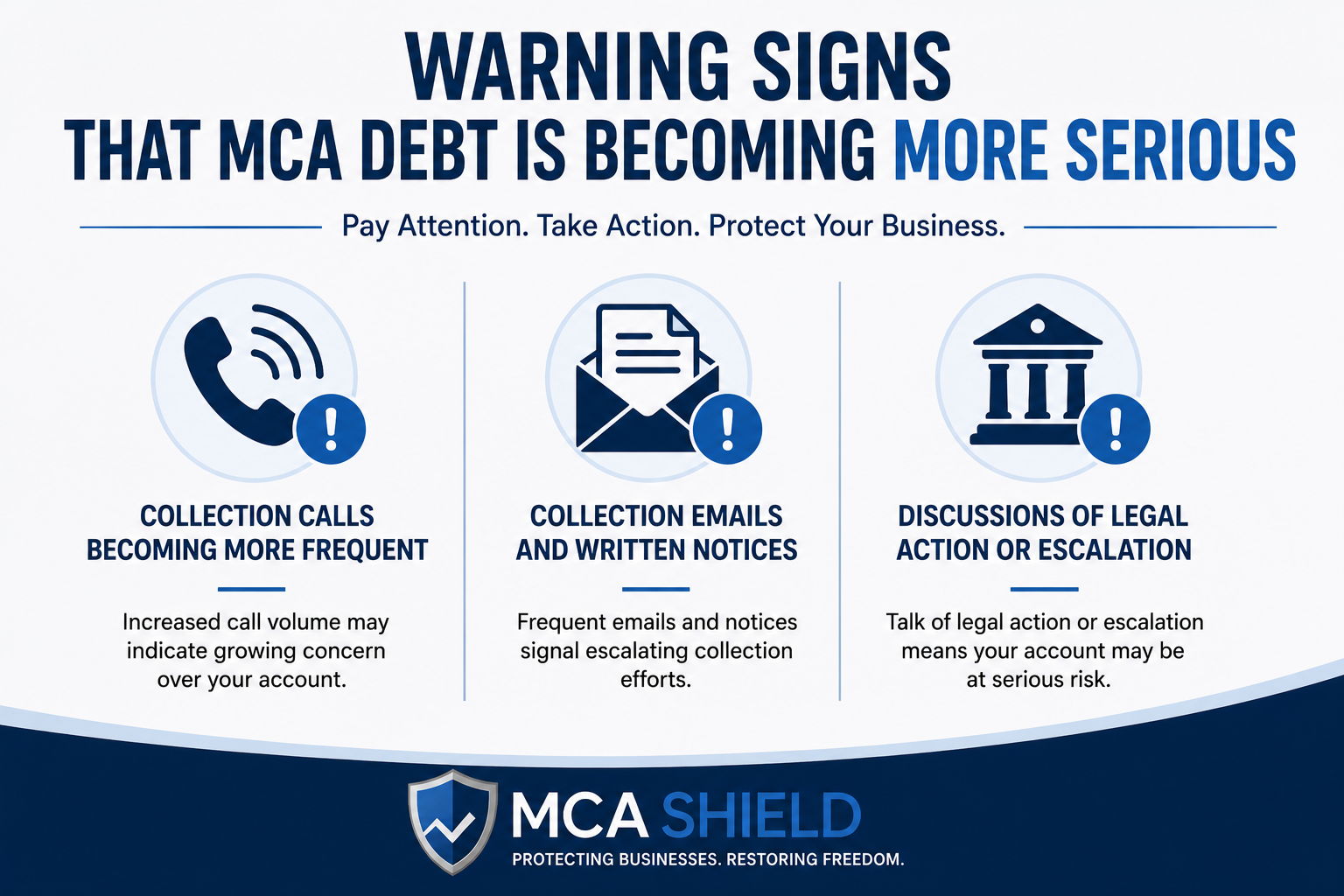
Financial challenges related to merchant cash advances often develop gradually. What begins as a temporary cash flow challenge can quickly escalate into a more serious financial problem as missed payments and collection activity increase. Recognizing the warning signs early may help business owners evaluate their options before collection activity, defaults, or other complications create additional pressure.
Several indicators may suggest that MCA debt is becoming more difficult to manage and requires closer attention.
Collection Calls Becoming More Frequent
One of the most noticeable warning signs is an increase in MCA collection calls. While an occasional call may occur after a missed payment or returned ACH transaction, frequent communication often signals growing concern from the MCA company.
As payment issues continue, collection representatives may contact the business more often to discuss outstanding balances, payment expectations, or account status. In some situations, business owners may receive calls from multiple MCA companies if they have several active obligations.
An increase in collection activity may indicate that payment problems are becoming more serious and should not be ignored.
Collection Emails and Written Notices
In addition to phone calls, MCA companies may begin sending collection emails, account notices, or other written communications. These messages often provide information regarding missed payments, outstanding balances, account status, or requested actions.
As collection efforts progress, written communications may become more frequent. Businesses may receive notices requesting payment, financial information, or a response regarding the status of the account.
Carefully reviewing these communications can help business owners better understand the current situation and identify potential concerns before they escalate further.
Discussions of Legal Action or Escalation
Conversations involving legal action, account escalation, or other formal collection measures are often among the most serious warning signs. While not every collection matter results in legal proceedings, discussions about these possibilities may indicate that the MCA company is pursuing additional recovery efforts.
Depending on the circumstances, collection representatives may reference default provisions, legal review, outside collection agencies, or other steps available under the agreement.
When discussions begin shifting toward potential legal action or escalation, many business owners choose to review their options and seek professional guidance before the situation becomes more complex.
Options for Businesses Struggling With MCA Payments
When MCA payments become difficult to manage, many business owners assume their only choices are to continue making payments they cannot afford or risk defaulting on their obligations. In reality, several potential solutions may be available depending on the business’s financial condition, the number of MCA agreements involved, and the severity of the cash flow challenges.
Exploring available options early often provides greater flexibility and may help reduce financial pressure before collection activity, defaults, or legal concerns become more serious.
MCA Debt Restructuring Solutions
MCA debt restructuring is one option that may help businesses improve cash flow and create a more manageable repayment strategy. The goal of restructuring is typically to reduce payment pressure by modifying existing obligations and developing a plan that better aligns with the company’s financial situation.
Depending on the circumstances, restructuring efforts may focus on lowering payment amounts, extending repayment terms, or addressing multiple MCA obligations through a coordinated strategy.
For businesses experiencing ongoing cash flow challenges, MCA debt restructuring may provide an opportunity to stabilize operations while working toward long-term financial recovery.
MCA Settlement Programs
In some situations, businesses may consider MCA settlement programs to resolve outstanding obligations. Settlement generally involves negotiating with MCA companies to reduce the amount required to satisfy the debt.
Settlement options are often explored when a business can no longer maintain its existing payment schedule and needs an alternative path toward resolving its obligations. The availability and terms of a settlement can vary based on factors such as account status, outstanding balances, and the financial condition of the business.
Because every situation is unique, settlement programs should be carefully evaluated to understand both the potential benefits and the long-term implications.
Professional Negotiation and Relief Assistance
Many business owners find it difficult to negotiate directly with multiple MCA companies while also managing daily business operations. Professional assistance can help simplify the process by providing guidance, evaluating available options, and communicating with MCA companies on the business’s behalf.
Experienced professionals can often help businesses review their obligations, analyze cash flow, identify potential solutions, and develop a strategy tailored to their specific circumstances.
Seeking assistance early may help business owners gain a clearer understanding of their options and potentially avoid additional financial pressure as collection activity continues.
Steps to Take When MCA Collection Calls Begin
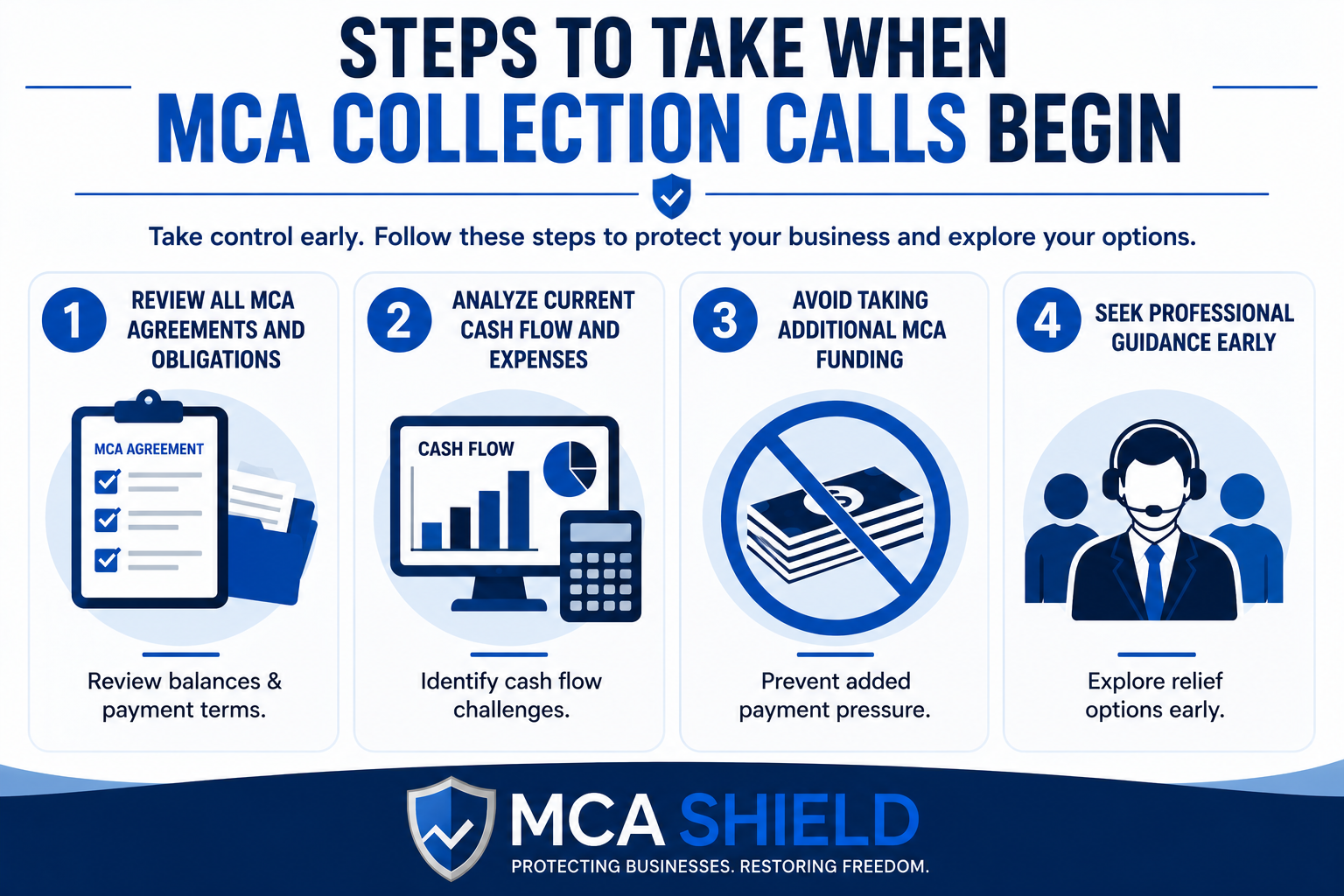
Receiving MCA collection calls can be stressful, especially when cash flow is already under pressure. While every situation is different, taking a proactive approach can help business owners better understand their financial position and identify potential solutions before collection activity escalates.
The earlier a business evaluates its obligations and available options, the more opportunities it may have to address payment challenges and protect day-to-day operations.
Review All MCA Agreements and Obligations
The first step is to gather and review all MCA agreements, payment schedules, balances, and related documentation. Many businesses have multiple merchant cash advances, making it difficult to understand the full scope of their obligations.
A complete review can help identify total outstanding balances, daily or weekly payment requirements, and the overall impact of MCA debt on business cash flow. Understanding the full picture is often essential when evaluating potential relief options.
Analyze Current Cash Flow and Expenses
Business owners should carefully assess their current cash flow, operating expenses, and available working capital. This analysis can help determine whether existing revenue is sufficient to support both MCA payments and essential business operations.
Reviewing payroll expenses, vendor obligations, rent, inventory costs, and other financial commitments can provide a clearer understanding of where cash flow challenges are occurring and how severe they may be.
Accurate financial information also helps support more informed decision-making when exploring possible solutions.
Avoid Taking Additional MCA Funding
When cash flow becomes tight, accepting additional MCA funding may seem like a quick solution. However, taking on another merchant cash advance can often increase payment pressure by adding new daily or weekly obligations.
In many cases, additional funding only provides temporary relief while creating larger repayment challenges in the future. Businesses already struggling with MCA payments should carefully evaluate the long-term impact before taking on new debt.
Avoiding additional MCA funding may help prevent the situation from becoming even more difficult to manage.
Seek Professional Guidance Early
Many business owners wait until collection activity becomes overwhelming before seeking assistance. Unfortunately, delaying action can sometimes limit the number of available options.
Professional guidance can help businesses review their MCA obligations, evaluate potential solutions, and develop a strategy based on their specific financial circumstances. Early intervention often creates more flexibility and may help reduce financial pressure before collection efforts, defaults, or legal concerns become more serious.
Taking action sooner rather than later can help business owners regain control and make more informed decisions about their business’s future.
Frequently Asked Questions About MCA Collections Calls
Can MCA Companies Call Me Every Day?
The frequency of MCA collection calls varies by lender and account status. Businesses with missed payments or accounts in default may receive frequent calls as the MCA company attempts to discuss repayment or account issues.
What Should I Say During an MCA Collection Call?
Remain professional and gather information about the account status, balance, and any proposed options. It is also a good idea to document the conversation and review any offers carefully before agreeing to new terms.
Can MCA Debt Be Settled?
In some cases, MCA debt can be settled through negotiations with the merchant cash advance company. MCA settlement options vary based on factors such as the amount owed, account status, and the business’s financial situation.
What Happens If I Cannot Afford My MCA Payments?
If MCA payments become unaffordable, collection activity may increase, and the account could move toward default. Reviewing available options early, such as restructuring or settlement, may help reduce financial pressure and create a more manageable path forward.
Taking Action Before MCA Collection Calls Escalate
MCA collection calls are often a sign that payment challenges are becoming more serious. While collection activity can create additional pressure, businesses frequently have more options available before defaults, legal concerns, or multiple MCA obligations make the situation more difficult to resolve.
Why Early Action Often Creates More Options
Taking action early allows business owners to evaluate their financial situation, review available solutions, and address cash flow challenges before collection efforts intensify. Waiting too long can limit flexibility and make it more difficult to negotiate favorable outcomes.
Businesses that seek guidance early are often better positioned to explore options such as MCA debt restructuring, settlement programs, or other relief strategies designed to improve cash flow and reduce payment pressure.
Schedule a Free Consultation With MCA Shield
If MCA collection calls are becoming more frequent or MCA payments are placing strain on your business, now may be the time to explore your options. MCA Shield helps business owners evaluate their MCA obligations, understand potential solutions, and develop a strategy tailored to their financial situation.
Schedule a free consultation today to review your MCA debt and learn what options may be available to help your business regain financial stability.