
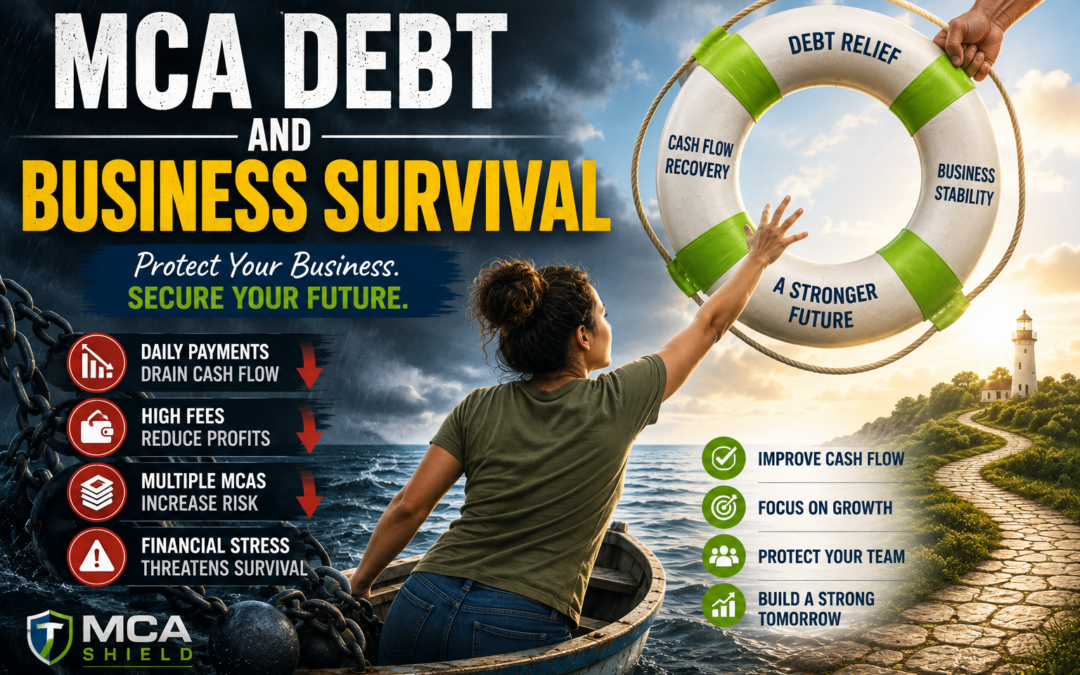
MCA debt and business survival often go hand in hand when daily withdrawals begin consuming the cash your business needs to operate. While a merchant cash advance may provide quick funding, the repayment structure can create ongoing financial pressure that makes it difficult to cover payroll, pay vendors, invest in growth, and maintain healthy cash flow. Understanding the warning signs and exploring debt relief options early can help protect your business, improve financial stability, and create a path toward long-term success.
Schedule Your Free Consultation
Why MCA Debt Can Threaten Business Survival
Many business owners turn to a merchant cash advance (MCA) because funding is often available quickly and requirements for qualifying may be less restrictive than traditional financing. While fast access to capital can solve an immediate problem, the repayment structure can quickly create new financial challenges. MCA debt and business survival become closely connected when daily withdrawals reduce the cash needed to operate, invest, and grow.
Understanding how MCA debt affects your finances can help you recognize problems before they threaten your business.
How Daily Payments Reduce Working Capital
Unlike many traditional business loans that require monthly payments, most merchant cash advances collect daily or weekly automatic withdrawals from your business bank account. Those frequent payments reduce the amount of working capital available every day.
As available cash shrinks, it becomes harder to:
- Purchase inventory
- Cover payroll
- Pay rent and utilities
- Maintain equipment
- Respond to unexpected expenses
Even profitable businesses can experience cash shortages when a significant portion of daily revenue is immediately redirected toward MCA payments. Over time, these withdrawals can limit flexibility and make it difficult to keep operations running smoothly.
When Cash Flow Problems Become a Business Crisis
Every business experiences occasional fluctuations in revenue. The problem begins when cash flow problems become consistent rather than temporary.
Warning signs may include:
- Delaying payroll or vendor payments
- Using credit cards for everyday operating expenses
- Postponing inventory purchases
- Struggling to pay taxes
- Maintaining a negative bank balance before new deposits arrive
As these challenges continue, business owners often spend more time managing financial emergencies than focusing on customers, sales, and growth. Instead of supporting expansion, cash flow becomes a daily struggle for survival.
Recognizing these warning signs early creates more opportunities to regain control before financial pressure becomes overwhelming.
Why Multiple Merchant Cash Advances Increase Financial Risk
One of the biggest threats to business survival is taking out a second or third merchant cash advance to cover existing payments. This practice, often called stacking MCAs, increases the total amount of daily withdrawals and places even more strain on cash flow.
Multiple merchant cash advances can lead to:
- Higher daily repayment obligations
- Less available working capital
- Greater financial stress
- Increased risk of missed payments or default
- Reduced ability to qualify for traditional financing
While another MCA may seem like a short-term solution, it often creates a cycle that becomes increasingly difficult to escape. Instead of solving the underlying cash flow problem, stacking advances can accelerate financial pressure and put the business’s future at greater risk.
For many companies, seeking merchant cash advance debt relief before taking on additional funding provides a more sustainable path toward restoring cash flow and improving long-term business survival.
Warning Signs That MCA Debt Is Putting Your Business at Risk
MCA debt and business survival are closely connected. Financial problems rarely appear overnight. Instead, they usually develop through a series of warning signs that become more serious over time. Recognizing these red flags early gives you more options to protect your business before cash flow problems become difficult to manage.
Struggling to Cover Payroll or Operating Expenses
One of the earliest warning signs is having trouble paying for the basic costs of running your business. If your daily MCA payments leave too little cash available, you may find yourself choosing between payroll, rent, inventory, or utilities.
Common signs include:
- Delaying employee payroll
- Postponing inventory purchases
- Paying bills later than usual
- Reducing marketing or business development efforts
- Using personal funds to keep the business operating
When essential expenses become difficult to cover, it often signals that your cash flow is under significant pressure.
Falling Behind on Vendors and Tax Payments
As cash becomes tighter, many businesses begin delaying payments to suppliers or postponing tax obligations. While this may provide temporary relief, it can create additional financial problems that are much harder to resolve.
Late payments may result in:
- Damaged vendor relationships
- Interrupted deliveries or reduced credit terms
- Late fees and penalties
- Tax interest and collection actions
- Additional financial stress
Maintaining strong relationships with vendors and staying current on tax obligations is essential for long-term business stability.
Taking New Merchant Cash Advances to Pay Existing Ones
A major warning sign is using one merchant cash advance to make payments on another. This practice, often called stacking, increases your daily repayment obligations without addressing the underlying cash flow problem.
Businesses caught in this cycle often experience:
- Higher daily withdrawals
- Less available working capital
- Growing financial pressure
- Increasing risk of default
- Fewer financing options in the future
Although another MCA may seem like a quick solution, it often makes long-term recovery more difficult.
Losing Control of Daily Cash Flow
Perhaps the clearest sign that MCA debt is putting your business at risk is feeling like you have lost control of your finances. Instead of planning for growth, every day becomes focused on making it through the next withdrawal.
You may notice that:
- Your bank account rarely maintains a healthy balance.
- Unexpected expenses create immediate financial problems.
- You constantly move money between accounts to cover payments.
- Business decisions are driven by daily cash shortages instead of long-term goals.
- Financial stress is affecting your ability to manage the business effectively.
When daily cash flow controls your decisions instead of supporting your business, it may be time to explore merchant cash advance debt relief. Taking action early can help stabilize your finances, reduce pressure, and improve your chances of long-term business survival.
- Additional payment demands
- Questions about business revenue and bank activity
- Pressure to agree to repayment terms that may still strain cash flow
For many businesses, this stage is a critical turning point. Taking on another advance to solve the problem may only create additional debt and make recovery more difficult.
Reviewing your options early can help reduce financial pressure and create a more realistic path forward. A structured approach can help protect cash flow while working toward a long-term solution.

How MCA Debt Affects Long-Term Business Survival
The effects of MCA debt and business survival extend far beyond daily cash flow challenges. As repayment pressure continues, many businesses are forced to make short-term financial decisions that limit long-term success. Without a plan to address merchant cash advance debt, the financial strain can affect profitability, growth, customer relationships, and overall stability.
Understanding these long-term consequences can help business owners take action before the damage becomes more difficult to reverse.
Reduced Profitability and Growth Opportunities
Healthy businesses need cash available to invest in growth. Whether it’s hiring employees, purchasing equipment, expanding inventory, or increasing marketing efforts, growth requires working capital.
Heavy MCA payments can leave little money available for these investments, forcing businesses to delay important opportunities.
Common long-term effects include:
- Lower profit margins due to ongoing repayment costs
- Delayed hiring and employee development
- Reduced inventory or service capacity
- Postponed equipment upgrades
- Fewer marketing and expansion opportunities
Instead of investing in future success, much of the business’s revenue goes toward satisfying existing debt obligations.
Increased Risk of Defaults and Legal Action
As cash flow becomes tighter, keeping up with daily MCA payments becomes increasingly difficult. Missing payments may trigger additional fees, collection efforts, or legal action depending on the terms of the agreement.
Potential consequences can include:
- Payment defaults
- Collection activity
- Business lawsuits
- Bank account restraints or other legal remedies where permitted
- Additional financial and operational stress
While not every merchant cash advance ends in legal action, allowing financial problems to continue without a plan significantly increases the risk.
Seeking merchant cash advance debt relief early may help businesses explore solutions before financial pressure escalates.
Damage to Customer Confidence and Business Reputation
Financial stress often extends beyond the accounting department. Customers, vendors, and employees may begin noticing the effects when cash flow problems interfere with normal business operations.
For example, businesses experiencing severe MCA debt may struggle with:
- Delayed product deliveries
- Reduced inventory availability
- Longer service wait times
- Employee turnover
- Declining customer satisfaction
Over time, these operational challenges can weaken customer confidence and make it more difficult to compete in the marketplace.
The good news is that MCA debt does not have to determine your business’s future. By addressing financial challenges early, improving cash flow, and developing a realistic debt relief strategy, many businesses stabilize operations, rebuild confidence, and improve their chances of long-term survival.
Practical Steps to Improve Business Survival While Managing MCA Debt
If your business is struggling under the weight of merchant cash advance debt, taking action early can make a significant difference. While every financial situation is unique, there are practical steps that can help improve cash flow, reduce financial pressure, and increase your chances of long-term success.
The goal is not simply to survive today’s challenges but to create a stronger financial foundation for the future.
Review All Existing Merchant Cash Advance Agreements
Start by gathering every active merchant cash advance agreement. Many business owners are surprised to discover how different repayment terms, fees, personal guarantees, or default provisions interact with one another.
As you review each agreement, look for:
- Remaining balances
- Daily or weekly payment amounts
- Factor rates and fees
- Default provisions
- Personal guarantee language
- Confession of judgment clauses where applicable
Having a complete picture of your obligations makes it easier to evaluate your options and develop a realistic recovery strategy.
Build a Weekly Cash Flow Recovery Plan
Managing MCA debt and business survival starts with understanding exactly where your money is going.
A weekly cash flow plan can help you:
- Track incoming revenue
- Monitor daily and weekly expenses
- Identify unnecessary spending
- Plan for upcoming obligations
- Avoid unexpected cash shortages
Reviewing your cash flow every week allows you to make adjustments before small problems become major financial setbacks.
Prioritize Essential Business Expenses
When cash is limited, every dollar matters. Focus first on the expenses that keep your business operating and generating revenue.
These often include:
- Employee payroll
- Inventory or materials
- Rent and utilities
- Insurance
- Equipment needed for daily operations
- Critical vendor relationships
Postponing non-essential spending can help preserve working capital while you work to improve your overall financial position.
Explore Merchant Cash Advance Debt Relief Before Problems Grow
Many business owners wait until they have already missed payments or taken out multiple merchant cash advances before seeking help. Unfortunately, waiting often reduces the number of available options.
Exploring merchant cash advance debt relief early may allow you to:
- Reduce financial pressure
- Improve cash flow
- Avoid stacking additional MCAs
- Develop a realistic repayment strategy
- Protect the long-term future of your business
The sooner you address MCA debt, the more flexibility you may have to regain control of your finances. Taking proactive steps today can help protect your business, strengthen financial stability, and improve your chances of long-term business survival.
How MCA Shield Helps Businesses Improve Their Chances of Survival
Frequently Asked Questions About MCA Debt and Business Survival
Protect Your Business Before MCA Debt Threatens Its Survival
Frequently Asked Questions About MCA Collections
What happens when an MCA goes into collections?
When an MCA goes into collections, the funding company may begin contacting the business about missed payments or unresolved balances. MCA collections can include increased communication, repayment requests, and additional collection efforts if the issue is not addressed.
How quickly can MCA collections escalate?
The timeline can vary depending on the MCA company, agreement terms, and payment history. In some situations, collection activity may increase quickly after missed payments or failed ACH withdrawals occur.
Can MCA companies take legal action?
Some MCA companies may pursue legal action if payment issues remain unresolved. The specific options available depend on the agreement, business details, and circumstances surrounding the account.
Can MCA debt be negotiated during collections?
Yes, some businesses may have options to negotiate MCA debt settlement, payment adjustments, or other solutions. Reviewing your agreement and financial situation can help determine the best path forward.
Should I take another MCA to stop collections?
Taking another merchant cash advance may provide temporary relief, but it can also increase total debt and create additional payment pressure. Exploring other solutions may help address the original financial problem.
When should I contact an MCA debt relief company?
Business owners should consider seeking help when MCA payments become difficult to manage, collection pressure increases, or cash flow problems begin affecting daily operations. Acting early may provide more options to regain financial stability.