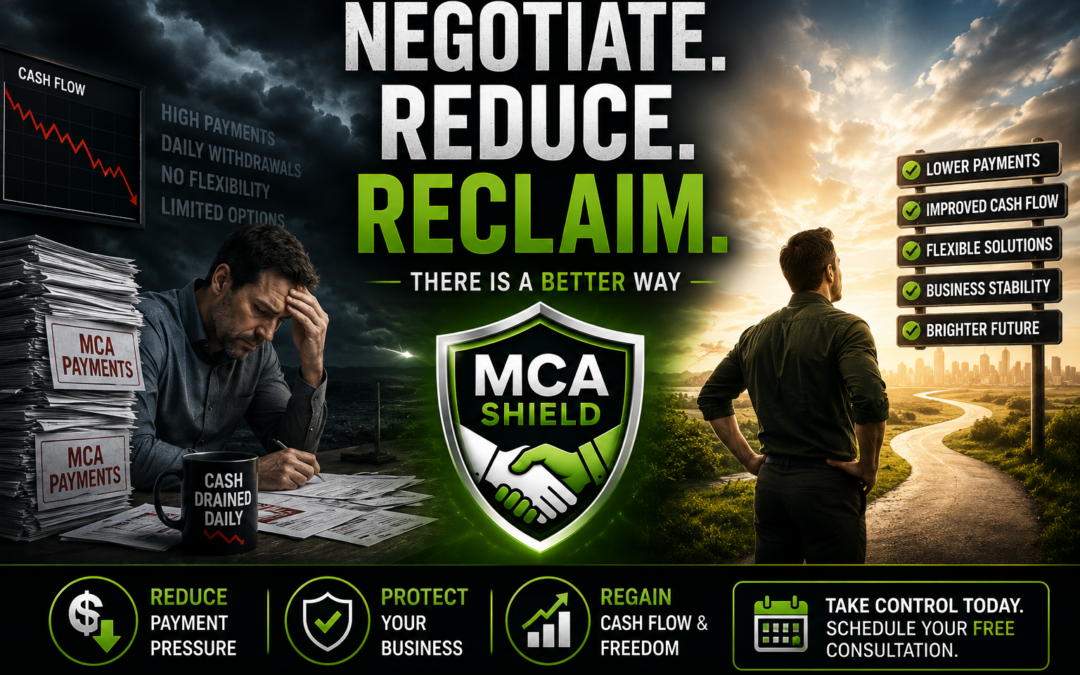
Many business owners facing overwhelming MCA payments ask the same question: Can you negotiate merchant cash advance debt? In many cases, the answer is yes. When cash flow tightens and daily withdrawals begin affecting payroll, vendors, or normal operations, negotiating MCA debt may help create a more manageable path forward. The key is taking action before the financial pressure becomes even more difficult to control.
MCA companies do not always agree to the same solutions, but businesses often have options. Depending on the circumstances, negotiations may lead to lower payments, modified repayment terms, debt restructuring, or settlement opportunities. Understanding how MCA debt negotiation works can help you evaluate your options and make informed decisions before cash flow problems threaten the future of your business.
Schedule Your Free Consultation
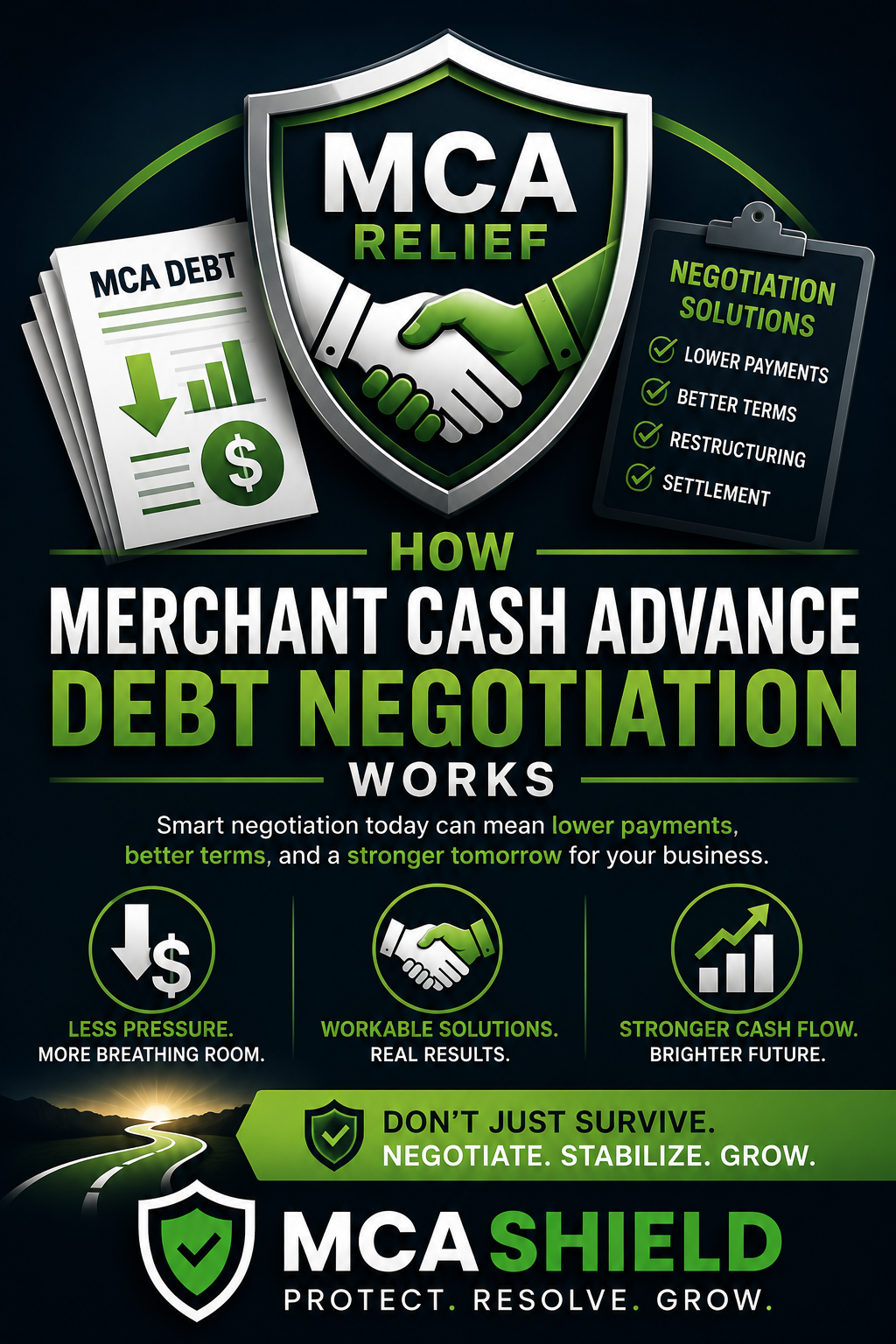
How Merchant Cash Advance Debt Negotiation Works
Merchant cash advance debt negotiation involves working directly with MCA companies to create a more sustainable repayment arrangement. When a business experiences cash flow challenges, MCA providers may be willing to discuss solutions that help avoid default while improving the likelihood of repayment. The goal is often to reduce immediate financial pressure and give the business an opportunity to stabilize.
Depending on the situation, negotiations may result in lower payments, adjusted repayment schedules, debt restructuring, or settlement opportunities. Every case is different, but businesses that address problems early often have more flexibility and more options available. The sooner you begin the conversation, the greater your chances of reaching a workable solution.
When MCA Companies May Be Willing to Negotiate
MCA companies may be more willing to negotiate when a business shows clear signs of financial strain but still wants to find a workable solution. Common situations include cash flow shortages, declining revenue, multiple MCA obligations, frequent overdrafts, or difficulty meeting payment requirements. In many cases, funders prefer discussing alternatives rather than dealing with a default or lengthy collection process.
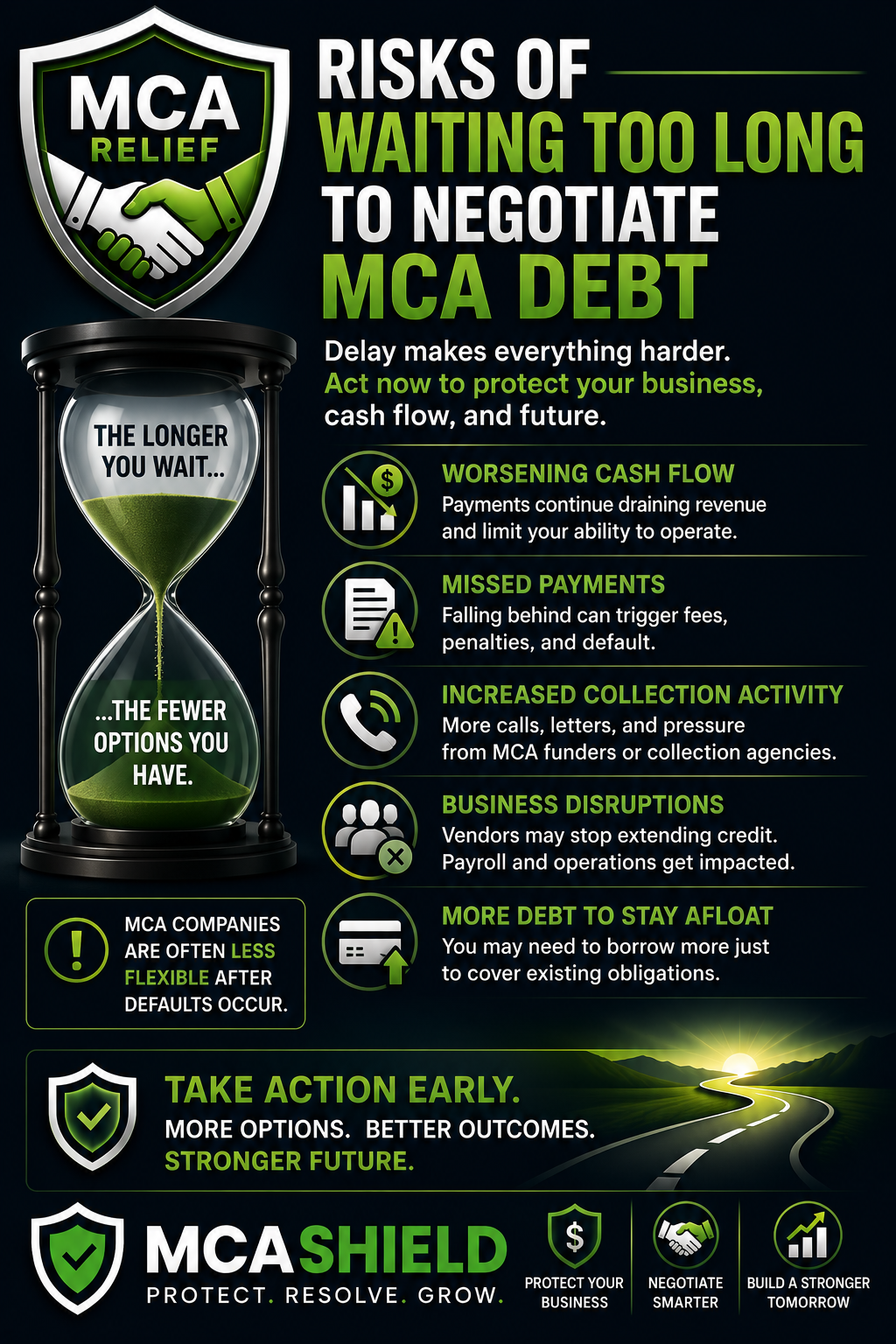
Timing matters. Businesses that seek help before missing multiple payments often have more options available. By addressing the problem early and demonstrating a willingness to resolve the debt, business owners may improve their chances of securing more manageable terms and reducing financial pressure.
Signs Your Business May Qualify for MCA Debt Negotiation
Many businesses do not realize they may qualify for MCA debt negotiation until cash flow problems begin affecting daily operations. If MCA payments consume too much revenue or force difficult financial decisions, it may be time to explore your options. The earlier you identify the warning signs, the more flexibility you may have during negotiations.
Common indicators include:
- Difficulty making payroll
- Frequent overdrafts or low account balances
- Late vendor or supplier payments
- Multiple stacked MCA obligations
- Using new funding to cover existing MCA payments
- Declining cash flow despite steady sales
You do not need to wait until default occurs to seek help. Many businesses pursue MCA debt negotiation while they are still operating and generating revenue. Taking action early may improve your chances of securing more manageable terms and reducing financial pressure before the situation worsens.
Common Merchant Cash Advance Debt Negotiation Strategies
Can You Reduce MCA Payments Through Negotiation?
In some situations, MCA payment reductions may be possible through negotiation. When a business experiences cash flow challenges, MCA companies may agree to modified payment arrangements that better reflect the company’s current financial reality. The goal is often to create a repayment structure that allows the business to continue operating while addressing its obligations.
Every case is different, and results vary, but many businesses successfully reduce payment pressure through negotiation or restructuring efforts. Lower payments can improve cash flow, help cover essential expenses, and provide valuable breathing room. The sooner a business explores its options, the more opportunities it may have to reach a workable solution before financial pressure escalates further.
Risks of Waiting Too Long to Negotiate MCA Debt
Alternatives to Merchant Cash Advance Debt Negotiation
While merchant cash advance debt negotiation can help many businesses, it is not the only option. Depending on your financial situation, other solutions may help you get out of mca loans, gain relief and provide a more sustainable path forward. The right approach often depends on cash flow, the number of MCA obligations, and the overall health of the business.
Potential alternatives may include:
- MCA debt restructuring programs
- Modified repayment arrangements
- Cash flow stabilization strategies
- Settlement opportunities when appropriate
- Comprehensive MCA relief programs
The most effective solution is the one that reduces payment pressure while helping your business remain operational. Evaluating all available options early can improve flexibility, protect cash flow, and increase the likelihood of a successful outcome.
Final Thoughts
If you are asking, “Can you negotiate merchant cash advance debt?”, there is a good chance your business is already feeling the effects of MCA payment pressure. The good news is that many businesses have options. Whether through negotiation, restructuring, modified repayment terms, or other MCA relief strategies, it may be possible to create a more manageable path forward.
The biggest mistake many business owners make is waiting too long to explore their options. Early action often provides greater flexibility and more opportunities to improve cash flow before financial challenges become more severe. If MCA payments are affecting payroll, vendors, daily operations, or your ability to grow, now may be the right time to evaluate your options and take the first step toward financial stability.