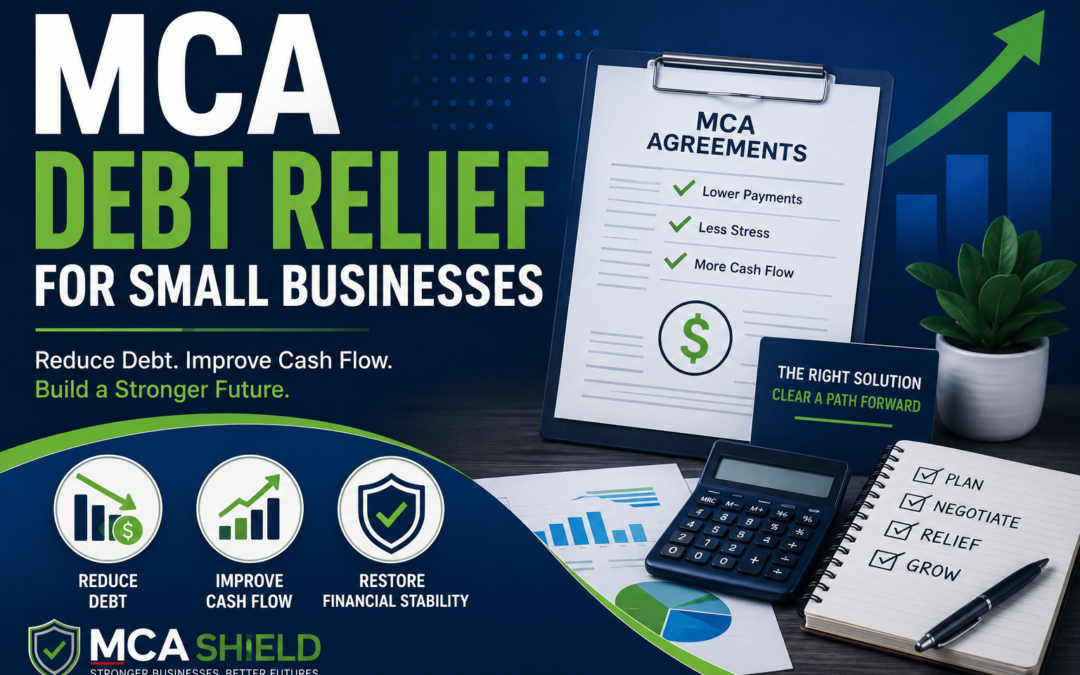
Many small businesses turn to merchant cash advances for quick funding, but the payments can become difficult to manage. MCA debt relief for small businesses helps owners reduce financial pressure, improve cash flow, and find a better path forward.
When daily or weekly MCA withdrawals begin affecting payroll, inventory, or basic expenses, it may be time to explore relief options. Understanding how MCA debt works and knowing the solutions available can help protect your business before the situation becomes worse.
Schedule Your Free Consultation
What Is MCA Debt Relief for Small Businesses?
Signs Your Small Business Needs MCA Debt Relief
Why MCA Debt Creates Challenges for Small Businesses
Merchant cash advances can provide fast access to funding, but repayment terms may create long-term challenges. Many small businesses begin with one advance and later discover the payments are harder to manage than expected.
When MCA debt consumes too much revenue, owners may have less money available for payroll, inventory, marketing, and daily operations. Understanding these challenges can help businesses recognize when it is time to explore MCA debt relief for small businesses.
High Repayment Costs and Factor Rates
One reason MCA debt becomes difficult is the way repayment costs are structured. Unlike traditional loans that use interest rates, many merchant cash advances use factor rates. This determines the total amount a business must repay.
The total repayment amount can be much higher than the original funding received. Since payments are usually collected frequently, business owners may feel the impact quickly.
Common challenges include:
- Higher overall repayment costs
- Less available working capital
- Reduced flexibility during slow sales periods
- Difficulty saving for future business needs
Understanding the true cost of an MCA is an important step toward finding the right financial solution.
Multiple MCA Payments and Stacked Advances
Many businesses take additional advances when cash flow becomes tight. While this may provide temporary relief, stacking multiple MCAs can create even more financial pressure.
Each new advance often adds another payment obligation. Over time, several daily or weekly withdrawals can reduce the cash needed to keep the business running.
Stacked MCAs may lead to:
✓ Multiple companies withdrawing payments
✓ Larger portions of revenue going toward debt
✓ Increased dependence on new funding
✓ Less control over business finances
For many small businesses, breaking the stacking cycle is necessary to rebuild stability.
The Risk of Collections and Default
When MCA payments become unaffordable, businesses may fall behind. Missed payments can result in collection activity, increased pressure from funders, and additional financial concerns.
Waiting until a default occurs may limit available options. Addressing MCA debt early can create more opportunities to negotiate solutions and protect the business’s future.
Professional MCA debt relief can help owners review their situation, understand available options, and create a strategy focused on long-term recovery.
MCA Debt Relief Options for Small Business Owners
When merchant cash advance payments become overwhelming, taking another advance is not the only option. Several MCA debt relief options for small business owners may help reduce financial pressure and create a more manageable path forward.
The right solution depends on your current MCA agreements, cash flow, business goals, and overall financial situation. Reviewing all available options can help you choose a strategy that supports long-term recovery.
MCA Debt Settlement
MCA debt settlement focuses on negotiating with MCA companies to resolve outstanding balances. The goal is often to reach an agreement that reduces financial strain and creates a more realistic repayment plan.
Settlement may be an option for businesses struggling with:
- Unmanageable daily or weekly withdrawals
- Multiple merchant cash advances
- Declining cash flow
- Difficulty meeting regular operating expenses
Every situation is different, which is why a detailed review of your MCA agreements is important before choosing this approach.
MCA Debt Consolidation
MCA debt consolidation combines multiple obligations into one structured solution designed to simplify repayment. For some businesses, this can reduce the pressure of managing several withdrawals and improve overall cash flow.
However, business owners should carefully review the terms before agreeing to any consolidation offer. Some solutions may extend repayment periods or increase the total cost.
The goal should be to improve financial stability, not create another cycle of short-term relief followed by long-term pressure.
Negotiating More Manageable Payment Terms
Some businesses may benefit from negotiating new payment arrangements with MCA providers. Adjusting repayment expectations can create breathing room and allow owners to focus on keeping operations moving.
A successful negotiation strategy often involves reviewing:
✓ Current MCA balances
✓ Payment schedules
✓ Business revenue
✓ Available cash flow
✓ Long-term financial goals
Creating realistic terms can help businesses regain control instead of constantly reacting to payment demands.
Avoiding the MCA Renewal Cycle
Many small businesses accept MCA renewals because they need immediate cash. However, renewing an advance without fixing the underlying cash flow problem can increase financial pressure.
Each renewal may add new fees, extend obligations, or make it harder to move away from MCA dependence.
Exploring MCA debt relief before accepting another advance can help business owners break the renewal cycle, protect cash flow, and create a stronger financial foundation.
How the MCA Debt Relief Process Works
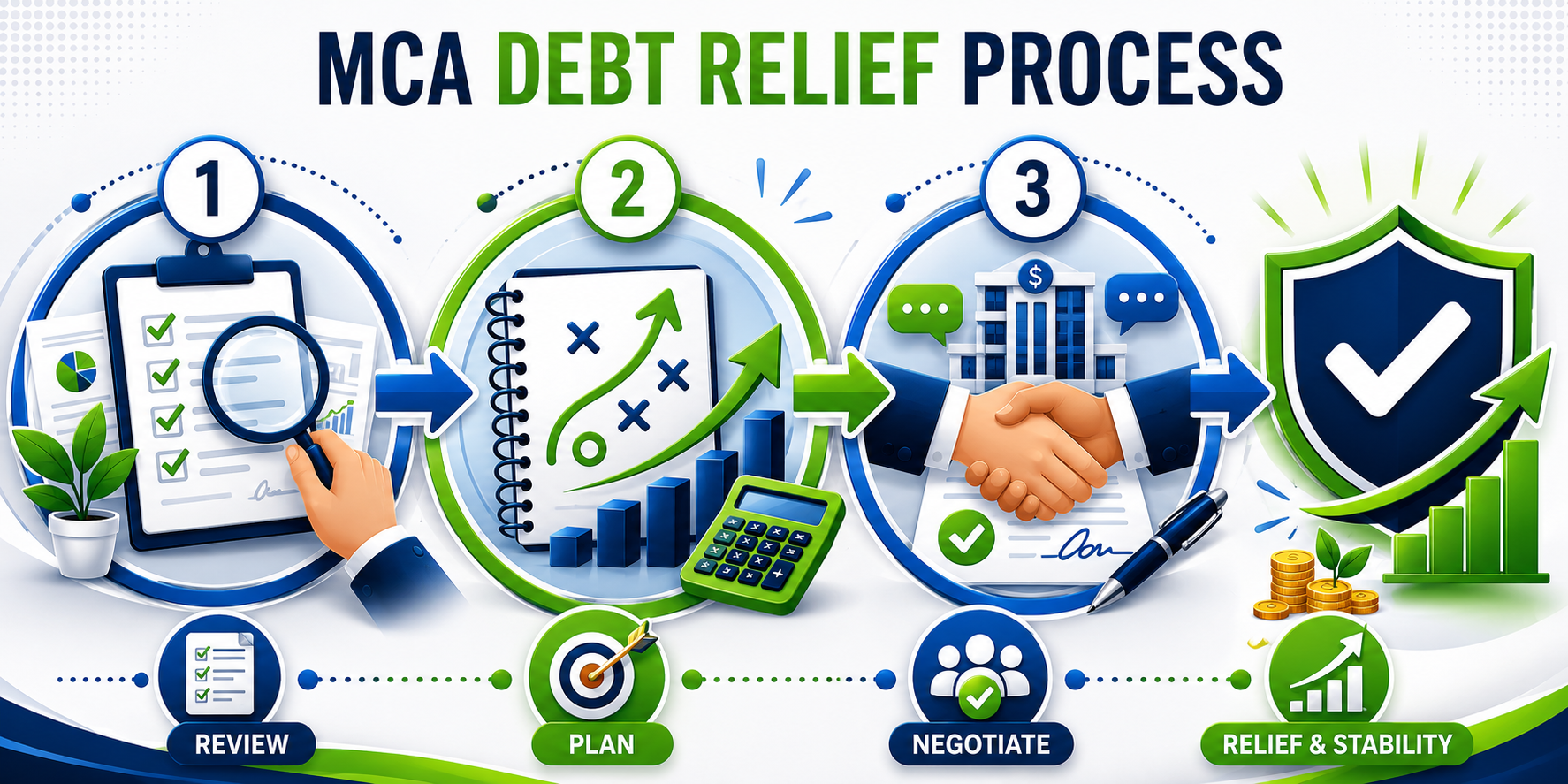
The MCA debt relief process begins with understanding your current financial situation and identifying the best path forward. Every business has different challenges, so the right strategy should be based on your agreements, payment structure, and available cash flow.
A professional approach to MCA debt relief for small businesses focuses on creating realistic solutions vs temporary fixes that may lead to more debt.
Reviewing Your Current MCA Agreements
The first step is reviewing each active merchant cash advance agreement. This helps determine exactly what your business owes and how current payments are affecting daily operations.
A complete review often includes:
- Original funding amounts
- Remaining balances
- Payment schedules
- Factor rates and fees
- ACH withdrawal requirements
- Current cash flow challenges
Understanding the full picture allows business owners to make informed decisions instead of reacting to immediate payment pressure.
Creating a Customized Relief Strategy
After reviewing your MCA situation, the next step is building a debt relief strategy based on your specific business needs. There is no single solution that works for every company.
A customized MCA relief plan considers your revenue, expenses, creditor obligations, and long-term goals. The focus is on creating a realistic path that improves cash flow while keeping the business moving forward.
The right strategy can help address current financial challenges without relying on additional MCA funding.
Negotiating With MCA Companies
Negotiation is often an important part of the MCA debt relief process. Experienced professionals can communicate with MCA companies to work toward more manageable solutions.
This may involve discussing payment adjustments, settlement opportunities, or alternative arrangements based on the business’s financial position.
The goal is to reduce pressure, create stability, and give small business owners more control over their financial future.
Benefits of Professional MCA Debt Relief
Trying to manage overwhelming merchant cash advance payments on your own can be stressful. Professional MCA debt relief for small businesses helps owners understand their options and develop a strategy based on their specific financial situation.
Instead of continuing the cycle of short-term funding, the right approach focuses on creating a more sustainable solution. The goal is to improve cash flow, reduce financial pressure, and build a stronger foundation for the future.
Reduce Daily Payment Pressure
Frequent MCA withdrawals can make it difficult for businesses to maintain control over their finances. When a large portion of revenue goes toward payments, owners may struggle to cover essential expenses.
Professional MCA debt relief can help by reviewing current obligations and exploring options to make payments more manageable.
Reducing payment pressure may help businesses:
- Maintain healthier cash flow
- Cover important operating costs
- Reduce reliance on additional advances
- Focus on daily business needs
Creating more financial flexibility allows owners to spend less time reacting to MCA payments and more time running their business.
Improve Business Cash Flow
Strong cash flow is necessary for long-term business success. When MCA payments consume too much revenue, even profitable businesses may experience financial strain.
MCA debt relief strategies focus on improving the balance between incoming revenue and outgoing obligations. With better cash flow management, businesses may have more resources available for payroll, vendors, inventory, and growth opportunities.
A healthier cash flow position can provide the stability needed to move forward.
Create a Path Toward Long-Term Stability
The goal of MCA debt relief is not only to solve immediate payment problems. It is also about helping businesses build a more sustainable financial future.
A customized relief plan can help owners address current challenges while reducing the risk of returning to the same debt cycle.
With the right strategy and support, small businesses can work toward stronger cash flow, improved financial control, and greater confidence in their future.
Common Mistakes Small Businesses Make With MCA Debt
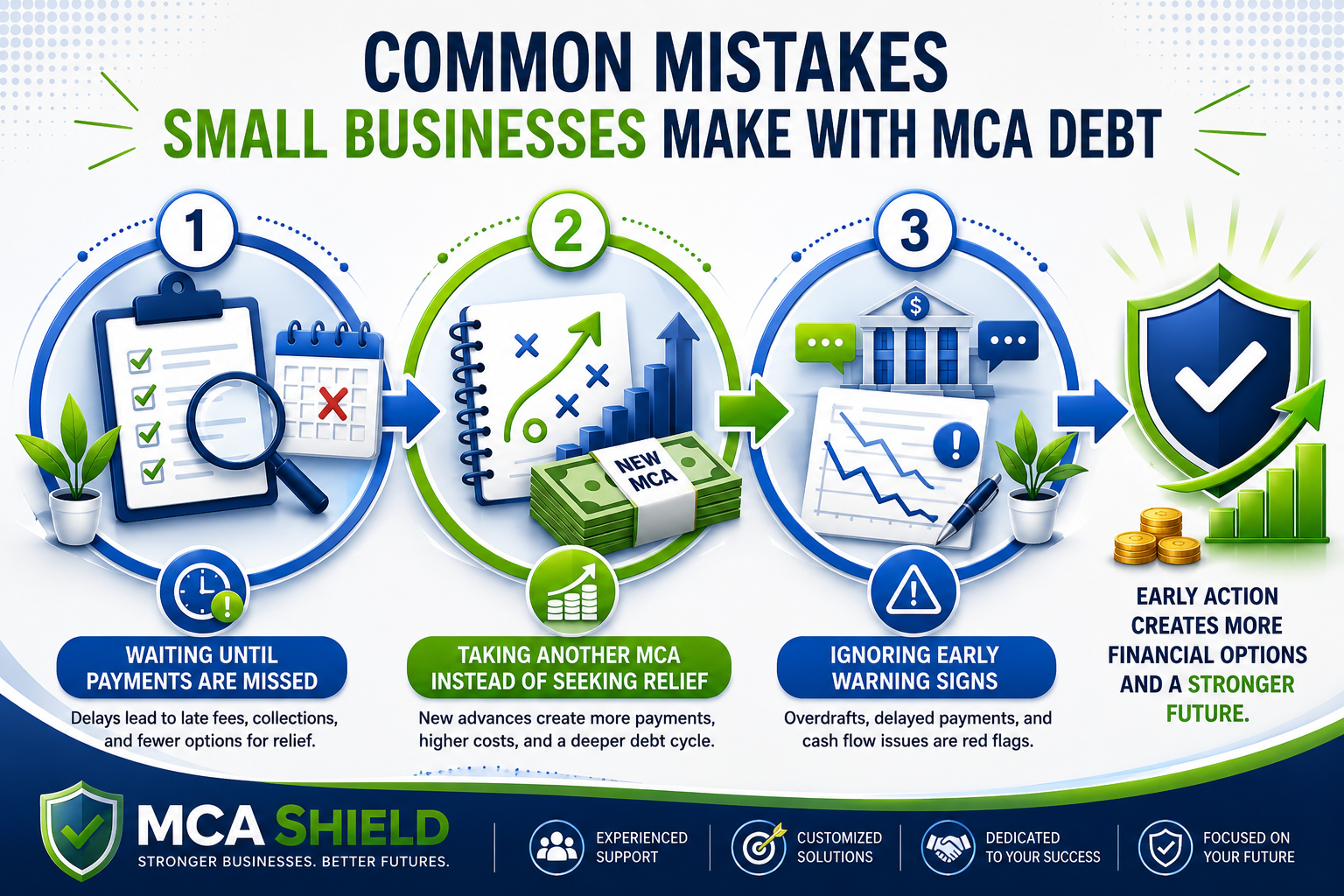
Many small business owners try to manage MCA debt on their own for as long as possible. While this is understandable, waiting too long to address payment challenges can limit available options.
Recognizing common mistakes early can help businesses avoid unnecessary financial pressure and find better solutions before problems become more difficult to manage.
Waiting Until Payments Are Missed
One of the biggest mistakes businesses make is waiting until MCA payments have already been missed. By this point, the business may be dealing with additional stress from returned payments, collection activity, or default concerns.
Seeking help before payments become unmanageable often provides more opportunities. Early action gives business owners time to review their options and create a plan based on their current financial situation.
Taking Another MCA Instead of Seeking Relief
A new merchant cash advance may seem like the fastest way to solve a cash shortage. However, using another advance to cover existing payments can increase the overall financial burden.
Additional MCA funding may create:
- Higher repayment obligations
- More frequent withdrawals
- Reduced available cash flow
- Greater difficulty breaking the debt cycle
Exploring MCA debt relief for small businesses provides alternatives focused on long-term stability vs temporary financial relief.
Ignoring Early Warning Signs
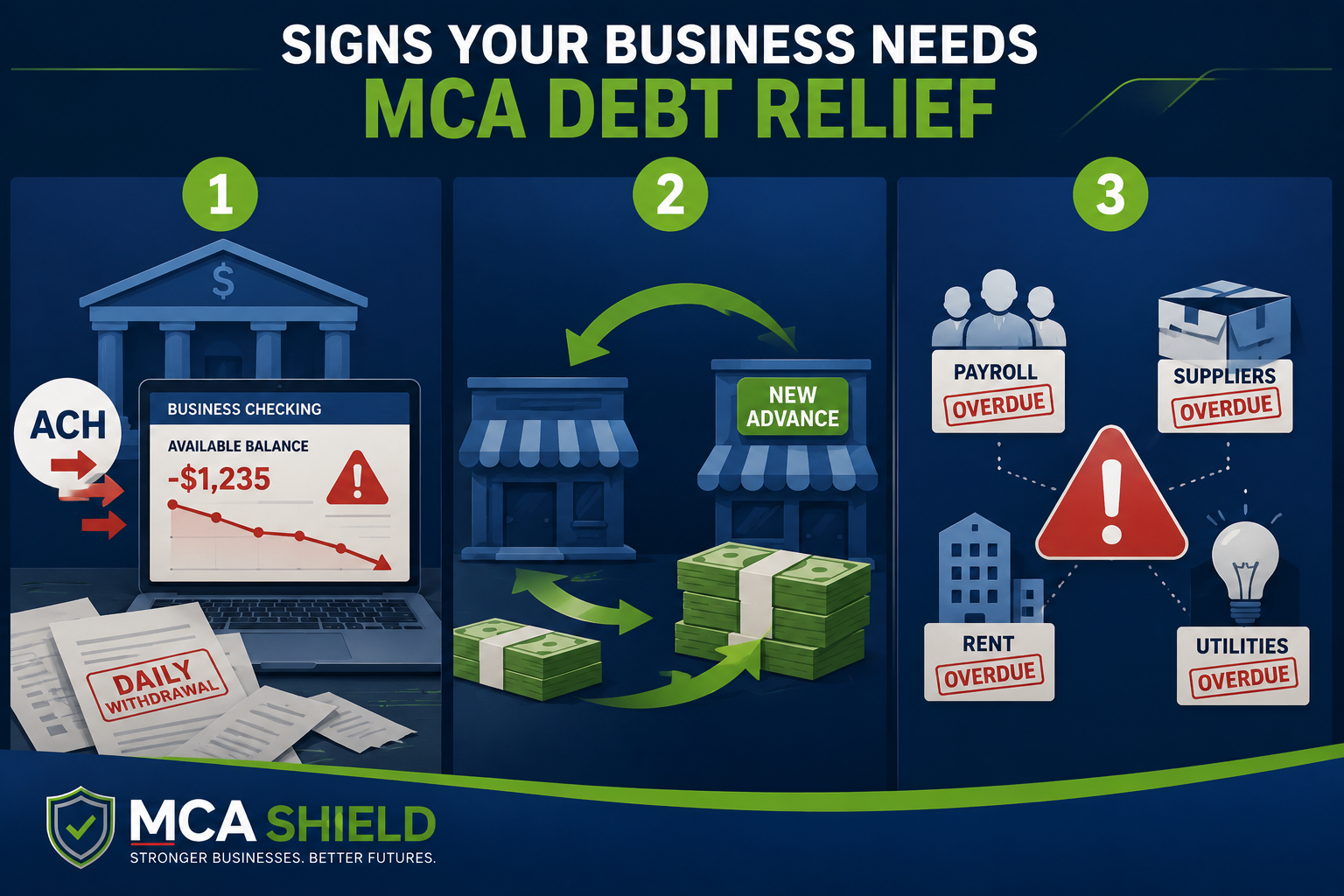
Cash flow problems usually develop before a business reaches a financial crisis. Warning signs such as overdrafts, delayed expenses, and relying on new funding should not be ignored.
Addressing these issues early allows business owners to take a proactive approach. Understanding your options before MCA debt grows can help protect operations and create a clearer path toward recovery.
Frequently Asked Questions About MCA Debt Relief for Small Businesses
Business owners facing merchant cash advance challenges often have questions about their options. Understanding how MCA debt relief for small businesses works can help you make informed decisions before financial pressure increases.
Can MCA Debt Be Reduced?
Yes, MCA debt may be reduced depending on your situation.
Some MCA companies may be willing to negotiate different terms or settlement options when a business is experiencing financial hardship.
Factors that may affect your options include:
✓ Current MCA balance
✓ Number of active advances
✓ Payment history
✓ Business cash flow
✓ Status of the account
Reviewing your agreements can help determine which debt relief options may be available.
Is MCA Debt Relief Better Than Taking Another Advance?
For many businesses, MCA debt relief may provide a better long-term solution than accepting another advance.
A new MCA may temporarily increase available cash, but it can also add:
❌ Another payment schedule
❌ Higher repayment obligations
❌ More pressure on future revenue
MCA debt relief focuses on addressing the existing problem instead of adding another financial obligation.
Can MCA Companies Negotiate Payments?
Yes, some MCA companies may negotiate payment arrangements.
Depending on the circumstances, negotiations may include adjusted payment terms, settlements, or alternative solutions.
Having a clear strategy before entering discussions is important. Understanding your financial position can improve the chances of finding a realistic path forward.
What Happens If I Cannot Pay My MCA?
If your business cannot keep up with MCA payments, the MCA company may begin collection efforts. This could include increased communication, attempts to recover payments, or other actions outlined in your agreement.
Ignoring the problem usually makes the situation more stressful. Exploring MCA debt relief early may provide more options before the situation becomes harder to manage.
Can I Stop Daily MCA Withdrawals?
Daily MCA withdrawals are typically connected to the authorization provided in your agreement. Before making changes, it is important to understand your contract and possible consequences.
If ACH payments are creating serious cash flow problems, a professional MCA debt relief company can review your situation and explain available options.
When Should a Small Business Seek MCA Debt Help?
The best time to seek help is when MCA payments first begin affecting your ability to operate.
Warning signs include:
🚩 Daily payments draining cash flow
🚩 Taking new advances to cover old ones
🚩 Falling behind on expenses
🚩 Struggling with payroll or vendors
🚩 Managing multiple MCA agreements
Taking action early gives small businesses more time to evaluate solutions, protect cash flow, and work toward long-term stability.
Take Control of MCA Debt Before It Limits Your Business
MCA debt can become more difficult to manage when payments continue to reduce available cash flow. Waiting until financial problems become severe may limit your options and make recovery more challenging.
The right MCA debt relief for small businesses can help you address payment pressure, understand your options, and create a plan focused on moving your business forward.
Why Early Action Creates More Financial Options
Taking action early gives business owners more opportunities to find solutions before MCA debt impacts daily operations. Addressing the problem sooner can help prevent additional advances, missed payments, and increased financial stress.
Early action allows you to:
✓ Review your current MCA agreements
✓ Understand your repayment obligations
✓ Explore available relief options
✓ Protect business cash flow
✓ Build a strategy for long-term stability
You do not have to wait until your business reaches a crisis point to explore better options.
Schedule a Free Consultation With MCA Shield
At MCA Shield, we help small businesses facing overwhelming merchant cash advance payments find practical solutions. Our team reviews your situation, explains your available options, and develops a strategy unique to your business needs.
If MCA payments are limiting your cash flow or making it harder to operate, now is the time to take action.
Schedule your free consultation with MCA Shield today and start building a stronger financial future for your business.