

Merchant Cash Advances can provide fast access to working capital. However, daily or weekly withdrawals can quickly consume a significant portion of a business’s revenue.
For many business owners, what initially feels like a short-term funding solution can quickly become a serious cash-flow burden. Payments stack up. Operating capital tightens. Financial flexibility disappears. Businesses often make reactive decisions to stay afloat.
This case study highlights how one business reduced its MCA payment obligations by 40% through strategic debt relief and mca restructuring. Their experience offers valuable insight for business owners facing similar pressure and shows that solutions are often available before the situation becomes unmanageable.
Schedule Your Free Consultation
How Daily Withdrawals Started Hurting Cash Flow
At first, the daily MCA withdrawals seemed like a manageable tradeoff for quick access to funding. The funding helped the business cover immediate expenses and continue operating without interruption. However, as the withdrawals continued day after day, they began taking a larger toll on available cash flow.
Because payments were automatically deducted from incoming revenue, less money remained available for essential business needs. Payroll, vendor payments, inventory purchases, and other expenses competed with daily MCA withdrawals for the same pool of cash. As a result, financial flexibility began to disappear.
Over time, cash flow became increasingly difficult to predict. Instead of focusing on growth and long-term planning, the business owner found themselves constantly managing short-term cash shortages and adjusting spending decisions around repayment demands. What started as a funding solution gradually became an operational challenge, placing ongoing pressure on the business’s ability to function efficiently.
As the strain continued to build, it became clear that the repayment structure was no longer supporting the business—it was limiting its ability to maintain healthy working capital and operate with confidence.
The Warning Signs That Action Was Needed
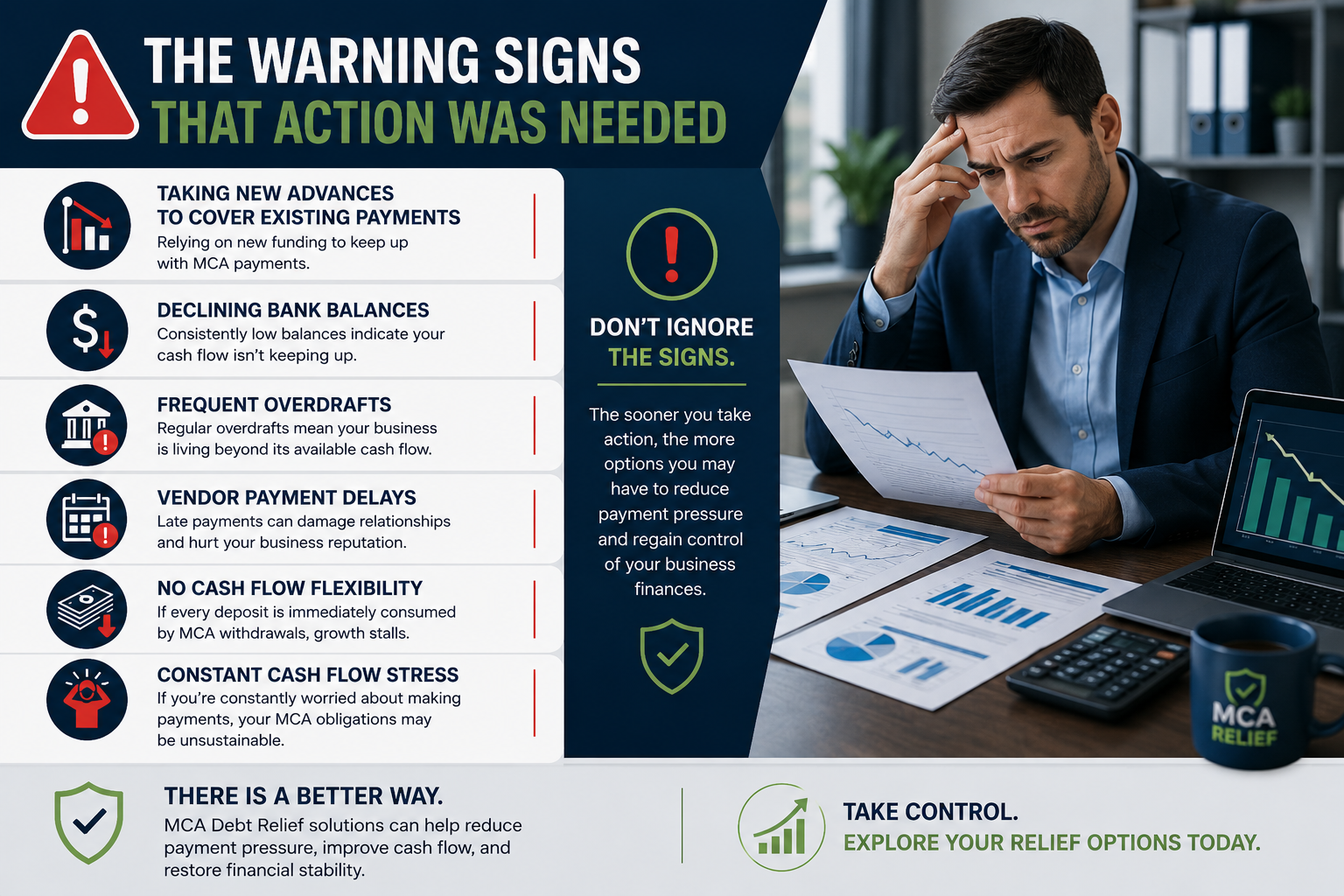
As daily MCA withdrawals continued to strain cash flow, several clear warning signs began to emerge. What once felt manageable became harder to sustain. The financial pressure started affecting daily business operations.
Vendor payments became delayed. Working capital became less predictable. Financial planning became reactive instead of strategic. Instead of focusing on growth and day-to-day operations, the business owner was spending more time managing cash flow gaps and adjusting to constant payment pressure.
One clear warning sign was the growing struggle to maintain financial stability without constant short-term adjustments. It became clear that without restructuring the repayment obligations, the pressure would continue to escalate and further limit the business’s ability to operate effectively.
Evaluating MCA Debt Relief Options
The Strategy Used to Reduce Payments by 40%
After reviewing the business’s MCA agreements, payment structure, and financial position, the team implemented a restructuring strategy that focused on:
- Evaluating all active MCA obligations
- Prioritizing the most aggressive repayment terms
- Negotiating payment modifications
- Restructuring obligations into more manageable terms
- Creating a realistic repayment framework aligned with actual cash flow
The strategy reduced payment pressure by 40% and created immediate breathing room.
How Cash Flow Stabilized After Restructuring
After reducing payments, the business could:
- Rebuild operating reserves
- Pay vendors on time
- Stabilize payroll scheduling
- Improve financial forecasting
- Focus on growth instead of constant survival mode
Most importantly, leadership regained control over business decision-making.
What Other Businesses Can Learn From This Case
One of the biggest mistakes business owners make is waiting too long to address MCA pressure.
Common warning signs include:
- Taking new advances to cover existing payments
- Declining bank account balances
- Frequent overdrafts
- Vendor payment delays
- Constant cash flow stress
Early action often creates more restructuring options and better outcomes.
This case study shows how strategic MCA debt relief helped a mid-sized business reduce payment pressure by 40% after daily withdrawals strained cash flow and limited financial flexibility.
By restructuring repayment terms and creating a more manageable payment framework, the business stabilized cash flow, rebuilt working capital, and regained financial control.
The key takeaway is simple: recognizing the warning signs early and exploring Merchant Cash Advance relief options can help businesses reduce financial pressure before the situation becomes more difficult to manage.
When to Seek MCA Debt Relief Before Things Get Worse
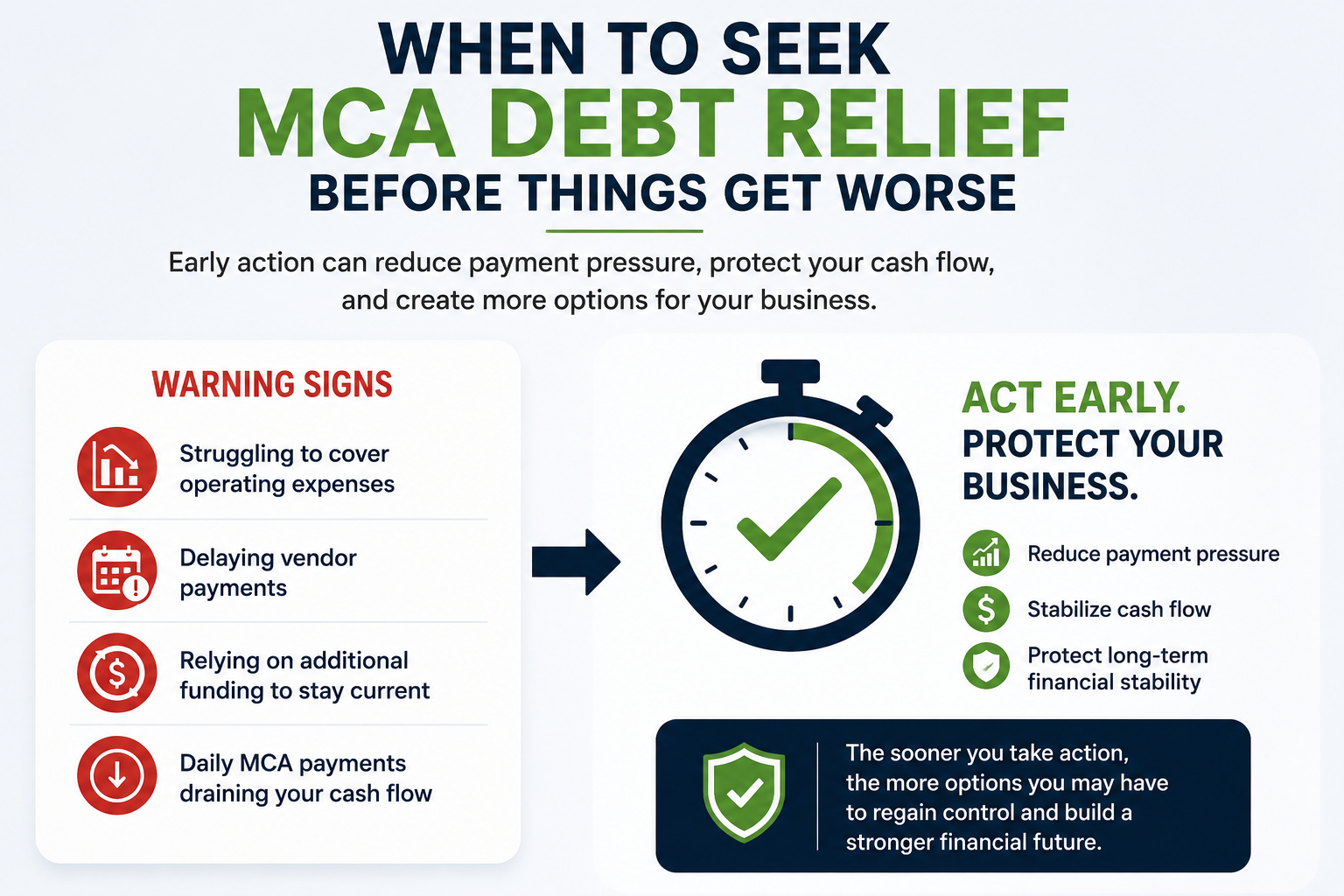
If your business struggles to cover operating expenses, delays vendor payments, or relies on additional funding to stay current, it’s time to explore relief options. Financial pressure rarely resolves on its own, and delaying action can reduce the number of available restructuring options.
Seeking MCA debt relief early can create more opportunities to reduce payment pressure, stabilize cash flow, and protect the long-term health of the business. Address repayment challenges early. Doing so makes it easier to stabilize cash flow and regain control before the situation worsens.
How MCA Debt Relief Can Help Restore Financial Control
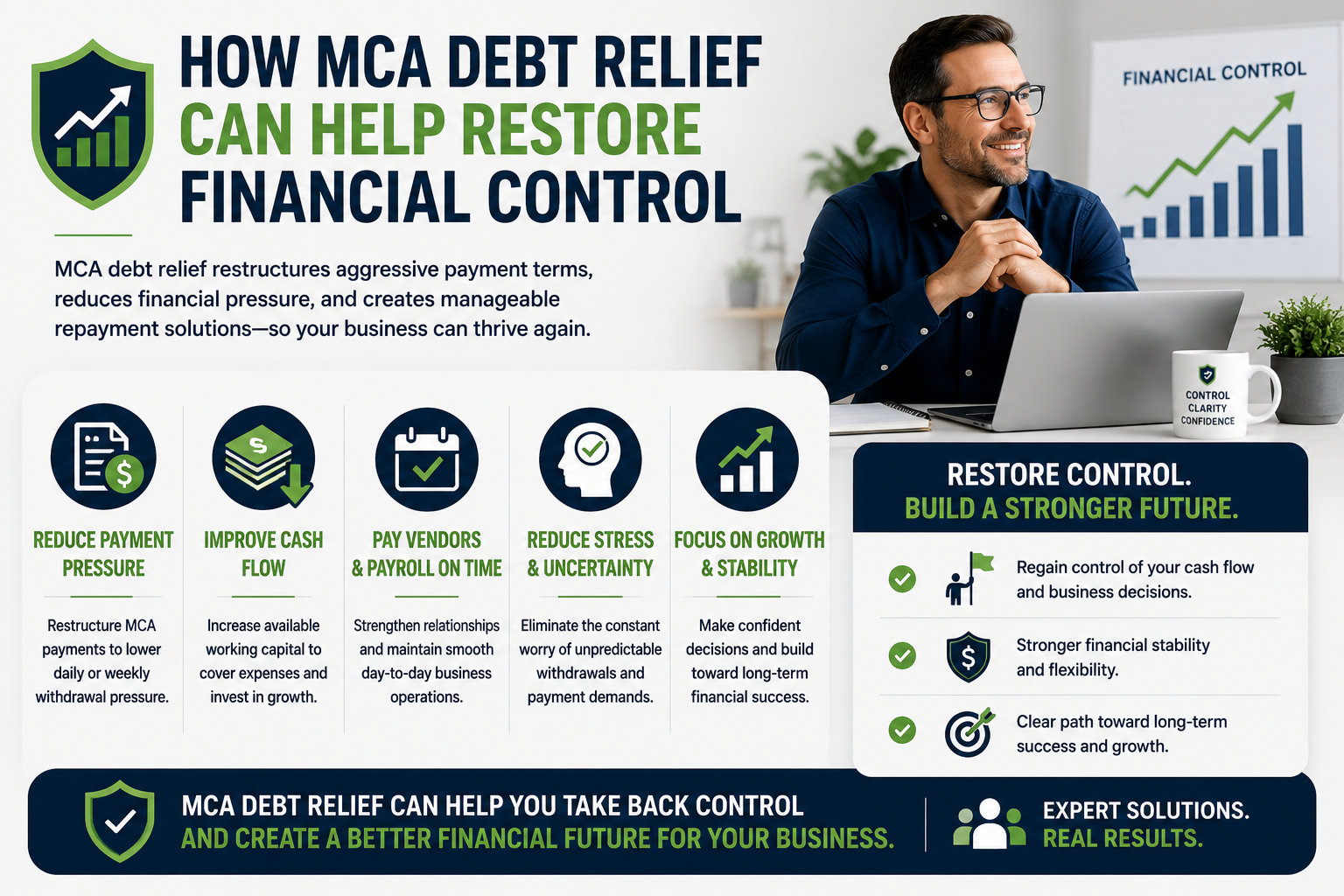
Merchant Cash Advance debt relief gives businesses a practical way to regain control when repayment obligations overwhelm daily cash flow. By consolidating aggressive mca payment terms into a lower payment, reducing financial pressure, and creating more manageable repayment arrangements, businesses can restore the working capital needed to operate effectively.
Improved cash flow helps business owners meet payroll, pay vendors on time, and make decisions that support long-term growth. Relief solutions can also reduce the constant stress of unpredictable daily withdrawals, allowing leadership to focus on running and strengthening the business.
Most importantly, MCA debt relief helps shift control back to the business owner. Instead of reacting to daily payment demands, businesses can move forward with greater financial flexibility, stronger planning capabilities, and a clearer path toward long-term stability.
If Merchant Cash Advance payments are putting pressure on your business, relief options may be available.
Assess your situation as early as possible. Early action can reduce payment strain, stabilize cash flow, and help you regain financial control.