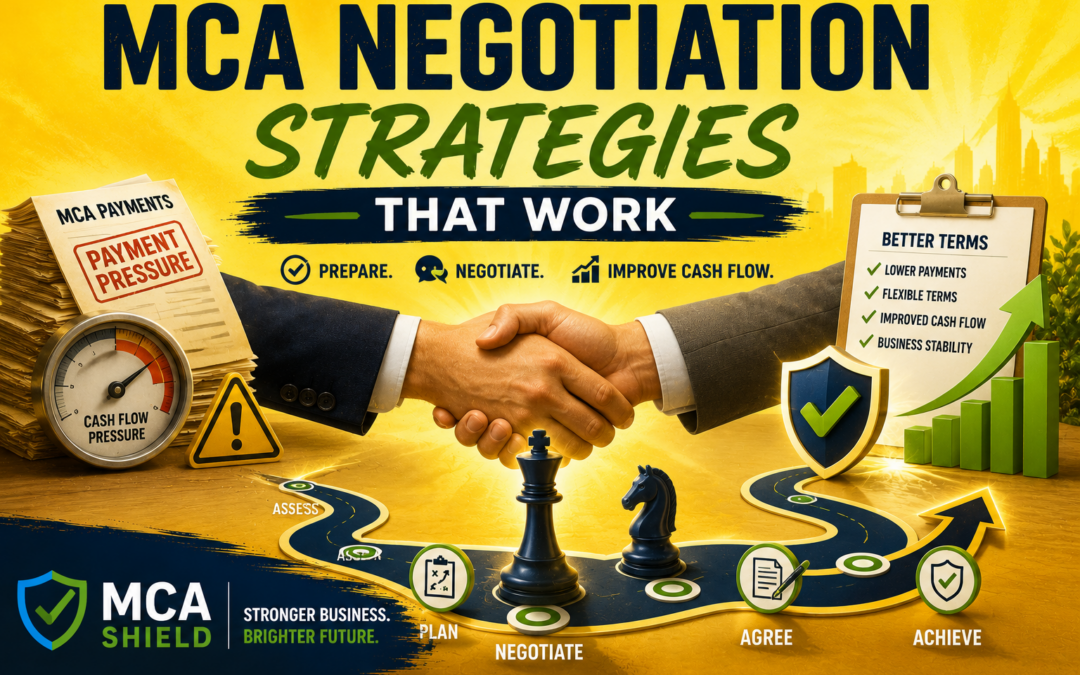
Many business owners feel trapped when Merchant Cash Advance (MCA) payments begin consuming too much of their cash flow. Daily or weekly withdrawals can quickly create pressure on payroll, vendors, inventory purchases, and other essential operating expenses. When payment obligations become difficult to manage, effective MCA negotiation strategies may help create opportunities to reduce financial strain and regain control of business finances.
Successful negotiations require more than simply asking for relief. MCA companies often respond more favorably when business owners present accurate financial information, realistic proposals, and a clear understanding of their situation. The right negotiation strategy can improve communication, increase flexibility, and create pathways toward more manageable repayment terms. Understanding which approaches tend to produce better results can help businesses navigate MCA challenges more effectively and avoid making costly decisions under pressure.
Schedule Your Free Consultation
How Merchant Cash Advance Debt Negotiation Works
Merchant Cash Advance debt negotiation is the process of working directly with MCA companies to address payment challenges and explore potential solutions. The goal is often to reduce financial pressure while creating a path that allows the business to continue operating. Every situation is different, but successful negotiations typically begin with a thorough review of the company’s financial condition, MCA agreements, and current cash flow.
Before discussions begin, it is important to understand the factors that may influence the outcome. MCA companies often evaluate a business’s ability to meet future obligations before considering any changes to repayment terms.
Common steps in the negotiation process include:
- Reviewing MCA balances and contract terms
- Analyzing cash flow and financial records
- Identifying realistic repayment options
- Communicating directly with MCA companies
- Negotiating potential modifications or settlements
- Documenting any agreed-upon terms in writing
Preparation plays a major role in successful negotiations. Businesses that approach discussions with accurate financial information and a clear strategy often have a stronger foundation for productive conversations and better outcomes.
When MCA Companies Are Most Willing to Negotiate
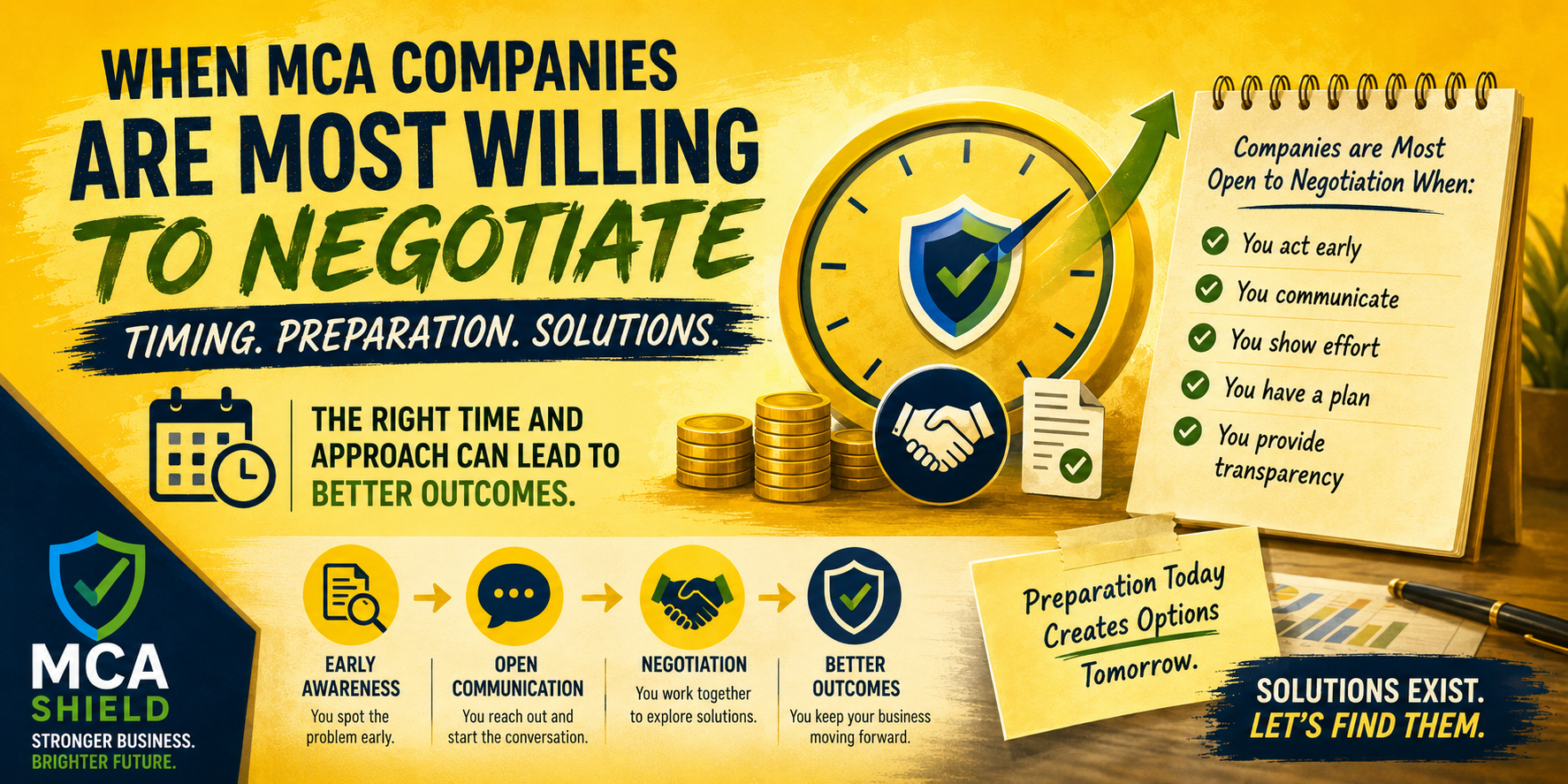
Timing can play an important role in Merchant Cash Advance debt negotiations. In many cases, MCA companies are more willing to discuss solutions when they believe a business is facing legitimate financial challenges but still has a realistic path forward. Waiting too long can reduce available options, especially if the situation progresses into prolonged defaults, legal action, or severe cash flow distress. Businesses that address problems early often have more opportunities to negotiate from a position of strength.
MCA companies typically want to recover as much of the outstanding balance as possible. As a result, they may be more open to discussions when business owners provide clear financial information and demonstrate a genuine effort to resolve the situation. The most productive negotiations often occur before payment issues become a full-blown crisis. Taking action early can improve communication, increase flexibility, and create a better environment for reaching a workable solution.
Preparing Your Business for MCA Debt Negotiations
Successful MCA debt negotiations often begin long before the first conversation with a funding company. Preparation can strengthen your position and help you present a clear picture of your business’s financial situation. The more organized and informed you are, the more productive negotiations are likely to be. Taking time to gather accurate information also helps identify realistic solutions before discussions begin.
Start by reviewing all MCA agreements, outstanding balances, payment schedules, and recent bank statements. Analyze your cash flow to determine what your business can realistically afford moving forward. It is also important to understand the factors that contributed to the current situation, whether that involves declining revenue, rising expenses, seasonal challenges, or stacked MCAs.
Before entering negotiations, consider:
- Gathering financial records and cash flow reports
- Reviewing MCA contract terms and obligations
- Calculating realistic payment capabilities
- Identifying business expenses that cannot be reduced
- Developing clear goals for the negotiation process
Preparation creates credibility. When MCA companies see accurate financial information and a realistic proposal, negotiations often become more constructive. A well-prepared business is typically in a stronger position to pursue solutions that support long-term financial stability.
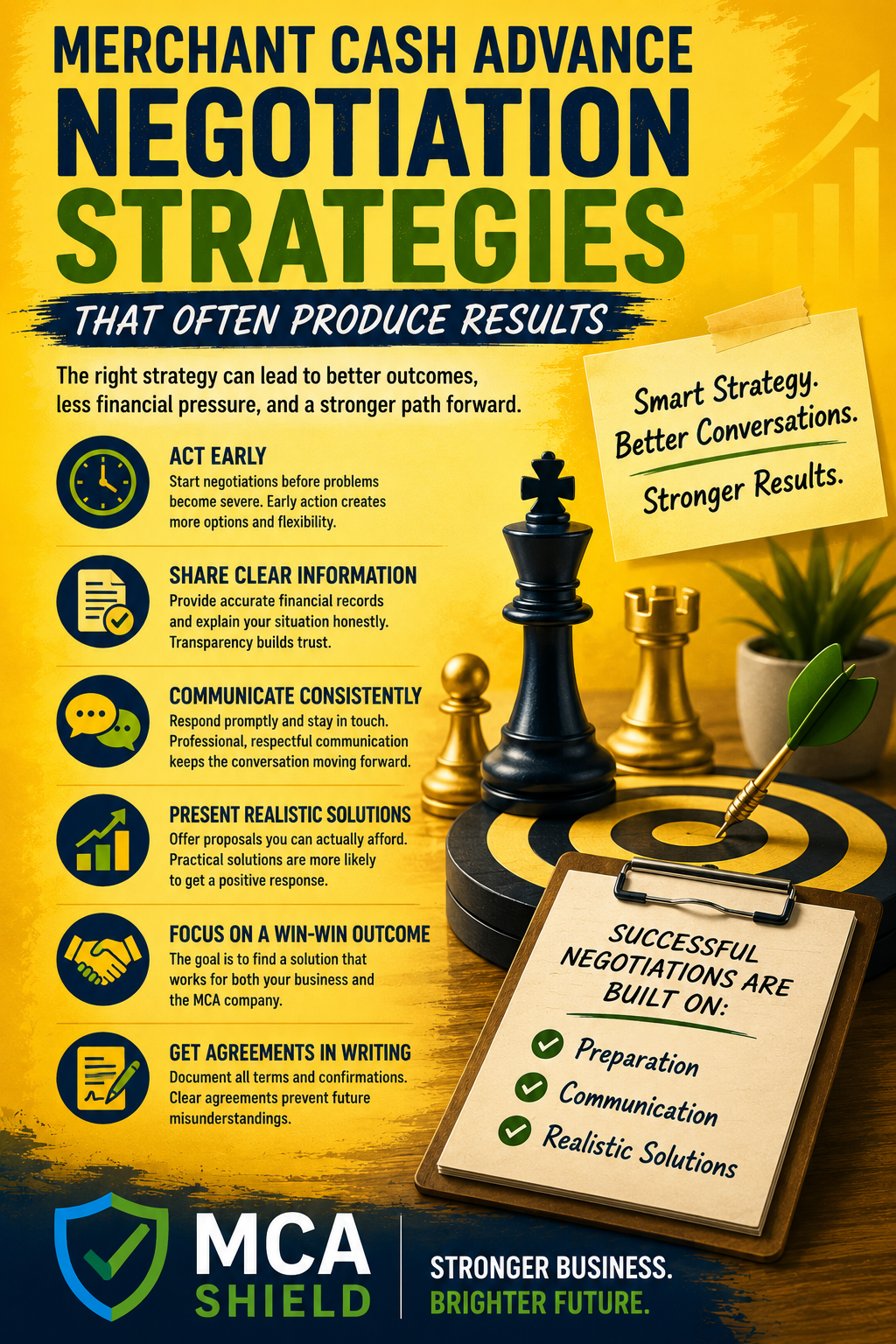
Merchant Cash Advance Negotiation Strategies That Often Produce Results
Successful Merchant Cash Advance negotiation strategies typically focus on preparation, transparency, and realistic expectations. MCA companies are often more willing to engage in productive discussions when business owners provide accurate financial information and demonstrate a genuine commitment to resolving the situation. Clear communication, early action, and a well-supported proposal often create the strongest foundation for meaningful negotiations. Businesses that understand their cash flow, document their financial challenges, and approach negotiations with a practical plan are generally better positioned to pursue solutions that reduce payment pressure and support long-term financial stability.
Common Mistakes Businesses Make During MCA Negotiations
Many business owners enter MCA negotiations with good intentions but make mistakes that reduce their chances of reaching a favorable outcome. In some cases, these mistakes can limit available options and create additional financial pressure. Successful negotiations require preparation, accurate information, and a realistic understanding of the business’s financial position.
One of the most common errors is waiting too long to begin the negotiation process. As cash flow problems worsen, businesses often lose flexibility and face increasing pressure from multiple obligations. Other owners agree to payment terms they cannot realistically maintain, which can lead to additional challenges later.
Common negotiation mistakes include:
- Waiting until the situation becomes a crisis
- Failing to gather accurate financial information
- Ignoring communication from MCA companies
- Making unrealistic repayment proposals
- Taking additional MCA funding during negotiations
- Agreeing to terms without fully understanding them
The strongest negotiations typically start with a clear strategy and realistic goals. Businesses that prepare thoroughly and address challenges early often place themselves in a better position to pursue solutions that support long-term financial stability.
How Negotiation Can Help Reduce MCA Payment Pressure
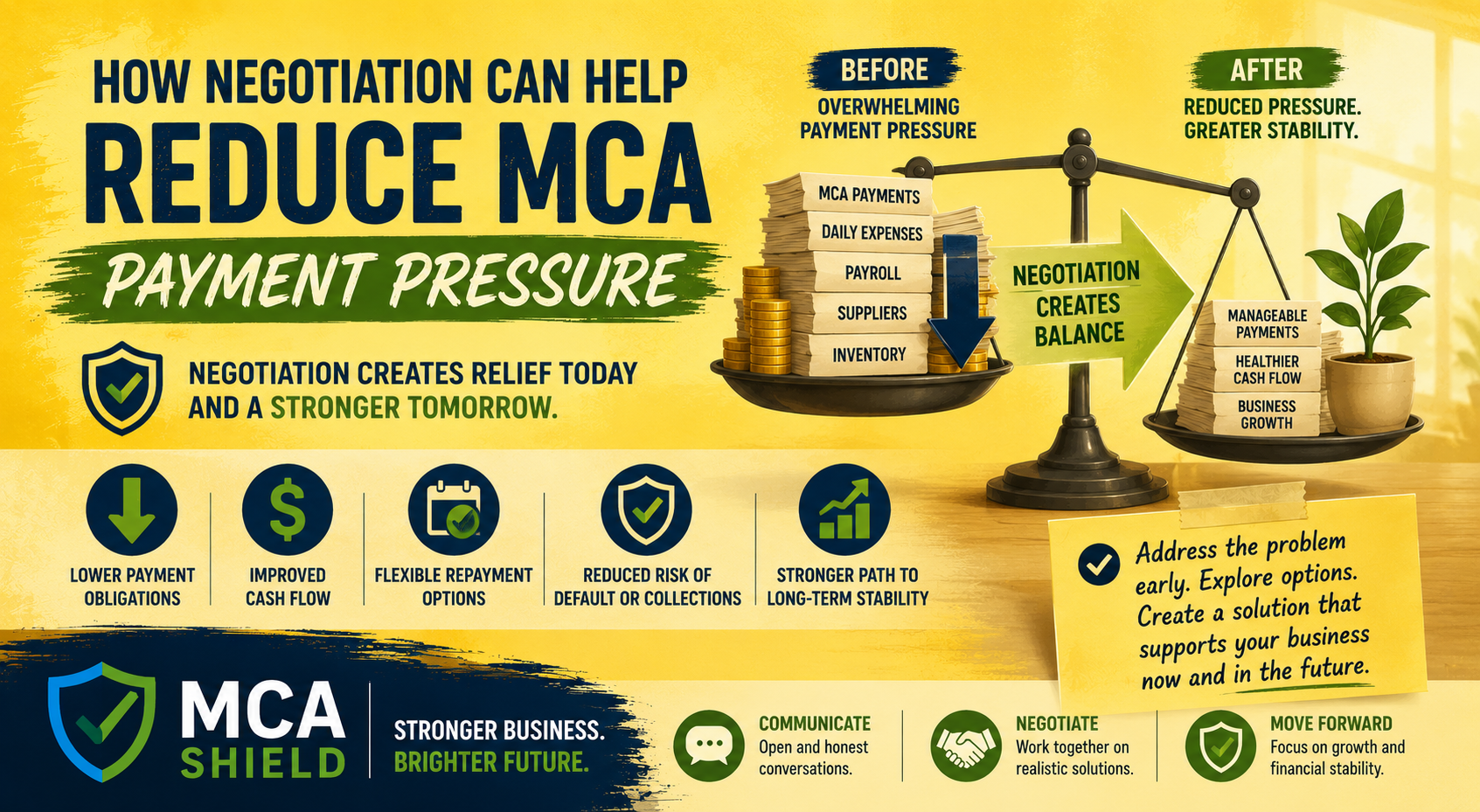
When MCA payments begin consuming too much of a business’s cash flow, negotiation can provide an opportunity to reduce financial pressure and create a more manageable path forward. Rather than allowing payment challenges to continue escalating, negotiations focus on finding solutions that better align repayment obligations with the company’s current financial reality. For many businesses, the objective is to improve cash flow stability while maintaining day-to-day operations.
Successful negotiations can open the door to alternatives that may ease immediate strain on payroll, vendors, inventory purchases, and other essential expenses. By addressing the problem proactively, businesses often gain more flexibility and a clearer understanding of their available options. While every situation is unique, a well-planned negotiation strategy can help create breathing room and support long-term financial recovery instead of simply reacting to ongoing payment demands.
When to Seek Professional Help With MCA Debt Negotiations
Some business owners successfully handle MCA debt negotiations on their own, while others face situations that require additional experience and guidance. As MCA obligations become more complex, negotiations often become more challenging. The best time to seek professional help is usually before payment problems escalate into defaults, collections, or legal disputes. Early action often creates more options and allows for a more strategic approach.
Professional assistance may be worth considering if your business has multiple stacked MCA advances, severe cash flow shortages, collection pressure, or difficulty communicating with funders. Experienced professionals can help evaluate your financial situation, develop a negotiation strategy, and identify potential solutions that align with your business goals. Seeking help is not a sign of failure. It is often a proactive step toward protecting your business and improving long-term financial stability.