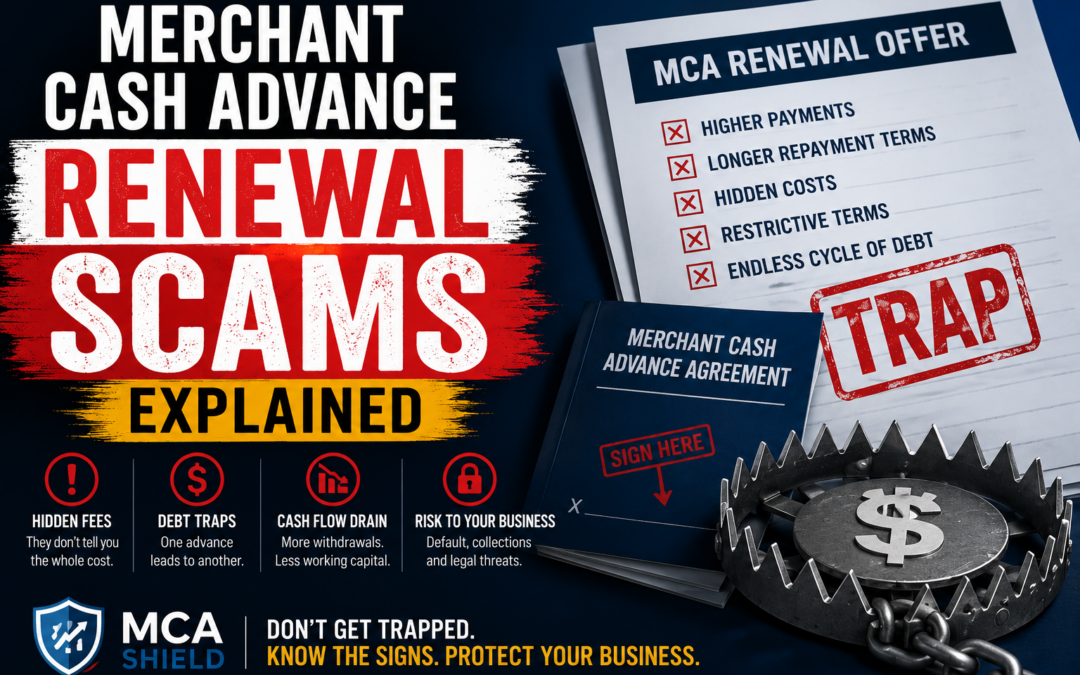
Merchant Cash Advance renewal scams can leave business owners with even higher payments, deeper debt, and fewer financial options. While some renewal offers may be legitimate, others are designed to keep businesses trapped in a costly cycle of borrowing. Understanding Merchant Cash Advance renewal scams can help business owners avoid costly financing mistakes before accepting another MCA.
This guide explains how MCA renewal scams work, the warning signs to watch for, and the steps you can take to protect your business before accepting another merchant cash advance.
Schedule Your Free Consultation
What Is a Merchant Cash Advance Renewal?
A merchant cash advance renewal occurs when an MCA company offers a business additional funding. The offer is made before the original advance has been fully repaid. The new advance is often used to pay off the remaining balance of the existing MCA while providing the business with extra working capital. Although this may seem like a convenient solution, it can increase the total amount owed. It can also create additional financial pressure if the terms are unfavorable. Learning how Merchant Cash Advance renewal scams work is an important step in protecting your business from unnecessary debt.
How MCA Renewals Work
MCA renewals typically become available after a business has repaid a portion of its existing advance. The funding company evaluates recent revenue and payment history before offering another advance. If accepted, part of the new funding pays off the remaining balance of the original MCA. The business then receives the remaining proceeds.
The new agreement usually comes with its own factor rate, repayment schedule, and daily or weekly ACH withdrawals. Some renewals provide temporary cash flow relief. However, they may also increase repayment costs and extend the business’s debt obligations.
Why MCA Companies Offer Renewals
MCA companies offer renewals because they generate additional revenue through new financing agreements. Businesses that have consistently made payments are often viewed as attractive candidates for another advance, making renewal offers a common part of the MCA industry.
A renewal may appear to solve immediate cash flow shortages. It may also provide funds for inventory, payroll, or operating expenses. However, repeatedly renewing merchant cash advances without addressing the underlying financial challenges can lead to a cycle of increasing payments, reduced working capital, and ongoing dependence on additional funding.
Are Merchant Cash Advance Renewals Always a Scam?
Not every merchant cash advance renewal is a scam. Some renewal offers are legitimate financing opportunities that may help a business access additional working capital when used responsibly. However, some MCA providers use aggressive or misleading tactics that encourage businesses to accept new advances without fully understanding the long-term financial impact.
The key is understanding the difference between a renewal that supports your business and one that keeps you trapped in an expensive debt cycle.
Understanding Legitimate Renewals
A legitimate MCA renewal should be transparent about the total repayment amount, factor rate, payment schedule, fees, and how the new advance affects any existing balance. Reputable funding companies provide business owners time to review the agreement, ask questions, and determine whether the renewal fits their financial goals.
In some situations, a renewal may provide necessary working capital to support business growth, purchase inventory, or cover temporary cash flow shortages. Before accepting any renewal, business owners should carefully compare the total cost of the new advance with other available financing or debt relief options.
When Renewal Offers Become Predatory
A renewal can become predatory when the focus shifts from helping the business to generating another financing agreement, regardless of the owner’s financial situation. Warning signs include high-pressure sales tactics, incomplete disclosure of repayment costs, repeated encouragement to renew, or recommendations to take on additional MCA funding simply to stay current on existing obligations.
These practices can quickly increase daily or weekly ACH withdrawals, reduce available cash flow, and make it more difficult to cover payroll, rent, inventory, and other operating expenses. Over time, repeated renewals may leave businesses with larger debt obligations and fewer options for financial recovery.
Common Merchant Cash Advance Renewal Scam Tactics
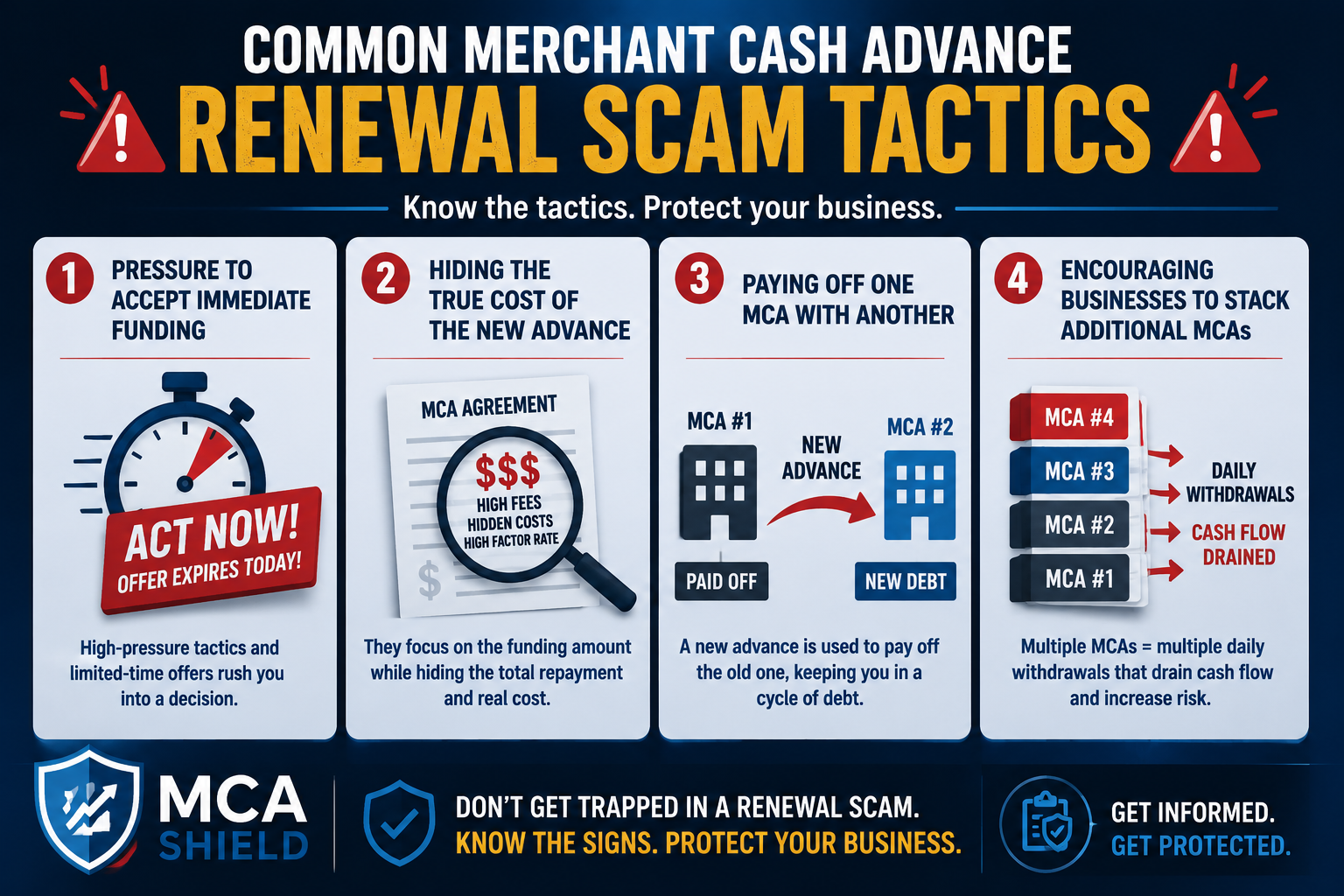
Some merchant cash advance companies use aggressive sales tactics. These tactics encourage business owners to renew funding without understanding the financial consequences. While not every renewal offer is deceptive, recognizing these common tactics can help you avoid agreements that increase debt and reduce cash flow.
Pressure to Accept Immediate Funding
One of the most common warning signs is being pressured to make a decision immediately. A sales representative may claim the offer is available “today only” or insist that funding will disappear if you do not sign right away. This sense of urgency can prevent business owners from reviewing the agreement carefully or comparing other financing options.
Legitimate funding decisions should never require you to sign before you fully understand the terms.
Hiding the True Cost of the New Advance
Some renewal offers emphasize the amount of new funding while downplaying the total repayment obligation. The discussion may focus on affordable daily payments without clearly explaining the factor rate, fees, or the full amount that must be repaid.
Before signing any renewal agreement, calculate the total repayment amount. Then compare it with the cash your business will actually receive. Understanding the true cost can help you avoid taking on more debt than expected.
Paying Off One MCA With Another
A common renewal strategy involves using part of the new advance to pay off the remaining balance of the existing MCA. While this may temporarily eliminate one obligation, it also replaces it with a new agreement that often carries additional costs and extends repayment.
If this process is repeated multiple times, the business may continue borrowing simply to replace previous advances instead of improving its financial position.
Encouraging Businesses to Stack Additional MCAs
Some businesses are encouraged to accept additional merchant cash advances from the same company or multiple providers at the same time. This practice, commonly known as MCA stacking, creates multiple daily or weekly ACH withdrawals that compete for the same business revenue.
As payment obligations grow, cash flow becomes increasingly difficult to manage. Many businesses use new funding to cover existing MCA payments. This creates a cycle of debt that becomes progressively harder to escape. Before accepting another advance, carefully evaluate whether restructuring or debt relief may provide a more sustainable solution.
Warning Signs of a Merchant Cash Advance Renewal Scam
Recognizing the warning signs of a merchant cash advance renewal scam can help protect your business from taking on unnecessary debt. Some renewal offers are legitimate. Others persuade business owners to accept additional funding without understanding the long-term financial impact. If you notice any of the following red flags, take time to carefully evaluate the offer before signing. Many Merchant Cash Advance renewal scams follow similar patterns, making these warning signs easier to recognize before signing a new agreement.
Constant Calls or Emails Offering More Funding
Frequent phone calls, emails, or text messages encouraging you to renew your merchant cash advance may be a warning sign. Some companies aggressively market additional funding as soon as you’ve repaid a portion of your current advance, regardless of whether your business actually needs more debt.
If the conversation focuses on getting you to sign quickly instead of discussing your financial goals, proceed with caution.
Promises That Sound Too Good to Be True
Be skeptical of claims such as “lower payments,” “instant approval,” “no financial risk,” or “easy money.” Some renewal offers emphasize only the benefits. They minimize the total repayment cost and financial obligations. Review these offers carefully.
A legitimate funding company should clearly explain the factor rate, repayment terms, fees, and the total amount your business will repay.
Little or No Review of Your Financial Situation
Responsible financing providers typically evaluate your business’s current revenue, cash flow, and ability to manage additional payments before recommending more funding. If a company approves a renewal without reviewing your financial condition, be cautious. The offer may not be in your best interest.
Taking on additional debt without considering your ability to repay it can increase financial strain and create long-term cash flow challenges.
Pressure to Sign Before Reviewing the Agreement
One of the clearest warning signs is being pressured to sign immediately. Sales representatives may claim the offer is available for only a short time or suggest you’ll lose the opportunity if you don’t act right away.
Never feel obligated to sign an MCA renewal agreement before reading every term, understanding the total repayment amount, and comparing your options. Taking a little extra time to review the agreement can help you avoid costly mistakes and protect your business from unnecessary financial risk.
How MCA Renewals Can Create a Cycle of Debt
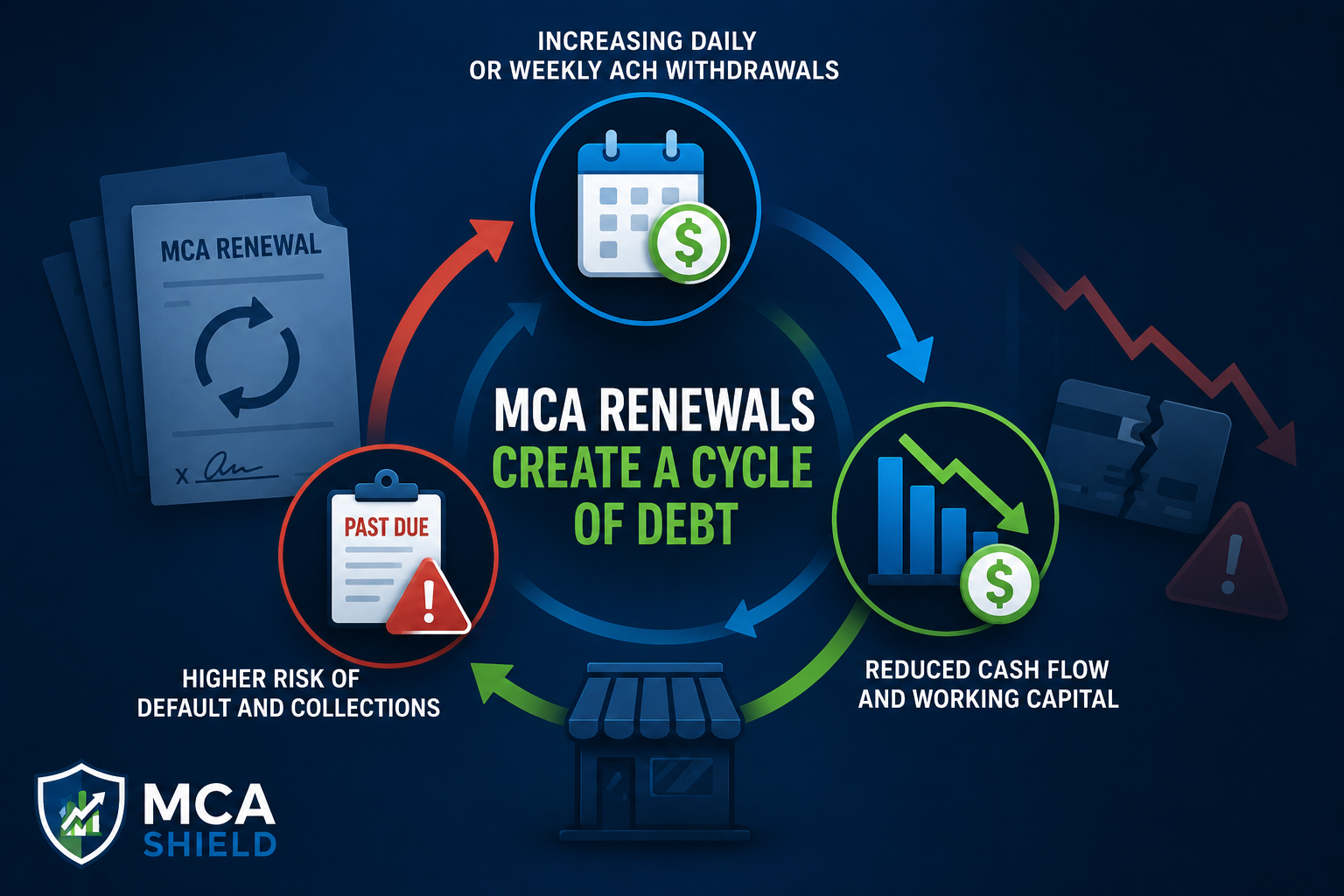
A merchant cash advance renewal may solve a short-term cash flow problem. It can also create a much larger financial challenge over time. Each renewal introduces another repayment obligation, and without addressing the underlying cash flow issues, businesses can become dependent on additional funding just to keep operating.
Understanding how this cycle develops can help business owners recognize the risks before accepting another renewal offer.
Increasing Daily or Weekly ACH Withdrawals
Every new merchant cash advance typically comes with its own daily or weekly ACH withdrawals. As renewals continue, these automatic deductions consume more of your incoming revenue. That leaves less money for payroll, rent, inventory, and other operating expenses.
Even if each payment seems manageable on its own, multiple repayment obligations can quickly strain your cash flow.
Reduced Cash Flow and Working Capital
As more revenue is committed to MCA payments, working capital begins to shrink. Businesses may find it increasingly difficult to purchase inventory, pay vendors on time, invest in growth, or respond to unexpected expenses.
When cash flow becomes tight, some owners accept another MCA renewal. They do so to cover normal operating costs. This pattern often causes the debt cycle to continue rather than improve.
Higher Risk of Default and Collections
As repayment obligations increase, the likelihood of missed payments also grows. Businesses with multiple MCA withdrawals may experience overdrafts and declined ACH transactions. They may also face collection calls, legal action, or lawsuits.
Taking action before cash flow becomes unmanageable often provides more options for restructuring or resolving MCA debt. Carefully evaluating renewal offers and exploring available debt relief solutions may help prevent a temporary funding decision from becoming a long-term financial burden.
How to Protect Your Business From MCA Renewal Scams
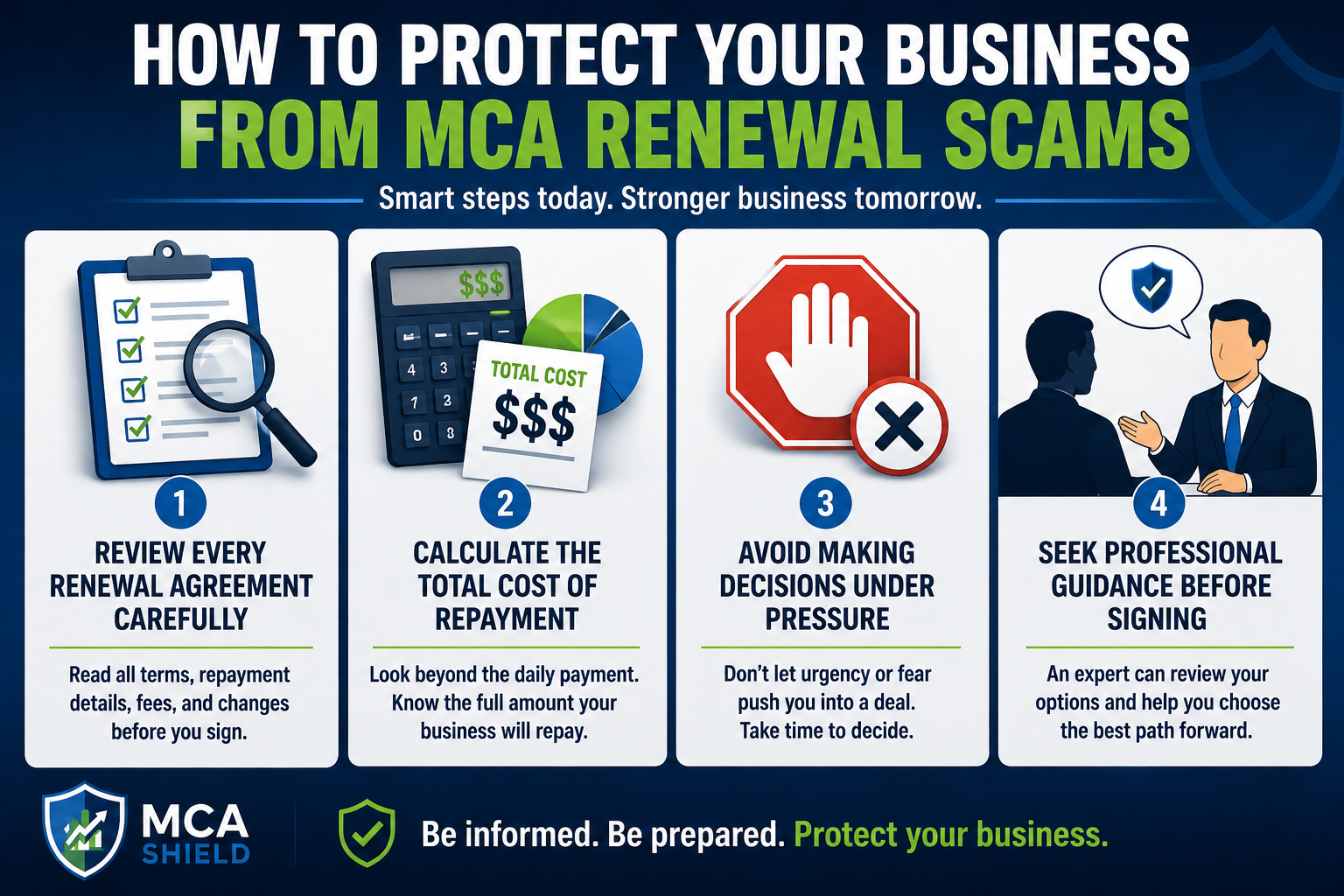
Accepting a merchant cash advance renewal without fully understanding the terms can create long-term financial challenges. Before signing any new agreement, take time to evaluate the offer, compare your options, and determine whether additional funding is truly the best solution for your business. A careful review today can help prevent costly problems in the future.
Review Every Renewal Agreement Carefully
Never rely solely on a verbal explanation from a sales representative. Read the entire renewal agreement, including the repayment terms, factor rate, fees, default provisions, and any changes from your previous MCA contract.
Understanding exactly what you are agreeing to can help you identify unfavorable terms before they affect your business.
Calculate the Total Cost of Repayment
Don’t focus only on how much new funding you’ll receive or the size of the daily payment. Calculate the total amount your business will repay over the life of the agreement and compare it with the amount you are actually receiving.
This simple calculation provides a clearer picture of the true cost of the renewal and whether it makes financial sense.
Avoid Making Decisions Under Pressure
High-pressure sales tactics are one of the most common warning signs of a questionable renewal offer. If you’re told the offer expires immediately or that you must sign before reviewing the paperwork, consider it a red flag.
A reputable funding company should allow you enough time to review the agreement, ask questions, and make an informed decision.
Seek Professional Guidance Before Signing
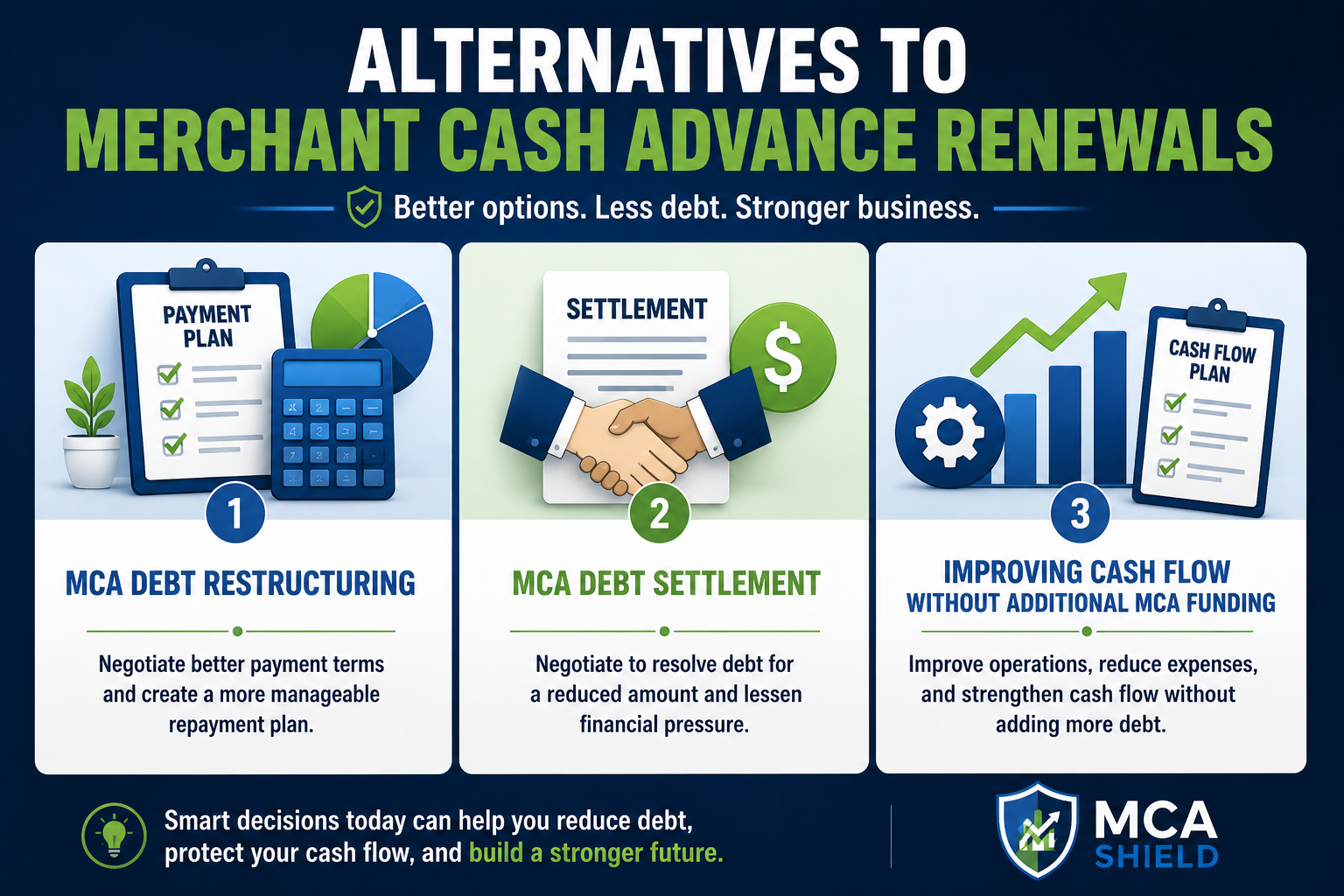
If you already have one or more merchant cash advances, obtaining an independent review before accepting another renewal can be one of the smartest financial decisions you make. An experienced MCA debt relief professional can evaluate your existing obligations, explain the long-term impact of the proposed renewal, and help you determine whether restructuring, settlement, or another solution may better improve your cash flow.
Seeking guidance before signing can help you avoid unnecessary debt and protect your business from becoming trapped in a continuing cycle of MCA renewals.
Alternatives to Merchant Cash Advance Renewals