
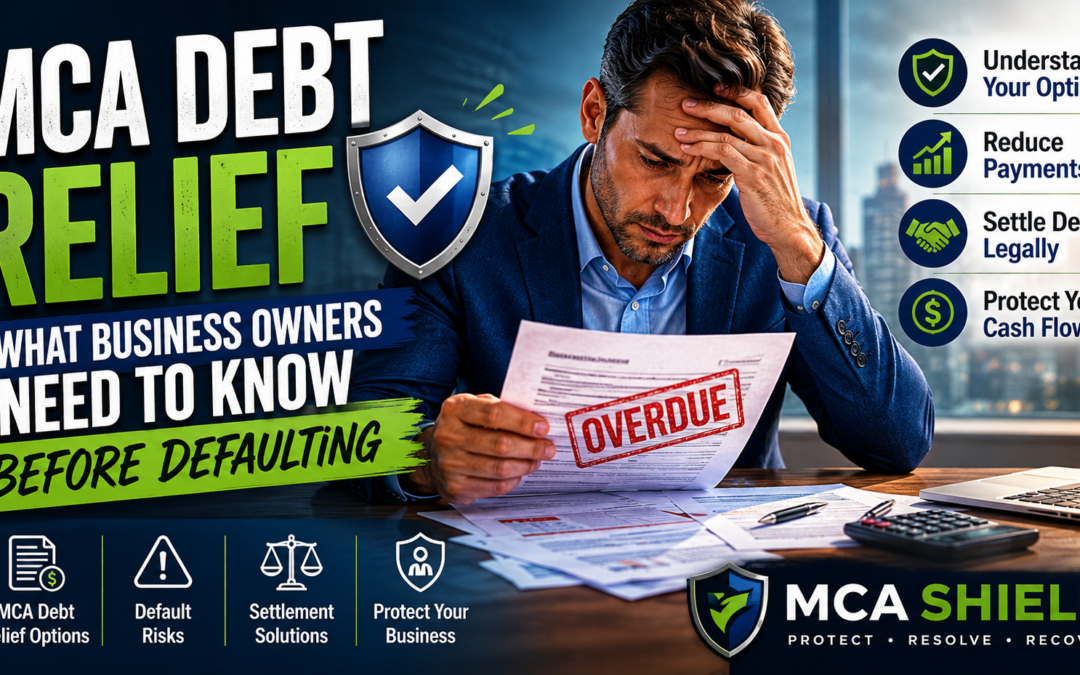
Merchant cash advance debt can quickly become overwhelming for business owners. Daily and weekly withdrawals often strain cash flow and make it difficult to keep operations running smoothly. As MCA payments increase, many companies become trapped in a cycle of stacked advances, aggressive collections, and growing financial pressure.
Understanding your MCA debt relief options before defaulting is critical. Early action can help protect your business, reduce payment strain, and prevent long-term financial damage. Many business owners do not realize that alternatives may be available. These options can include settlement negotiations, payment restructuring, and cash flow stabilization strategies.
In this guide, we’ll explain how MCA debt relief works. We’ll cover what happens during an MCA default, review potential settlement solutions, and discuss practical steps business owners can take to regain control of their finances. You’ll also learn how to stabilize business operations before financial challenges become more severe.
What Is MCA Debt Relief?
MCA debt relief refers to a range of solutions that help business owners manage overwhelming merchant cash advance debt. Daily or weekly withdrawals can put significant pressure on cash flow. Over time, they can make it difficult to cover payroll, pay vendors, and maintain normal business operations.
Common MCA Debt Relief Strategies
MCA debt relief strategies may include negotiating a lower payoff amount. They can also involve restructuring payment terms or consolidating multiple advances. Some solutions focus on reducing payment pressure and improving cash flow. The goal is not just to address the debt. It is to create breathing room so the business can stabilize and move forward.
Why Early MCA Debt Relief Matters
If MCA payments have become difficult to manage, it is important to understand your options early. Acting sooner can help protect your business and reduce financial strain. It may also help prevent a complete cash-flow crisis. Taking action before default often creates more opportunities for resolution and stabilization.
Signs Your MCA Is Becoming Dangerous

A major warning sign is when daily or weekly MCA withdrawals begin to disrupt normal business operations. If you’re constantly juggling money to make payroll, cover rent, or pay essential expenses, the debt may be controlling your business decisions.
Another red flag is taking out new advances to stay current on existing ones. This cycle can develop quickly. Before long, it may feel like you’re constantly digging out of a deeper financial hole.
You may also notice increasing financial stress. Late vendor payments, overdraft concerns, and the use of personal funds to cover business expenses are common warning signs. When MCA repayment starts dictating every financial decision, it’s often time to reassess your situation and explore available options.
What Happens If You Default on an MCA?
Defaulting on a merchant cash advance can trigger a chain reaction. It affects far more than a single missed payment. MCA agreements often include aggressive collection terms. These can activate quickly when payments are missed or withdrawals start bouncing.
What may begin as a temporary cash flow issue can escalate quickly. It can place additional pressure on an already strained business.
Depending on your agreement, the MCA provider may increase collection efforts. This can include constant calls, emails, and account monitoring. They may also attempt repeated withdrawals from your account. In some cases, they may freeze withdrawals, demand immediate repayment, enforce personal guarantees, or pursue legal action. These actions can disrupt daily operations and make it difficult to focus on running your business.
A default can also create long-term consequences. It may limit your ability to secure future funding. It can also damage relationships with vendors. Many business owners are then forced into difficult decisions, such as delaying payroll or falling behind on essential expenses.
The good news is that default does not always eliminate your options. Taking action early can improve your chances of restructuring or negotiating a resolution. It may also help you regain control before the situation becomes more serious.
Can MCA Debt Be Settled?
Yes, MCA debt can often be settled, but it depends on your provider, your financial situation, and how early you take action. Many MCA companies would rather negotiate a reduced payoff than risk lengthy collections or legal action that could delay recovery altogether.
If your business is struggling to keep up with daily or weekly payments, settlement may be an option to reduce the total amount owed and create a more manageable path forward. This can provide immediate relief and help free up cash flow for essential business expenses.
The key is addressing the issue before it spirals further. With the right strategy and a clear understanding of your agreement, many business owners are able to negotiate terms that provide relief, stabilize their finances, and create a path toward regaining control of their business.
MCA Settlement vs Bankruptcy
When MCA payments become too much to handle, many business owners feel like they only have two choices: try to settle the debt or file for bankruptcy. The truth is, these options are very different, and choosing the right one depends on how serious the situation has become.
An MCA settlement is often the less drastic path. It usually involves negotiating with the MCA provider to reduce what you owe or create terms your business can realistically manage. For businesses that are still generating revenue but struggling to keep up with aggressive withdrawals, settlement can offer breathing room without forcing operations to shut down.
Bankruptcy is a much bigger legal step. While it can provide protection from creditors, it often comes with more time, expense, stress, and long-term financial consequences. It can also impact your ability to secure funding and rebuild business credit down the road.
For many business owners, exploring settlement first makes sense. If your business has a real chance to recover, resolving MCA debt through negotiation can help you stabilize cash flow, protect what you have built, and move forward without the lasting weight that bankruptcy can carry.
How Stacked MCAs Destroy Cash Flow
Warning Signs of Predatory MCA Companies
Predatory MCA companies often rely on urgency, confusing contracts, and aggressive promises to trap business owners into agreements that become almost impossible to manage. What may sound like fast, easy funding can quickly turn into overwhelming daily or weekly withdrawals that drain your cash flow and make it difficult to keep your business running. Many business owners do not realize the true cost until the payments start hitting their account and there is far less money available for payroll, rent, inventory, and other essential expenses.
The biggest warning sign is a lender that pushes speed over transparency. If a company is rushing you to sign, avoiding direct answers, or glossing over repayment terms, that is a major red flag. Legitimate funding companies should clearly explain the total payback amount, withdrawal schedule, fees, and what happens if your business runs into trouble.
Common warning signs of predatory MCA companies:
- High-pressure sales tactics that push you to sign immediately
- Hidden fees or vague contract language that is difficult to understand
- Excessive payback amounts far beyond what was originally advanced
- Daily or weekly withdrawals that put immediate strain on cash flow
- Promises that sound too good to be true with little explanation of the risks
- No clear answers about default terms or collections practices
- Encouraging you to stack multiple advances instead of solving the root problem
Doing your due diligence before signing any MCA agreement can protect your business from unnecessary financial stress. If something feels rushed, unclear, or overly aggressive, it is worth slowing down and getting a second opinion before moving forward.
The Real Goal: Regaining Cash Flow Control From Daily MCA Payments
When MCA debt starts putting pressure on your business, taking immediate action can make all the difference. The longer the problem is ignored, the harder it becomes to regain control of your cash flow. Acting quickly gives you the best chance to protect your business, reduce financial strain, and create a path forward before the situation becomes more serious.
The key is to focus on practical steps that stabilize your finances now while helping position your business for long-term recovery.
1. Evaluate Your Current Situation
Take a full look at where your business stands right now. Review all MCA balances, payment obligations, and how much is being withdrawn from your account each day or week.
2. Review Your Cash Flow
Analyze your income and expenses to understand exactly where the pressure points are. This helps identify what your business can realistically manage.
3. Contact a Trusted Advisor
Speak with someone who understands MCA debt and can help you assess your options. The right guidance can help you avoid costly decisions made under pressure.
4. Explore Your Options
Look into settlement, restructuring, or other debt relief solutions that may reduce your payment burden and create immediate breathing room.
5. Stop Digging a Deeper Hole
Avoid taking on additional advances to cover existing MCA payments. Stacking debt usually increases the financial pressure and makes recovery much harder.
6. Create a Short-Term Action Plan
Build a realistic plan to stabilize operations, protect essential business expenses, and manage cash flow over the next several weeks.
7. Focus on Long-Term Recovery
Once immediate pressure is reduced, shift your focus toward rebuilding stronger cash flow, reducing debt dependency, and creating a healthier financial foundation for the future.
Taking these steps immediately can help you move from reacting to the crisis to actively taking back control of your business.
Frequently Asked Questions About MCA Debt Relief
When business owners start struggling with Merchant Cash Advance payments, a lot of questions come up fast. Most people are simply looking for answers, clarity, and a way to regain control before the situation gets worse. The good news is that MCA debt relief is often possible, and in many cases, there are more options available than business owners initially realize.
Understanding how MCA debt relief works can help you make informed decisions and avoid costly mistakes. Below are some of the most common questions business owners ask when they are trying to navigate overwhelming MCA payments and explore possible solutions.
Common questions business owners ask about MCA debt relief include:
- Can MCA debt be settled for less than what is owed?
In many cases, yes. Settlement may allow you to negotiate a reduced payoff amount depending on your circumstances. - What happens if I can’t keep up with payments?
Missing payments can trigger collections activity, increased pressure from the provider, and possible legal action depending on your agreement. - Can MCA payments be restructured?
Sometimes. Certain situations allow for modified terms that create more manageable payments. - Will debt relief hurt my business credit?
Every situation is different, but unresolved defaults often create more long-term damage than addressing the problem early. - Should I take another advance to cover existing payments?
In most cases, this creates more financial strain and deepens the cycle of debt. - How quickly should I act?
As soon as possible. The earlier you address MCA debt, the more options you typically have available.
Getting answers to these questions is often the first step toward relief. The more informed you are, the better equipped you will be to protect your cash flow, make smart decisions, and move your business toward recovery.