

Merchant cash advance funding can provide fast access to capital, but it can also create serious financial pressure. If daily or weekly withdrawals have become difficult to manage, you may be searching for the fastest way to get out of MCA loans legally. Fortunately, there are legitimate options that can help businesses regain control of their finances without making the situation worse.
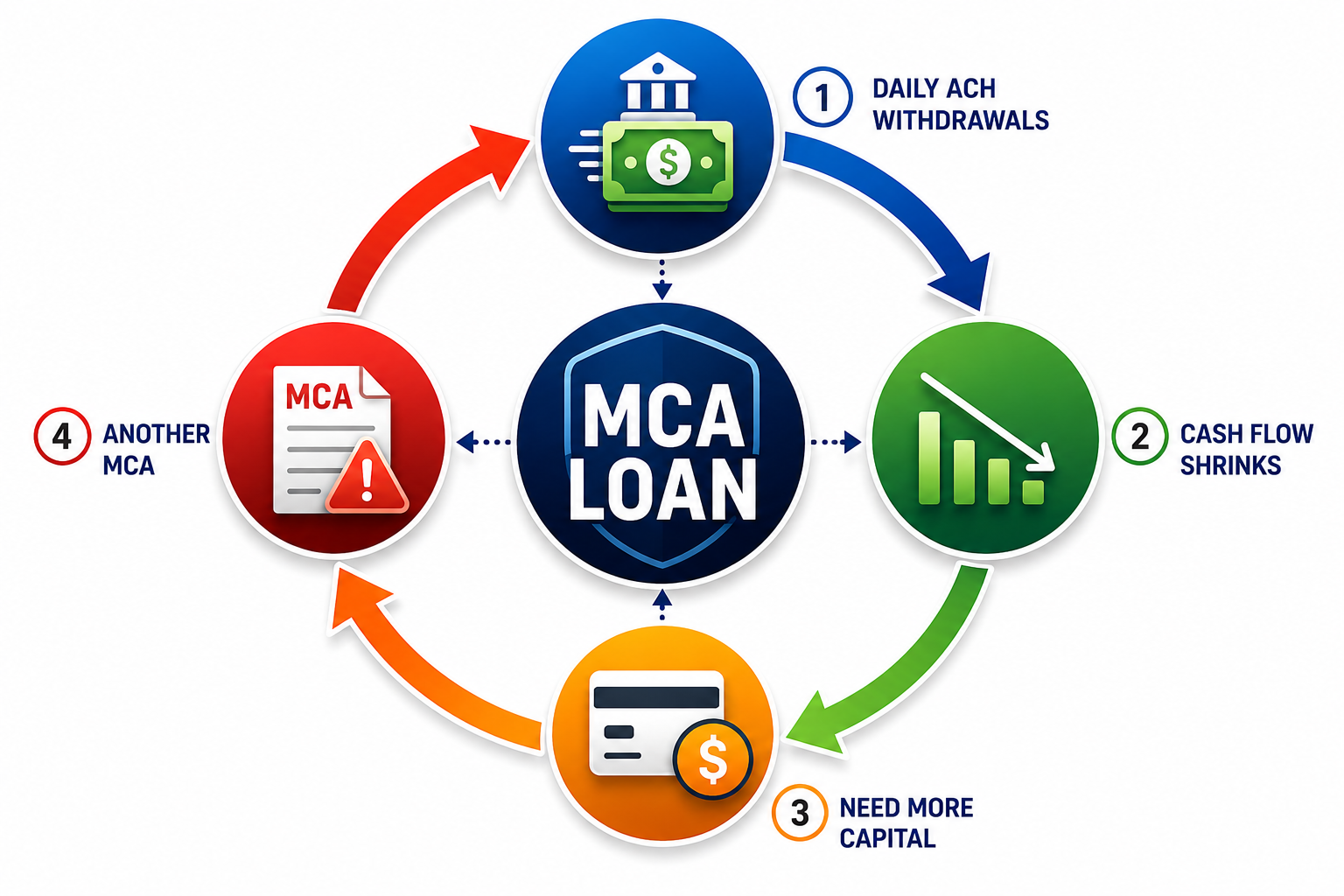
Many business owners feel trapped after taking one merchant cash advance, only to discover that shrinking cash flow leads to additional funding and even greater repayment obligations. As a result, what started as a short-term solution can quickly become a cycle that affects payroll, vendor payments, inventory purchases, and long-term growth.
The good news is that you do not have to navigate this process alone. While every business has unique financial circumstances, understanding your legal options is the first step toward creating a realistic path forward. Taking action early often provides more flexibility and more opportunities to resolve merchant cash advance debt before financial pressure escalates.
In this guide, you’ll learn how to get out of MCA loans legally, the common mistakes to avoid, the legal strategies that may be available, and how MCA Shield helps businesses develop customized solutions to restore healthier cash flow and long-term financial stability.
Schedule Your Free Consultation
What Are MCA Loans and Why Are They So Difficult to Escape?
Although many people refer to them as MCA loans, a merchant cash advance (MCA) is technically not a traditional loan. Instead, a merchant cash advance provides a business with an upfront lump sum in exchange for a portion of its future sales. Repayment is often collected by daily or weekly ACH withdrawals, which means money leaves your business account automatically and frequently.
While this funding model can provide quick access to working capital, it can also become difficult to manage when revenue fluctuates or unexpected expenses arise. As repayments continue regardless of your business’s changing financial needs, many owners begin searching for ways to get out of MCA loans before cash flow problems become severe.
How Merchant Cash Advances Create Daily Cash Flow Pressure
One of the biggest challenges with merchant cash advances is the frequency of repayments. Unlike a traditional business loan with predictable monthly payments, many MCA providers withdraw funds from your account every business day.
These daily ACH withdrawals reduce the cash available to cover essential operating expenses, including:
- Payroll
- Rent or mortgage payments
- Vendor invoices
- Inventory purchases
- Equipment repairs
- Marketing and advertising
- Emergency business expenses
Even businesses with strong sales can experience cash flow shortages because money leaves the account so frequently. Consequently, owners may delay important purchases, postpone growth opportunities, or struggle to maintain normal operations.
Why Many Businesses Feel Trapped by MCA Loans
As cash flow tightens, many business owners begin looking for additional funding to keep operations moving. Unfortunately, this often creates a cycle that becomes increasingly difficult to break.
For example, a second merchant cash advance may temporarily provide enough cash to cover immediate expenses. However, it also introduces another repayment obligation. As a result, daily withdrawals increase, available working capital decreases, and financial pressure continues to build.
Many businesses feel trapped because they are constantly trying to stay ahead of the next withdrawal instead of focusing on growth. Rather than improving financial stability, each new obligation can make it harder to get out of MCA loans and regain control of daily operations.
The Hidden Cost of Multiple MCA Loans
The true cost of merchant cash advances extends beyond the amount being repaid. Multiple MCA agreements can create financial challenges that affect nearly every aspect of a business.
Some of the most common hidden costs include:
- Reduced working capital available for daily operations.
- Less flexibility to respond to unexpected expenses.
- Increased dependence on additional financing.
- Greater stress caused by constant cash flow shortages.
- Delayed business growth due to limited available funds.
- Higher overall repayment obligations when multiple MCAs are active at the same time.
The longer these obligations continue, the fewer financial options many businesses have. Therefore, recognizing the warning signs early and exploring legitimate strategies to get out of MCA loans can help preserve cash flow, reduce financial pressure, and position your business for long-term stability.
Is There a Legal Way to Get Out of MCA Loans?
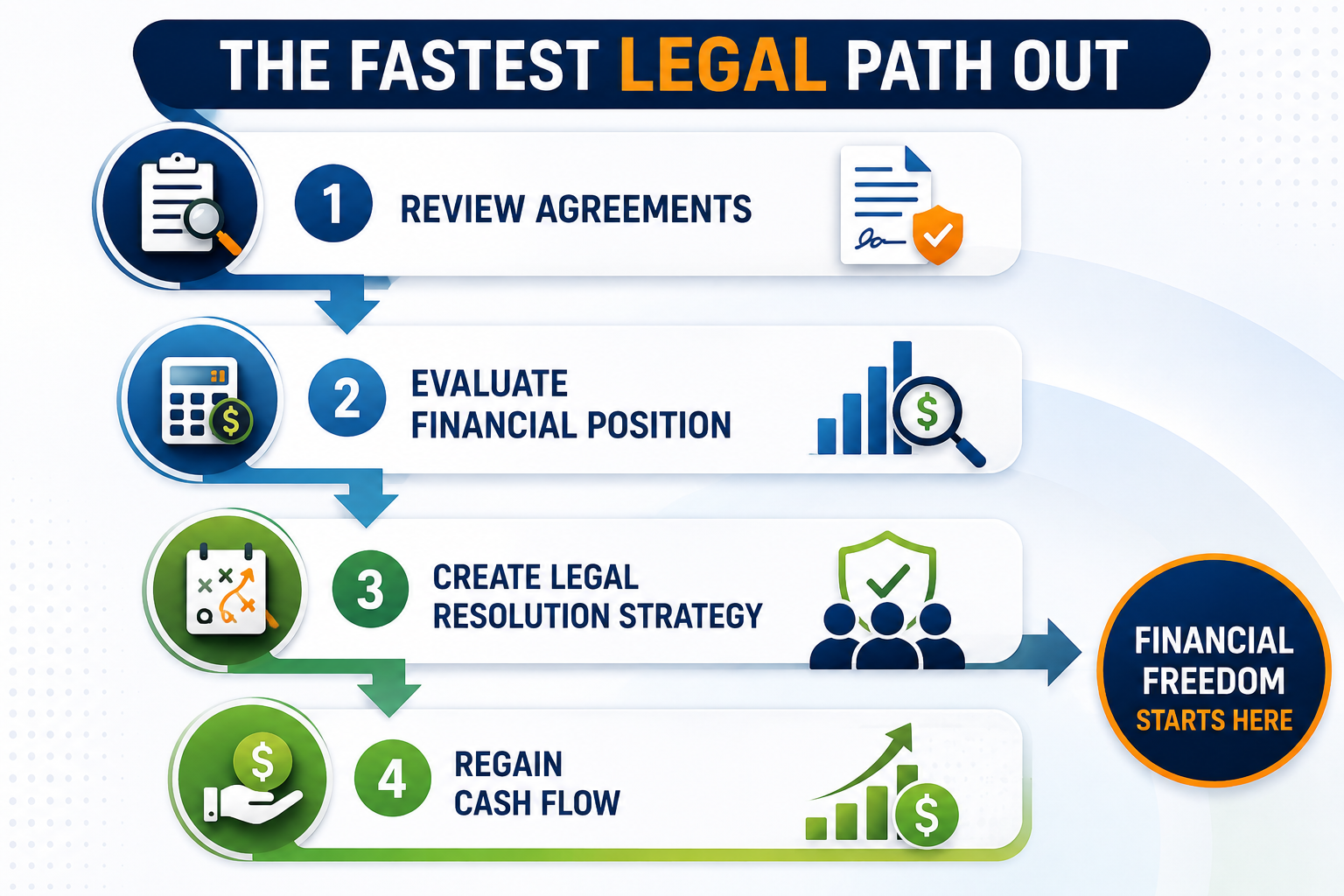
The Fastest Legal Strategies to Get Out of MCA Loans
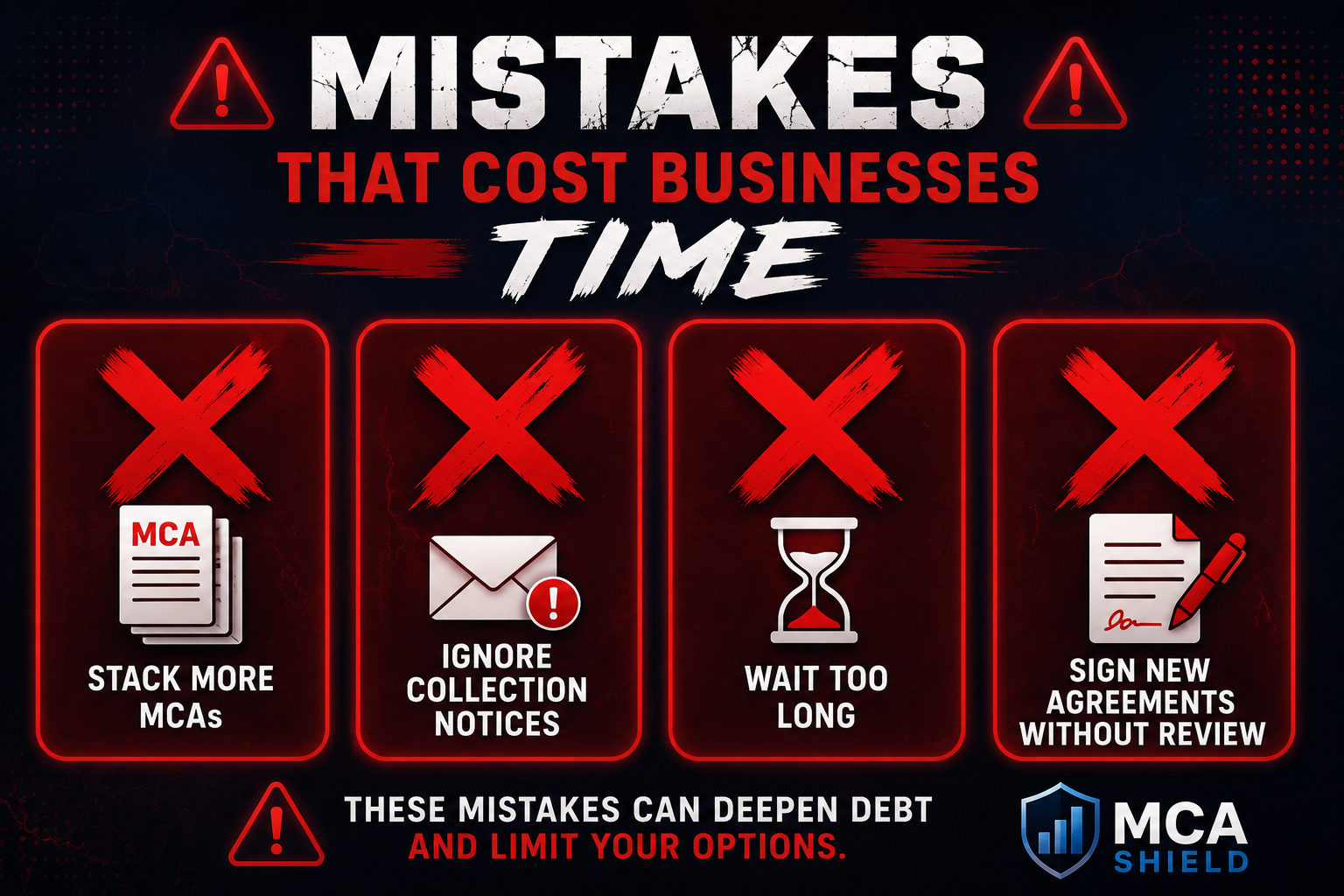
Mistakes That Keep Businesses Stuck in MCA Loans
What to Do If You're Already Behind on MCA Payments
How MCA Shield Helps Businesses Get Out of MCA Loans
Frequently Asked Questions About Getting Out of MCA Loans
Take the First Step Toward Getting Out of MCA Loans