
Schedule Your Free Consultation
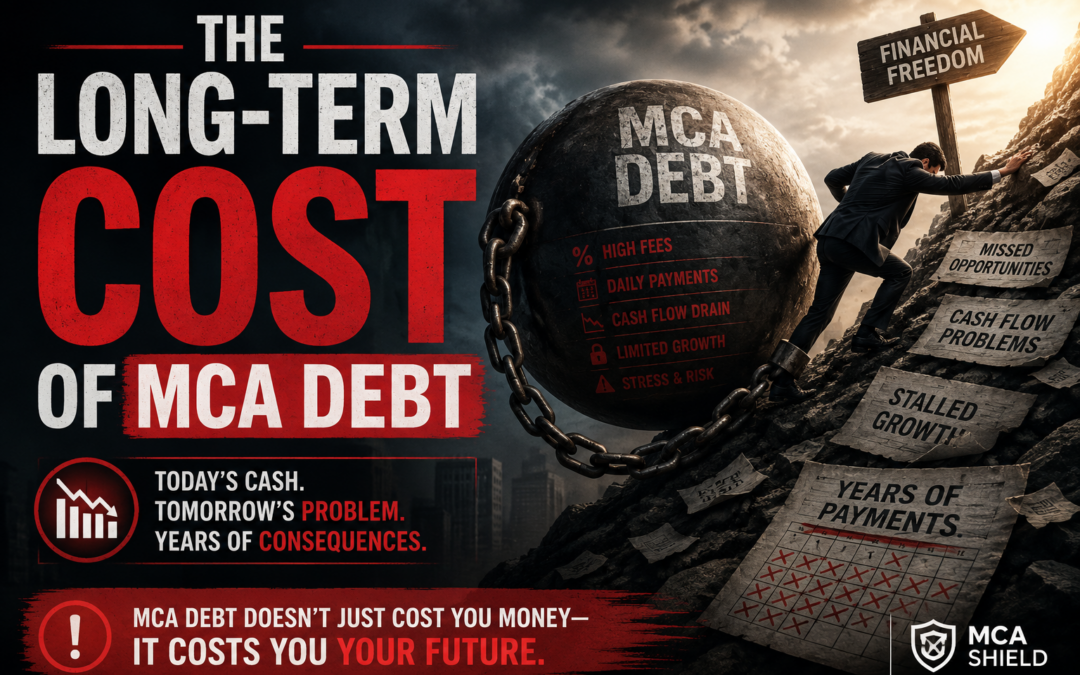
The long-term cost of MCA debt often extends far beyond the original funding amount. While a merchant cash advance can provide quick access to cash, ongoing daily payments can reduce cash flow, slow business growth, and make it harder to cover everyday expenses. Understanding how MCA debt affects your business over time can help you recognize warning signs early and explore practical options before financial pressure becomes more difficult to manage.
Why Merchant Cash Advance Debt Gets More Expensive Over Time
Many business owners focus on the amount they receive from a merchant cash advance. What often goes unnoticed is how the debt affects the business over time. Daily withdrawals, repeated renewals, and mounting financial pressure can make it increasingly difficult to recover. As cash flow tightens, businesses may have fewer options and face higher costs than they expected.
Daily Withdrawals Slowly Drain Cash Flow
A merchant cash advance is typically repaid through automatic daily or weekly withdrawals from your business bank account. While each payment may seem manageable at first, the ongoing withdrawals can steadily reduce the cash available to operate your business.
Over time, these payments may leave less money for:
- Payroll
- Inventory and supplies
- Rent and utilities
- Marketing and growth
- Emergency expenses
When cash flow remains under constant pressure, many businesses struggle to build financial reserves or invest in future opportunities. Instead of helping the business move forward, MCA payments can make it difficult to keep pace with everyday operating costs.
Multiple MCA Advances Can Create a Debt Cycle
When daily payments become difficult to manage, some business owners turn to another merchant cash advance to cover existing obligations. While this may provide short-term relief, it often increases the total amount of debt and raises future payment obligations.
This pattern can quickly become a cycle:
- Take an MCA to solve a cash shortage.
- Daily withdrawals reduce available cash.
- Business cash flow becomes tighter.
- Another MCA is used to fill the gap.
- Total debt and payment pressure continue to grow.
Each new advance can make it harder to regain financial stability. Instead of improving cash flow, stacking multiple MCAs often increases long-term financial pressure and limits future options.
The Hidden Costs Beyond Repayment
The long-term cost of MCA debt extends beyond the repayment amount. As daily withdrawals continue, businesses may experience consequences that are harder to measure but just as significant.
These hidden costs can include:
- Lost growth opportunities because cash is unavailable for expansion.
- Delayed equipment purchases or necessary repairs.
- Difficulty hiring or retaining employees.
- Increased stress for business owners and management teams.
- Greater risk of collection actions or legal disputes if payments become unmanageable.
Over time, these financial challenges can affect nearly every part of a business. Recognizing the long-term impact of MCA debt early gives business owners more opportunities to improve cash flow and explore solutions before the situation becomes more difficult.

How Long-Term MCA Debt Affects Your Business
The long-term cost of MCA debt is about more than making daily payments. As repayment continues month after month, the effects can spread throughout your business. Cash flow becomes tighter, important decisions get delayed, and financial flexibility often decreases. Over time, these challenges can make it harder to grow, manage unexpected expenses, and plan for the future.
Reduced Working Capital and Slower Growth
Working capital is the money your business uses to operate each day. When a significant portion of your revenue is automatically withdrawn to repay an MCA, less cash remains to support normal operations.
Limited working capital can lead to:
- Delaying equipment purchases or repairs.
- Reducing inventory levels.
- Scaling back marketing efforts.
- Passing on growth opportunities.
- Struggling to hire or retain employees.
Rather than investing in the future, many businesses find themselves using available cash simply to keep up with daily obligations. As this pattern continues, business growth often slows or comes to a standstill.
Increased Collection Pressure and Legal Risk
As financial pressure grows, keeping up with MCA payments can become more difficult. Missed or returned payments may trigger collection activity from the funding company.
Depending on the terms of the agreement, business owners may experience:
- Frequent collection calls and emails.
- Default notices.
- Demands for payment.
- Legal action or lawsuits.
- Additional fees and costs.
Not every MCA ends in litigation, but allowing payment problems to continue can increase both financial and legal risk. Addressing concerns early often provides more options than waiting until collections escalate.
Damage to Business Stability and Future Financing
The long-term cost of MCA debt can also affect your business well beyond today’s cash flow. When most available revenue goes toward repayment, it becomes more difficult to build a stronger financial foundation.
Over time, businesses may experience:
- Less predictable cash flow.
- Reduced financial reserves.
- Difficulty qualifying for traditional financing.
- Delayed expansion plans.
- Increased financial stress for owners and employees.
A healthy business needs flexibility to adapt, invest, and grow. When MCA debt continues for an extended period, that flexibility becomes increasingly limited. Taking action before financial pressure becomes overwhelming can help preserve stability and create more opportunities for long-term success.
Warning Signs That Long-Term MCA Debt Is Becoming Dangerous
Many business owners don’t notice the long-term cost of MCA debt until it begins affecting everyday operations. What may have started as a short-term funding solution can gradually become a constant financial burden. Recognizing the warning signs early can help you take action before your options become more limited.
You’re Using New Funding to Pay Old Advances
One of the clearest warning signs is relying on new financing to repay existing merchant cash advances. While another advance may temporarily relieve cash flow pressure, it often increases total debt and creates even larger payment obligations.
You may be entering a debt cycle if you:
- Take a new MCA to make payments on another.
- Need additional funding every few months.
- Find that each advance leaves less cash available than the last.
- Feel like you’re always borrowing just to stay current.
If new funding is solving yesterday’s problem instead of supporting future growth, it’s time to reassess your financial strategy.
Payroll, Vendors, or Taxes Are Becoming Difficult to Cover
Daily MCA withdrawals can slowly reduce the cash available for essential business expenses. As financial pressure builds, routine obligations often become harder to manage.
Warning signs include:
- Paying employees later than usual.
- Falling behind with suppliers or vendors.
- Delaying payroll tax or sales tax payments.
- Struggling to cover rent, utilities, or insurance.
- Constantly choosing which bills can wait.
These challenges often indicate that cash flow is under significant strain and that the business is operating with very little financial cushion.
Cash Flow Never Seems to Recover
Healthy businesses experience ups and downs, but cash flow should improve as revenue increases. When long-term MCA debt is involved, many owners discover that additional sales don’t seem to improve their financial position because daily withdrawals continue to absorb much of the incoming revenue.
If any of these statements sound familiar, it may be time to take a closer look at your situation:
- Your bank balance stays low despite strong sales.
- Busy months feel no different than slow months.
- Every deposit disappears almost immediately.
- Building a cash reserve feels impossible.
- Financial stress has become your new normal.
When cash flow never seems to improve, the issue may not be revenue—it may be the ongoing cost of servicing MCA debt. Identifying the problem early can create more opportunities to stabilize your business before financial pressure continues to grow.
The Financial Impact of Waiting Too Long
Many business owners hope that higher sales or a strong season will solve their cash flow problems. While that can happen in some cases, long-term MCA debt often becomes more difficult to manage when no action is taken. Waiting too long can reduce your options and increase the financial pressure on your business.
Why MCA Costs Continue to Grow
The longer MCA debt remains in place, the more likely it is to affect your day-to-day operations. Daily withdrawals continue to reduce available cash, making it harder to rebuild working capital or prepare for unexpected expenses.
Over time, businesses may face:
- Ongoing cash flow shortages.
- Additional funding needs.
- Increased collection activity.
- Delayed business investments.
- Greater financial stress.
Instead of improving naturally, the situation often becomes more difficult without a plan.
Why Early Action Creates More Resolution Options
Taking action early doesn’t mean your business is failing. It means you’re protecting it before financial pressure grows.
Addressing MCA debt sooner may provide opportunities to:
- Improve cash flow.
- Explore debt resolution strategies.
- Reduce financial pressure.
- Focus on growing your business instead of managing debt.
The earlier you evaluate your options, the more flexibility you typically have.
What Waiting Can Cost Your Business
The long-term cost of MCA debt isn’t measured only by dollars. Waiting too long can affect opportunities that may never return.
Delaying action can lead to:
- Lost growth opportunities.
- Strained relationships with vendors.
- Difficulty keeping up with payroll or taxes.
- Increased collection or legal pressure.
- More stress for business owners and employees.
Every business faces challenges from time to time. The key is recognizing when temporary financial pressure has become a long-term problem—and taking steps to address it before the cost becomes even greater.
How MCA Shield Helps Businesses Break the Long-Term Debt Cycle
Breaking free from the long-term cost of MCA debt starts with understanding your current situation. Every business is different, which is why MCA Shield focuses on practical solutions tailored to your financial circumstances instead of a one-size-fits-all approach.
Reviewing Existing MCA Agreements
The first step is reviewing your current merchant cash advance agreements. MCA Shield helps identify payment obligations, funding terms, and other factors affecting your cash flow, giving you a clear picture of where your business stands.
Developing a Customized Debt Resolution Strategy
After evaluating your situation, MCA Shield works with you to develop a strategy based on your business’s goals and financial condition. The objective is to reduce financial pressure while helping you regain greater control over your cash flow.
Helping Restore Long-Term Financial Stability
The goal isn’t simply to address today’s payment challenges—it’s to help position your business for the future. By improving cash flow and reducing ongoing financial pressure, MCA Shield helps businesses move toward greater stability, flexibility, and long-term success.
Frequently Asked Questions About the Long-Term Cost of MCA Debt
The long-term cost of MCA debt can affect every business differently. Here are answers to some of the questions business owners ask most often.
Does MCA Debt Get More Expensive Over Time?
It can. While the repayment amount is established in the agreement, the ongoing impact of daily withdrawals can create additional financial costs. Reduced cash flow, delayed growth, missed opportunities, and the need for additional funding can all increase the overall cost of carrying MCA debt over time.
Can MCA Payments Be Reduced?
In some situations, businesses may be able to pursue debt resolution strategies that improve cash flow or reduce financial pressure. Every case is different, so the available options depend on your MCA agreements, your business’s financial condition, and your overall goals.
Can You Get Out of Long-Term MCA Debt Without Closing Your Business?
Yes. Many businesses address long-term MCA debt while continuing normal operations. The key is taking action before financial pressure becomes overwhelming. Exploring your options early often provides greater flexibility and may help your business improve cash flow while remaining open and serving customers.
Stop the Long-Term Cost of MCA Debt Before It Gets Worse
The long-term cost of MCA debt doesn’t have to define the future of your business. The sooner you recognize the warning signs, the more opportunities you may have to improve cash flow and reduce financial pressure before the situation becomes more difficult.
Why Acting Early Protects Your Business
Early action can help preserve working capital, reduce financial strain, and give your business greater flexibility moving forward. Rather than waiting for payment problems or collection activity to escalate, taking the first step now may create more options for resolving MCA debt and restoring long-term stability.
Schedule a Free Consultation With MCA Shield
If MCA payments are putting pressure on your business, MCA Shield is here to help. Our team will review your current MCA agreements, discuss your situation, and explain potential resolution strategies tailored to your business. Schedule a free, no-obligation consultation today and take the first step toward breaking the long-term debt cycle.