
Schedule Your Free Consultation
What Is an MCA Funding Agreement?

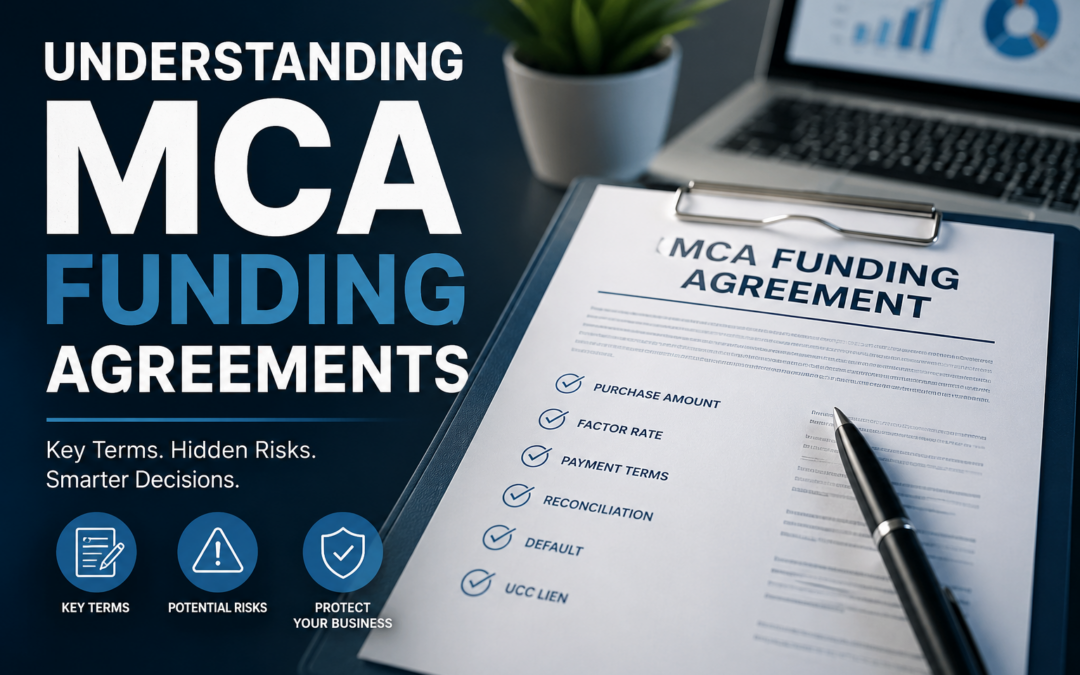
An MCA funding agreement is the legal contract between a business and a Merchant Cash Advance provider. Unlike a traditional lender, the funding company purchases a portion of your future receivables. In return, your business receives an upfront lump sum. The agreement outlines how much funding the business receives, the total amount to be repaid, how payments will be collected, and the rights and responsibilities of both parties.
Because MCA funding agreements often contain specialized financial and legal language, many business owners sign them without fully understanding the long-term impact on cash flow. Taking time to review the agreement carefully before signing can help prevent unexpected financial strain and make it easier to identify potential risks.
How Merchant Cash Advance Agreements Work
When a business accepts a Merchant Cash Advance, it receives immediate working capital in exchange for a percentage of its future sales or receivables. Instead of fixed monthly loan payments, most MCA funding agreements require automatic daily or weekly ACH withdrawals from the business bank account until the full amount is collected.
The agreement typically includes important terms such as:
- The funding amount received
- The factor rate used to calculate the total repayment
- The purchased receivables amount
- The holdback percentage
- The ACH payment schedule
- Default provisions
- Reconciliation terms, when available
- Any personal guarantee or UCC lien requirements
Understanding these provisions helps business owners estimate the true cost of the advance. It also helps determine whether the repayment structure fits their cash flow.
Why MCA Agreements Are Different From Traditional Loans
Although Merchant Cash Advances provide financing, they are not structured like traditional business loans. A bank loan generally charges interest over a defined repayment period with predictable monthly payments. An MCA funding agreement, however, uses a factor rate instead of an interest rate and is based on the purchase of future receivables rather than the extension of credit.
As a result, repayment is often faster. Most MCA companies collect payments through daily or weekly ACH withdrawals. This repayment structure can reduce available working capital, making it more difficult to cover payroll, inventory, rent, and other operating expenses during slower revenue periods.
Understanding these differences allows business owners to make informed financing decisions and recognize the financial obligations they are accepting before signing an MCA funding agreement.
Key Terms Found in MCA Funding Agreements
Understanding the language used in MCA funding agreements is essential before accepting a Merchant Cash Advance. Many contracts include financial and legal terms that are unfamiliar to business owners. These provisions determine how much you will repay, how payments are collected, and what happens if your business experiences financial difficulties. Knowing what these terms mean can help you make more informed decisions and avoid costly surprises.
Purchase Amount vs. Purchased Receivables
One of the most common points of confusion is the difference between the purchase amount and the purchased receivables.
The purchase amount is the lump sum your business receives when the funding is issued. The purchased receivables represent the total amount the MCA company expects to collect from your future sales. Because the purchased receivables include the funding company’s profit, this amount is always higher than the purchase amount.
For example, a business may receive $100,000 but agree to sell $140,000 in future receivables. Understanding this distinction helps you calculate the true cost of the advance.
Factor Rate Explained
Instead of charging an interest rate like a traditional loan, Merchant Cash Advances use a factor rate to determine repayment.
Common factor rates range from approximately 1.10 to 1.50, although they may be higher depending on the funding company and the business’s risk profile. The factor rate is multiplied by the purchase amount to determine the total repayment obligation.
Unlike interest on a traditional loan, the factor rate does not decrease as you make payments. This means the total repayment amount remains fixed from the beginning of the agreement.
Holdback Percentage
The holdback percentage is the portion of your daily or weekly revenue that is applied toward repayment.
For businesses that process credit card transactions, the holdback may represent a percentage of sales. Many MCA providers, however, use fixed ACH withdrawals regardless of daily revenue.
A higher holdback percentage generally means larger payments, which can place additional pressure on operating cash flow during slower business periods.
Daily or Weekly ACH Withdrawals
Most MCA funding agreements authorize the funding company to collect payments automatically through Automated Clearing House (ACH) withdrawals.
Rather than making one monthly payment, businesses often have funds withdrawn every business day or every week directly from their bank account. While this allows the MCA company to recover its purchased receivables quickly, frequent withdrawals can reduce the cash available for payroll, inventory, rent, vendor payments, and other operating expenses.
Business owners should understand both the withdrawal schedule and the expected payment amounts before signing an agreement.
Reconciliation Clauses
Some MCA funding agreements include a reconciliation clause, which allows repayment amounts to be adjusted if business revenue changes significantly.
If sales decline, a properly written reconciliation provision may permit the business to request lower payments based on actual receivable collections. However, not every agreement includes this protection, and some reconciliation clauses contain strict requirements or limitations.
Understanding whether your agreement includes a meaningful reconciliation provision can become especially important during periods of reduced revenue.
Personal Guarantees and UCC Liens
Many MCA funding agreements also include additional legal protections for the funding company.
A personal guarantee may make the business owner personally responsible under certain circumstances outlined in the agreement, such as fraud or other contractual violations. The specific language varies between contracts and should be reviewed carefully.
Many agreements also authorize the filing of a UCC lien, which gives the funding company a security interest in certain business assets or receivables. A UCC lien does not automatically mean the lender takes ownership of your business assets. However, it can affect future financing because other lenders may see the existing claim.
Before signing any MCA funding agreement, it is important to understand how these provisions may affect both your business and your future financial flexibility.
Important Clauses Every Business Owner Should Review
Common Problems Hidden in MCA Funding Agreements
Many MCA funding agreements appear straightforward at first glance, but certain provisions can create financial challenges that are not immediately obvious. Daily payment structures and high repayment obligations may not seem significant at first. Over time, however, they can place increasing pressure on your business. Understanding these common problems helps business owners recognize potential risks before they affect operations.
High Repayment Costs
One of the biggest concerns with Merchant Cash Advances is the total amount that must be repaid. Because MCA funding agreements use a factor rate vs a traditional interest rate, the total repayment amount is determined when the agreement is signed. Unlike a traditional loan, the repayment obligation does not decrease over time as payments are made.
While fast funding can help address immediate business needs, the total repayment amount is often significantly higher than the amount originally received. Business owners should calculate the full repayment obligation before accepting an advance so they understand its long-term financial impact.
Cash Flow Pressure
Most MCA funding agreements require automatic daily or weekly ACH withdrawals from the business bank account. While individual payments may appear manageable, frequent withdrawals steadily reduce the working capital available for normal operations.
As cash flow tightens, businesses may struggle to pay employees, purchase inventory, cover rent, or meet vendor obligations. Even profitable businesses can experience financial pressure. This often happens when revenue fluctuates but repayment amounts stay the same.
Multiple MCA Agreements
A common problem occurs when businesses obtain additional Merchant Cash Advances before existing agreements have been repaid. This practice, known as MCA stacking, creates multiple repayment schedules that often overlap.
Every new agreement increases the number of daily or weekly withdrawals, leaving less cash available to operate the business. What begins as a short-term funding solution can quickly develop into a cycle of debt that becomes increasingly difficult to manage.
Before accepting another advance, business owners should carefully evaluate whether additional payments will improve or worsen their financial position.
Limited Flexibility During Financial Hardship
Business revenue rarely remains the same every month. Seasonal slowdowns, unexpected expenses, or economic changes can temporarily reduce income. Unfortunately, many MCA funding agreements provide little flexibility when cash flow declines.
Although some contracts include reconciliation provisions, others require payments to continue according to the original agreement, regardless of changing business conditions. This can make it difficult for struggling businesses to regain financial stability without seeking professional assistance.
Understanding these limitations before signing an MCA funding agreement allows business owners to better prepare for unexpected challenges and make financing decisions that support long-term business health.
Warning Signs Your MCA Agreement May Be Hurting Your Business
Many businesses do not experience serious financial problems immediately after accepting a Merchant Cash Advance. Instead, the effects often develop gradually as daily or weekly payments reduce available working capital. Recognizing the early warning signs helps you act sooner. Early action often provides more options before financial pressure becomes overwhelming.
Daily Payments Are Becoming Difficult
One of the first signs that an MCA funding agreement is becoming unmanageable is struggling to keep up with the required daily or weekly ACH withdrawals.
You may notice your account balance dropping faster than expected, frequent overdrafts, or difficulty maintaining enough cash to cover automatic payments. Even if your business is generating revenue, consistent withdrawals can create ongoing cash shortages that make day-to-day operations more challenging.
If making each payment feels like a constant struggle, it may be time to reevaluate your financial situation before the problem escalates.
You’re Considering Another MCA
Many business owners turn to a second Merchant Cash Advance to cover the payments on an existing one or to fill a growing cash flow gap.
While another advance may provide temporary relief, it often creates a much larger financial obligation. Additional daily or weekly payments reduce available working capital even further and can lead to MCA stacking, where multiple repayment schedules place significant strain on the business.
If you are considering another MCA to stay current on existing obligations, it is usually a sign that your current funding arrangement is no longer sustainable.
Vendor or Payroll Payments Are Falling Behind
Healthy businesses typically prioritize paying employees, suppliers, rent, and other operating expenses on time. When MCA payments take priority because of automatic ACH withdrawals, other financial obligations may become difficult to meet.
Late vendor payments can damage supplier relationships, while delayed payroll can affect employee morale and business operations. If you regularly find yourself deciding which bills can be paid this week, your MCA funding agreement may be placing too much pressure on your cash flow.
Recognizing these warning signs early gives you more time to explore solutions to help stabilize your finances before the situation becomes more difficult to manage.
How to Review Your MCA Funding Agreement
Options If Your MCA Agreement Has Become Unmanageable