
ClickCease

Merchant cash advances (MCAs) can provide fast access to working capital, but not every MCA funding model works the same way. The way your funding is structured affects how payments are collected, how much cash remains in your business, and how easily you can manage daily operations. Understanding these differences is essential before accepting any merchant cash advance.

Whether you’re considering your first MCA or already managing one, learning about MCA funding models can help you make more informed financial decisions. By understanding how repayment structures work, you can better evaluate the true cost of funding, recognize potential risks, and protect your business from unnecessary financial pressure.

In this guide, you’ll learn what MCA funding models are, explore the most common repayment structures, understand how they affect cash flow, and discover practical steps to help your business make smarter financing decisions.

Get an Instant Payment Reduction Quote

What Is an MCA Funding Model?

An MCA funding model is the method a merchant cash advance company uses to provide funding and collect repayment. Unlike traditional business financing, merchant cash advances are typically repaid through daily or weekly ACH withdrawals, a percentage of future credit card sales, or another agreed-upon collection method. The funding model determines how payments are calculated, when they are collected, and how much money remains available for your business to operate.

Understanding MCA funding models is important because the repayment structure directly affects your cash flow. Before accepting any merchant cash advance, business owners should understand exactly how the funding model works and how it may impact day-to-day operations.

How Merchant Cash Advance Funding Differs From Traditional Loans

A merchant cash advance is not structured like a traditional business loan. Instead of borrowing a fixed amount with an interest rate and monthly payments, an MCA provides an advance against future business receivables. Repayment is based on the terms of the agreement rather than a standard loan amortization schedule.

Traditional business loans often offer:

  • Fixed monthly payments
  • Interest rates based on the outstanding balance
  • Longer repayment periods
  • Predictable payment schedules

Merchant cash advances commonly include:

  • Daily or weekly repayment
  • Factor rates instead of traditional interest rates
  • Shorter repayment periods
  • Payments that may significantly affect daily cash flow

Because these repayment structures differ, businesses should carefully evaluate whether an MCA funding model aligns with their financial needs before accepting funding.

How MCA Companies Calculate Repayment

Each MCA funding model calculates repayment differently. While the exact terms vary by provider, most repayment methods fall into one of several common structures.

Some MCA companies collect:

  • A fixed daily or weekly ACH withdrawal from your business bank account
  • A percentage of future credit card or debit card sales
  • Split-funding arrangements, where a portion of customer payments is automatically directed to the funding company

The total repayment amount is usually determined by applying a factor rate to the amount advanced. As a result, businesses often repay more than the original funding amount. Understanding how repayment is calculated helps business owners estimate the overall cost of funding and prepare for its impact on cash flow.

Why Funding Models Matter to Business Owners

Choosing the right MCA funding model can have a significant impact on your business’s financial stability. A repayment structure that seems manageable during strong sales periods may become difficult to sustain if revenue slows unexpectedly.

Before signing any agreement, business owners should understand:

  • How payments will be collected
  • How often payments will occur
  • The total amount that will be repaid
  • How the repayment schedule may affect operating cash flow
  • Whether the funding model fits the business’s financial situation

By fully understanding MCA funding models, business owners can make more informed financing decisions, reduce the risk of unexpected financial pressure, and protect the long-term health of their business.

The Most Common Merchant Cash Advance Funding Models
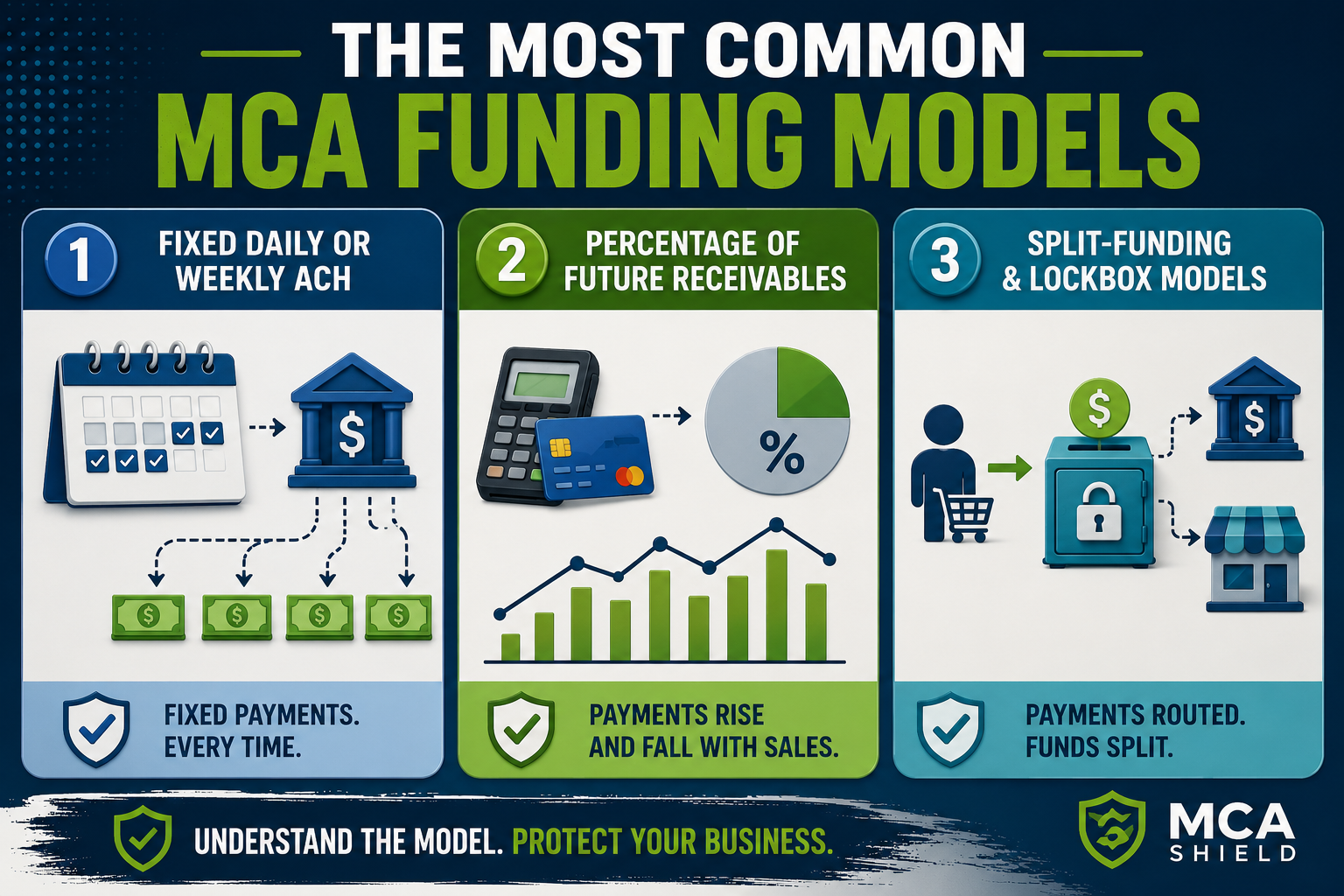
Infographic comparing the most common MCA funding models, including fixed daily or weekly ACH withdrawals, percentage of future receivables, and split-funding or lockbox models, illustrating how each merchant cash advance repayment structure affects business cash flow.

Not all MCA funding models operate the same way. While every merchant cash advance provides upfront funding, the repayment structure can vary significantly from one provider to another. Understanding the most common funding models helps business owners evaluate how each option may affect cash flow, daily operations, and overall financial stability.

Below are the three funding models most commonly used in the merchant cash advance industry.

Fixed Daily or Weekly ACH Withdrawals

One of the most common MCA funding models uses fixed daily or weekly ACH withdrawals. Under this structure, the funding company automatically withdraws a predetermined amount from your business bank account on a regular schedule.

Because the payment amount remains the same regardless of your sales, this model offers predictable repayment. However, it can also create financial pressure during slower business periods. Even if revenue declines, the scheduled ACH withdrawals continue until the agreed-upon amount has been repaid.

Business owners should consider whether their cash flow can consistently support these fixed withdrawals before agreeing to this type of repayment structure.

Percentage of Future Receivables

Another popular MCA funding model bases repayment on a percentage of future receivables, such as credit card or debit card sales. Instead of paying a fixed amount each day, the repayment adjusts according to your business’s revenue.

During stronger sales periods, repayments increase because a percentage of each transaction is collected. When sales decline, repayment amounts generally decrease as well. This flexibility can help reduce cash flow pressure during slower seasons.

Although this model may feel more manageable for some businesses, owners should still understand the factor rate, expected repayment timeline, and total cost of the merchant cash advance before signing an agreement.

Split-Funding and Lockbox Models

Some merchant cash advance providers use split-funding or lockbox funding models to collect repayment automatically.

With split funding, a percentage of each customer payment is divided at the time of the transaction. The agreed-upon portion is sent directly to the funding company, while the remaining balance is deposited into the business’s bank account.

A lockbox model works differently. Customer payments are first deposited into a designated account controlled by the funding company. After deducting the agreed repayment amount, the remaining funds are transferred to the business.

These repayment methods provide funding companies with greater control over collections. However, they can also reduce a business owner’s flexibility in managing cash flow and daily expenses.

Before accepting either of these MCA funding models, it is important to understand how customer payments will be handled, when funds will become available, and how the repayment process may affect ongoing business operations. A clear understanding of these terms can help business owners avoid unexpected financial challenges and make more informed funding decisions.

How MCA Funding Models Affect Business Cash Flow
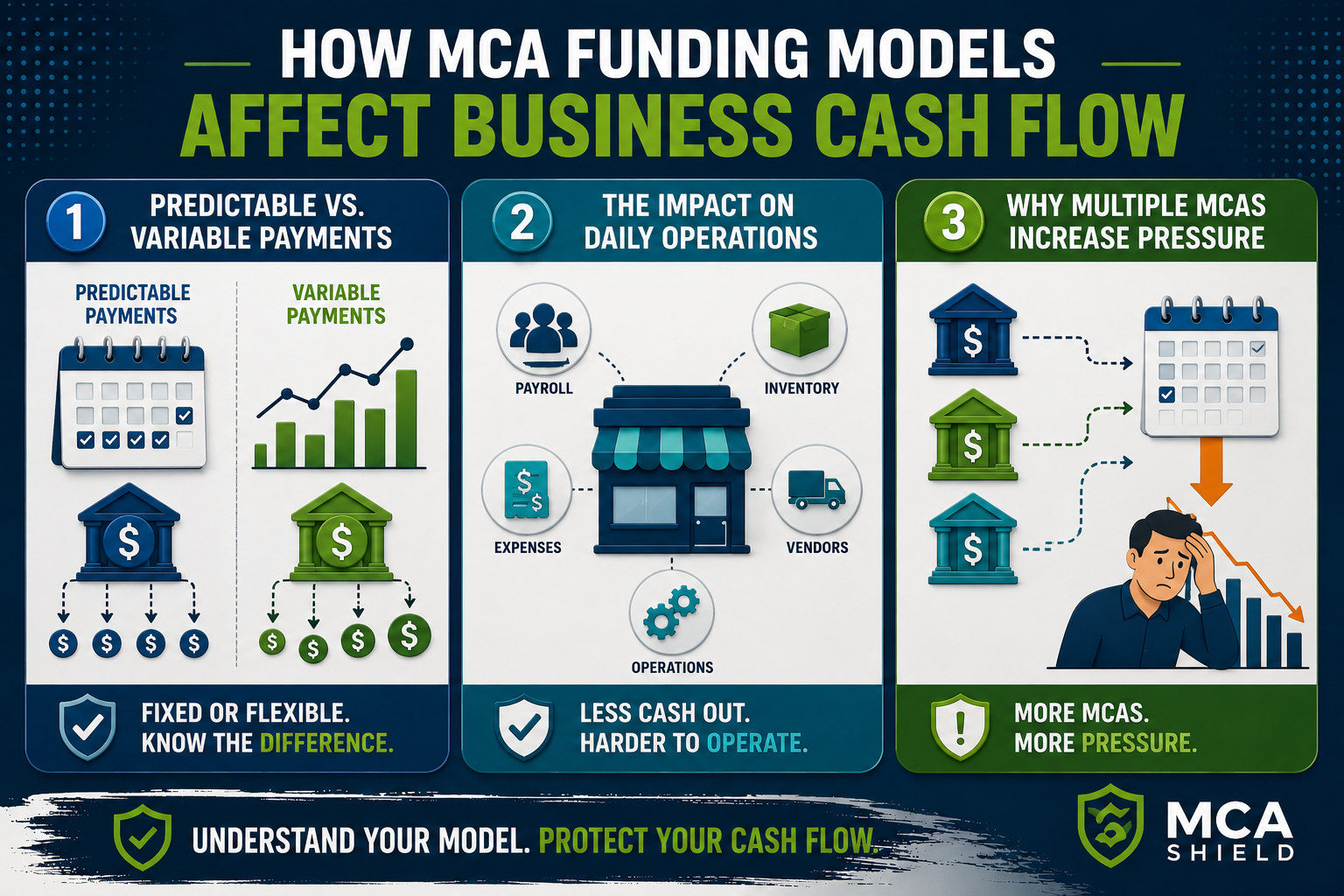
Infographic showing how MCA funding models affect business cash flow, comparing predictable and variable payments, illustrating the impact on daily business operations, and explaining how multiple merchant cash advances can increase financial pressure and reduce available working capital.

Every MCA funding model influences business cash flow differently. While merchant cash advances provide fast access to working capital, the repayment structure determines how much money remains available to cover payroll, inventory, rent, vendor invoices, and other operating expenses.

Some funding models create predictable payment schedules, while others adjust based on revenue. Understanding these differences allows business owners to choose a repayment structure that better aligns with their financial situation and helps reduce unnecessary cash flow challenges.

Predictable vs. Variable Payments

One of the biggest differences between MCA funding models is whether repayments remain fixed or fluctuate with business performance.

With fixed daily or weekly ACH withdrawals, the same amount is deducted from your bank account on every scheduled payment date. This consistency makes budgeting easier because you know exactly how much will leave your account. However, fixed payments continue even during slower sales periods, which can place additional strain on cash flow.

In contrast, percentage-based funding models adjust repayment according to your business’s sales. When revenue increases, repayment amounts generally increase as well. Likewise, when sales decline, payments typically decrease because they are based on a percentage of future receivables.

Neither repayment structure is automatically better than the other. Instead, the right choice depends on your business’s revenue patterns, cash flow stability, and financial goals.

The Impact on Daily Operations

The MCA funding model you choose can influence nearly every aspect of your daily business operations. Frequent repayments reduce the amount of cash available for routine expenses, making financial planning more challenging if revenue becomes unpredictable.

Businesses may feel the effects through:

  • Reduced working capital
  • Tighter payroll schedules
  • Delayed inventory purchases
  • Difficulty paying vendors on time
  • Less flexibility to respond to unexpected expenses

Even profitable businesses can experience financial pressure if cash leaves the business faster than it comes in. For this reason, it is important to evaluate how repayment timing fits your normal cash flow cycle before accepting merchant cash advance funding.

Why Multiple MCAs Increase Financial Pressure

Many businesses experience greater financial stress after taking on multiple merchant cash advances. Each additional MCA introduces another repayment obligation, which can significantly reduce the cash available for everyday operations.

When several MCA funding models operate at the same time, business owners may face:

  • Multiple daily or weekly withdrawals
  • Higher total repayment obligations
  • Reduced operating cash
  • Greater difficulty covering regular business expenses
  • An increased risk of seeking additional financing to fill cash flow gaps

Over time, these overlapping repayment schedules can create a cycle of growing financial pressure. Instead of improving cash flow, additional merchant cash advances may make it more difficult to manage daily expenses and plan for future growth.

Before accepting another advance, business owners should carefully review their existing repayment obligations and determine whether additional funding will genuinely improve their financial position or simply increase repayment demands. Understanding MCA funding models can help businesses make informed decisions that support long-term financial stability rather than short-term relief.

Warning Signs That an MCA Funding Model Is Becoming Unsustainable

Practical Steps Before Accepting Any MCA Funding Model
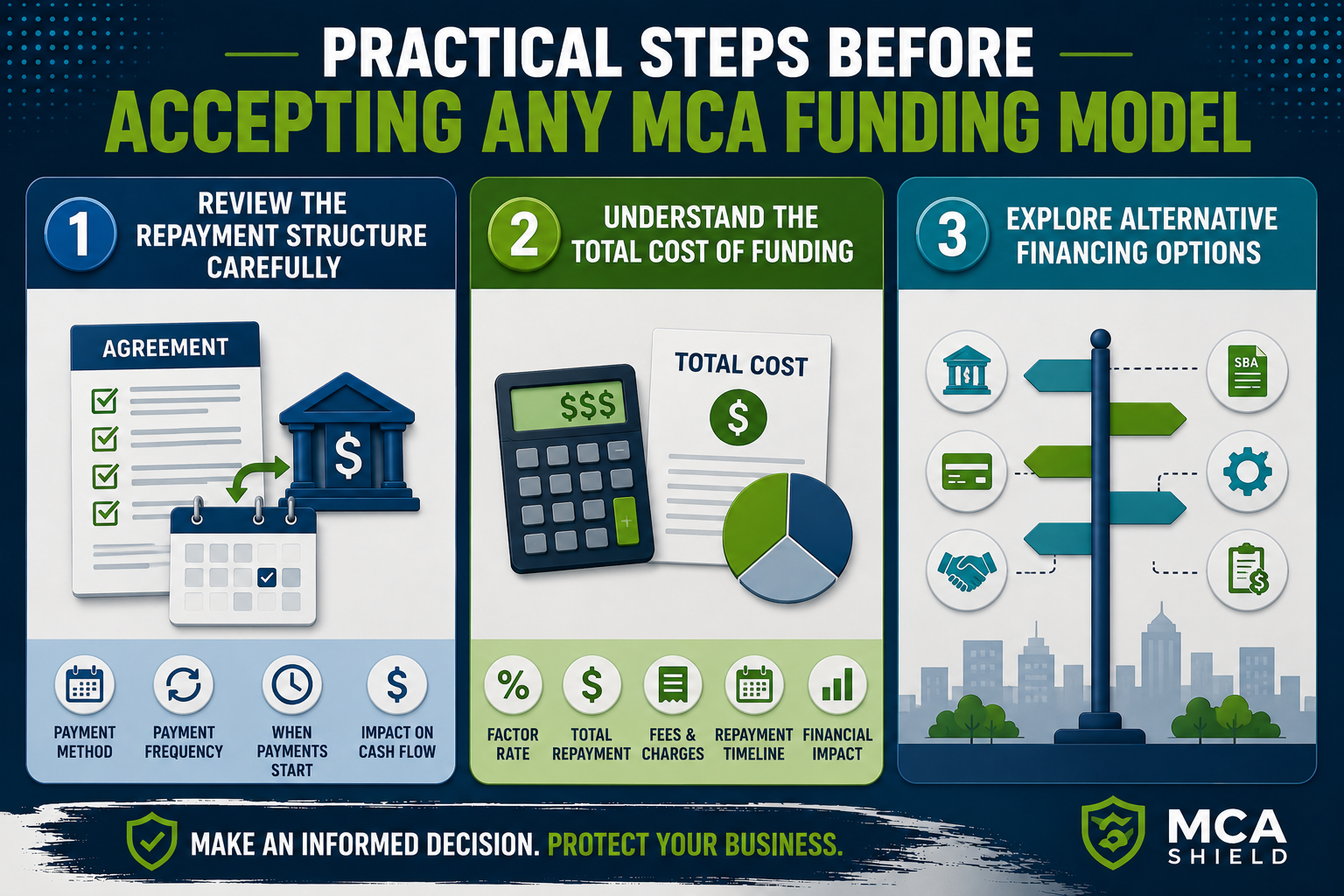
Infographic illustrating practical steps before accepting an MCA funding model, including reviewing the repayment structure, understanding the total cost of merchant cash advance funding, and comparing alternative financing options before signing an agreement.</p> <p>What is the best image file name I should save this under?</p> <p>The best SEO-friendly filename for this infographic is:</p> <p>mca-funding-model-checklist-infographic.webp</p> <p>If you're saving it as a PNG:</p> <p>mca-funding-model-checklist-infographic.png</p> <p>This is the filename I'd recommend because it:</p> <p>Starts with the primary keyword MCA funding model.<br /> Includes checklist, which accurately describes the image and aligns with the section's intent.<br /> Is concise, descriptive, and keyword-rich.<br /> Uses lowercase letters and hyphens, following SEO best practices.<br /> Avoids unnecessary filler words while remaining highly relevant to both search engines and users.

How MCA Shield Helps Businesses Understand MCA Funding Models

Frequently Asked Questions About MCA Funding Models

Understand Your MCA Funding Model Before It Costs Your Business More