
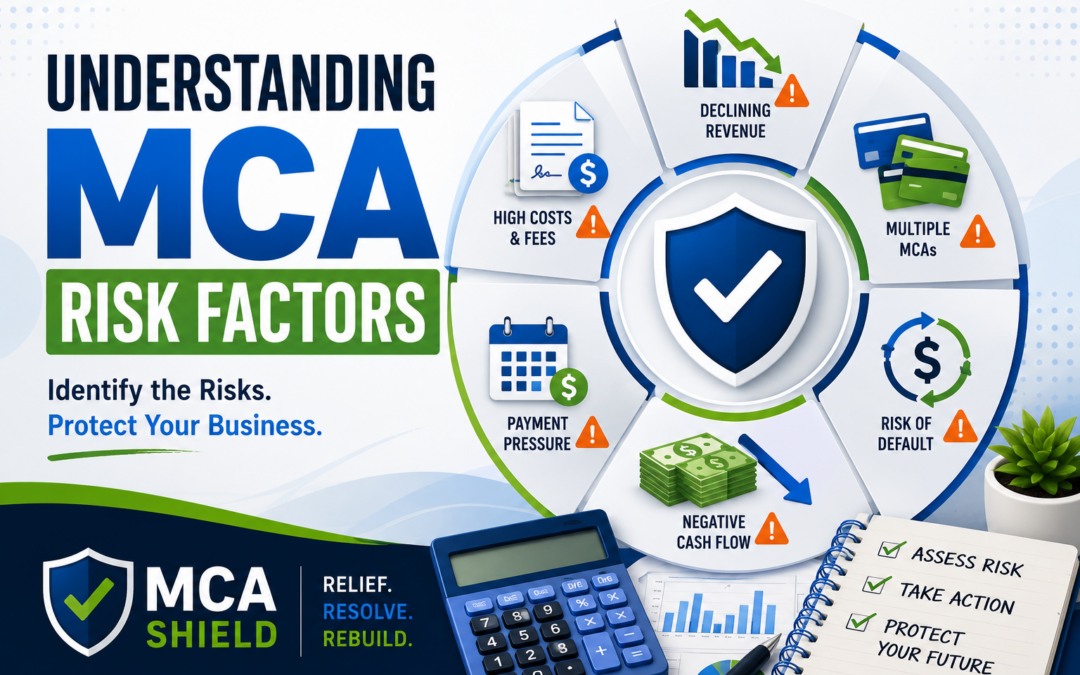
Merchant cash advances can provide quick access to funding, but they also come with risks that every business owner should understand before signing an agreement. Merchant cash advances can provide quick access to funding, but they also come with risks that every business owner should understand before signing an agreement. Merchant cash advance risk factors can affect your cash flow, limit financial flexibility, and create serious financial challenges when they aren’t fully understood.
Knowing how to recognize these warning signs allows you to make informed financial decisions and protect your business from unnecessary debt. In this guide, we’ll explain the most common merchant cash advance risk factors, how they can affect your business, and the practical steps you can take to reduce financial risk and regain control of your cash flow.
Schedule Your Free Consultation
What Are MCA Risk Factors?
Understanding merchant cash advance risk factors is essential before accepting this type of financing. While a merchant cash advance (MCA) can provide quick access to working capital, it also introduces financial obligations that may affect your business if they are not carefully evaluated. Every business has unique financial circumstances, and recognizing potential risks early can help you make more informed decisions and avoid unnecessary financial pressure.
Understanding Merchant Cash Advance Risk
A merchant cash advance is not a traditional business loan. Instead, a financing company purchases a portion of your future receivables and collects repayment through daily or weekly withdrawals from your business bank account. Because payments occur frequently, your available cash flow can change quickly if sales decline or unexpected expenses arise.
Several merchant cash advance risk factors can increase the likelihood of financial challenges, including:
- Declining business revenue
- Multiple merchant cash advances (MCA stacking)
- High repayment obligations
- Negative cash flow
- Seasonal fluctuations in sales
- Unexpected business expenses
Individually, these factors may be manageable. When several occur simultaneously, however, they can place significant strain on your business’s finances.
Why Risk Factors Matter Before Accepting an MCA
Understanding merchant cash advance risk factors before signing an agreement helps you evaluate whether an MCA is the right financing solution for your business. Many business owners focus on receiving funds quickly without fully considering how daily or weekly repayments may affect future operations.
Evaluating these risks in advance can help you:
- Protect your business cash flow
- Avoid taking on more debt than your business can support
- Reduce the likelihood of payment difficulties
- Identify warning signs before financial problems become more serious
- Make informed financing decisions that support long-term stability
Taking the time to understand these risks before accepting a merchant cash advance can help position your business for healthier financial growth. If your business already has one or more MCAs, recognizing these risk factors early may also create more opportunities to explore merchant cash advance debt relief, restructuring, or settlement before financial pressure becomes more difficult to manage.
The Most Common MCA Risk Factors
Not every business that accepts a merchant cash advance experiences financial difficulty. However, certain merchant cash advance risk factors can significantly increase the likelihood of cash flow problems and repayment challenges. Understanding these common risks allows business owners to identify potential issues early and take steps to protect their financial stability.
Below are three of the most common merchant cash advance risk factors that affect businesses across many industries.
Declining Business Revenue
A declining revenue stream is one of the biggest risk factors associated with a merchant cash advance. Because most MCAs are repaid through daily or weekly withdrawals, lower sales can quickly make those payments more difficult to manage.
Revenue may decline for many reasons, including:
- Seasonal fluctuations
- Economic uncertainty
- Loss of major customers
- Supply chain disruptions
- Changing market conditions
When revenue decreases while repayment obligations remain the same, businesses often have less cash available for payroll, inventory, rent, marketing, and other essential operating expenses. Over time, this financial pressure can affect both short-term operations and long-term growth.
Multiple Merchant Cash Advances
Taking out multiple merchant cash advances, often called MCA stacking, can dramatically increase financial risk. Many businesses obtain a second or third advance to cover existing repayment obligations or address ongoing cash flow shortages. Although this may provide temporary relief, it often creates a cycle of increasing debt.
With multiple MCAs, businesses may face:
- Several daily or weekly withdrawals
- Higher overall repayment obligations
- Reduced operating cash
- Greater financial complexity
- An increased likelihood of default
As repayment obligations grow, it becomes more difficult to maintain healthy cash flow. Instead of supporting business growth, stacked merchant cash advances can limit financial flexibility and reduce the resources available for everyday operations.
Daily or Weekly Payment Pressure
Unlike traditional business loans with monthly payments, merchant cash advances typically require daily or weekly repayments. While smaller, more frequent payments may appear manageable at first, they can steadily reduce the cash available to operate your business.
Frequent withdrawals can make it more challenging to:
- Cover payroll on time
- Purchase inventory
- Pay vendors and suppliers
- Manage unexpected expenses
- Maintain a healthy cash reserve
When combined with declining revenue or multiple merchant cash advances, daily or weekly payment obligations can create significant financial strain. Recognizing this pressure early gives business owners more time to explore solutions, improve cash flow, and reduce the risk of long-term financial challenges.

Financial Warning Signs That Increase MCA Risk
How MCA Risk Factors Affect Your Business
Practical Steps to Reduce MCA Risk
How MCA Shield Helps Businesses Reduce MCA Risk
Frequently Asked Questions About MCA Risk Factors
Understanding merchant cash advance risk factors can help you make better financial decisions and recognize when it’s time to seek assistance. Below are answers to some of the questions business owners ask most often.
❓ What Is the Biggest Risk of a Merchant Cash Advance?
The biggest risk is cash flow pressure. Because most merchant cash advances require daily or weekly repayments, your business has less available cash to cover payroll, inventory, rent, and other operating expenses. If revenue declines, those frequent payments can become increasingly difficult to manage.
❓ Can Having Multiple MCAs Hurt My Business?
Yes. Taking on multiple merchant cash advances—often called MCA stacking—can significantly increase your financial risk. Multiple repayment obligations reduce available cash flow, increase overall debt, and may make it harder to meet your day-to-day business expenses. Businesses with stacked MCAs often have fewer financial options if cash flow continues to decline.
❓ How Do I Know if My Business Is at Risk?
Your business may be experiencing increased merchant cash advance risk if you notice any of these warning signs:
✔ Cash flow continues to decline
✔ Daily or weekly payments are difficult to manage
✔ Vendor or payroll payments are delayed
✔ You’re considering another MCA to cover existing debt
✔ You’re relying on short-term financing to stay current
Recognizing these signs early can help you explore solutions before financial challenges become more difficult to resolve.
❓ Can MCA Risk Be Reduced?
Absolutely. While every business faces unique circumstances, there are several ways to reduce risk:
- Review your cash flow regularly
- Avoid stacking multiple merchant cash advances
- Understand every repayment obligation before signing an agreement
- Seek professional guidance if financial pressure begins to increase
- Explore restructuring or debt relief options early
Taking proactive steps often creates more opportunities to improve your financial position.
❓ When Should I Seek Professional Help?
You should consider speaking with an MCA professional as soon as repayment obligations begin affecting your business operations. Waiting until payments are missed or cash flow becomes severely restricted can limit your available options.
Seeking guidance early may help you:
✅ Reduce financial pressure
✅ Improve business cash flow
✅ Evaluate settlement or restructuring options
✅ Develop a customized debt relief strategy
✅ Restore long-term financial stability
The earlier you address merchant cash advance risk factors, the more flexibility you may have to protect your business and move toward a stronger financial future.
Protect Your Business Before MCA Risk Becomes a Crisis