
Defaulting on a merchant cash advance can create serious pressure for any business. Collection efforts may increase, cash flow can tighten even further, and the stress of keeping your business running often grows quickly. What starts as a missed payment can feel overwhelming, especially when daily operations already depend on every dollar coming into the business.
The good news is that defaulting on an mca does not always mean you have run out of options. Many business owners still have opportunities to negotiate, restructure, or consolidate their MCA debt before the situation gets worse. Understanding what happens after a default is the first step toward protecting your business and finding a path forward.
Schedule Your Free Consultation
What Is Considered a Default on a Merchant Cash Advance?
Many business owners think a default happens only after they stop making payments. In reality, a merchant cash advance default can occur whenever the terms of the agreement are violated. Failed withdrawals, missed payments, or other contract violations can all trigger a default, depending on the specific MCA agreement.
Understanding what constitutes a default is important because funders often move quickly once it occurs. Collection efforts may increase, and your options can become more limited. Recognizing the warning signs early gives you more time to explore solutions and take steps to protect your business before the situation gets worse.

What Happens Immediately After an MCA Default?
The moments after an MCA default can feel overwhelming. Many funders move quickly once payments stop or withdrawals fail. Collection calls may increase. Additional withdrawal attempts may follow. Some funders may also demand immediate action under the terms of the agreement.
Business owners often experience:
• Increased collection calls and emails
• Repeated ACH withdrawal attempts
• Demands for immediate repayment
• Greater pressure on cash flow and operations
• Potential legal action, depending on the agreement
That pressure can make it difficult to focus on running your business. Payroll, vendors, and everyday expenses still need attention. The good news is that a default does not automatically mean you have run out of options. Understanding what happens next can help you stay calm, take control, and respond with a strategy instead of reacting under pressure.
Can a Merchant Cash Advance Company Sue Your Business?
Yes, a merchant cash advance company can sue your business after a default. Whether they take legal action depends on the agreement and the circumstances surrounding the debt. While not every default leads to a lawsuit, business owners should understand that legal action is a possibility.
The good news is that a lawsuit is not always inevitable. Many businesses can avoid that outcome through mca negotiation, restructuring, or debt consolidation. Taking action early often creates more options and can help protect your business before the situation escalates.

How MCA Funders Typically Respond to Default
When an MCA default occurs, funders rarely sit back and wait. Most respond quickly to protect their financial interests. Collection calls and emails often increase. Additional withdrawal attempts may follow. In some cases, funders demand immediate payment or begin exploring legal remedies allowed under the agreement.
Common responses from MCA funders can include:
• Increased collection efforts
• Repeated ACH withdrawal attempts
• Demands for immediate repayment
• Account monitoring and financial reviews
• Potential legal action, depending on the contract
These actions can create even more pressure for a business that already struggles with cash flow. That is why early action matters. Understanding how funders typically respond can help you prepare, protect your business, and explore solutions before the situation becomes more difficult.
Can You Legally Stop Merchant Cash Advance Payments?
Many business owners ask this question when MCA payments start overwhelming their cash flow. The answer is that, in some situations, you can legally stop or challenge merchant cash advance payments. However, that decision requires a clear strategy. Simply blocking withdrawals without a plan can create additional problems and increase pressure from the funder.
The better approach is to understand your options first. Depending on your situation, solutions may include restructuring mca debt, negotiating a settlement, reviewing the agreement for legal issues, or consolidating multiple advances into a more manageable payment plan. Taking action early often gives you more flexibility and can help protect your business before the situation reaches a crisis point.
Options for Resolving MCA Debt Before the Situation Gets Worse
When MCA debt starts creating serious pressure, waiting rarely makes the problem better. Missed payments, declining cash flow, and stacked advances can quickly push a business into a difficult position. The good news is that several options may help resolve the debt before it reaches that point. Taking action early often gives business owners more flexibility and a better chance of protecting their operations.
Potential solutions may include:
• Debt restructuring to create more manageable payment terms
• Negotiated settlements to reduce the overall debt burden
• MCA debt consolidation to simplify multiple payments into one solution
• Payment modifications that better align with current cash flow
The sooner you explore these options, the more control you usually have over the outcome. A proactive approach can reduce financial pressure, stabilize cash flow, and help your business move forward with confidence.
How Debt Consolidation Can Help After an MCA Default
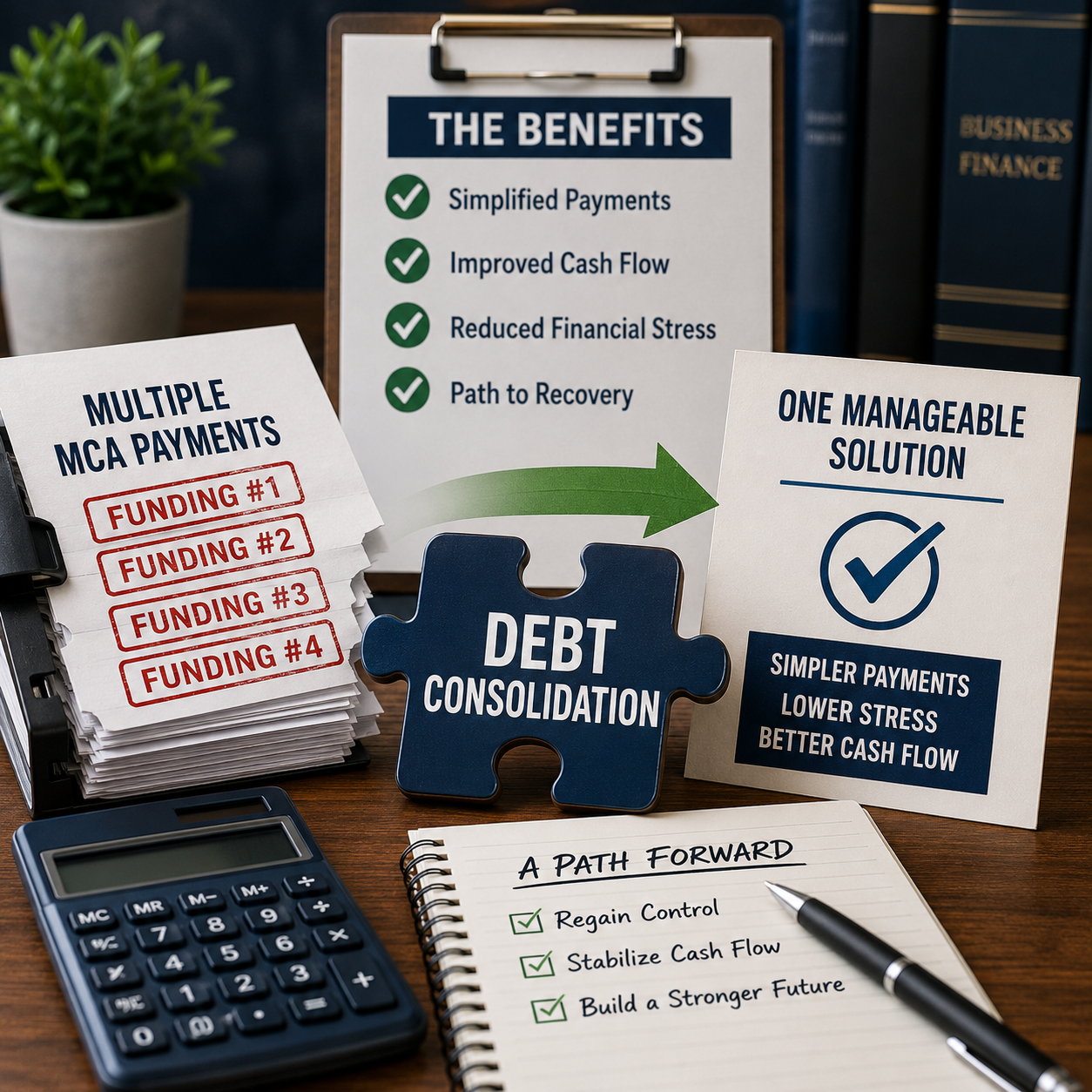
An MCA default does not mean your business is out of options. Debt consolidation can combine multiple obligations into one more manageable solution. That can ease payment pressure and give your business much-needed breathing room.
For many business owners, consolidation helps stabilize cash flow and restore a sense of control. The right strategy can reduce financial stress and create a clear path toward recovery.
Steps to Protect Your Business After Defaulting on an MCA
Defaulting on an MCA can feel overwhelming, but the steps you take next can make a significant difference. Ignoring the problem usually gives funders more leverage and limits your options. Instead, focus on protecting your cash flow, understanding your obligations, and evaluating available mca debt relief solutions as soon as possible.
After an MCA default, consider these important steps:
• Review your MCA agreement carefully
• Assess your current cash flow and financial position
• Document all communications with funders
• Explore restructuring, settlement, or consolidation options
• Seek professional guidance before making major decisions
Taking action early can help you regain control and reduce financial pressure. A clear strategy can protect your business, stabilize operations, and improve your chances of achieving a successful long-term outcome.
Your Business Still Has Options
Defaulting on a merchant cash advance can be stressful, but it does not have to define the future of your business. The sooner you address the problem, the more options you typically have to reduce payment pressure, protect cash flow, and regain control. Whether through restructuring, settlement, or debt consolidation, many businesses find a path forward before the situation becomes irreversible. Taking action today can help stabilize your finances, protect your operations, and put your business back on the road to long-term success.
MCA Payment Range Calculator
Use the MCA calculator below to estimate what reduced MCA payments may look like after restructuring. Results are based on common repayment structures and should be viewed as estimates only.