

Schedule Your Free Consultation
Daily MCA withdrawals may seem manageable when a business first receives funding. However, those automatic deductions can quickly create challenges as cash flow fluctuates. Every withdrawal reduces the amount of working capital available for payroll, inventory, marketing, equipment, and other essential expenses. When cash leaves the business every day, growth often takes a back seat to short-term survival.
Many business owners discover that daily MCA payments make it difficult to plan ahead or invest in new opportunities. Even profitable companies can feel pressure when a large portion of their revenue disappears before they have a chance to use it. Over time, daily MCA withdrawals can limit flexibility, slow expansion, and make it harder to build a stronger financial foundation.
Understanding how daily MCA withdrawals affect cash flow is the first step toward protecting your business. By recognizing the long-term impact of these payment structures, business owners can make more informed decisions and explore options that support sustainable growth.
How Daily MCA Withdrawals Affect Business Cash Flow
Daily MCA withdrawals reduce cash flow every business day, regardless of what other expenses may be due. While the withdrawal amount may seem manageable at first, the cumulative impact can create significant pressure over time. Many business owners find themselves with less working capital available to cover routine operating costs, respond to unexpected expenses, or take advantage of growth opportunities.
As daily deductions continue, cash flow often becomes less predictable and more difficult to manage. Businesses may struggle to maintain adequate reserves while balancing other financial obligations, including:
- Payroll
- Inventory purchases
- Vendor and supplier payments
- Rent and utilities
- Marketing and growth initiatives
The challenge becomes even greater when revenue fluctuates from week to week or month to month. Daily MCA withdrawals continue regardless of seasonal slowdowns or temporary cash flow disruptions. As a result, many businesses spend more time managing short-term cash needs and less time focusing on growth, profitability, and long-term success.
Why Daily Withdrawals Make It Difficult to Reinvest in Growth
Growth requires capital. Businesses need available cash to hire employees, purchase equipment, increase inventory, expand marketing efforts, and pursue new opportunities. Daily MCA withdrawals reduce the amount of money available for those investments by removing funds from the business every single day. As a result, many companies find themselves focused on meeting immediate obligations instead of building for the future.
The impact often extends beyond major growth initiatives. Even routine improvements can become difficult when cash flow remains under constant pressure. Business owners may delay equipment upgrades, postpone hiring decisions, or reduce marketing budgets simply to maintain adequate working capital. Over time, these delays can slow business growth and limit the company’s ability to compete effectively.
When a large portion of incoming revenue goes toward daily repayments, businesses have fewer resources available to strengthen operations and expand. What begins as a financing solution can eventually become a barrier to growth if daily withdrawals consume too much of the cash needed to move the business forward.

The Impact of MCA Payments on Payroll, Inventory, and Operations
Daily MCA payments can create challenges far beyond simple cash flow management. As funds leave a business account each day, owners often have less flexibility to cover critical operating expenses. What begins as a manageable repayment obligation can gradually affect multiple areas of the business when revenue slows or unexpected expenses arise.
Some of the most common areas impacted include:
- Payroll and employee wages
- Inventory purchases and replenishment
- Vendor and supplier payments
- Equipment maintenance and upgrades
- Marketing and business development efforts
When working capital becomes limited, business owners often face difficult decisions. They may delay inventory orders, postpone equipment purchases, or reduce spending in areas that support future growth. Over time, these compromises can affect customer service, operational efficiency, and overall profitability.
The pressure becomes even greater when multiple MCA obligations exist at the same time. Instead of investing in growth, businesses often focus on managing daily withdrawals and preserving cash. That shift can make it harder to maintain momentum and achieve long-term business goals.
How Daily MCA Withdrawals Can Lead to Additional Borrowing
Daily MCA withdrawals can create a cycle that becomes increasingly difficult to escape. As cash leaves the business account each day, owners may struggle to cover payroll, inventory, vendor payments, and other operating expenses. When working capital runs short, some businesses turn to additional funding to fill the gap and maintain operations.
While new financing may provide temporary relief, it can also create new repayment obligations and place even more pressure on future cash flow. What starts as a solution to a short-term cash shortage can quickly become a pattern of borrowing to cover existing debt. Over time, this cycle may increase financial stress, reduce flexibility, and make it more difficult for the business to regain control of its finances. Recognizing the warning signs early can help business owners explore alternatives before additional borrowing becomes the only option.

Warning Signs MCA Payments Are Slowing Business Growth
MCA payments can affect growth long before a business experiences a financial crisis. In many cases, the warning signs appear gradually as more revenue goes toward repayments and less remains available for expansion. Business owners may notice that growth initiatives take longer to implement or that important investments continue moving to the bottom of the priority list.
Several indicators may suggest that MCA payments are limiting your company’s ability to grow:
- Delaying hiring or staffing additions
- Postponing equipment purchases or upgrades
- Reducing marketing and advertising budgets
- Struggling to maintain adequate inventory levels
- Using working capital to cover daily MCA withdrawals
- Passing on growth opportunities due to cash flow concerns
Over time, these challenges can make it difficult to compete effectively and achieve long-term goals. When MCA payments begin influencing major business decisions, it may be a sign that repayment obligations have become too restrictive. Recognizing these warning signs early can help business owners explore solutions before growth slows even further.
The Long-Term Consequences of Ongoing MCA Payment Pressure
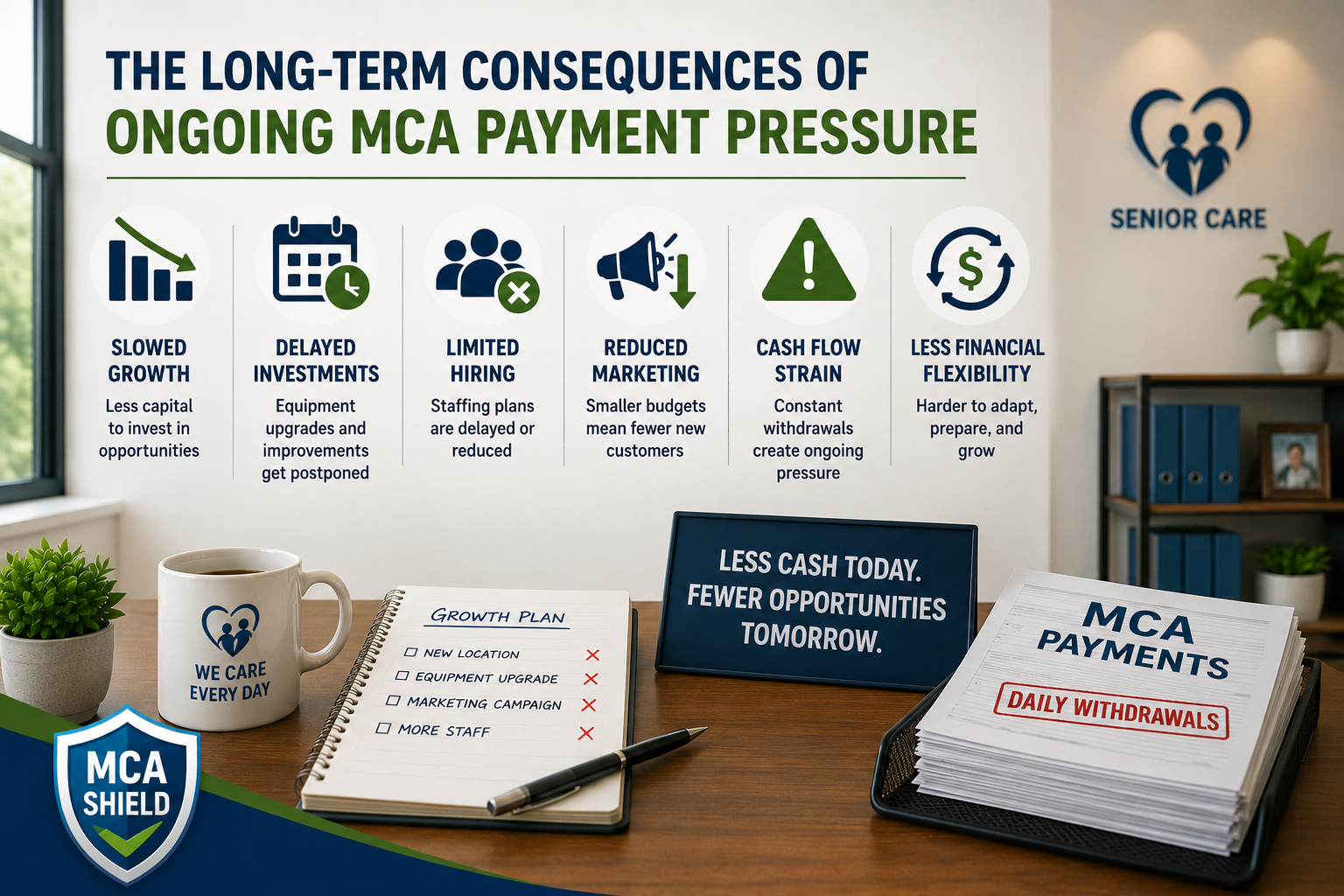
At first, MCA payments may seem like a manageable cost of accessing fast business funding. Over time, however, ongoing MCA payment pressure can create lasting challenges that affect nearly every aspect of a business. As daily or weekly withdrawals continue, owners often have less flexibility to manage cash flow, invest in growth, and respond to unexpected expenses.
What makes the situation particularly difficult is the cumulative effect. A business may continue operating, but growth can slow as more revenue goes toward repayment obligations. Marketing budgets shrink, equipment upgrades get delayed, and hiring plans often move to the back burner. The longer payment pressure persists, the harder it can become to build reserves and create financial stability.
Many business owners focus on solving immediate cash flow problems without considering the long-term impact. Understanding these consequences can help businesses recognize warning signs early and explore solutions before payment pressure begins limiting future opportunities. Taking action sooner often creates more options and a stronger path toward sustainable growth.
How MCA Debt Restructuring May Improve Cash Flow
When MCA payments consume too much of a company’s revenue, cash flow often becomes difficult to manage. MCA debt restructuring may help by creating a repayment strategy that better aligns with the business’s current financial situation. The goal is to reduce immediate payment pressure and provide more flexibility for day-to-day operations.
Potential benefits of restructuring may include:
- Lower overall payment pressure
- Improved working capital
- Greater flexibility for payroll and operating expenses
- More predictable cash flow management
- Reduced reliance on additional borrowing
As cash flow improves, businesses often gain more room to focus on growth instead of survival. Owners may have a better opportunity to invest in inventory, staffing, equipment, and customer acquisition. Rather than constantly reacting to daily withdrawals, businesses can begin planning for the future with greater confidence.
Every situation is different, but restructuring can provide a path toward financial stability when MCA obligations become difficult to sustain. For many businesses, improving cash flow is the first step toward regaining control and creating long-term growth opportunities.
Steps to Take Before Daily MCA Withdrawals Become Unmanageable
The best time to address MCA payment pressure is before it turns into a serious cash flow problem. Many business owners have more options available when they act early. Waiting until payroll becomes difficult or vendor payments fall behind can limit flexibility and make the situation harder to resolve.
Start by reviewing all MCA agreements and calculating the total amount withdrawn from your business each day or week. Analyze your cash flow, identify areas of financial strain, and avoid taking on additional MCA funding without understanding the long-term impact. The sooner you evaluate your options, the easier it becomes to protect working capital and maintain control of your business. Taking proactive steps today can help prevent larger financial challenges tomorrow.