
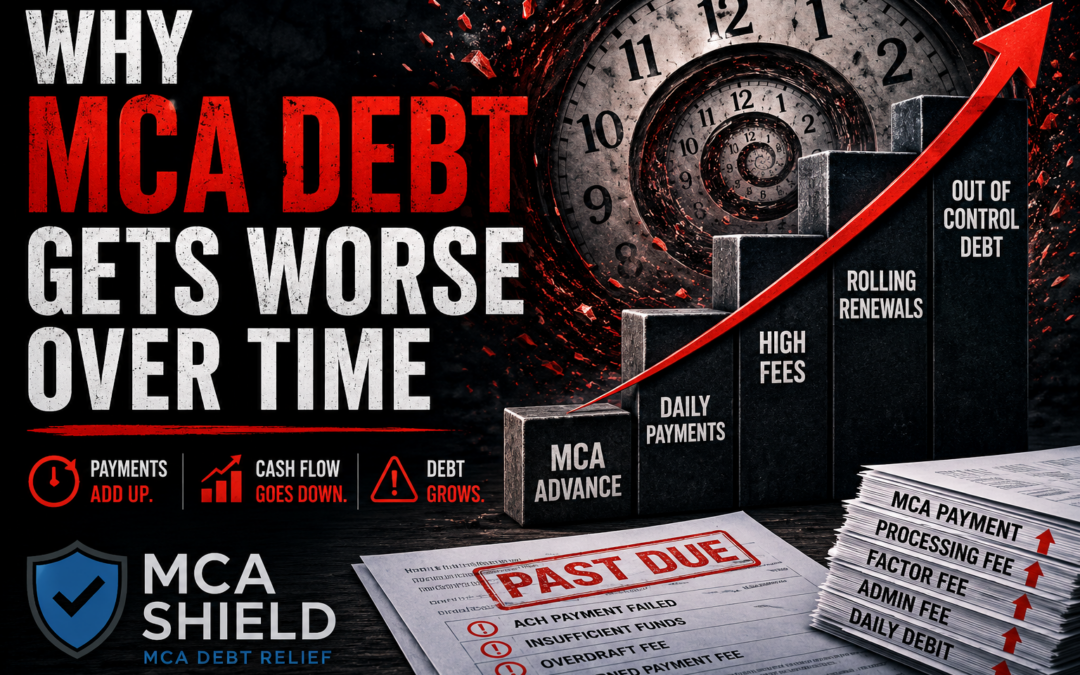
MCA debt often becomes more difficult to manage the longer it remains unresolved. What may start as a single merchant cash advance can gradually evolve into multiple funding obligations, higher repayment costs, and increasing pressure on business cash flow. Daily or weekly withdrawals can make it harder to cover payroll, vendors, inventory, and other essential operating expenses.
Understanding why MCA debt gets worse over time can help business owners recognize warning signs early and take proactive steps before the situation becomes unmanageable. In this guide, we explain the factors that contribute to growing MCA debt, the risks businesses may face, and the options available to regain financial stability.
Schedule Your Free Consultation
Understanding How MCA Debt Grows Over Time
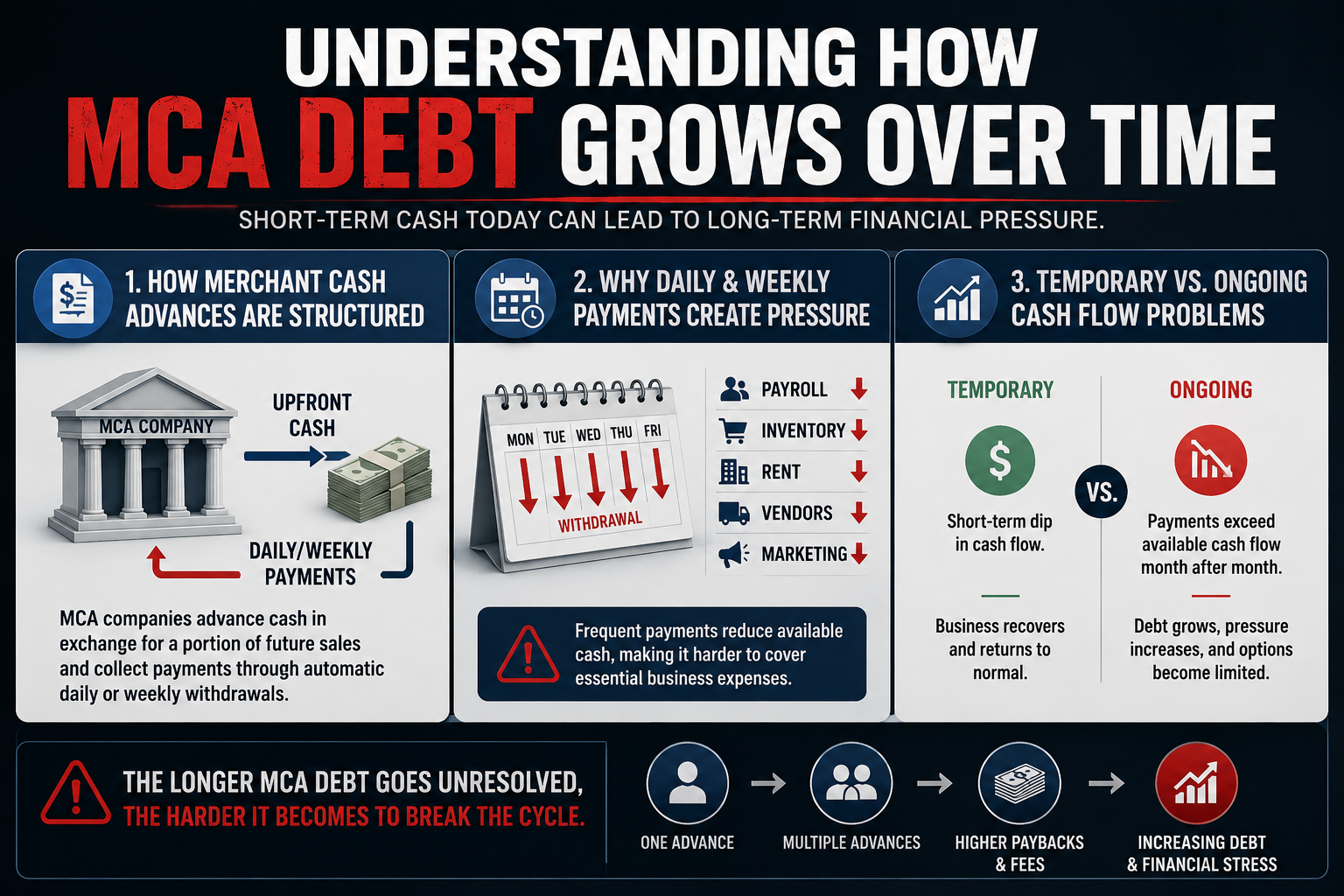
Many business owners are surprised by how quickly MCA debt can become difficult to manage. While a merchant cash advance may provide immediate access to working capital, the repayment structure often creates ongoing financial pressure. As payments continue and cash flow tightens, businesses may find themselves facing challenges that become more severe over time.
How Merchant Cash Advances Are Structured
Unlike traditional business loans, merchant cash advances are typically repaid through automatic daily or weekly withdrawals from a business bank account. MCA companies purchase a portion of future receivables and collect payments until the agreed-upon amount has been repaid. Because payments occur frequently and often begin immediately, many businesses experience a significant reduction in available working capital.
Why Daily and Weekly Payments Create Pressure
Frequent MCA payments can quickly strain cash flow, especially during periods of slower revenue. Every withdrawal reduces the funds available for payroll, rent, inventory, marketing, and other operating expenses. As payment obligations continue, businesses may struggle to maintain normal operations and may begin relying on additional funding to cover short-term shortages.
The Difference Between Temporary and Ongoing Cash Flow Problems
Most businesses experience occasional cash flow fluctuations. However, MCA debt can transform a temporary challenge into a long-term financial problem when repayment obligations consistently exceed available cash flow. When daily or weekly withdrawals leave insufficient funds to cover essential expenses month after month, the financial pressure often compounds, becoming increasingly difficult to overcome without a structured solution.
Common Reasons MCA Debt Becomes More Difficult to Manage
MCA debt rarely becomes overwhelming overnight. In many cases, financial pressure builds gradually as repayment obligations consume a larger portion of available revenue. As cash flow tightens, businesses may find it increasingly difficult to meet operating expenses while keeping up with MCA payments. Understanding the factors that contribute to growing debt can help business owners recognize potential problems before they escalate.
Declining Working Capital and Cash Flow
One of the most common reasons MCA debt becomes difficult to manage is declining working capital. Daily or weekly withdrawals reduce the cash available for payroll, inventory, rent, marketing, and other essential expenses. When revenue fluctuates, or unexpected costs arise, businesses may struggle to maintain adequate cash reserves. Over time, the gap between incoming revenue and outgoing obligations can continue to widen.
Multiple MCA Advances and Loan Stacking
Some businesses respond to cash flow shortages by obtaining additional merchant cash advances. While new funding may provide temporary relief, it often creates additional repayment obligations that further strain cash flow. This practice, commonly known as MCA loan stacking, can lead to multiple daily or weekly withdrawals occurring simultaneously. As repayment obligations accumulate, the financial pressure often becomes significantly more difficult to manage.
Renewals That Increase Overall Debt Obligations
Many MCA companies offer renewals before an existing advance has been fully repaid. While a renewal may provide immediate access to capital, it can also increase the total amount a business owes over time. Repeated renewals may extend the cycle of debt and make it harder for businesses to improve cash flow. What initially appears to be a short-term solution can ultimately contribute to larger and more persistent financial challenges.
Warning Signs That MCA Debt Is Getting Worse
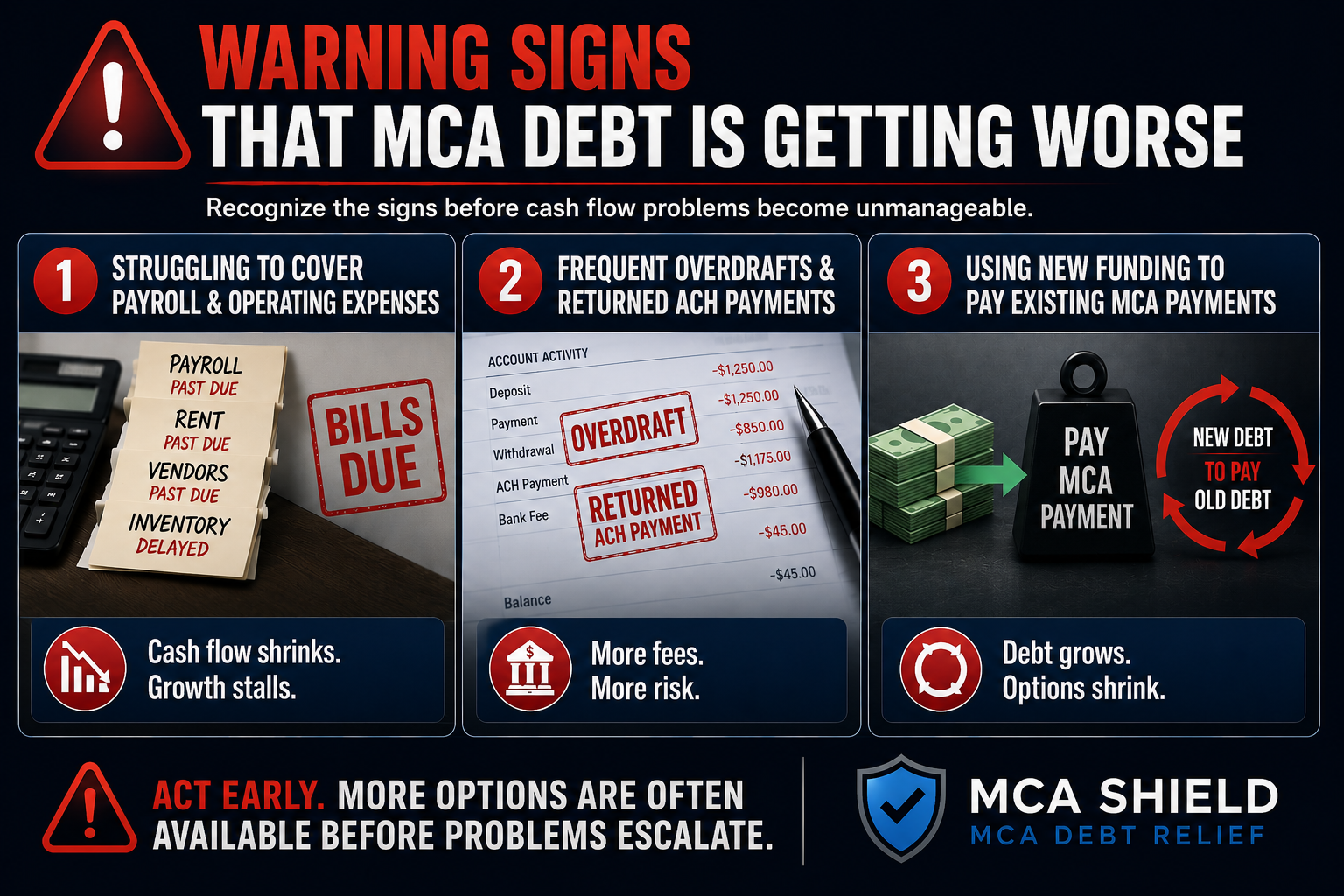
As MCA debt grows, businesses often experience warning signs indicating financial pressure is increasing. Recognizing these indicators early can help business owners take action before cash flow problems become severe. Ignoring the warning signs may allow the situation to continue deteriorating, limiting the options available for relief.
Struggling to Cover Payroll and Operating Expenses
One of the clearest warning signs that MCA debt is becoming unmanageable is difficulty paying for essential business expenses such as payroll, rent, inventory, and vendor obligations. Payroll, rent, utilities, inventory purchases, and vendor payments may become harder to fund as MCA withdrawals consume a larger share of revenue. When essential expenses are consistently delayed or paid late, it often signals that cash flow is under significant strain.
Frequent Overdrafts and Returned ACH Payments
Overdraft fees and returned ACH payments are common indicators of worsening MCA debt problems. Daily or weekly withdrawals can leave insufficient funds in a business bank account, resulting in bounced payments and additional bank charges. These disruptions can create further financial pressure and may trigger collection activity from MCA companies.
Using New Funding to Pay Existing MCA Payments
Many businesses turn to additional financing when cash flow becomes tight. However, using a new merchant cash advance or other funding source to cover existing MCA payments often indicates a growing debt cycle. While additional funding may provide temporary relief, it frequently increases overall repayment obligations and can make long-term financial recovery more difficult. When new debt is being used to service old debt, the underlying cash flow problem typically remains unresolved.
How Growing MCA Debt Impacts Business Operations
As MCA debt increases, the effects often extend far beyond repayment obligations. What begins as a cash flow challenge can gradually disrupt multiple areas of a business, making daily operations more difficult to manage. Over time, growing debt pressure can affect vendor relationships, limit growth opportunities, and place significant stress on business owners and management teams.
Vendor Payment Delays and Supply Chain Challenges
When a large portion of revenue is directed toward MCA payments, businesses may struggle to pay vendors on time. Delayed payments can strain supplier relationships and may result in reduced credit terms, late fees, or interruptions in inventory deliveries. These disruptions can create operational challenges that make it harder to meet customer demand and maintain normal business activity.
Reduced Ability to Invest in Business Growth
Businesses burdened by growing MCA debt often have fewer resources available for growth initiatives. Funds that could be used for hiring, marketing, equipment purchases, technology upgrades, or expansion are frequently redirected toward repayment obligations. As a result, businesses may find themselves focused on managing debt rather than pursuing opportunities that could increase revenue and profitability.
Increased Financial Stress on Business Owners
The ongoing pressure of managing MCA debt can create significant stress for business owners. Concerns about cash flow, upcoming withdrawals, vendor obligations, and employee payroll often become a daily source of anxiety. As financial challenges continue to mount, business owners may spend more time reacting to short-term problems and less time focusing on long-term planning and growth.
UCC Liens and Security Interests in MCA Agreements
Many Merchant Cash Advance Contracts include provisions related to UCC filings and security interests. While these filings do not always affect daily business operations, they can create challenges when a business seeks additional financing. Understanding how UCC liens work can help business owners avoid surprises and make more informed funding decisions.
What Is a UCC Filing?
A UCC filing, often called a UCC-1 financing statement, is a public notice to establish a claimed interest in certain business assets or receivables. MCA companies may file a UCC lien to protect their interest in the agreement.
A UCC filing does not necessarily mean the business has done anything wrong. In many cases, it is a standard part of the funding process.
How UCC Liens Can Affect Future Financing
UCC liens can sometimes create obstacles when a business applies for new financing. Lenders and financing companies often review existing UCC filings as part of their approval process.
An active UCC lien may limit financing options, delay approvals, or require additional review before new funding can be obtained. For businesses seeking loans, lines of credit, or equipment financing, existing liens can become an important consideration.
Removing or Resolving Existing Liens
Once an MCA obligation has been satisfied, the related UCC filing may be eligible for termination or release. However, the process can vary depending on the agreement and the filing party.
If a business believes a UCC lien should no longer be active, it may be beneficial to verify the filing status and determine whether additional action is required. Addressing outdated or unresolved liens can help improve access to future financing opportunities.
What Happens If MCA Debt Continues to Escalate
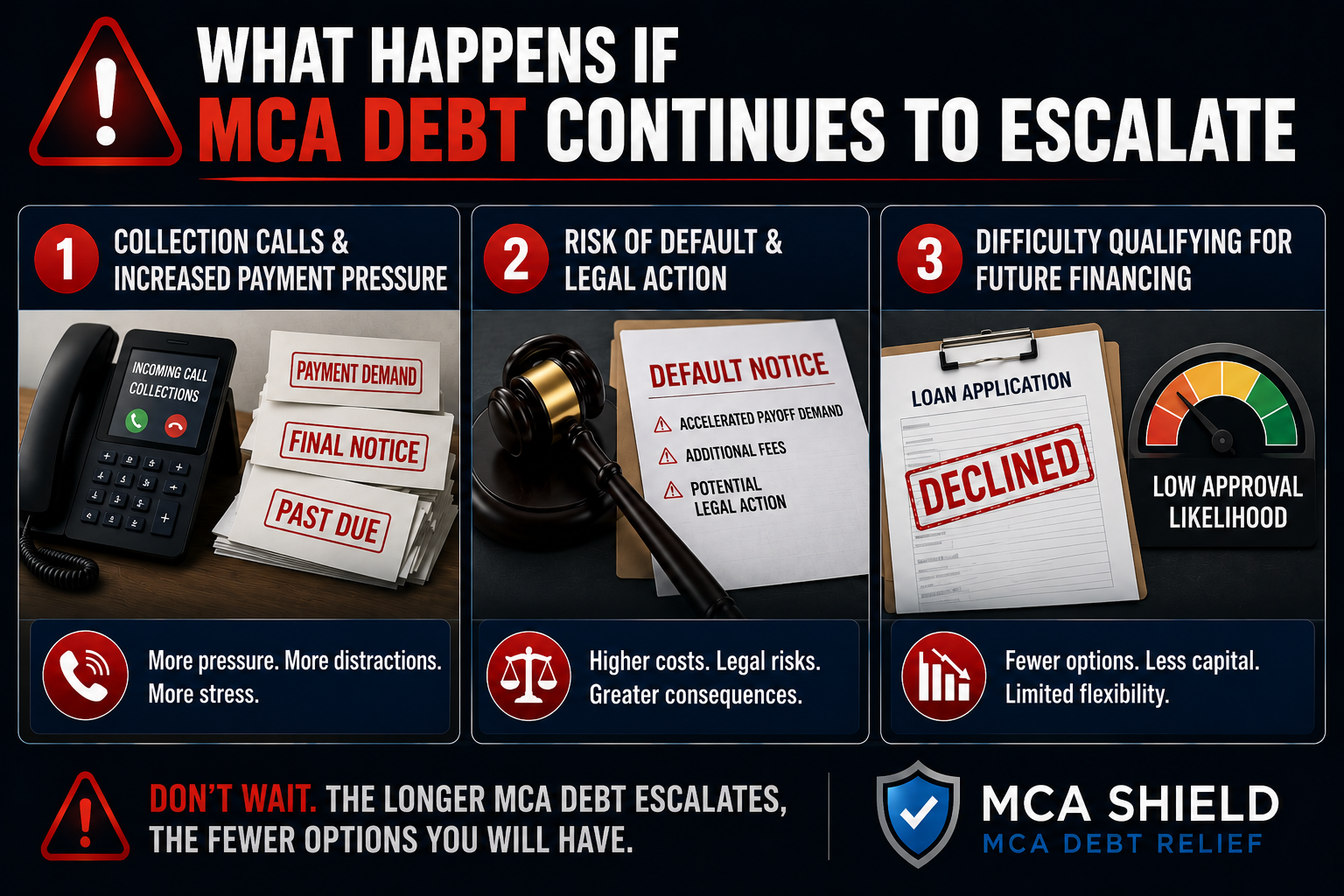
When MCA debt remains unresolved, the financial consequences often become more serious over time. What may begin as a cash flow challenge can eventually lead to collection activity, default risks, and difficulty obtaining future financing. As pressure increases, businesses may find that the options available to resolve the problem become more limited.
Collection Calls and Increased Payment Pressure
Businesses that fall behind on MCA payments often experience increased collection efforts. Collection calls, emails, payment demands, and other communication methods may become more frequent as MCA companies attempt to recover outstanding balances. These collection activities can create additional stress for business owners and further distract from daily operations.
Risk of Default and Legal Action
As payment difficulties continue, the risk of default increases. Depending on the terms of the agreement, an MCA default may trigger additional fees, accelerated repayment demands, or legal action. Some MCA providers may pursue collection remedies outlined in the contract, making it important for business owners to understand their obligations and seek guidance before the situation becomes more complex.
Difficulty Qualifying for Future Financing
Growing MCA debt can also make it more difficult to obtain future funding. Existing repayment obligations, cash flow challenges, and active collection activity may raise concerns for potential lenders and financing providers. As a result, businesses may have fewer financing options available when additional capital is needed, further increasing financial pressure and limiting flexibility.
Options for Businesses Struggling With MCA Debt
MCA Debt Restructuring Solutions
Reduce payment pressure by restructuring MCAs into a more manageable repayment plan. Restructuring may improve cash flow and help businesses regain financial stability without taking on additional funding.
MCA Settlement Programs
Settlement programs focus on negotiating reduced payoff amounts with MCA providers. Depending on the circumstances, settlements may help businesses resolve debt obligations for less than the full balance owed.
Professional Negotiation and Relief Assistance
Experienced professionals can evaluate your situation, communicate with MCA companies, and help identify available relief options. Professional guidance often helps businesses navigate complex debt challenges more effectively.
Steps to Take Before MCA Debt Becomes Unmanageable
Businesses facing growing MCA debt often have more options when they take action early. Waiting until cash flow problems become severe can make it more difficult to negotiate with creditors, maintain operations, and explore relief solutions. Taking the following steps can help business owners better understand their situation and identify a path forward.
Review All MCA Agreements and Obligations
Start by gathering and reviewing all MCA contracts, payment schedules, balances, and repayment terms. Understanding the full scope of your obligations is an important first step toward evaluating potential solutions.
Analyze Current Cash Flow and Expenses
Carefully review revenue, operating expenses, payroll obligations, and upcoming payments. A clear picture of cash flow can help identify financial pressure points and determine what level of repayment may be sustainable.
Avoid Taking Additional MCA Funding
While additional funding may provide short-term relief, it can also increase repayment obligations and worsen cash flow challenges. Avoiding new MCA advances can help prevent the debt cycle from becoming even more difficult to manage.
Seek Professional Guidance Early
Professional assistance may help businesses evaluate restructuring, settlement, or other relief options before the situation escalates. Early action often creates flexibility and may improve the likelihood of achieving a favorable outcome.
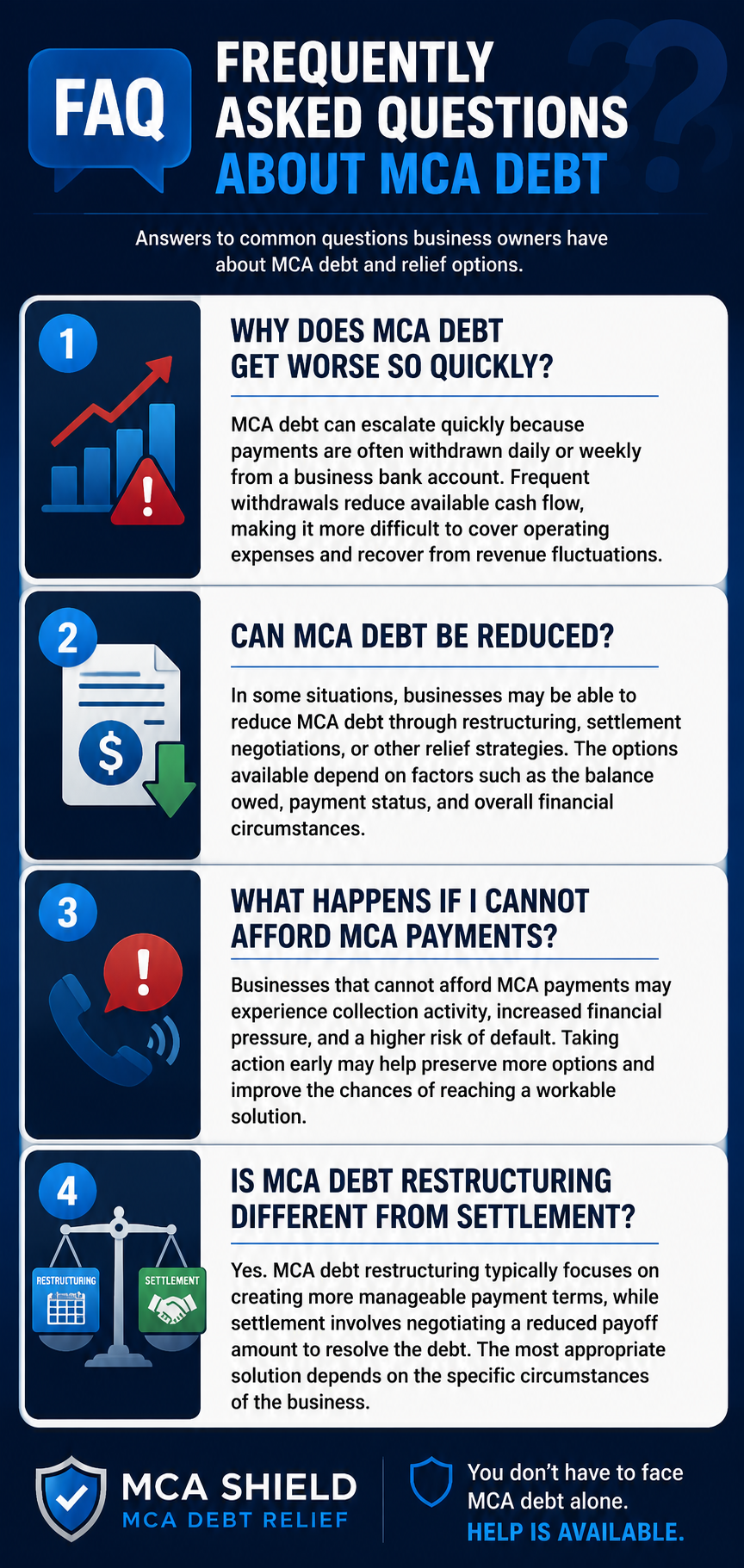
Frequently Asked Questions About MCA Debt
Taking Action Before MCA Debt Creates Bigger Problems
MCA debt often becomes more difficult to resolve as financial pressure increases. Collection activity, cash flow shortages, and mounting repayment obligations can limit the options available to business owners over time. Taking action early may help preserve flexibility, reduce financial stress, and create more opportunities to address the problem before it escalates.
Why Early Action Often Creates More Options
Businesses that address MCA debt early are often in a stronger position to explore relief solutions. Whether through restructuring, settlement negotiations, or other strategies, proactive action can help prevent additional debt accumulation, reduce payment pressure, and improve the likelihood of achieving a sustainable outcome.
Schedule a Free Consultation With MCA Shield
If MCA debt is affecting your cash flow, operations, or ability to grow, now is the time to explore your options. MCA Shield helps business owners evaluate their situation and identify potential solutions designed to reduce financial pressure. Schedule a free consultation today to learn what relief options may be available for your business.