
ClickCease

Get an Instant Payment Reduction Quote

Why MCA Debt Can Spiral Out of Control

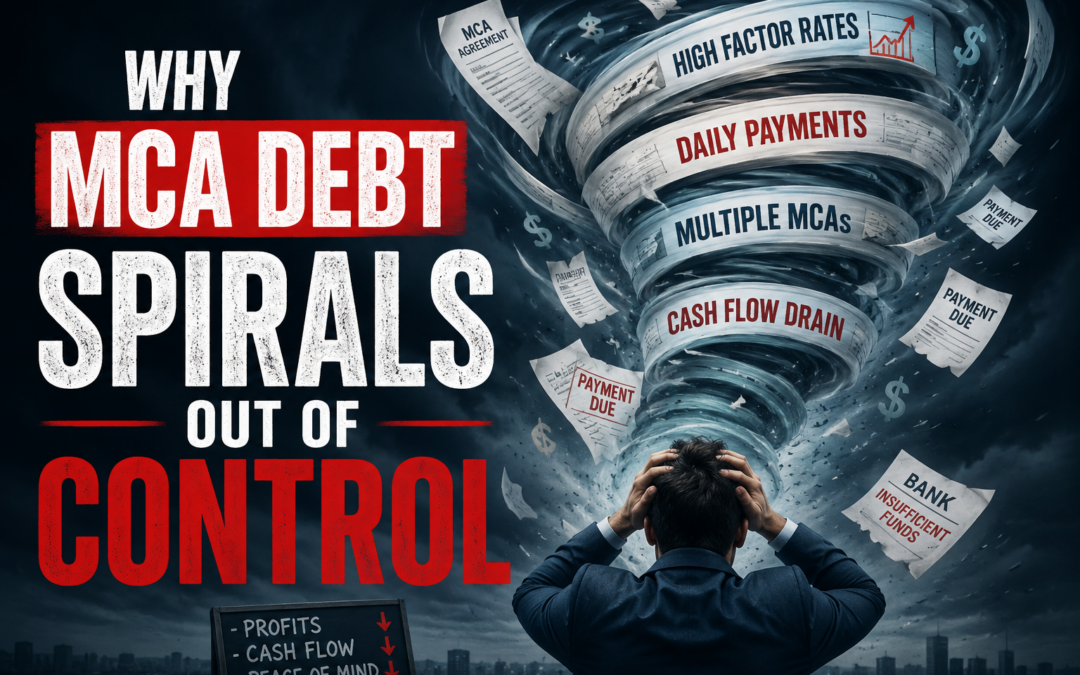
Why MCA debt spirals out of control is a question many business owners ask after cash flow becomes increasingly difficult to manage. What often starts as a quick funding solution can lead to daily or weekly payments, growing repayment obligations, and mounting financial pressure. Understanding what causes this debt cycle can help you recognize the warning signs early and take steps to protect your business before the situation becomes more difficult.

Many business owners accept a merchant cash advance because the funding arrives quickly and the approval process is often simpler than a traditional loan. At first, the payments may seem manageable. Over time, however, the repayment structure can put increasing pressure on cash flow. As revenue tightens, everyday operating expenses become harder to cover, and many businesses find themselves searching for additional funding to stay current.

Understanding why MCA debt spirals out of control can help you recognize the warning signs early and take action before financial pressure becomes a larger problem.

Daily or Weekly Payments Reduce Available Cash

Unlike traditional business loans with monthly payments, most merchant cash advances collect payments through automatic daily or weekly withdrawals. That means money leaves your account almost constantly.

For many businesses, this creates ongoing pressure on working capital. Even when sales remain steady, frequent withdrawals reduce the cash available to pay employees, purchase inventory, cover rent, or invest in growth. During slower periods, those automatic payments become even more difficult to manage.

As available cash continues to shrink, many owners find themselves making difficult decisions about which bills to pay first.

High Factor Rates Increase the Total Cost

Merchant cash advances typically use a factor rate instead of an interest rate. While the funding may appear affordable at first, the total repayment amount is often much higher than the amount originally received.

For example, a business that receives $50,000 with a 1.40 factor rate must repay $70,000. When those larger repayment amounts are combined with daily or weekly withdrawals, the financial strain can build quickly.

Many business owners focus on how much funding they can receive without fully understanding the total repayment obligation. As a result, cash flow may become tighter much sooner than expected.

Multiple Merchant Cash Advances Create a Debt Cycle

When one merchant cash advance becomes difficult to manage, some businesses respond by taking another advance to cover existing payments. This practice, often called stacking, can make financial problems much worse.

Each new advance adds another series of automatic withdrawals, leaving even less money available for normal business operations. Instead of solving the problem, additional funding often increases the total debt burden and accelerates cash flow problems.

Before long, a business may spend more time managing MCA payments than focusing on serving customers, growing revenue, or planning for the future. The earlier this cycle is identified, the more options are typically available to regain financial stability.

Understanding why MCA debt spirals out of control allows business owners to recognize these risks before financial pressure becomes overwhelming.

Warning Signs That MCA Debt Is Getting Worse

Illustration showing warning signs that merchant cash advance (MCA) debt is getting worse, including shrinking cash flow, stacked MCA debt, late payroll, unpaid vendors, and tax payment problems.

Once you understand why MCA debt spirals out of control, it’s easier to recognize the warning signs before they threaten your business. MCA debt problems rarely appear overnight. In many cases, financial pressure builds gradually until business owners realize there is not enough cash to cover everyday expenses. Recognizing these warning signs early can help you explore solutions before the situation becomes more difficult.

Cash Flow Keeps Shrinking

One of the earliest signs of a growing MCA problem is a steady decline in available cash. Even if your business continues to generate revenue, automatic MCA payments may leave less money available for normal operations.

You may notice that your account balance stays lower than expected, leaving little room for unexpected expenses. Instead of building a financial cushion, you’re simply trying to make it through the next payment cycle.

If cash flow continues to tighten month after month, it may be time to evaluate whether your current repayment obligations are sustainable.

Payments Are Covering Older MCA Debt

Using one merchant cash advance to pay another is one of the clearest signs that debt is spiraling.

While additional funding may provide temporary breathing room, it often increases the total amount you owe and creates even more automatic withdrawals. Over time, a larger share of your revenue goes toward repaying existing advances instead of supporting your business.

When new funding is being used to solve old funding problems, the debt cycle often becomes much harder to escape.

Payroll, Vendors, or Taxes Are Falling Behind

As MCA payments consume more of your available cash, other financial obligations may begin to slip.

You may find yourself delaying payroll, extending payments to vendors, missing tax deadlines, or falling behind on rent and other operating expenses. These challenges can disrupt daily operations, strain important business relationships, and create additional financial pressure.

If essential business expenses are becoming harder to manage because of MCA payments, it’s often a sign that the debt has reached a point where exploring relief options may help protect your business before the situation worsens.

How Businesses Can Stop the MCA Debt Spiral

Illustration showing how businesses can stop the merchant cash advance (MCA) debt spiral by reviewing MCA agreements, avoiding additional advances, and exploring debt relief options to restore cash flow.

Knowing why MCA debt spirals out of control is the first step toward breaking the cycle and restoring healthy cash flow. When MCA debt begins to affect cash flow, many business owners feel like they have only two choices: keep making payments or take another advance. In reality, there are often additional options. Taking action early can make it easier to reduce financial pressure, preserve working capital, and create a path toward long-term stability.

Review Every MCA Agreement

The first step is understanding exactly what your business owes. Many companies have more than one merchant cash advance, each with different factor rates, payment schedules, and contract terms.

Reviewing every agreement provides a clear picture of your total repayment obligations. It also helps identify which advances are creating the greatest pressure on cash flow and where relief opportunities may exist.

Without a complete understanding of your MCA obligations, it is difficult to make informed financial decisions.

Avoid Taking Another Merchant Cash Advance

When cash becomes tight, another merchant cash advance can seem like the fastest solution. While it may provide short-term relief, it often increases the total amount of debt and creates additional automatic payments.

Instead of solving the underlying problem, another advance can accelerate the debt cycle by reducing available cash even further. As repayment obligations grow, businesses often have fewer financial options available.

Whenever possible, explore alternatives before accepting additional MCA funding.

Explore Debt Relief and Settlement Options Early

Many business owners wait until they have missed payments before looking for help. By that point, the available options may be more limited.

Seeking assistance early allows more time to evaluate MCA debt relief or settlement strategies before financial pressure becomes overwhelming. In many cases, addressing the problem sooner can improve cash flow, reduce financial stress, and help your business focus on future growth instead of daily repayment challenges.

The earlier you begin exploring your options, the greater your opportunity to regain control and stop the MCA debt spiral before it grows into a larger financial problem.

How MCA Shield Helps Businesses Break the MCA Debt Cycle

Illustration showing a business breaking the merchant cash advance (MCA) debt cycle by reviewing MCA agreements, creating a debt relief strategy, and restoring cash flow for long-term financial recovery.

When MCA debt begins to affect cash flow, having a clear plan can make a significant difference. MCA Shield works with business owners to evaluate their financial situation, identify practical solutions, and develop strategies designed to reduce payment pressure while supporting long-term business stability.

Reviewing Existing MCA Agreements

Every business faces a unique financial situation, which is why the first step is a thorough review of your existing merchant cash advance agreements.

Our team evaluates repayment terms, factor rates, payment schedules, and the overall impact each advance has on your cash flow. This review helps identify where financial pressure is coming from and provides a clearer picture of the options available.

Understanding your obligations is the foundation for making informed financial decisions.

Developing a Customized Debt Relief Strategy

No two businesses have the same goals or financial challenges. Rather than applying a one-size-fits-all approach, MCA Shield develops a strategy tailored to your business’s specific circumstances.

Depending on your situation, that strategy may include negotiating with MCA providers, pursuing settlement opportunities, or exploring other debt relief options designed to improve cash flow. The objective is to reduce financial strain while helping your business continue operating.

By creating a personalized plan, businesses often gain a clearer path toward regaining financial control.

Supporting Long-Term Financial Recovery

Breaking the MCA debt cycle is only the beginning. Long-term success comes from restoring healthy cash flow and putting your business in a stronger financial position.

MCA Shield continues to support business owners as they work toward greater financial stability, helping them move beyond daily payment pressure and focus on running and growing their businesses.

With the right strategy and timely action, many businesses can stop the MCA debt spiral and build a more stable financial future.

Now that you understand why MCA debt spirals out of control, the next step is taking action before financial pressure limits your options.

Frequently Asked Questions About MCA Debt Spirals

If you’re worried that MCA debt is spiraling out of control, you’re not alone. Here are answers to some of the most common questions business owners ask when daily payments begin draining cash flow.

❓ Why Does MCA Debt Spiral So Quickly?

Merchant cash advances often require automatic daily or weekly payments. Combined with high factor rates, these frequent withdrawals can reduce available cash faster than many business owners expect. If revenue slows or unexpected expenses arise, covering both MCA payments and normal operating costs becomes increasingly difficult.

💰 Can MCA Payments Be Reduced?

In some situations, yes. Depending on the terms of your agreements and your financial circumstances, there may be options to negotiate repayment terms or pursue debt relief strategies that reduce payment pressure. Every business is different, so reviewing your specific MCA agreements is an important first step.

🔄 Is Taking Another MCA a Good Solution?

For most businesses, taking another merchant cash advance only provides temporary relief. While additional funding may help cover immediate expenses, it often increases total debt and creates more automatic withdrawals. This can accelerate the debt cycle rather than resolve the underlying cash flow problem.

🤝 Can MCA Debt Be Settled?

In many cases, merchant cash advance debt may be eligible for settlement. The available options depend on factors such as the number of advances, the terms of each agreement, and your business’s financial situation. A professional review can help determine which solutions may be available.

⏰ When Should I Ask for Help?

The best time to seek help is before MCA payments begin affecting payroll, vendor relationships, taxes, or other essential business expenses. Acting early often provides more options to reduce financial pressure and improve cash flow before the situation becomes more difficult to manage.

Stop the MCA Debt Spiral Before It Gets Worse

The longer MCA debt continues to strain your cash flow, the fewer financial options your business may have. Taking action early can help you regain control, reduce financial pressure, and focus on building a stronger future instead of managing daily withdrawals.

Why Acting Early Creates More Financial Options

Many business owners wait until they have exhausted their cash reserves before looking for solutions. By then, missed payments and mounting financial obligations can make recovery more challenging.

Seeking help early allows you to evaluate your options before the situation escalates. Whether your goal is improving cash flow, reducing payment pressure, or resolving multiple merchant cash advances, acting sooner often creates more opportunities to protect your business and move forward with confidence.

Schedule a Free Consultation With MCA Shield

If MCA debt is spiraling out of control, you don’t have to face it alone. The team at MCA Shield works with business owners to review existing MCA agreements, explain available debt relief options, and develop strategies tailored to each business’s financial situation.

A free consultation can help you better understand your options and take the first step toward breaking the MCA debt cycle. Contact MCA Shield today and start building a path toward stronger cash flow and long-term financial stability.