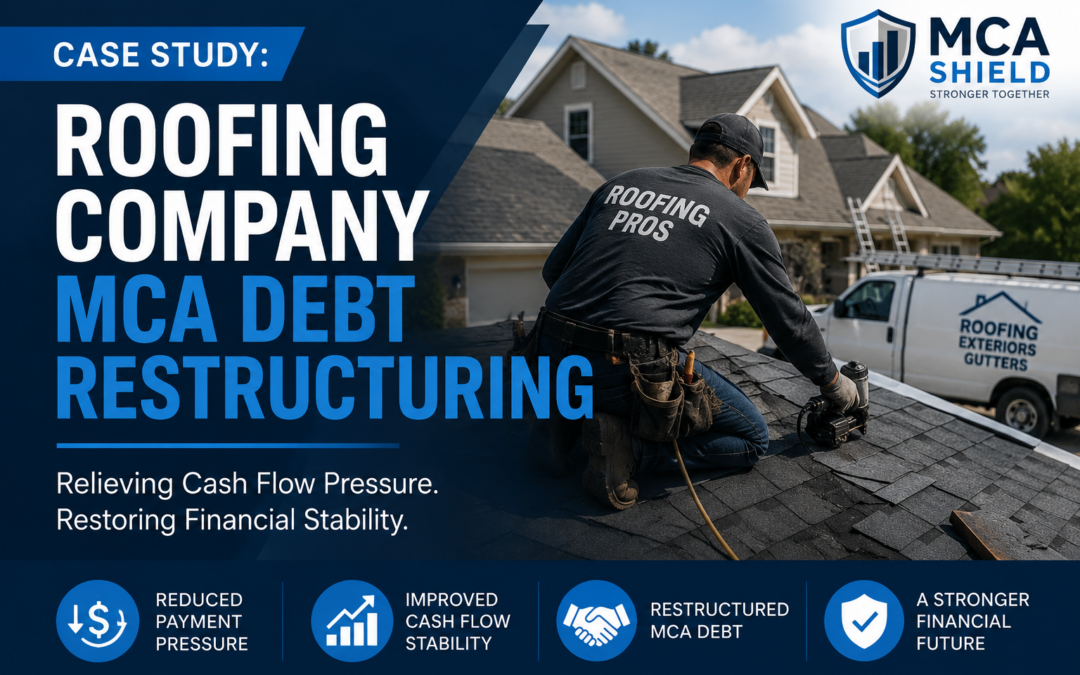
This Roofing Company MCA Debt Restructuring case study highlights how one growing roofing contractor found itself struggling under the weight of multiple merchant cash advance payments. Like many businesses in the construction industry, the company originally used MCA funding to address short-term cash flow needs and support ongoing operations.
Over time, however, frequent withdrawals began consuming a significant portion of incoming revenue. Payroll, vendor payments, equipment expenses, and day-to-day operating costs became increasingly difficult to manage. As cash flow tightened, the business needed a legal solution that would reduce financial pressure without disrupting operations.
By exploring MCA debt restructuring, the company was able to create a more sustainable repayment strategy, improve cash flow stability, and regain control of its finances. This case study examines the challenges the business faced, the restructuring approach that was implemented, and the results that followed.
Schedule Your Free Consultation
A Growing Roofing Business Facing Funding Challenges
The company had built a strong reputation in its market by providing residential and commercial roofing services. Demand for its work continued to grow, creating opportunities to expand operations, hire additional crews, and take on larger projects.
Like many roofing contractors, however, the business faced periods of uneven cash flow. Delays in customer payments, rising material costs, and the need to cover payroll and operating expenses created short-term funding gaps. To maintain momentum and keep projects moving forward, the company turned to merchant cash advance financing.
While the funding provided immediate access to capital, the repayment structure eventually created new financial challenges. As daily withdrawals increased, cash flow became more difficult to manage, and the business began looking for a long-term solution.
The MCA Debt Problem
Multiple MCA Payments Creating Cash Flow Pressure
What began as a single funding solution eventually grew into multiple MCA obligations. Each advance came with its own repayment requirements, creating a growing financial burden on the business. As revenue was directed toward servicing existing MCA payments, less working capital remained available for daily operations and future growth.
Daily Withdrawals Impacting Operations and Payroll
The frequent withdrawals began placing significant pressure on cash flow. Funds that would normally be used for payroll, materials, fuel, equipment, and vendor payments were being redirected toward MCA repayments. As payment obligations increased, the company found it more difficult to maintain financial flexibility and respond to unexpected business expenses.
Management recognized that continuing on the same path could create additional operational challenges. The company needed to explore options to reduce payment pressure and improve cash flow stability.

Warning Signs That Action Was Needed
Vendor Payment Delays
As MCA payments consumed a larger share of incoming revenue, the company began experiencing delays in paying suppliers and vendors. These delays created additional pressure on project timelines and day-to-day operations.
Reduced Working Capital
The business had less cash available to cover routine expenses, purchase materials, and respond to unexpected costs. Limited working capital made it increasingly difficult to operate efficiently and pursue new growth opportunities.
Difficulty Managing Existing MCA Obligations
Keeping up with multiple MCA payments became more challenging as cash flow tightened. The company found itself dedicating more revenue toward repayment obligations and less toward supporting the business. These warning signs indicated that action was needed before the financial pressure became more severe.
Evaluating MCA Debt Restructuring Options
Reviewing Current Merchant Cash Advance Agreements
Before moving forward with a solution, the company conducted a thorough review of its existing merchant cash advance agreements. This process helped identify repayment obligations, withdrawal amounts, funding terms, and the overall impact each MCA had on cash flow.
Identifying Opportunities to Reduce Payment Pressure
After evaluating the company’s financial situation, several opportunities were identified to improve cash flow and reduce financial strain. The primary objective was to create a more manageable repayment structure that would allow the business to continue operating while addressing its existing MCA obligations.
By understanding the full scope of the debt and repayment requirements, the company was able to develop a strategy focused on improving financial stability and creating a more sustainable path forward.
The MCA Debt Restructuring Strategy
Negotiating More Manageable Payment Terms
After reviewing the company’s MCA obligations, a restructuring strategy was developed to reduce the immediate strain on cash flow. The focus was on creating more manageable payment terms aligned more closely with the company’s revenue and operating needs.
Reducing payment pressure allowed the business to retain more working capital for essential expenses while continuing to address its outstanding obligations.
Creating a Sustainable Cash Flow Plan
The restructuring effort was supported by implementing a detailed cash flow analysis to improve financial stability. By balancing repayment obligations with operational requirements, the company established a more sustainable path forward.
The goal was not only to address current financial challenges but also to position the business for long-term success. With improved cash flow management and reduced repayment pressure, the company could focus on serving customers, completing projects, and supporting future growth.
The Results After MCA Debt Restructuring
Improved Cash Flow Stability
Following the restructuring process, the company experienced improved cash flow stability. With less revenue being consumed by repayment obligations, management gained greater control over day-to-day finances and could better plan for upcoming expenses.
Greater Flexibility for Payroll and Operating Expenses
The reduction in payment pressure allowed more funds to remain available for payroll, materials, fuel, equipment, and other operating costs. This increased flexibility helped the company maintain normal operations and continue serving customers without the constant strain of excessive withdrawals.
Reduced Financial Stress on the Business
Perhaps most importantly, the restructuring provided much-needed financial breathing room. Instead of focusing on daily payment challenges, management could concentrate on running the business, completing projects, and pursuing growth opportunities. The company moved from a reactive financial position to a more stable and sustainable path forward.
Key Lessons Other Business Owners Can Learn
Why Early Action Often Creates More Options
One of the most important lessons from this case study is the value of acting early. Businesses that address MCA payment pressure before it becomes a crisis often have more flexibility and a wider range of potential solutions available. Waiting too long can lead to increased financial strain, collection activity, and fewer options for improving cash flow.
Avoiding Additional MCA Debt and Loan Stacking
When cash flow becomes tight, taking on additional MCA funding may seem like a quick solution. However, adding new advances to existing obligations can increase payment pressure and create a cycle of debt that becomes more difficult to manage.
Instead of relying on additional funding, business owners should carefully evaluate their current obligations and explore solutions designed to improve long-term financial stability. Addressing the underlying cash flow challenges often provides a more sustainable path forward than adding more debt.
Could MCA Debt Restructuring Help Your Business?
When to Consider Professional Guidance
Every business faces unique financial challenges, but certain warning signs may indicate that it is time to explore professional assistance. If MCA payments are consuming too much of your revenue, limiting working capital, causing vendor payment delays, or making payroll difficult to manage, a review of your options may be beneficial.
Businesses with multiple MCA obligations, frequent cash flow shortages, or growing financial pressure often benefit from evaluating potential restructuring solutions before the situation worsens. Early action may provide more opportunities to improve cash flow and create a more sustainable repayment strategy.
If your business is struggling with MCA payments, professional guidance can help you better understand your obligations, evaluate available options, and determine the most effective path forward. The sooner financial challenges are addressed, the more flexibility you may have to protect your business and support future growth.
Taking Action Before MCA Debt Becomes Unmanageable
Schedule a Free Consultation With MCA Shield
This roofing company’s experience demonstrates how quickly MCA payments can begin affecting cash flow, payroll, vendor relationships, and daily operations. The longer payment pressure continues, the fewer options may be available to improve the situation.
If your business is struggling with merchant cash advance payments, stacked advances, or ongoing cash flow challenges, exploring MCA debt restructuring solutions early may help create a more sustainable path forward.
Schedule a free consultation with MCA Shield today. Our team will review your current MCA obligations, evaluate potential restructuring opportunities, and help you understand the options available to reduce payment pressure and regain financial stability.