
Merchant cash advance debt can pull a business into a difficult cycle fast. What starts as quick access to funding can turn into nonstop pressure on your cash flow. Daily withdrawals chip away at the money your business needs to operate.
Stacked advances often make things worse. One payment becomes two or three. Before long, keeping up with payroll, vendors, and operating expenses feels like a constant battle. That kind of pressure can force business owners into survival mode.
You still have options. Legal solutions can help you break that cycle before the damage spreads further. Debt restructuring can reduce payment pressure. Negotiated settlements can lower the burden. Consolidation can create a more manageable path forward.
The key is acting early. The sooner you address the problem, the more control you have over the outcome. A strong strategy can stabilize cash flow, protect your business, and help you move toward long-term recovery.
Understand Your Legal Options for Merchant Cash Advance Debt Relief
Many business owners use a merchant cash advance to cover payroll, buy inventory, or handle unexpected expenses. It often seems like a quick fix. But that short-term relief can quickly become a serious burden.
Daily or weekly withdrawals can drain cash flow fast. They can disrupt operations and make it harder to cover basic business expenses. When owners stack multiple advances, the pressure often grows even faster. Even so, financial strain does not mean you have run out of options.
Understanding your legal options is the first step toward regaining control. Several solutions may help, including debt restructuring, negotiated settlements, payment modifications, and strategic MCA consolidation. These approaches can reduce pressure without pushing your business deeper into financial trouble.
Every MCA agreement works differently. The best solution depends on your contract terms, your current cash flow, and how quickly you act.
Business owners should address the problem before it becomes unmanageable. Waiting too long can limit your choices. It can also increase the risk of default, collection efforts, and operational setbacks.
Experienced professionals can help you review your agreements and identify practical legal strategies. With the right plan, you can reduce payment pressure, stabilize your finances, and move forward with confidence.
Can You Legally Stop Merchant Cash Advance Payments?
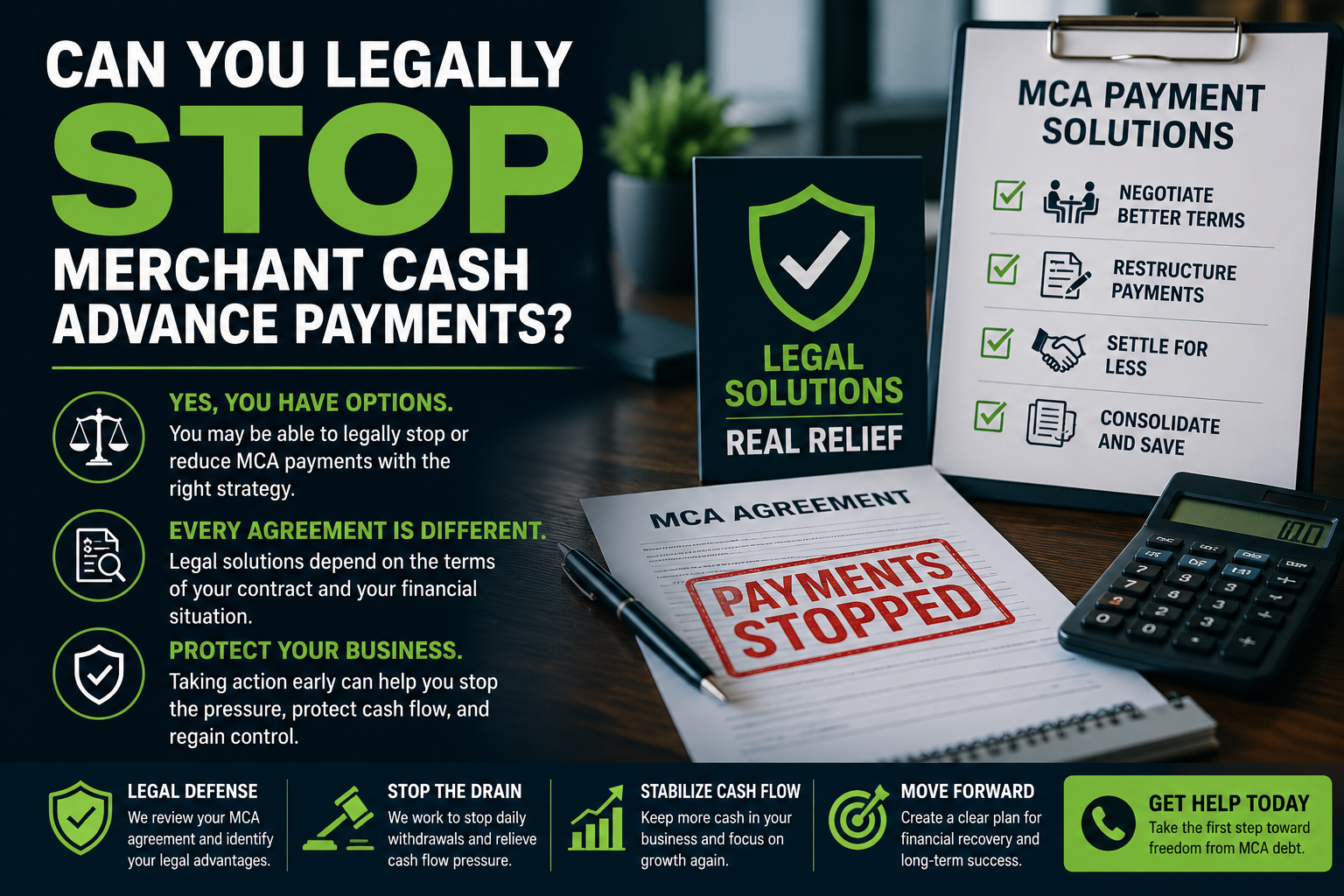
Business owners ask this question every day when MCA payments start crushing cash flow. In some cases, you can legally stop or challenge those payments. Success depends on having the right strategy before you act.
Many MCA agreements include aggressive repayment terms. Daily withdrawals can drain your account fast. That pressure can make it hard to cover payroll, operating costs, and vendor payments.
Stopping payments requires more than cutting off withdrawals. You need a clear plan. Options to get out of mca loans may include restructuring terms, negotiating a settlement, reviewing contract language, or consolidating multiple advances into one manageable solution.
Time matters when MCA debt starts creating problems. Waiting often gives funders more leverage and reduces your options. Early action can protect cash flow and give your business a stronger path forward.
How Merchant Cash Advance Debt Consolidation Works
Merchant cash advance debt consolidation helps simplify a difficult situation. Instead of managing several daily or weekly withdrawals, you combine them into one manageable payment. That change can ease immediate pressure on your cash flow.
For many business owners, that breathing room makes a huge difference. It becomes easier to cover payroll, pay vendors, and handle everyday expenses. You can spend less time worrying about withdrawals and more time focused on running your business.
Consolidation does more than simplify payments. It helps create a path back to financial stability. Lower payment pressure gives your business room to recover and regain balance.
A strong consolidation strategy can also break the cycle of borrowing to cover existing advances. With the right plan, you can stabilize operations, rebuild cash flow, and take back control of your finances.
What Happens If You Default on a Merchant Cash Advance?
Defaulting on a merchant cash advance can create serious pressure fast. Many business owners fall behind sooner than they expected. Daily withdrawals can drain your account before you have enough cash to cover basic expenses.
That pressure builds quickly. Funders may start calling, emailing, or making repeated withdrawal attempts. Some may demand immediate payment. Others may escalate collection efforts based on the terms of the agreement.
For a business already fighting cash flow problems, that added stress can make everything harder. Payroll becomes tougher to meet. Vendor relationships can suffer. Day-to-day operations often take a hit.
Default does not mean the end of your options. You can still take action. Legal strategies like negotiation, restructuring, or consolidation can reduce pressure and create a path forward. The sooner you act, the more control you keep over the outcome.
Legal Strategies to Resolve Stacked MCA Debt
Stacked merchant cash advance debt can push a business into serious financial trouble. Multiple MCA withdrawals can drain cash flow fast. That makes it harder to cover payroll, pay vendors, and keep daily operations on track. The good news is that legal strategies can ease the pressure and help you move forward.
Some of the most effective legal options for resolving stacked MCA debt include:
• MCA Debt Restructuring – Revising payment terms to create a manageable repayment schedule
• Negotiated Settlements – Working with funders to lower the total amount owed
• MCA Debt Consolidation – Combining several advances into one structured payment solution
• Agreement Review – Examining contracts for unfair or aggressive terms that may be challenged
• Cash Flow Stabilization Planning – Building a strategy that protects your business during debt resolution
Acting early gives business owners more control and flexibility. Early action often leads to stronger results. It can protect cash flow, reduce financial stress, and help your business regain stability.
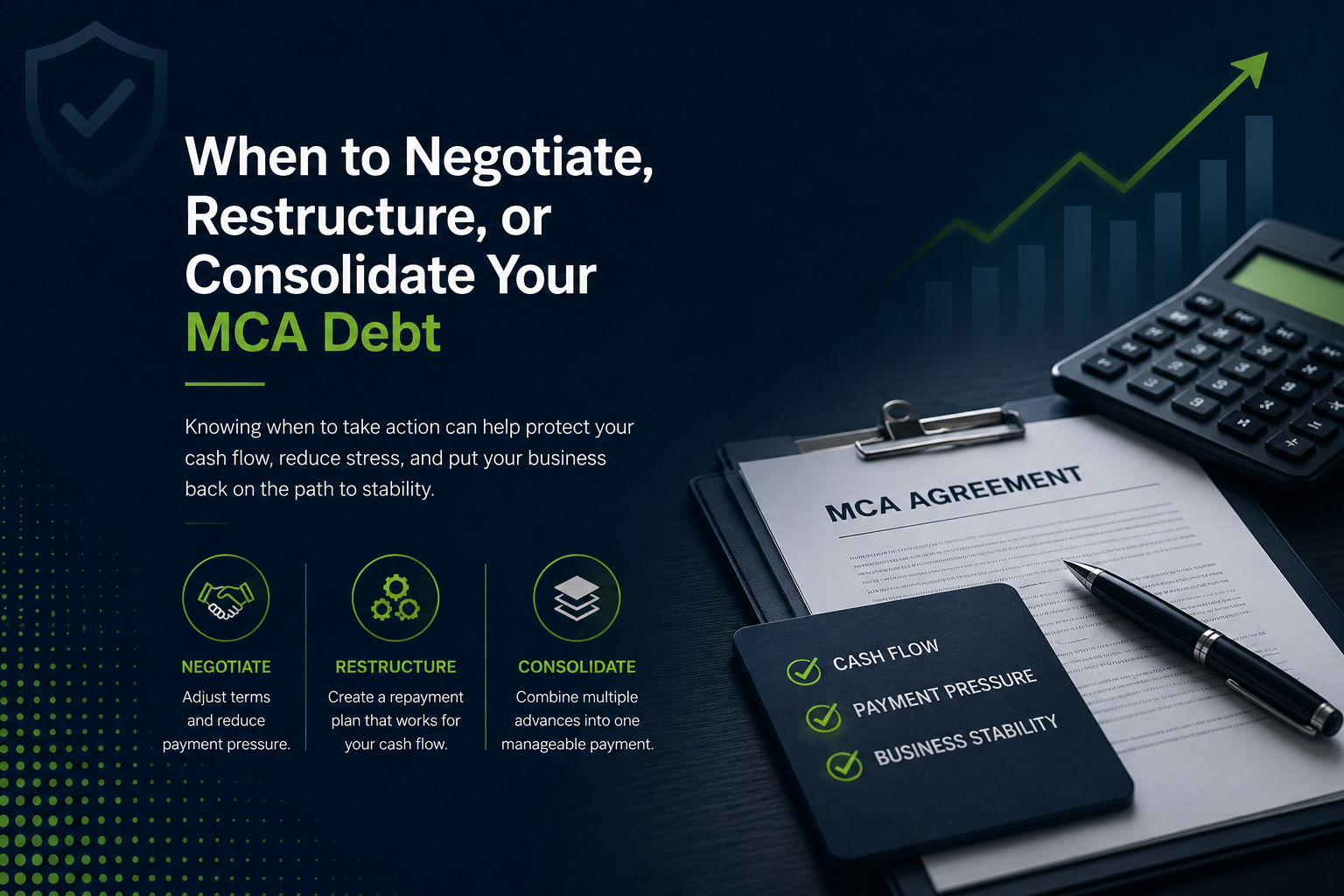
When to Negotiate, Restructure, or Consolidate Your MCA Debt
How to Protect Your Business While Resolving MCA Debt
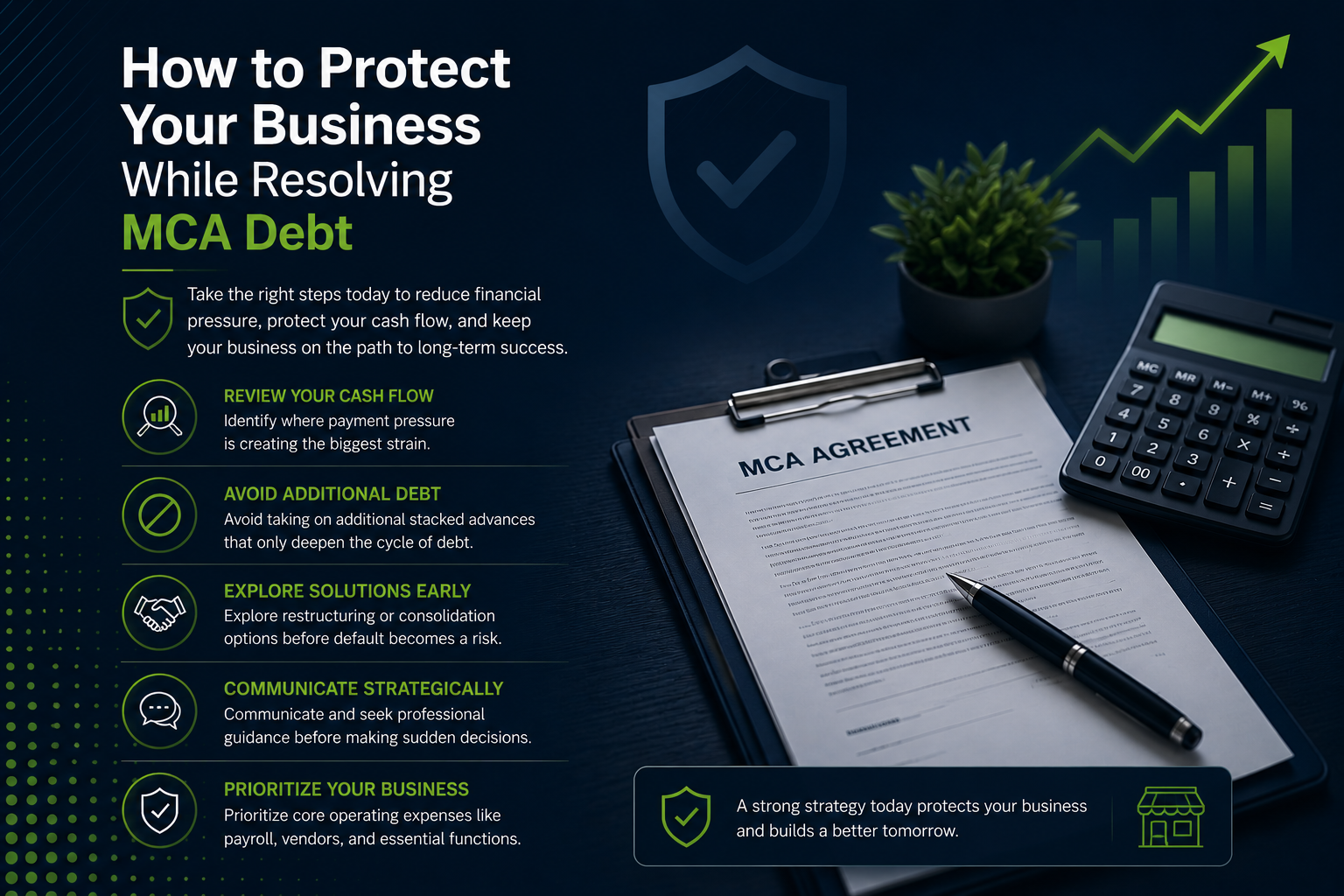
Resolving merchant cash advance debt matters, but protecting your business during the process matters just as much. Many business owners focus so heavily on daily withdrawals that they lose sight of the bigger picture. The goal is not only to eliminate MCA debt. You also need to keep your business stable, protect cash flow, and avoid short-term choices that create larger problems later.
The best way to protect your business is to act before financial pressure reaches a crisis point. If MCA payments are affecting your ability to cover essential expenses, step back and create a plan. Key steps include:
• Review your cash flow carefully to pinpoint where payment pressure creates the most strain
• Avoid taking on stacked advances that deepen the debt cycle
• Explore restructuring or consolidation early before default becomes a serious risk
• Communicate strategically and seek professional guidance before changing payment arrangements
• Prioritize core operating expenses such as payroll, vendors, and essential business functions
The sooner you address MCA debt with a clear strategy, the more control you keep. Proactive action can reduce financial stress and protect daily operations. It also gives your business room to recover. With the right approach, you can resolve MCA debt and keep your business strong enough to move forward.