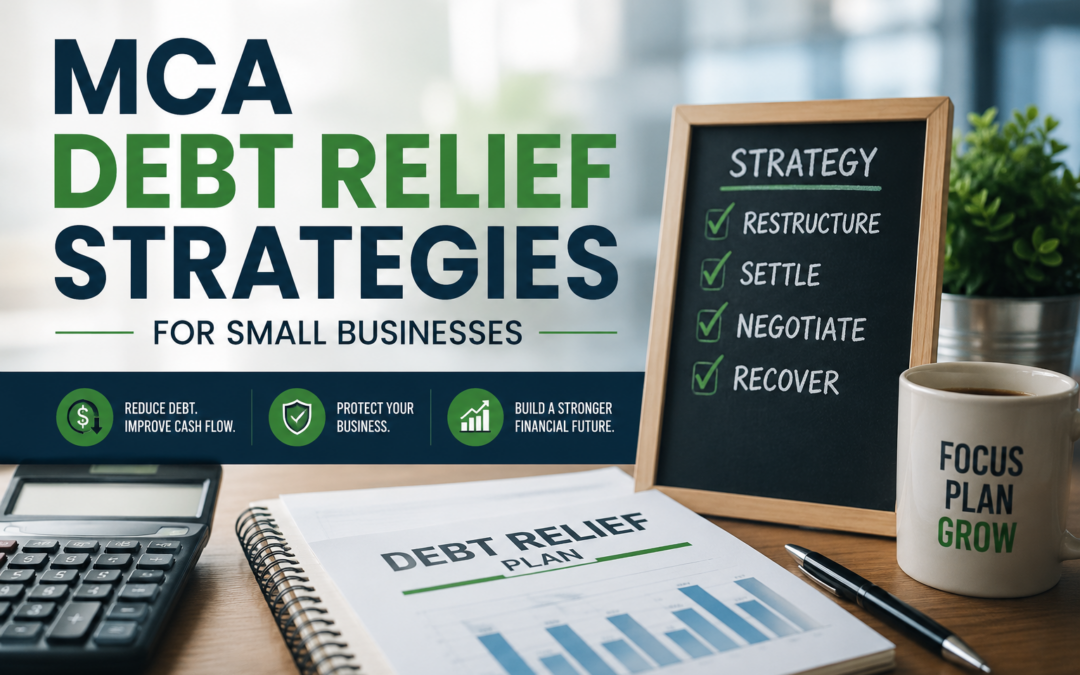
MCA debt relief strategies for small businesses can provide a path forward when merchant cash advance payments begin creating serious cash flow challenges. Daily or weekly ACH withdrawals often make it difficult to cover payroll, inventory, rent, and other operating expenses, especially when multiple MCA obligations are active simultaneously.
Understanding effective relief options can help business owners regain control of their finances before the situation becomes more difficult to manage. Whether through restructuring, settlement, or other debt relief solutions, taking action early may create more opportunities to reduce payment pressure and improve long-term financial stability.
Schedule Your Free Consultation
What Is MCA Debt Relief and How Does It Work?
Understanding MCA Debt Relief Programs
MCA debt relief refers to a variety of strategies designed to help businesses manage overwhelming merchant cash advance obligations. These solutions may include debt restructuring, settlement negotiations, payment modifications, or other approaches to reduce financial pressure and improve cash flow.
Unlike taking on additional funding, MCA debt relief focuses on addressing existing obligations. The goal is to create a more manageable path forward so businesses can continue operating while working toward resolving their MCA debt. Depending on the company’s financial situation, relief programs may help lower payment burdens, reduce collection pressure, and provide greater financial stability.
Why Small Businesses Seek Debt Relief Solutions
Many turn to MCA debt relief strategies for small businesses when daily or weekly withdrawals interfere with normal operations. As MCA payments consume a larger portion of revenue, business owners may struggle to cover payroll, inventory purchases, rent, vendor payments, and other essential expenses.
In many cases, businesses seek debt relief after experiencing ongoing cash flow shortages, stacking multiple MCA loans, or falling behind on payments. Taking action early often provides more options for resolving the situation before defaults, collections, or legal actions create additional challenges.
Common Signs Your Business May Need MCA Debt Relief

Many business owners do not realize how serious their MCA obligations have become until cash flow problems begin affecting daily operations. Recognizing the warning signs early can help businesses explore MCA debt relief strategies for small businesses before financial pressure becomes more difficult to manage.
Daily ACH Withdrawals Straining Cash Flow
One of the most common warning signs is when daily or weekly ACH withdrawals consistently leave the business short on available cash. While merchant cash advances are designed to be repaid through frequent withdrawals, those payments can quickly become difficult to sustain if revenue declines or expenses increase.
As more cash leaves the account each day, business owners may find it harder to maintain healthy working capital and respond to unexpected business needs.
Difficulty Covering Payroll, Rent, and Vendors
When MCA payments begin competing with essential operating expenses, the financial strain often becomes more noticeable. Businesses may struggle to pay employees on time, keep up with rent obligations, purchase inventory, or maintain vendor relationships.
If routine expenses are becoming difficult to cover, it may indicate that current MCA obligations are consuming too much of the company’s available revenue.
Using New Funding to Cover Existing MCA Payments
A particularly concerning sign is relying on new financing to keep up with existing MCA payments. Some businesses take additional merchant cash advances to temporarily relieve cash flow pressure, only to find themselves managing multiple payment obligations at once.
This cycle can increase overall debt, reduce available cash flow, and make future repayment even more difficult. Identifying this pattern early may help businesses avoid deeper financial challenges and explore relief options before the situation worsens.
How Merchant Cash Advance Debt Impacts Small Businesses
Merchant cash advance debt can affect far more than a company’s bank account balance. As payments consume a larger share of revenue, business owners often experience increasing pressure on cash flow, operations, and overall financial stability. Over time, these challenges can make it more difficult to maintain normal business activities and plan for future growth.
Reduced Working Capital
One of the most immediate effects of MCA debt is reduced working capital. Daily or weekly ACH withdrawals remove funds that would otherwise be available for inventory, payroll, marketing, equipment, and other operating expenses.
As available cash decreases, businesses may have less flexibility to respond to unexpected expenses or pursue growth opportunities.
Increased Financial Pressure
As MCA obligations grow, many business owners experience increased financial pressure. Constant payment withdrawals can create ongoing concerns about meeting expenses, maintaining cash flow, and keeping the business operating smoothly.
This pressure becomes even greater when multiple MCA obligations are active simultaneously.
Risk of Default and Collections
When cash flow becomes strained, the risk of missed payments and default increases. Businesses that fall behind may begin receiving collection notices, frequent communication from MCA companies, or other collection-related activity.
Addressing financial challenges early may help businesses explore available relief options before payment issues escalate into more serious collection or legal concerns.
MCA Debt Relief Strategies for Small Businesses
Businesses facing ongoing MCA payment pressure often have several potential relief options available. The most appropriate strategy depends on factors such as the number of MCA obligations, current cash flow, financial goals, and the overall condition of the business. Understanding the available solutions can help business owners make informed decisions before financial challenges become severe.
Debt Restructuring Options
MCA debt restructuring focuses on modifying existing obligations to create a more manageable payment structure. This may involve negotiating revised payment arrangements that better align with the business’s current revenue and cash flow situation.
For many businesses, restructuring can help reduce immediate financial pressure while allowing operations to continue without taking on additional MCA funding.
Settlement Opportunities
In some situations, settlement may provide an opportunity to resolve MCA debt for less than the full outstanding balance. Settlement negotiations typically involve reaching an agreement with MCA companies to satisfy obligations through mutually acceptable terms.
The availability and success of settlement options often depend on the specific circumstances and the status of existing MCA accounts.
Negotiating More Manageable Payment Terms
Direct negotiation may help businesses secure payment terms that are more sustainable than their current arrangements. Adjustments to payment schedules or repayment structures can sometimes improve cash flow and reduce the burden of daily or weekly withdrawals.
Exploring MCA negotiation opportunities early may provide more flexibility and increase the likelihood of reaching a workable solution before defaults or collections occur.
Benefits of Seeking MCA Debt Relief Early
Many businesses wait until payment problems become severe before exploring relief options. However, taking action early often provides greater flexibility and can help prevent financial challenges from becoming more difficult to resolve. Businesses that address MCA debt proactively may have access to more solutions and a clearer path toward financial stability.
More Available Resolution Options
The earlier a business evaluates its situation, the more options may be available. Before defaults, collections, or legal actions occur, business owners often have greater flexibility to explore restructuring, settlement, or negotiation strategies.
Acting early can create opportunities that may become more limited as financial pressure increases.
Improved Cash Flow Stability
Reducing MCA payment pressure can help businesses improve cash flow stability. With more predictable cash flow, companies may find it easier to manage payroll, inventory purchases, vendor obligations, and other essential operating expenses.
Improved financial stability can also help business owners focus on running and growing the business rather than constantly managing payment challenges.
Reduced Risk of Legal Escalation
Unresolved MCA debt can sometimes lead to collection activity, legal disputes, or other complications. Seeking relief before accounts become severely delinquent may help reduce the likelihood of these issues developing.
Addressing problems early often allows businesses to pursue solutions from a stronger position while preserving more options for resolving existing obligations.
Mistakes Small Businesses Should Avoid
When MCA payments become difficult to manage, business owners often seek quick solutions to relieve financial pressure. Unfortunately, certain decisions can complicate the situation and limit available relief options. Understanding these common mistakes may help businesses avoid additional financial strain.
Taking Additional MCA Funding
One of the most common mistakes is taking on new MCA funding to cover existing payments. While additional funding may provide temporary relief, it often creates another payment obligation that further reduces available cash flow.
Over time, multiple MCA obligations can become increasingly difficult to manage, creating a cycle that compounds financial pressure and further restricts cash flow.
Ignoring Collection Activity
Ignoring collection notices, phone calls, or other communication rarely improves the situation. Unanswered collection efforts can lead to increased pressure and reduce opportunities to resolve issues before they escalate.
Addressing collection activity early often allows businesses to better understand their options and respond strategically.
Waiting Too Long to Address the Problem
Many businesses delay seeking help in the hope that cash flow will improve on its own. While temporary setbacks can occur, ongoing payment difficulties often become more challenging to resolve over time.
Taking action early may provide access to more relief options and help prevent defaults, collections, or other financial complications from creating larger problems.
How to Evaluate MCA Debt Relief Companies
Steps to Take Before MCA Debt Becomes Unmanageable
Frequently Asked Questions About MCA Debt Relief
Taking Action to Regain Control of MCA Debt
Why Early Action Creates More Options
MCA debt rarely becomes easier to manage by waiting. As payment pressure increases, businesses often face growing cash flow challenges, limited working capital, and fewer available solutions. Taking action early allows business owners to evaluate their situation before defaults, collections, or legal issues create additional obstacles.
Early intervention may provide access to more restructuring, settlement, or negotiation opportunities while helping preserve the financial stability of the business. The sooner problems are identified and addressed, the greater the likelihood of finding a workable path forward.
Schedule a Free Consultation With MCA Shield
If MCA payments are affecting your cash flow, payroll, vendor relationships, or day-to-day operations, now is the time to explore your options. MCA Shield helps business owners evaluate their financial situation and identify potential solutions designed to reduce payment pressure and improve cash flow.
Schedule a free consultation today to review your MCA obligations, discuss available relief strategies, and learn what options may be available for your business.