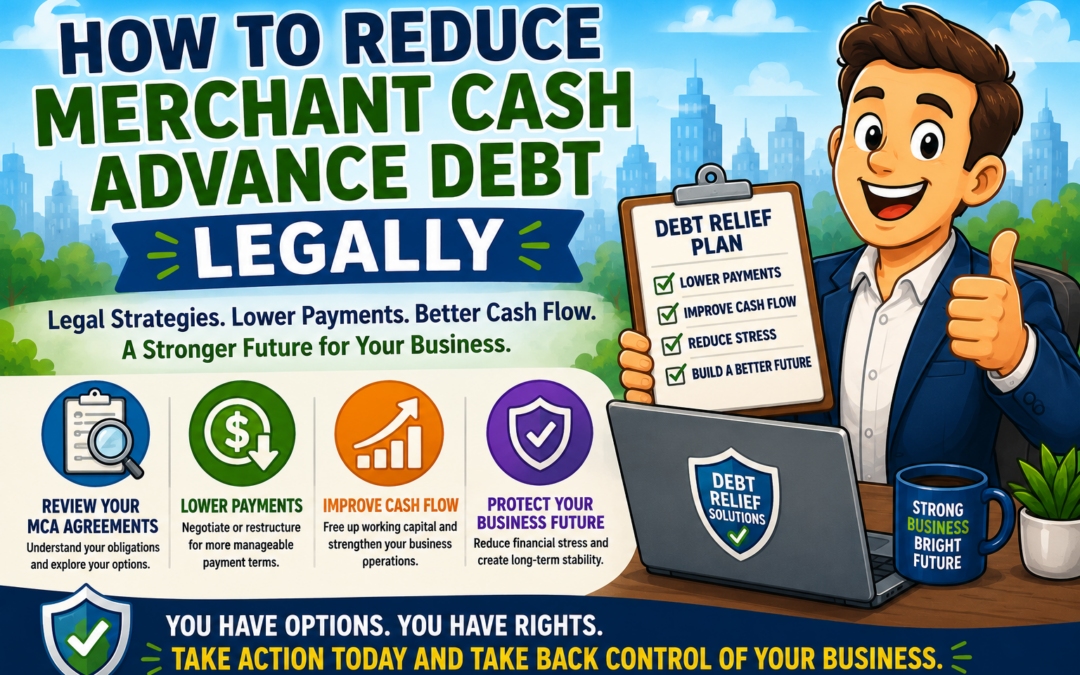
Merchant cash advance debt can become overwhelming when daily or weekly payments begin consuming too much of a company’s cash flow. Many business owners find themselves struggling to cover payroll, vendor invoices, inventory purchases, and other essential expenses while trying to keep up with multiple MCA obligations. The good news is that there are legal strategies available that may help reduce MCA debt and create a more sustainable financial path forward.
Reducing Merchant Cash Advance debt legally does not mean ignoring obligations or hoping the problem goes away. Instead, it involves understanding your options, reviewing your agreements, and taking proactive steps to address the situation before it becomes more severe. Solutions such as MCA debt restructuring, settlement negotiations, and professional debt relief assistance may help lower financial pressure and improve cash flow.
The earlier a business takes action, the more options it typically has available. By understanding the legal methods used to reduce MCA debt, business owners can make informed decisions, protect their operations, and work toward long-term financial stability.
Understanding Your Legal Options for Reducing MCA Debt
Many business owners assume they have no choice but to continue making payments exactly as outlined in their MCA agreements. In reality, several legal options for reducing MCA debt may exist depending on the company’s financial condition, the terms of the contracts, and the number of obligations involved. Understanding these options is often the first step toward regaining control of cash flow and reducing financial pressure.
Potential solutions may include MCA debt restructuring, settlement negotiations, contract reviews, and professional debt relief programs. Each option offers different advantages and challenges, which is why a careful evaluation of your situation is so important. Some businesses benefit from modifying payment arrangements, while others pursue negotiated settlements that reduce overall obligations.
The key is taking action before the situation becomes more difficult to manage. By understanding your legal options early, you can make informed decisions, protect business operations, and create a more sustainable path toward financial recovery.
Why MCA Debt Becomes Difficult to Manage
MCA debt often becomes difficult to manage because repayment obligations directly impact daily cash flow. What may start as a single advance can quickly create financial strain when revenue slows, expenses increase, or additional funding becomes necessary. Many businesses find themselves dedicating a growing portion of their incoming revenue to MCA payments, leaving less money available for payroll, inventory, rent, marketing, and other operating expenses.
The challenge often intensifies when multiple MCA obligations overlap. Daily or weekly withdrawals can make it difficult to maintain healthy working capital and respond to unexpected business needs. As cash flow tightens, some business owners turn to additional funding to cover existing obligations, creating a cycle that becomes increasingly difficult to break. Recognizing these warning signs early can help businesses explore relief options before financial pressure grows even more severe.

How MCA Debt Restructuring Can Reduce Payment Pressure
MCA debt restructuring helps businesses address overwhelming payment obligations without taking on additional MCA funding. The goal is to create a more manageable repayment strategy that aligns better with the company’s current cash flow. When payment pressure decreases, businesses often gain more flexibility to cover payroll, vendor invoices, inventory purchases, and other essential operating expenses.
For many companies, restructuring provides an opportunity to break the cycle of constant financial stress. Instead of focusing on daily withdrawals and short-term survival, business owners can begin focusing on stability and long-term growth. Reducing payment pressure often creates breathing room that allows a business to regain control of its finances and make smarter decisions moving forward.
Every situation is different, but the earlier a business explores restructuring options, the more opportunities it may have available. Taking proactive action today can help prevent larger financial problems tomorrow.
Can Merchant Cash Advance Debt Be Negotiated?
In many situations, Merchant Cash Advance debt can be negotiated. While every case is different, some MCA companies may be willing to discuss modified payment arrangements, settlement opportunities, or other solutions when a business experiences financial hardship. Negotiation often becomes more effective when business owners act before missed payments, defaults, or legal issues create additional complications.
Successful negotiations typically begin with a clear understanding of the company’s financial condition, cash flow challenges, and existing MCA obligations. The goal is to identify a realistic path forward that reduces financial pressure while helping the business remain operational. Taking action early and exploring negotiation options can often provide more flexibility than waiting until the situation becomes a crisis.
When MCA Settlement May Be an Option
For some businesses, MCA settlement may become an option when current payment obligations are no longer sustainable. Settlement typically involves negotiating with the MCA company to resolve a debt for less than the full claimed balance. While this approach is not appropriate for every situation, it may provide relief for businesses facing severe cash flow challenges, multiple MCA obligations, or increasing collection pressure.
Many factors influence whether settlement makes sense, including the company’s financial condition, available resources, and the status of existing MCA agreements. The goal is to create a realistic path forward that helps the business regain stability while reducing financial strain. Businesses that wait until legal action or significant defaults occur often have fewer options than those that explore solutions early.
Every case is unique, which is why a thorough review of the company’s finances and MCA contracts is essential before pursuing a settlement strategy. Understanding the available options can help business owners make informed decisions and take proactive steps toward long-term financial recovery.
Common Mistakes Businesses Make When Trying to Solve MCA Debt
When financial pressure builds, many business owners rush to find a quick solution. Unfortunately, some of the most common responses can make the problem even worse. Taking the wrong approach often increases debt, reduces cash flow, and limits future options.
Common mistakes include:
- Taking out another MCA to cover existing payments
- Waiting too long to address the problem
- Ignoring collection notices or lender communication
- Failing to review MCA contract terms
- Making decisions without a clear cash flow analysis
The most successful debt relief strategies usually begin with a realistic assessment of the business’s financial situation. Early action and informed decision-making often create more opportunities than waiting for the problem to resolve itself. By avoiding these common mistakes, business owners can improve their chances of achieving a sustainable financial recovery.
Warning Signs Your MCA Debt Is Becoming Unmanageable
MCA debt rarely becomes overwhelming overnight. In most cases, warning signs appear gradually as cash flow tightens and payment obligations consume a larger share of revenue. Many business owners initially view the problem as temporary, but the situation can escalate when incoming cash no longer keeps pace with daily or weekly withdrawals.
Several red flags often indicate that MCA debt is becoming more difficult to manage:
- Frequent cash flow shortages
- Difficulty covering payroll or vendor invoices
- Reliance on new funding to pay existing MCA obligations
- Declining working capital
- Missed opportunities for growth or expansion
- Increasing stress related to daily financial obligations
As financial pressure grows, business owners often spend more time managing debt than running the business. That shift is a warning sign in itself. When MCA payments begin driving operational decisions, it may be time to explore relief options before the situation becomes even more difficult to resolve. Early action often creates more flexibility and a wider range of solutions.
Steps to Take Before MCA Debt Gets Worse
If MCA debt starts creating cash flow problems, taking action early can make a significant difference. Waiting too long often reduces the number of available solutions and allows financial pressure to continue building. The first step is to gain a clear understanding of your current obligations, payment schedules, and overall cash flow situation.
Business owners should review all MCA agreements, analyze income and expenses, and identify areas where cash flow remains under strain. It is also important to avoid taking on additional MCA funding without fully understanding the long-term impact. The sooner you evaluate your options, the greater your chances of protecting cash flow and restoring financial stability. Early action often creates more flexibility, better outcomes, and a clearer path forward.
How Professional MCA Debt Relief Services May Help
When MCA debt begins affecting cash flow, many business owners struggle to determine the best path forward. Professional MCA debt relief services can help by providing an objective review of the situation and identifying potential solutions based on the company’s financial condition. Instead of reacting to problems as they arise, businesses can develop a structured strategy designed to reduce financial pressure and improve stability.
Professional assistance may help with:
- Reviewing MCA agreements and obligations
- Analyzing cash flow and financial challenges
- Negotiating with MCA companies
- Exploring restructuring or settlement options
- Developing a long-term debt relief strategy
Every business faces unique circumstances, which is why there is no one-size-fits-all solution. The right strategy depends on factors such as cash flow, revenue trends, existing MCA obligations, and future business goals. Experienced guidance can help business owners better understand their options and avoid costly mistakes.
Most importantly, professional support can help businesses take action before financial pressure becomes overwhelming. The earlier a company explores its options, the greater its chances of protecting cash flow, maintaining operations, and achieving a successful financial recovery.
Taking Action to Regain Control of MCA Debt
Regaining control of MCA debt starts with taking action before financial pressure becomes overwhelming. Many businesses have more options available than they realize, especially when they address cash flow challenges early. Waiting for the situation to improve on its own often leads to additional stress, fewer solutions, and greater disruption to daily operations.
The first step is understanding your current financial position and evaluating the relief options available. Whether through restructuring, settlement negotiations, or professional debt relief assistance, the goal is to create a sustainable path forward. Taking action today can help protect cash flow, reduce financial uncertainty, and put your business in a stronger position for long-term success.