
ClickCease

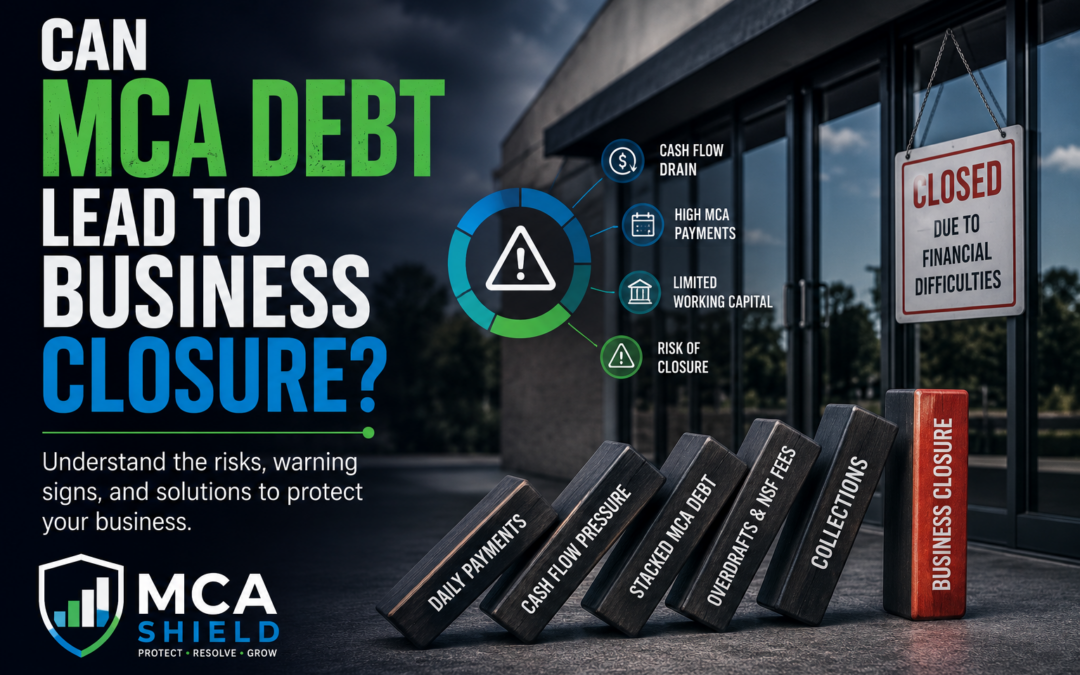
Businesses facing Merchant Cash Advance debt often worry about one important question: Can MCA debt lead to business closure? Unfortunately, when daily or weekly payments consume too much cash flow, it can become increasingly difficult to cover payroll, pay vendors, purchase inventory, and keep operations running. Understanding the warning signs and exploring relief options early can help protect your business and create a path toward long-term financial stability.

Can MCA Debt Really Force a Business to Close?

The short answer is yes—MCA debt can lead to business closure if the financial pressure becomes too great and no action is taken. While a Merchant Cash Advance is designed to provide quick access to capital, the repayment structure can create serious challenges when revenue slows or expenses increase. Daily or weekly ACH withdrawals reduce the cash available to operate the business, making it harder to keep up with essential obligations.

Not every business with MCA debt will close. Many owners successfully regain control by recognizing the warning signs early and exploring professional debt relief solutions before the situation becomes unmanageable.

How MCA Payments Can Overwhelm Cash Flow

Merchant Cash Advance payments are typically withdrawn automatically from a business bank account every business day or every week. Unlike traditional loans with monthly payments, these frequent withdrawals leave little time for cash flow to recover between deposits.

As payments continue, business owners may struggle to:

  • Cover payroll on time
  • Pay vendors and suppliers
  • Purchase inventory or materials
  • Keep up with rent and utility bills
  • Build cash reserves for unexpected expenses

The problem becomes even more serious when sales fluctuate. A temporary decline in revenue may leave the business without enough working capital to cover both MCA payments and normal operating costs. Over time, this constant pressure can create a cycle that becomes increasingly difficult to escape.

Why Some Businesses Reach a Breaking Point

Business closure is rarely caused by a single Merchant Cash Advance alone. More often, it results from several financial challenges occurring collectively. As cash flow tightens, many owners rely on credit cards, delay paying vendors, or accept additional MCA funding to cover existing obligations. Each decision may provide temporary relief, but it can also increase long-term financial pressure.

Eventually, businesses may experience:

  • Persistent cash flow shortages
  • Multiple stacked MCA payments
  • Missed payroll or vendor payments
  • Frequent overdrafts and returned ACH withdrawals
  • Collection activity or legal action
  • Declining customer service caused by limited operating funds

When these issues continue without a recovery plan, the risk that MCA debt can lead to business closure increases significantly. The good news is that recognizing these warning signs early gives business owners more opportunities to reduce payment pressure, improve cash flow, and pursue solutions before permanent damage occurs.

Why MCA Debt Can Become Unmanageable

Merchant Cash Advances can provide fast access to funding, but they can also create ongoing financial pressure when repayments begin to consume too much of a business’s cash flow. What may feel manageable at first can quickly become difficult if sales decline, expenses increase, or multiple advances are taken. Understanding why MCA debt can become unmanageable helps business owners recognize potential problems before they threaten the future of the business.

Daily or Weekly Withdrawals Reduce Working Capital

Unlike traditional business loans with monthly payments, Merchant Cash Advances are commonly repaid through automatic daily or weekly ACH withdrawals. These frequent payments continuously reduce the cash available to operate the business.

As working capital declines, it becomes more difficult to:

  • Pay employees on time
  • Purchase inventory or supplies
  • Cover rent, utilities, and insurance
  • Pay vendors according to agreed terms
  • Maintain a financial cushion for unexpected expenses

Even businesses with steady revenue can experience cash flow shortages when automatic withdrawals leave too little money available for day-to-day operations. Over time, the lack of financial flexibility can make it increasingly difficult to keep the business running smoothly.

Multiple MCA Advances Increase Financial Pressure

Many businesses facing cash flow challenges accept another Merchant Cash Advance to cover existing payments or operating expenses. While this may provide temporary relief, it often creates a much larger financial burden.

Each additional MCA introduces another repayment obligation, further reducing available working capital. As payments accumulate, business owners may find themselves juggling multiple daily or weekly withdrawals that consume a significant portion of incoming revenue.

This cycle, commonly known as MCA stacking, can lead to:

  • Higher total repayment costs
  • Reduced cash flow every business day
  • Greater reliance on short-term financing
  • Increased risk of missed payments or default

The more repayment obligations a business carries, the more difficult it becomes to regain financial stability without a structured recovery plan.

Revenue Slowdowns Make Payments Harder to Sustain

Few businesses generate the same revenue every month. Seasonal fluctuations, economic uncertainty, changing customer demand, or unexpected expenses can all reduce incoming cash at the worst possible time.

Because Merchant Cash Advance payments continue regardless of changing business conditions, a temporary slowdown can quickly create financial strain. Business owners may be forced to postpone vendor payments, delay purchasing inventory, or use available cash to keep up with automatic withdrawals.

When declining revenue combines with multiple MCA obligations, the risk that MCA debt can lead to business closure increases significantly. Taking action early—before cash flow problems become overwhelming—can provide more opportunities to reduce payment pressure and restore financial stability.

Warning Signs Your Business May Be Headed Toward Closure

Warning signs that MCA debt may lead to business closure, illustrated by overdue payroll, bank overdrafts and returned ACH payments, stacked Merchant Cash Advances, and past-due tax and utility bills, highlighting the financial warning signs businesses should recognize before cash flow problems become unmanageable.

Businesses rarely close without warning. In most cases, financial problems develop gradually as cash flow tightens and operating expenses become harder to manage. Recognizing these warning signs early allows business owners to address the underlying issues before MCA debt leads to business closure.

Struggling to Cover Payroll or Vendors

One of the earliest signs of serious financial distress is difficulty paying employees or vendors on time. When Merchant Cash Advance payments consume too much working capital, business owners may be forced to prioritize daily ACH withdrawals over other essential obligations.

Common warning signs include:

  • Delaying payroll to preserve cash
  • Paying vendors later than agreed
  • Reducing inventory purchases
  • Missing early payment discounts from suppliers

These problems can damage employee morale, strain vendor relationships, and disrupt normal business operations.

Frequent Overdrafts and Returned ACH Payments

As cash flow becomes more unpredictable, business bank accounts may experience frequent overdrafts or returned ACH withdrawals. Every failed payment can trigger bank fees, increase financial stress, and create additional challenges with MCA providers.

You may notice:

  • Negative account balances
  • Multiple overdraft or NSF fees
  • Returned ACH payments
  • Difficulty maintaining a positive cash balance

Repeated banking issues often indicate that cash flow is no longer keeping pace with daily financial obligations.

Taking New MCA Funding to Pay Existing Debt

Using one Merchant Cash Advance to pay another is one of the strongest indicators that financial pressure is escalating. Although additional funding may temporarily ease immediate cash shortages, it often increases the overall repayment burden.

This cycle can result in:

  • Multiple daily or weekly withdrawals
  • Higher total repayment costs
  • Less available working capital
  • Greater risk of default

Accepting additional MCA funding without addressing the underlying cash flow problem rarely provides a long-term solution.

Falling Behind on Taxes or Essential Bills

When cash becomes scarce, businesses often postpone expenses they consider less urgent. Unfortunately, delaying tax payments, rent, utilities, insurance premiums, or other essential bills can create even greater financial problems over time.

Warning signs include:

  • Late payroll or sales tax payments
  • Past-due rent or mortgage payments
  • Utility shutoff notices
  • Lapsed insurance coverage
  • Growing balances with vendors or service providers

If your business is experiencing several of these warning signs at the same time, it may be time to explore professional MCA debt relief options. Acting early can improve cash flow, reduce payment pressure, and help prevent MCA debt from leading to business closure.

What Happens If MCA Debt Continues to Grow

When Merchant Cash Advance debt continues to increase, the financial pressure rarely remains limited to repayment obligations alone. As cash flow tightens, other areas of the business often begin to suffer. Vendor relationships may deteriorate, collection efforts can become more aggressive, and daily operations may become increasingly difficult to maintain. Understanding these potential consequences can help business owners take action before MCA debt leads to business closure.

Vendor Relationships Begin to Suffer

Strong vendor relationships are essential for keeping a business operating smoothly. However, when working capital is consumed by daily or weekly MCA payments, paying suppliers on time often becomes more difficult.

Late or missed vendor payments can lead to:

  • Delayed shipments or inventory shortages
  • Loss of favorable payment terms
  • Reduced credit availability
  • Strained long-term business relationships

As these challenges grow, businesses may struggle to maintain the inventory, materials, or services needed to serve customers effectively.

Collection Activity May Increase

Missing MCA payments or falling behind on repayment obligations may trigger collection activity. Depending on the funding agreement, MCA companies may increase communication efforts to recover the outstanding balance.

Business owners may experience:

  • More frequent phone calls and emails
  • Formal payment demands
  • Requests for updated financial information
  • Increased pressure to resolve past-due balances

Responding promptly and seeking professional guidance early can often provide more options than waiting until collection activity becomes more aggressive.

Legal Risks Can Become More Serious

If repayment problems continue without a resolution, legal risks may increase. Some MCA providers may pursue legal remedies permitted under the funding agreement or applicable law to recover the remaining balance.

Potential consequences can include:

  • Demand letters from attorneys
  • Lawsuits seeking repayment
  • Court judgments, when applicable
  • Additional legal costs and financial stress

Not every delinquent MCA account results in legal action, but the likelihood generally increases the longer repayment issues remain unresolved.

Business Operations May Be Disrupted

As financial pressure continues to build, normal business operations often become more difficult to sustain. Owners may spend more time managing cash shortages than focusing on customers, employees, or business growth.

Operational disruptions may include:

  • Reduced inventory or delayed purchasing
  • Staffing shortages or delayed payroll
  • Deferred equipment maintenance
  • Slower customer service
  • Lost opportunities for growth and expansion

When these operational challenges continue alongside mounting MCA debt, the risk that MCA debt can lead to business closure becomes much greater. Taking action before financial pressure reaches this stage can help preserve cash flow, stabilize operations, and improve the likelihood of long-term business recovery.

Can Your Business Recover Before It Closes?

In many cases, yes. Even when financial pressure feels overwhelming, business closure is not always inevitable. Many businesses recover by recognizing the problem early, evaluating their financial situation honestly, and taking steps to reduce the burden of MCA debt before it becomes unmanageable.

The sooner you address the underlying cash flow issues, the more options you may have to protect your business and regain financial stability.

Review Every MCA Agreement

Start by gathering every Merchant Cash Advance agreement your business has signed. Understanding the full scope of your obligations is essential before making any financial decisions.

Pay close attention to:

  • Outstanding balances
  • Daily or weekly payment amounts
  • Payment schedules
  • Any default provisions
  • Other terms that may affect your repayment options

Having a complete picture of your obligations makes it easier to evaluate possible relief strategies.

Analyze Your Cash Flow

Next, take a close look at how money moves through your business. Compare your monthly revenue with your operating expenses and all existing MCA payments.

Ask yourself:

  • Are daily or weekly withdrawals limiting working capital?
  • Can you consistently cover payroll, vendors, and other essential expenses?
  • Are cash flow shortages becoming more frequent?
  • Is your business generating enough revenue to support current repayment obligations?

An honest cash flow analysis often reveals where financial pressure is greatest and what changes may be needed.

Stop the Cycle of Additional MCA Funding

When cash flow becomes tight, accepting another Merchant Cash Advance may seem like the fastest solution. Unfortunately, adding new funding often increases repayment obligations and places even greater strain on your business.

Breaking the cycle of repeated borrowing can help prevent:

  • Additional daily or weekly withdrawals
  • Higher overall repayment costs
  • More severe cash flow shortages
  • Increased risk of default

Addressing the underlying financial challenges is typically a more effective long-term strategy than relying on additional MCA funding.

Explore Professional MCA Debt Relief

If your business is struggling to keep up with multiple MCA payments, professional debt relief may help you regain control before financial problems become irreversible.

An experienced MCA debt relief company can help:

  • Review your MCA agreements
  • Evaluate your financial situation
  • Develop a strategy based on your cash flow
  • Negotiate with MCA companies when appropriate
  • Create a plan designed to improve long-term financial stability

Seeking help early often provides more flexibility and more potential solutions than waiting until MCA debt leads to business closure. Taking proactive action today may allow your business to recover, stabilize cash flow, and move forward with greater confidence.

Common Mistakes That Push Businesses Closer to Closure

Illustration of common mistakes that can lead to business closure from Merchant Cash Advance debt, including waiting too long to seek help, taking additional MCA funding to cover existing debt, and ignoring cash flow warning signs such as overdue invoices, overdraft fees, and declining business finances.

When financial pressure begins to build, it’s easy to make decisions that provide temporary relief but create bigger problems over time. Many businesses that struggle with Merchant Cash Advance debt follow a similar pattern of trying to solve immediate cash shortages without addressing the underlying issue. Avoiding these common mistakes can improve your chances of protecting your business before MCA debt leads to business closure.

Waiting Too Long to Seek Help

Many business owners believe cash flow will improve on its own or that they can catch up over time. Although optimism is understandable, delaying action often allows financial problems to grow, making them more difficult to resolve.

Waiting too long can result in:

  • Larger outstanding balances
  • Increased collection activity
  • Greater cash flow shortages
  • Fewer available relief options

Seeking guidance early often provides more flexibility and a wider range of potential solutions before financial pressure becomes overwhelming.

Accepting Another MCA to Stay Current

When cash is tight, another Merchant Cash Advance may appear to offer immediate relief. Unfortunately, using new funding to pay existing MCA obligations often increases the overall financial burden instead of solving the problem.

Additional MCA funding can lead to:

  • More daily or weekly ACH withdrawals
  • Higher total repayment costs
  • Reduced working capital
  • Greater risk of default

Rather than relying on another advance, focus on addressing the underlying cash flow challenges that created the financial strain in the first place.

Ignoring Cash Flow Warning Signs

Cash flow problems rarely appear overnight. They usually develop gradually through smaller warning signs that become more serious if they are ignored.

Watch for indicators such as:

  • Declining bank balances
  • Frequent overdraft or NSF fees
  • Difficulty paying vendors or employees
  • Delayed tax or utility payments
  • Increasing reliance on short-term financing

Recognizing these warning signs early allows you to take corrective action before financial pressure escalates. The sooner you address the root causes of your cash flow problems, the more likely you are to stabilize your business and avoid MCA debt leading to business closure.

Frequently Asked Questions About MCA Debt and Business Closure

❓ Can MCA Debt Actually Force a Business to Close?

Yes. If Merchant Cash Advance payments consume too much of your cash flow and the financial pressure continues without a solution, a business may eventually be forced to close. However, many businesses avoid closure by recognizing the warning signs early and seeking professional help.


❓ Can MCA Debt Be Settled Before Closure?

In many cases, yes. Depending on your financial situation and the terms of your agreements, settlement may be an option. Every case is different, but addressing the problem early often provides more opportunities to negotiate and improve cash flow.


❓ Is MCA Debt Consolidation an Option?

For some businesses, MCA debt consolidation may help simplify repayment and reduce financial pressure. The right solution depends on factors such as the number of MCA obligations, current cash flow, and your overall financial condition. A professional review can help determine the most appropriate strategy.


❓ Should I Stop MCA Payments?

Do not stop making payments without first understanding the potential legal and financial consequences. Every Merchant Cash Advance agreement is different. Speaking with an experienced MCA debt relief professional before making changes to your payment strategy is strongly recommended.


❓ How Early Should I Seek Help?

The sooner, the better. Seeking assistance when you first notice cash flow problems usually provides more options than waiting until payments are missed, collection activity begins, or legal issues develop.


❓ Can My Business Recover After Severe MCA Debt?

Yes. Many businesses have successfully recovered after experiencing significant MCA debt. With the right strategy, improved cash flow management, and professional guidance, it is often possible to stabilize operations, reduce financial pressure, and build a stronger foundation for future growth.

Protect Your Business Before MCA Debt Forces Difficult Decisions

Financial problems rarely improve by waiting. The earlier you take action, the more opportunities you have to protect your cash flow, reduce financial pressure, and keep your business moving forward. If you’re concerned that MCA debt could lead to business closure, now is the time to explore your options before the situation becomes more difficult to manage.

Why Early Action Creates More Financial Options

Taking action early can significantly improve your chances of protecting your business and restoring financial stability. Addressing cash flow challenges before they escalate often provides greater flexibility and more potential solutions.

Early intervention may help you:

  • Reduce the pressure of daily or weekly MCA payments
  • Preserve working capital for essential business expenses
  • Avoid the need for additional MCA funding
  • Minimize collection activity and legal risks
  • Create a sustainable path toward long-term financial stability

Waiting until financial problems become overwhelming often limits your options. Acting sooner gives you more control over the recovery process.

Schedule a Free Consultation With MCA Shield

You don’t have to face overwhelming MCA debt alone. The experienced team at MCA Shield understands the challenges businesses face when Merchant Cash Advance payments begin to consume cash flow.

During your free consultation, we’ll:

  • Review your current MCA obligations
  • Evaluate your business’s cash flow
  • Discuss potential debt relief strategies
  • Answer your questions with clear, straightforward guidance
  • Help you determine the best path toward financial recovery

If you’re worried that MCA debt could lead to business closure, don’t wait until your options become more limited. Schedule your free consultation with MCA Shield today and take the first step toward protecting your business and rebuilding financial stability.