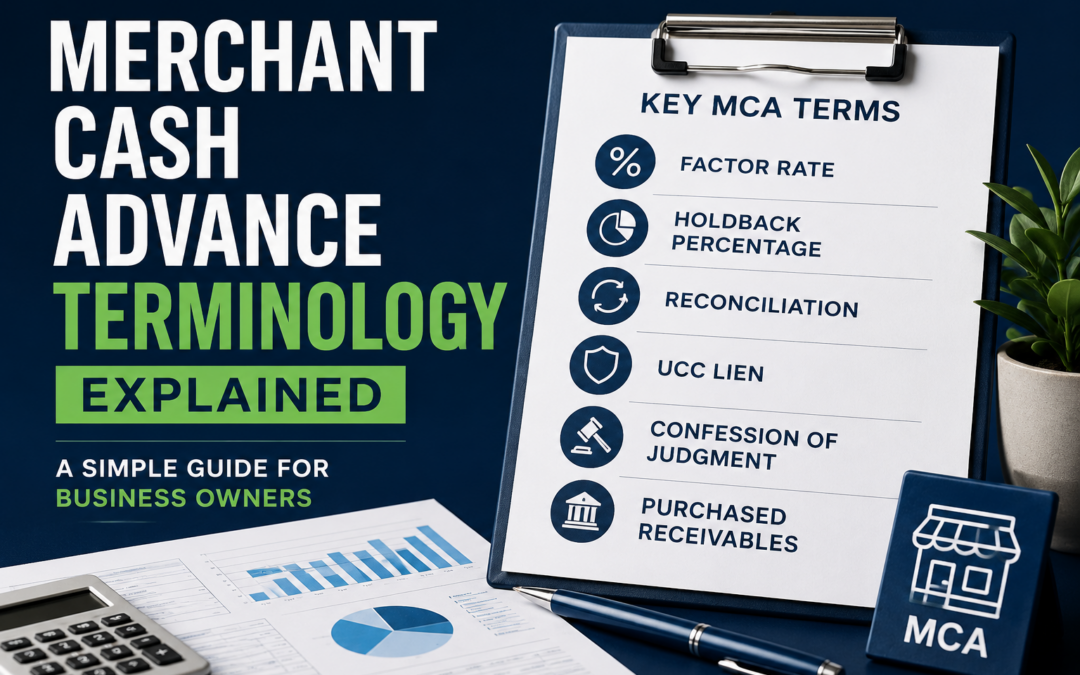
Merchant cash advance terminology can seem confusing, especially when you’re reviewing an MCA agreement for the first time. Terms like factor rate, holdback percentage, reconciliation, and UCC lien often appear in contracts, yet many business owners are unsure what they actually mean or how they affect daily operations.
This guide explains the most common merchant cash advance terms in plain language. By understanding this terminology, you can make more informed financial decisions, identify potential risks, and feel more confident before signing a merchant cash advance agreement or exploring debt relief options.
Schedule Your Free Consultation
Why Understanding Merchant Cash Advance Terminology Matters
Many business owners focus on how quickly they can receive funding and pay less attention to the language inside a merchant cash advance agreement. While fast access to capital can be appealing, the terms used in the contract often determine how much you’ll repay, how payments are collected, and what happens if your business experiences financial challenges. Learning merchant cash advance terminology helps you make informed decisions before signing any agreement.
A clear understanding of common MCA terms also makes it easier to compare funding offers, recognize potential risks, and ask the right questions. The more familiar you are with the terminology, the better prepared you’ll be to protect your cash flow and your business.
How MCA Terms Affect Your Business
Every merchant cash advance term directly impacts your business finances. For example, understanding the factor rate helps you calculate the true repayment amount, while knowing your holdback percentage explains how much of your daily or weekly sales will be deducted. Terms like reconciliation, UCC lien, and default provisions can also affect your flexibility if revenue slows or unexpected expenses arise.
Taking the time to understand these terms allows you to:
- Estimate your total repayment obligation.
- Understand how repayments affect daily cash flow.
- Compare multiple MCA offers more accurately.
- Recognize contract provisions that may increase financial risk.
- Avoid surprises after funding has been received.
Even a single misunderstood term can influence your business long after the funds have been deposited.
Why Misunderstanding MCA Agreements Can Be Costly
Signing an MCA agreement without fully understanding its terminology can lead to unexpected financial pressure. Business owners sometimes focus only on the amount they’re receiving and overlook important contract language that affects repayment, renewal options, or collection procedures.
Misunderstanding key terms may result in:
- Higher repayment costs than expected.
- Cash flow challenges caused by frequent withdrawals.
- Difficulty qualifying for additional financing.
- Unexpected legal or collection actions after a default.
- Limited options if your business experiences declining revenue.
Before accepting any merchant cash advance, take time to review the agreement carefully and ask questions about any unfamiliar language. A better understanding of merchant cash advance terminology can help you make confident decisions and reduce the risk of costly mistakes.
Common Merchant Cash Advance Terms Every Business Owner Should Know
Important Merchant Cash Advance Contract Terms

Financial Terms You'll See in MCA Agreements
Warning Signs Hidden in Merchant Cash Advance Agreements
What These Merchant Cash Advance Terms Mean for Your Business
Practical Steps Before Signing a Merchant Cash Advance Agreement
How MCA Shield Helps Businesses Understand Merchant Cash Advance Agreements
Frequently Asked Questions About Merchant Cash Advance Terminology
Still have questions about merchant cash advance terminology? You’re not alone. These are some of the most common questions business owners ask before signing an MCA agreement.
❓ What Is a Factor Rate?
A factor rate is the number used to calculate the total amount you’ll repay on a merchant cash advance. Unlike an interest rate, a factor rate is multiplied by the funding amount to determine your repayment obligation.
Example:
- Funding Received: $50,000
- Factor Rate: 1.30
- Total Repayment: $65,000
Before accepting any MCA, calculate the total repayment amount—not just the amount you’ll receive.
❓ What Does Holdback Percentage Mean?
A holdback percentage is the portion of your business’s sales used to repay the merchant cash advance.
For example, if your agreement has a 10% holdback, the MCA provider collects 10% of eligible sales during each repayment period. A higher holdback percentage can reduce the cash available for payroll, inventory, and other operating expenses.
❓ Is an MCA a Loan?
Not typically. A merchant cash advance is generally structured as the purchase of future business receivables rather than a traditional business loan.
Because of this structure, MCA agreements often use different terminology and repayment methods than conventional financing. Understanding those differences can help you evaluate funding offers more effectively.
❓ What Is a UCC Lien?
A UCC lien is a public filing that notifies other lenders a funding company has a financial interest in certain business assets.
While a UCC lien does not necessarily prevent your business from obtaining additional financing, it may affect future borrowing until the lien has been released. Always ask whether a UCC lien will be filed and when it will be removed after your obligation has been satisfied.
❓ Why Is Reconciliation Important?
A reconciliation clause may allow your repayment amount to change if your business revenue declines. This flexibility can help reduce financial pressure during slower sales periods.
Before signing an MCA agreement, ask:
- ✅ Does the agreement include a reconciliation clause?
- ✅ How do I request reconciliation?
- ✅ What documentation is required?
- ✅ Are there deadlines or eligibility requirements?
Understanding the reconciliation process before accepting funding can help you avoid surprises and make better financial decisions if your business experiences revenue changes.
Quick Tip: The more familiar you are with merchant cash advance terminology, the easier it becomes to compare funding offers, recognize potential risks, and choose the financing option that best supports your business.
Learn the Language Before Signing an MCA
Understanding merchant cash advance terminology is one of the most effective ways to protect your business before accepting funding. Every term in an MCA agreement carries financial implications, from how much you’ll repay to how payments are collected and what happens if your business encounters financial challenges.
Taking the time to understand the language today can help you avoid misunderstandings, compare financing options with confidence, and make decisions that support your business’s long-term success.
Knowledge Helps You Make Better Financial Decisions
Knowledge is one of the best tools a business owner can have when evaluating a merchant cash advance. The more familiar you are with terms such as factor rate, holdback percentage, reconciliation clause, UCC lien, and ACH authorization, the easier it becomes to identify potential risks and choose the financing solution that best fits your business.
Before signing any agreement, remember to:
- Review every contract carefully.
- Calculate the total repayment amount.
- Understand how repayments affect cash flow.
- Ask questions about unfamiliar terms.
- Seek professional guidance when needed.
A clear understanding of merchant cash advance terminology helps you make informed financial decisions and reduces the risk of costly surprises later.
Schedule a Free Consultation With MCA Shield
If you’re reviewing a merchant cash advance agreement or struggling to understand complex contract language, MCA Shield is here to help. Our team works with business owners to explain MCA terminology, review existing agreements, and identify practical solutions that align with their financial goals.
Whether you’re considering a new merchant cash advance, managing multiple advances, or exploring debt relief options, we’ll help you better understand your choices so you can move forward with confidence.
Schedule your free consultation with MCA Shield today and gain the clarity you need to make informed decisions about your business’s financial future.