
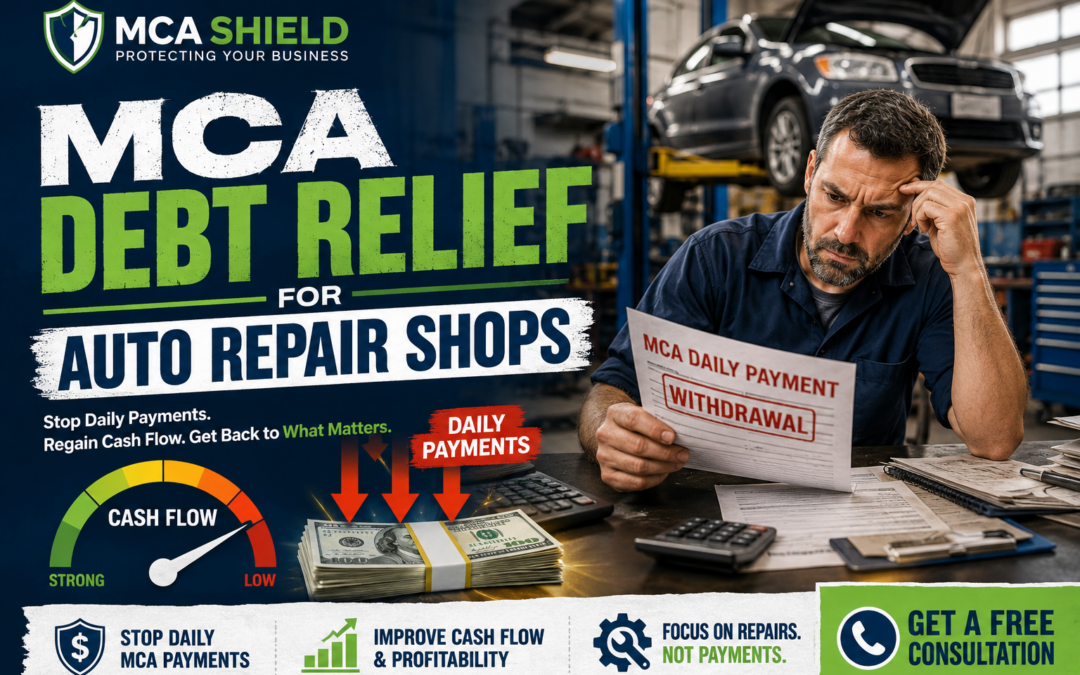
Auto repair shops depend on steady cash flow to purchase parts, pay technicians, and keep repair bays running efficiently. When unexpected expenses or seasonal slowdowns occur, some shop owners turn to merchant cash advances (MCAs) for fast funding. While this financing may provide immediate relief, the daily repayment structure can quickly create additional financial pressure.
If your business is struggling with MCA debt, you are not alone. Understanding your MCA debt relief options can help you reduce financial stress, improve cash flow, and regain control of your business. This guide explains how MCA debt relief for auto repair shops works, the warning signs to watch for, and the practical steps you can take to move toward long-term financial stability.
Schedule Your Free Consultation
Why Auto Repair Shops Often Turn to Merchant Cash Advances
Running an auto repair shop requires constant access to cash. Parts must be ordered, technicians need to be paid, equipment requires maintenance, and overhead expenses continue whether business is booming or slow. When cash flow becomes tight, many shop owners look for quick financing solutions. Unfortunately, a merchant cash advance (MCA) can solve an immediate problem while creating a much larger financial burden over time.
Managing Unexpected Repair Shop Expenses
Unexpected costs are part of owning an auto repair business. A vehicle lift may fail, diagnostic equipment may need replacement, or a large parts order may be required to complete customer repairs. At the same time, rent, utilities, insurance, and payroll continue without interruption.
Because merchant cash advances are often approved quickly and require less documentation than traditional financing, they can appear to be an attractive solution. However, the convenience of fast funding often comes with high repayment costs and daily withdrawals that reduce the cash available to operate your business.
Cash Flow Challenges During Slow Seasons
Even successful repair shops experience periods when revenue declines. Seasonal changes, fewer customer appointments, or local economic conditions can reduce the number of vehicles coming through the shop. While income fluctuates, fixed business expenses remain the same.
During these slower periods, daily MCA payments can place even more pressure on your cash flow. Instead of using revenue to purchase inventory, pay employees, or invest in business growth, a significant portion of your daily income may go toward repaying your merchant cash advance. As a result, many shop owners find themselves struggling to maintain healthy financial stability.
The Risks of Fast Funding
Fast funding can be helpful during a financial emergency, but it often comes at a significant cost. Many merchant cash advance agreements include high repayment amounts that are automatically deducted from your daily sales. As cash flow becomes tighter, some businesses take out additional advances to cover existing obligations, creating a cycle of increasing debt.
Rather than solving long-term financial problems, this pattern can reduce working capital and limit future financial flexibility. Understanding these risks is the first step toward finding the right MCA debt relief for auto repair shops and developing a strategy that supports lasting business recovery.
How Merchant Cash Advance Debt Can Impact an Auto Repair Business

Signs Your Auto Repair Shop May Need MCA Debt Relief
MCA Debt Relief Options for Auto Repair Shops
Practical Steps to Improve Cash Flow Before Debt Becomes Worse
How MCA Shield Helps Auto Repair Shops Regain Financial Stability
Frequently Asked Questions About MCA Debt Relief for Auto Repair Shops
Take the First Step Toward Financial Stability