Schedule Your Free Consultation
Merchant cash advances can provide quick funding, but they can also create significant financial pressure when daily or weekly payments begin to strain cash flow. Many business owners know they need MCA debt relief, but they’re unsure what the process actually involves or whether it can help their situation.
Understanding how MCA debt relief works is the first step toward making informed financial decisions. This guide explains the debt relief process, explores potential options, and shows how acting early can help protect your business and restore financial stability.
What Is MCA Debt Relief?
Understanding the Goal of MCA Debt Relief
MCA debt relief is the process of helping businesses address the financial strain resulting from one or more merchant cash advance agreements. Rather than taking on additional debt, the goal is to create a realistic path toward improved cash flow and long-term financial stability.
Every business faces different challenges, which means there is no one-size-fits-all solution. Depending on the circumstances, MCA debt relief may involve reviewing existing agreements, negotiating with funding companies, restructuring payment obligations, or developing a strategy that better aligns with your business’s current financial position.
The primary objective is to reduce financial pressure, preserve business operations, and help owners regain control of their finances before the situation worsens.
When Businesses Typically Seek MCA Debt Relief
Many business owners wait until they feel overwhelmed before exploring MCA debt relief, but acting sooner often creates more opportunities. If daily or weekly withdrawals are consuming working capital, it may be time to evaluate your options.
Common signs that businesses begin seeking MCA debt relief include:
- Daily ACH payments are making it difficult to cover operating expenses.
- Cash flow has become unpredictable, even during busy periods.
- Multiple merchant cash advances have been stacked together.
- Payroll, rent, inventory, or vendor payments are becoming harder to manage.
- The business is considering another MCA simply to cover existing obligations.
Recognizing these warning signs early can provide more flexibility when exploring potential solutions. By addressing the problem before financial pressure builds, business owners may have more options to restore healthy cash flow and position their company for long-term success.
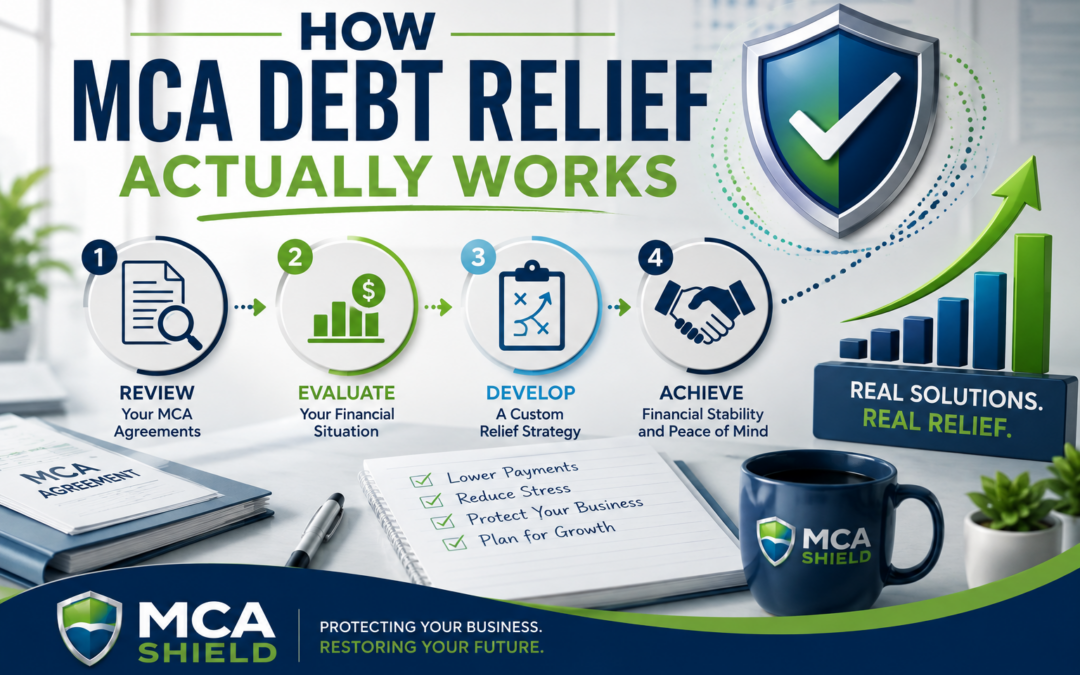
How MCA Debt Relief Actually Works

Reviewing Your Existing MCA Agreements
The first step in how MCA debt relief works is conducting a thorough review of every merchant cash advance agreement your business has signed. Each contract may contain different repayment terms, daily ACH withdrawal amounts, fees, reconciliation provisions, and other important conditions that affect your financial obligations.
By carefully examining these agreements, you can identify how each MCA impacts your cash flow and determine which obligations are creating the greatest financial pressure. A complete review provides the foundation for building an effective debt relief strategy.
Evaluating Your Business’s Financial Situation
After reviewing your MCA agreements, the next step is evaluating your business’s overall financial health. This includes analyzing cash flow, monthly revenue, operating expenses, existing debt obligations, and future financial projections.
Understanding where your business stands today helps identify realistic solutions that support continued operations instead of creating additional financial strain. The goal is to develop a plan based on your actual financial condition—not assumptions.
Developing a Customized Resolution Strategy
Because every business is different, MCA debt relief should never rely on a generic solution. An effective strategy considers your company’s unique financial circumstances, the number of merchant cash advances involved, and your long-term business goals.
Depending on your situation, a customized resolution strategy may include reviewing repayment options, pursuing negotiations when appropriate, restructuring financial obligations, or implementing a plan designed to improve cash flow over time. The objective is to reduce financial pressure while helping your business regain stability and move forward with greater confidence.
Understanding how MCA debt relief works gives business owners the knowledge they need to make informed decisions before financial challenges become even more difficult to manage.
What Types of MCA Debt Relief Options May Be Available?
Negotiating With MCA Providers
One of the most common MCA debt relief options involves direct communication with merchant cash advance providers to explore possible adjustments. Depending on the circumstances, negotiations may focus on modifying payment terms, addressing outstanding balances, or finding a resolution that better reflects the business’s current financial position.
While not every situation results in the same outcome, proactive negotiations can sometimes help reduce immediate financial pressure and create a more manageable path forward. Beginning these conversations early often provides more flexibility than waiting until the business faces severe financial hardship.
Restructuring Multiple MCA Obligations
Businesses with stacked merchant cash advances often experience the greatest financial strain because multiple daily or weekly ACH withdrawals compete for the same cash flow. This cycle can make it increasingly difficult to cover payroll, rent, inventory, and other essential operating expenses.
A restructuring strategy evaluates all existing MCA obligations together rather than treating each advance separately. By reviewing the complete financial picture, business owners can develop a coordinated approach designed to improve cash flow and reduce the burden of managing multiple repayment obligations simultaneously.
Creating a Sustainable Payment Plan
The ultimate goal of MCA debt relief is not simply to reduce today’s financial pressure—it’s creating a plan that supports the long-term health of the business.
A sustainable payment strategy considers your company’s current revenue, operating expenses, seasonal fluctuations, and future financial goals. Instead of relying on additional borrowing to resolve short-term cash shortages, the focus shifts toward building a repayment approach that allows the business to continue operating while working toward lasting financial stability.
Every business is unique, which is why the most effective MCA debt relief options are those tailored to the company’s specific financial circumstances. Developing the right strategy early can help restore confidence, improve cash flow, and position the business for long-term success.
Common Misconceptions About MCA Debt Relief
Many business owners delay seeking MCA debt relief because of common misconceptions about how the process works. Unfortunately, these misunderstandings can cause financial challenges to grow even more severe. Understanding the facts can help you make informed decisions and take action before your options become more limited.
Debt Relief Is Not the Same as Bankruptcy
One of the biggest misconceptions is that MCA debt relief automatically means filing for bankruptcy. In reality, these are two very different approaches.
Bankruptcy is a formal legal process that may be appropriate in certain situations. MCA debt relief, however, focuses on evaluating your existing merchant cash advance obligations and exploring strategies that help improve your financial position while allowing your business to continue operating.
For many businesses, debt relief is about finding practical solutions before more drastic measures become necessary.
Waiting Usually Limits Your Options
Some business owners believe the best approach is to wait and hope cash flow improves on its own. Unfortunately, delaying action often allows financial pressure to continue building.
As additional payments are missed or new merchant cash advances are added, available options may become more limited. Taking action early gives businesses more time to review their financial situation, evaluate potential solutions, and develop a strategy before the challenges become even more difficult to manage.
Every Business Requires a Different Solution
There is no universal formula for MCA debt relief. Every business has different revenue patterns, operating expenses, existing obligations, and financial goals. As a result, the best strategy for one company may not be appropriate for another.
An effective debt relief plan begins with understanding the complete financial picture. By reviewing your merchant cash advance agreements, evaluating cash flow, and identifying your business’s unique challenges, you can develop a customized resolution strategy focused on restoring long-term financial stability rather than relying on temporary fixes.
Signs It May Be Time to Explore MCA Debt Relief
Financial pressure from merchant cash advances rarely develops overnight. Instead, it often builds gradually as daily withdrawals reduce available cash, making it increasingly difficult to cover normal operating expenses. Recognizing the warning signs early can give your business more flexibility to explore MCA debt relief before the situation becomes more severe.
Daily ACH Payments Are Draining Cash Flow
One of the clearest indicators that it may be time to explore MCA debt relief is when daily ACH withdrawals consistently consume the cash your business needs to operate.
If paying employees, purchasing inventory, covering rent, or meeting vendor obligations becomes increasingly difficult because of automatic MCA payments, your cash flow may no longer be sustainable. Addressing the issue early can help you evaluate available options before financial pressure continues to grow.
You’re Considering Taking Another MCA
Many businesses fall into a dangerous cycle of stacking merchant cash advances. When one MCA is used to repay another, daily payment obligations often increase, placing even greater strain on cash flow.
If you’re thinking about taking out another merchant cash advance to keep up with existing payments, it’s a strong signal that your current financing strategy may no longer be working. Exploring MCA debt relief before adding more debt may help you identify a more sustainable path forward.
Bills Are Becoming Difficult to Pay
When routine business expenses begin competing with MCA payments, financial challenges can escalate quickly. Falling behind on payroll, rent, utilities, inventory purchases, taxes, or vendor invoices often indicates that cash flow is no longer keeping pace with your obligations.
These warning signs should not be ignored. The sooner you evaluate your financial situation, the more opportunities you may have to develop a customized resolution strategy that restores financial stability and positions your business for long-term success.
How MCA Shield Helps Businesses Navigate MCA Debt Relief
Understanding how MCA debt relief works is an important first step, but creating an effective strategy often requires a thorough evaluation of your business’s financial situation. At MCA Shield, we work with business owners to better understand their merchant cash advance obligations and identify practical solutions that align with their financial goals.
Reviewing Existing MCA Contracts
Every merchant cash advance agreement contains unique repayment terms, fees, and contract provisions that can significantly affect your business. MCA Shield begins by conducting a comprehensive review of your existing MCA contracts to gain a clear understanding of your financial obligations.
This detailed evaluation helps identify how each agreement affects your cash flow and provides the foundation for developing an informed debt relief strategy.
Building a Customized Debt Relief Strategy
No two businesses face the same financial challenges. That’s why MCA Shield develops customized debt relief strategies based on your company’s unique circumstances rather than relying on a one-size-fits-all approach.
After reviewing your MCA agreements and evaluating your financial position, we help identify potential resolution options that may improve cash flow, reduce financial pressure, and support your long-term business objectives.
Helping Restore Financial Stability
The goal of MCA debt relief extends beyond addressing today’s financial challenges. It is about creating a path toward greater financial stability and allowing your business to move forward with confidence.
By combining careful contract reviews, personalized planning, and practical guidance, MCA Shield helps business owners navigate the complexities of merchant cash advance debt while working toward stronger cash flow and a more stable financial future.
Frequently Asked Questions About MCA Debt Relief
❓ Does MCA Debt Relief Stop Daily ACH Payments?
It depends on your specific situation. Every merchant cash advance agreement is different, and the available options vary based on your contracts, financial condition, and the strategy being pursued. Because no two businesses are alike, there is no universal answer. The first step is reviewing your existing MCA agreements to determine what options may be available.
⏳ How Long Does the MCA Debt Relief Process Take?
The timeline for MCA debt relief varies from one business to another. Factors such as the number of merchant cash advances involved, the complexity of the agreements, and your company’s financial circumstances can all affect the process.
While some situations may move more quickly than others, taking action early often provides greater flexibility and may create more opportunities to develop an effective resolution strategy.
💼 Is MCA Debt Relief Better Than Taking Another Advance?
For many businesses, taking another merchant cash advance to cover existing MCA payments can increase financial pressure rather than relieve it. Additional advances may lead to higher daily ACH withdrawals, creating even greater strain on your business’s cash flow.
Exploring MCA debt relief allows you to evaluate your current financial situation and consider strategies to address existing obligations instead of adding new ones. Understanding all available options can help you make informed decisions that support your business’s long-term financial stability.
Take the First Step Toward MCA Debt Relief
Why Acting Early Creates More Financial Options
Financial challenges caused by merchant cash advances rarely improve without a plan. As daily ACH withdrawals continue, cash flow can become increasingly strained, making it more difficult to cover payroll, rent, inventory, and other essential business expenses.
The sooner you explore MCA debt relief, the more opportunities you may have to evaluate your financial situation, review your existing MCA agreements, and develop a customized resolution strategy. Taking action early can help reduce financial pressure and position your business for greater long-term stability.
Schedule a Free Consultation With MCA Shield
You don’t have to navigate MCA debt relief alone. Whether you’re managing a single merchant cash advance or multiple MCA obligations, understanding your options is the first step toward regaining financial control.
Schedule a free consultation with MCA Shield to receive a comprehensive review of your current situation and learn about potential debt relief strategies tailored to your business’s needs. The sooner you begin, the sooner you can start building a stronger financial future with greater confidence.