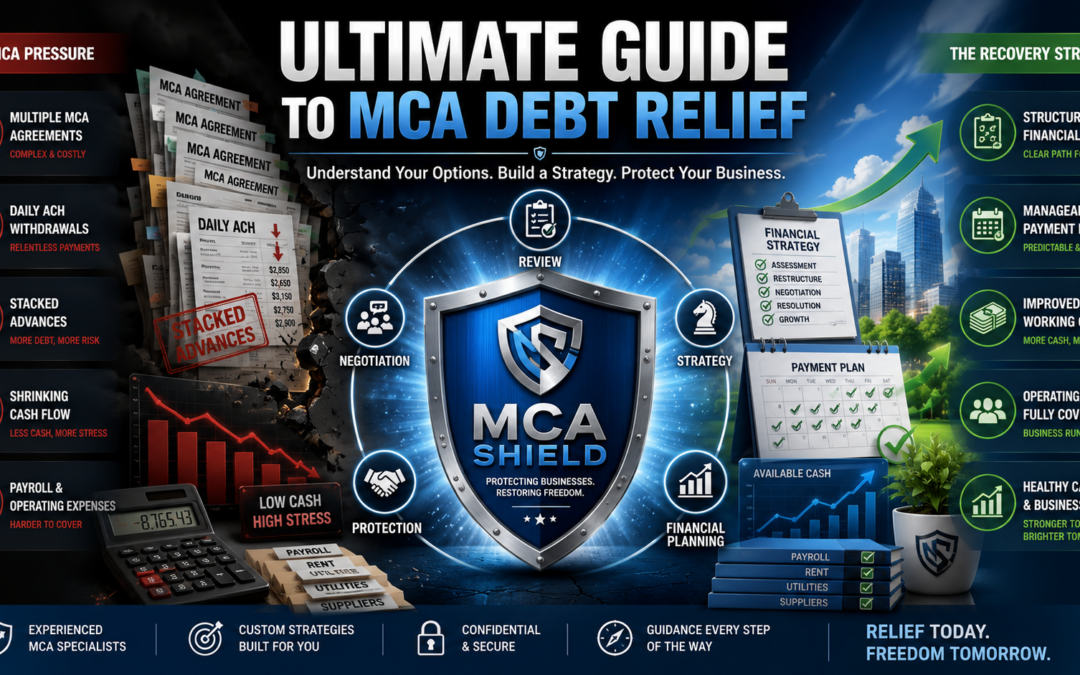
MCA debt relief can provide a path forward when Merchant Cash Advance payments begin putting serious pressure on your business. Daily or weekly withdrawals can quickly reduce working capital, especially when multiple MCAs are involved.
This Ultimate Guide to MCA Debt Relief explains how relief works, what options may be available, and when it may be time to take action. You’ll also learn how to recognize warning signs, avoid common mistakes, and choose the right MCA debt relief company.
If MCA payments are making it harder to cover payroll, inventory, rent, or other operating expenses, understanding your options early can make a difference. The goal of this guide is simple: help you make informed decisions and identify a more sustainable path forward for your business.
Schedule Your Free Consultation
What Is MCA Debt Relief?
Why Merchant Cash Advances Can Become Difficult to Manage
Signs Your Business May Need MCA Debt Relief

What MCA Debt Relief Options Are Available?
There is no single MCA debt relief option that works for every business. The right approach depends on active MCA obligations, repayment requirements, available revenue, financial health, and the conditions of each agreement.
Some businesses need relief from frequent withdrawals. Others may have several MCAs competing for the same revenue. In more serious situations, the business may already struggle to cover essential operating expenses.
For these reasons, a relief strategy should begin with a complete review of the business’s MCA obligations and financial condition. From there, potential options can be evaluated based on the business’s circumstances.
Restructuring MCA Payment Obligations
One possible approach involves seeking changes to the existing payment structure.
Daily or weekly withdrawals can place significant pressure on working capital. If the current payment schedule has become difficult to maintain, a modified arrangement could provide more room for everyday business expenses.
Depending on the agreement and MCA provider, restructuring efforts might focus on adjusting payment amounts, changing payment frequency, or creating a more manageable repayment arrangement.
Any potential modification depends on the individual circumstances and the provider’s willingness to make changes. Therefore, businesses should avoid assuming that a specific payment reduction or arrangement is guaranteed.
The objective is to create a payment structure that better reflects the business’s current financial capacity while addressing its existing obligations.
Negotiating With MCA Providers
Negotiation may also play a role in an MCA debt relief strategy.
This process typically involves communication with MCA providers about the business’s financial circumstances and current payment challenges. Financial records and other documentation may help explain why the existing arrangement has become difficult to maintain.
Depending on the situation, discussions could address payment terms, outstanding obligations, or other possible resolution options.
Successful negotiations require a clear understanding of the MCA agreements and the business’s finances. Promising a payment the business cannot realistically maintain could create additional problems.
For that reason, the goal should be a realistic resolution that considers both the MCA obligations and the business’s ability to continue operating.
Developing a Business Debt Resolution Strategy
For businesses with several MCAs or significant cash-flow pressure, changing one payment may not address the entire problem. A broader business debt resolution strategy may be necessary.
This approach looks at the complete financial picture. Active MCA agreements, payment schedules, revenue, working capital, operating expenses, and other business obligations should all be considered.
A strategy may include several steps, such as:
- Reviewing every active MCA agreement
- Identifying the obligations creating the greatest cash-flow pressure
- Evaluating possible payment modifications or negotiations
- Prioritizing essential operating expenses
- Creating a realistic plan for available business cash
- Avoiding additional debt that could increase financial pressure
The goal is not simply to reduce today’s financial stress. A strong MCA debt relief strategy should help the business address existing obligations while creating a more sustainable financial structure for the future.
Every business has different circumstances. Understanding the available options—and selecting a strategy based on the actual financial picture—can provide a clearer path toward improved cash flow and long-term business stability.
How the MCA Debt Relief Process Works
MCA Debt Relief vs. Taking Out Another MCA
How to Choose an MCA Debt Relief Company
Choosing the right MCA debt relief company is an important decision. You may be trusting that company with sensitive financial information and relying on its guidance during a difficult period for your business.
Not every company uses the same approach. Before making a decision, take time to understand its experience, services, fees, and communication style.
A reputable company should clearly explain your situation without pressuring you to make a quick decision.
Look for Experience With Merchant Cash Advances
Merchant Cash Advances differ from traditional business loans. Their agreements, payment structures, and frequent withdrawals can create unique financial challenges.
For that reason, look for a company with specific experience handling Merchant Cash Advance debt.
Ask about the types of MCA situations the company regularly handles. Does it work with businesses carrying multiple advances? Does the team understand daily and weekly ACH payments? Can it review MCA agreements and clearly explain potential strategies?
Experience does not guarantee a particular result. However, familiarity with MCA obligations can help a company identify important issues and develop a strategy suited to your financial situation.
The company should also take time to learn about your business. A recommendation made without reviewing your MCA agreements, revenue, expenses, and cash flow may overlook important details.
Ask About the Process, Costs, and Expectations
Before hiring an MCA debt relief company, make sure you understand what happens after you sign up.
Ask the company to explain its process in straightforward terms. You should know which documents are required, who will communicate with you, what services are included, and what role your business will have throughout the process.
Costs should also be clear.
Ask about fees, payment requirements, and any additional charges that could apply. Request this information in writing so you can review it before signing an agreement.
You should also discuss expectations. Ask what the company can realistically attempt to accomplish and which factors could influence the outcome.
A trustworthy MCA debt relief company should be comfortable answering questions. Clear communication and transparency can help you make a more informed decision.
Watch for Unrealistic Promises and High-Pressure Sales
Be cautious of any company that promises a guaranteed result before thoroughly reviewing your financial situation.
Every business has different MCA agreements, providers, revenue, expenses, and financial challenges. Therefore, a responsible company should evaluate those details before recommending a strategy.
Watch for warning signs such as:
- Guaranteed debt reductions or specific outcomes
- Pressure to sign an agreement immediately
- Vague or confusing explanations about fees
- Limited information about the actual relief process
- Promises made before reviewing your MCA agreements
- Reluctance to answer questions or provide information in writing
High-pressure sales tactics should also raise concerns. Financial stress can make business owners feel urgency, but that does not mean you should rush into an agreement you do not fully understand.
The right MCA debt relief company should focus on education, transparency, and a strategy tailored to your circumstances.
Take time to compare your options, ask questions, and understand what you are agreeing to. Choosing carefully can help you find professional guidance that supports both your immediate financial needs and your business’s long-term stability.
What Results Can Businesses Expect From MCA Debt Relief?
Common MCA Debt Relief Mistakes to Avoid
How MCA Shield Helps Businesses Navigate MCA Debt Relief
Frequently Asked Questions About MCA Debt Relief
Take the First Step Toward MCA Debt Relief