

Schedule Your Free Consultation
Manufacturing Business Overview
Company Background and Operations
The business featured in this case study was a well-established manufacturing company that supplied precision components to commercial and industrial customers. With a skilled workforce, specialized equipment, and long-standing customer relationships, the company had built a reputation for delivering quality products on tight production schedules.
Like many manufacturers, the business relied on steady cash flow to purchase raw materials, maintain equipment, pay employees, and fulfill customer orders. Although sales remained strong, rising operating expenses and fluctuating customer payment cycles created increasing pressure on working capital.
Financial Challenges Before Seeking Help
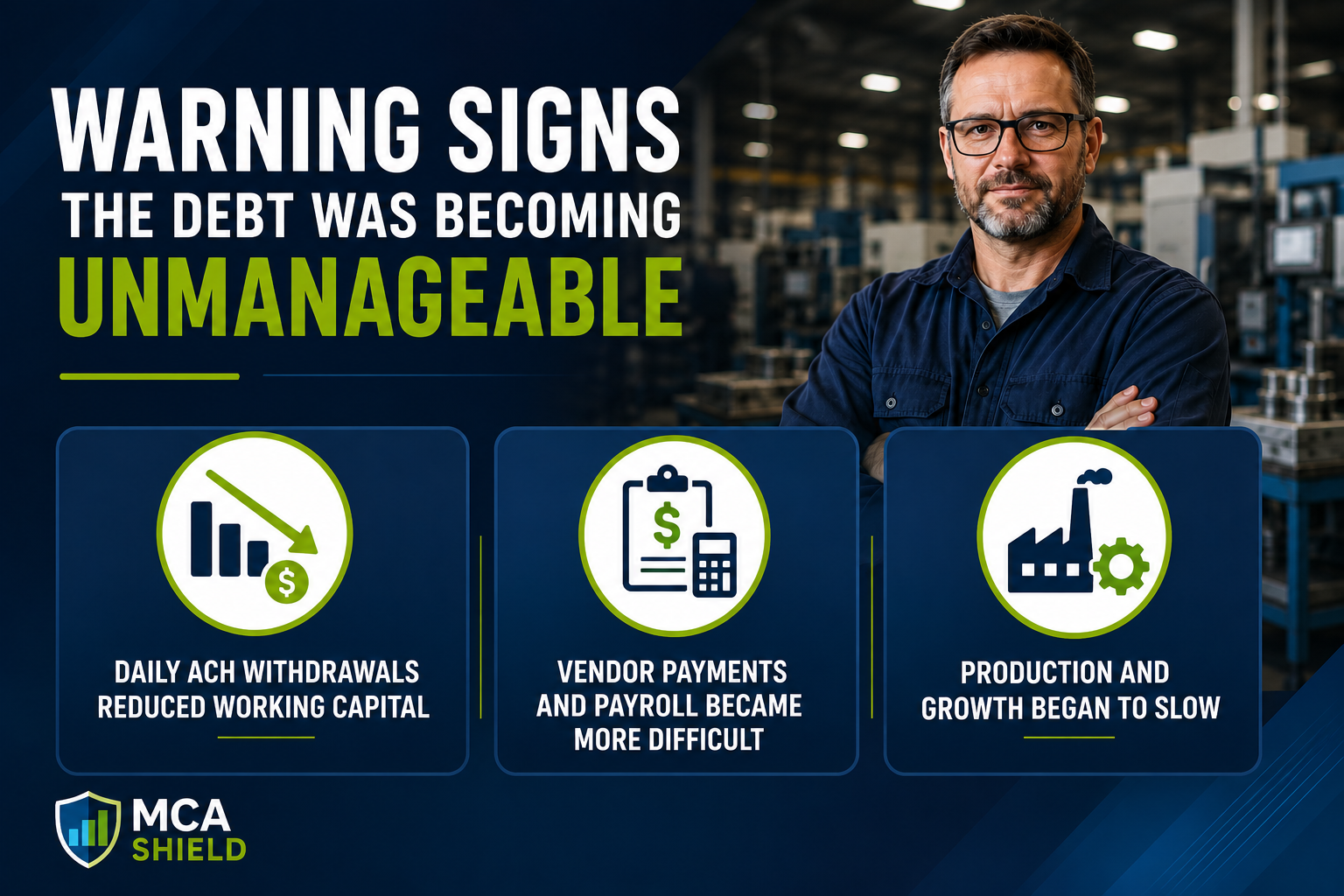
As cash flow became tighter, the business turned to merchant cash advance (MCA) funding to cover short-term operating needs. The fast approval process provided immediate access to capital, but the daily ACH withdrawals quickly became difficult to manage.
Over time, multiple MCA obligations reduced available cash needed for inventory purchases, payroll, equipment maintenance, and vendor payments. Instead of improving financial stability, the business found itself dedicating a growing portion of its daily revenue to debt repayment.
The owners recognized that continuing on the same path could limit production, strain supplier relationships, and make future growth difficult. They decided to explore Manufacturing Business Debt Relief before the financial pressure became even more challenging to overcome.
How Merchant Cash Advance Debt Began
Why the Business Accepted MCA Funding
The company initially sought merchant cash advance (MCA) funding to address short-term cash flow needs. Delayed customer payments, rising material costs, and unexpected equipment expenses created a temporary funding gap that required immediate attention. Because traditional financing could take weeks to approve, an MCA offered quick access to working capital.
At first, the daily payments appeared manageable. The business used the funds to purchase inventory, keep production on schedule, and meet payroll obligations without disrupting operations. However, the convenience of fast funding came with repayment terms that placed increasing pressure on daily cash flow.
How Multiple Advances Created Cash Flow Problems
As operating expenses continued to rise, the business accepted additional MCA funding to cover existing obligations and maintain production. Each new advance introduced another daily ACH withdrawal, leaving less revenue available for normal operating expenses.
Before long, a significant portion of the company’s daily deposits was being used to repay multiple MCA providers. Cash that should have been available for raw materials, equipment maintenance, payroll, and vendor invoices was instead committed to debt payments.
This cycle made it increasingly difficult to operate efficiently. Rather than solving the underlying cash flow problem, the stacked MCA obligations created ongoing financial pressure that threatened the company’s stability. Recognizing that the situation was becoming unsustainable, the owners began exploring Manufacturing Business Debt Relief to regain control of their finances before the debt became even more difficult to manage.
Warning Signs the Debt Was Becoming Unmanageable
Exploring Manufacturing Business Debt Relief Options
The Debt Relief Strategy That Helped Stabilize the Business
Results After Manufacturing Business Debt Relief
Stronger Cash Flow
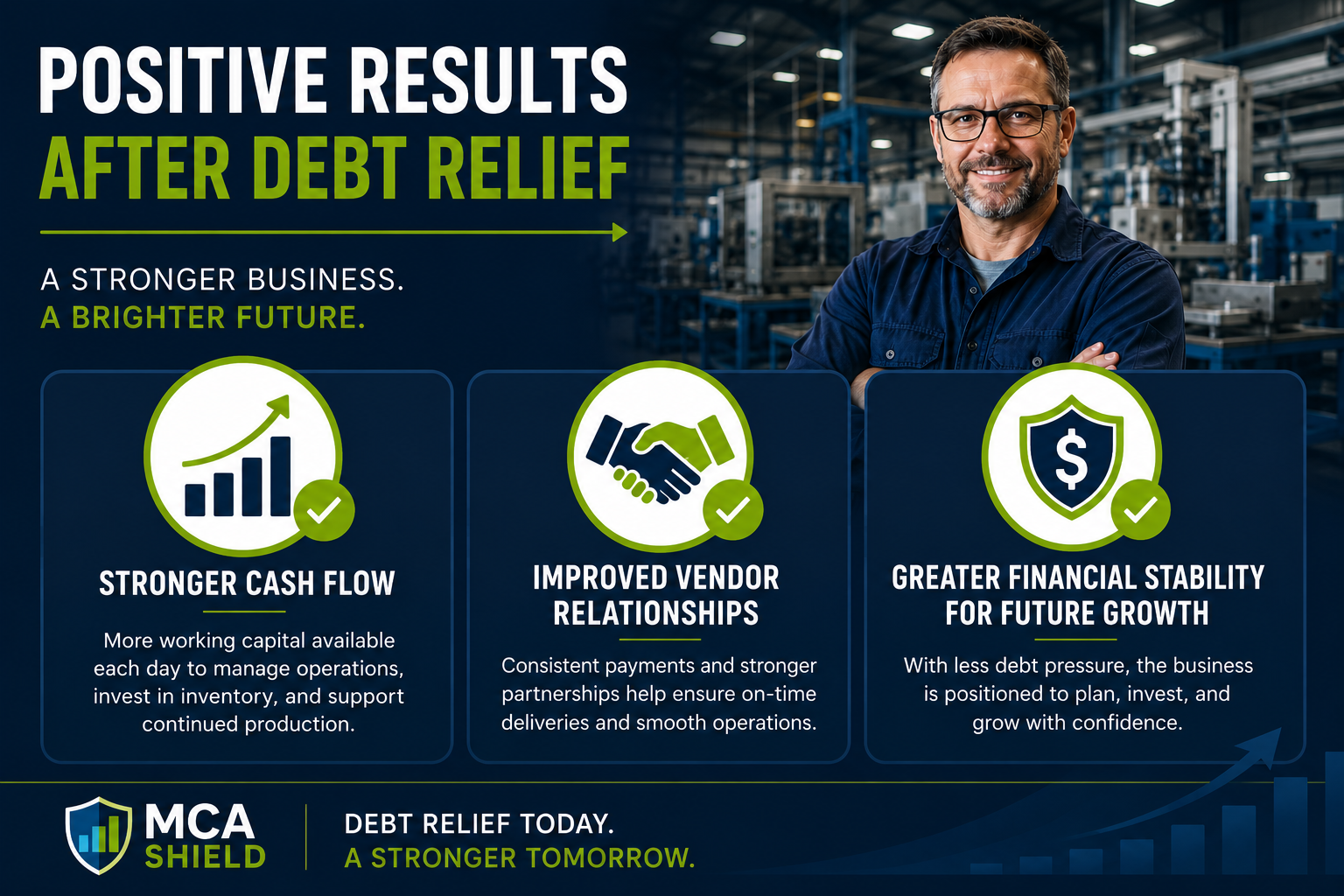
As the debt relief strategy took effect, the business experienced a noticeable improvement in daily cash flow. With less revenue committed to MCA payments, more funds were available to cover operating expenses and support production.
The additional working capital allowed management to make financial decisions based on business needs instead of daily repayment demands. This improved flexibility helped restore confidence in the company’s financial future.
Improved Vendor Relationships
Healthier cash flow also strengthened relationships with suppliers. The company was able to make payments more consistently, reducing the risk of delayed shipments, tighter credit terms, and disruptions to production.
Reliable vendor relationships helped ensure that raw materials arrived on schedule, allowing the business to meet customer deadlines and maintain efficient operations.
Greater Financial Stability for Future Growth
With immediate financial pressure reduced, the company shifted its focus from managing debt to planning for long-term success. Leadership could once again invest in equipment maintenance, production improvements, and future growth opportunities.
This case study demonstrates how Manufacturing Business Debt Relief can provide businesses with the opportunity to stabilize operations, improve cash flow, and build a stronger financial foundation. By addressing the problem early and following a structured recovery plan, the business was able to move forward with greater confidence and a clearer path toward sustainable growth.
Lessons Other Manufacturing Businesses Can Learn
Recognize Financial Pressure Early
One of the biggest lessons from this case study is the importance of acting before financial challenges become overwhelming. Early warning signs, such as shrinking working capital, increasing reliance on short-term financing, and difficulty covering routine expenses, should never be ignored.
Taking action early gives business owners more options and can prevent a temporary cash flow issue from becoming a long-term financial crisis. Exploring Manufacturing Business Debt Relief at the first signs of trouble can make the recovery process more manageable.
Avoid Taking Additional MCA Funding
When cash flow becomes tight, accepting another merchant cash advance may seem like the quickest solution. However, adding new MCA obligations often increases daily payment pressure and makes it even harder to manage operating expenses.
Instead of relying on additional funding to solve existing debt, manufacturers should carefully evaluate alternatives that improve long-term financial stability. Breaking the cycle of stacked MCA debt is often an important step toward lasting recovery.
Seek Professional Help Before Default
Many manufacturing businesses wait until they have already missed payments or are facing collection activity before asking for help. By that point, the available options may be more limited.
Seeking professional guidance before default allows business owners to review their financial situation, evaluate available debt relief solutions, and develop a strategy that supports continued operations. Acting early can help preserve cash flow, strengthen the business’s financial position, and create a clearer path toward successful Manufacturing Business Debt Relief.
Take Action Before Manufacturing Business Debt Becomes More Difficult to Manage
Why Early Action Creates More Options
Financial challenges rarely improve on their own. As merchant cash advance payments continue, daily cash flow can become more restricted, making it harder to purchase inventory, pay employees, maintain equipment, and meet customer demands. Addressing the problem early gives manufacturing businesses more flexibility and a wider range of potential solutions.
Whether your business is managing one MCA or several stacked advances, exploring Manufacturing Business Debt Relief before the situation worsens can help reduce financial pressure and protect your company’s long-term stability.
Schedule a Free Consultation With MCA Shield
If daily MCA payments are affecting your manufacturing business, you don’t have to face the situation alone. The team at MCA Shield helps business owners evaluate their financial circumstances, review existing MCA obligations, and develop customized debt relief strategies designed to improve cash flow.
Schedule your free, confidential consultation today to learn how Manufacturing Business Debt Relief may help your business regain financial stability and focus on future growth.