Retail business MCA debt can escalate quickly, especially when daily payments begin consuming the cash needed for inventory, payroll, rent, and other essential operating expenses. Many retailers find themselves trapped in a cycle of borrowing just to keep their doors open.
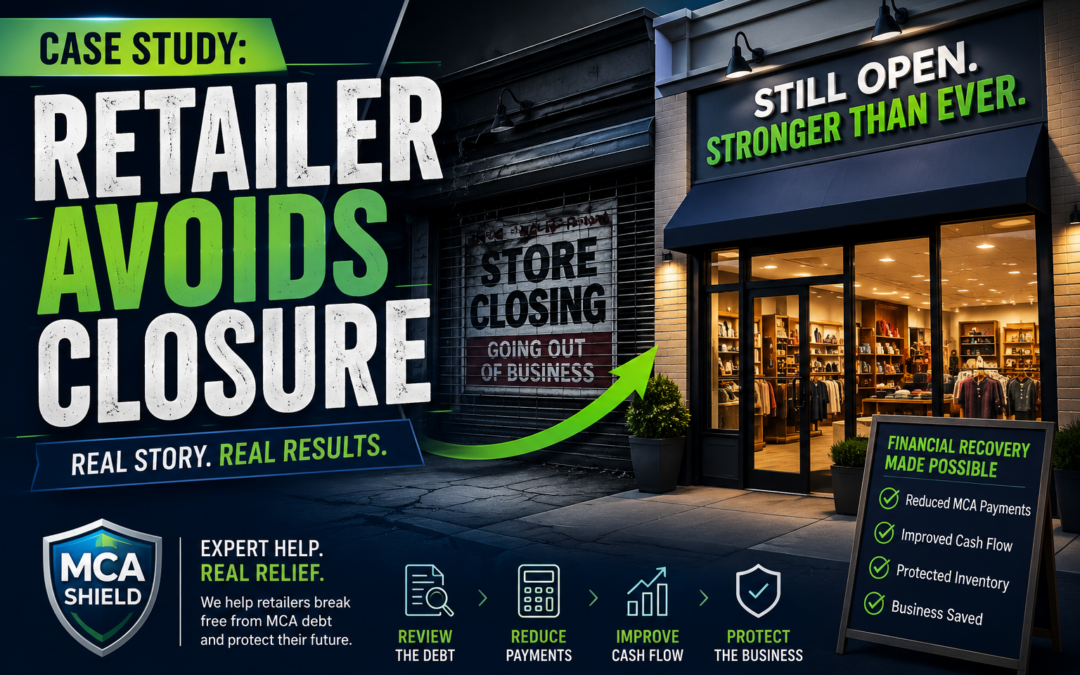
This case study shows how one retailer faced mounting Merchant Cash Advance debt, took action before it was too late, and avoided permanent closure by implementing a strategic debt relief plan. While every business is different, the lessons from this story can help other retailers recognize warning signs and explore practical solutions before financial pressure becomes overwhelming.
How Merchant Cash Advance Debt Pushed a Retail Business to the Brink
Declining Cash Flow and Daily Payment Pressure
This retailer had built a loyal customer base and generated steady sales for years. However, after taking on several Merchant Cash Advances to cover short-term expenses, retail business MCA debt quickly became the company’s biggest challenge. The daily automatic withdrawals reduced available working capital before the business could pay for inventory, utilities, payroll, and other essential operating costs.
At first, management believed increasing sales would solve the problem. Instead, a growing portion of every day’s revenue disappeared into MCA payments. Cash flow became unpredictable, making it difficult to plan or maintain healthy financial reserves.
Inventory Shortages Began Hurting Sales
As cash flow tightened, purchasing inventory became increasingly difficult. Best-selling products were frequently out of stock because the retailer lacked the funds to replenish merchandise quickly. Customers who could not find what they needed often purchased from competitors instead.
The business entered a damaging cycle. Lower inventory led to fewer sales, fewer sales created even less cash flow, and reduced cash flow made it even harder to restock shelves. The retailer was working harder each month but seeing fewer positive financial results.
The Risk of Permanent Business Closure
Eventually, the business reached a critical point. Management struggled to cover rent, payroll, supplier invoices, and Merchant Cash Advance payments while trying to keep the doors open. The pressure created constant uncertainty about whether the business could remain open.
Without a clear strategy to address the growing retail business MCA debt, the company faced the real possibility of closing its doors. Fortunately, the owners recognized the warning signs before it was too late and sought professional guidance to stabilize their finances and protect the future of the business.
How the Retailer Recovered Before It Was Too Late
Reviewing Every Merchant Cash Advance Agreement
The first step toward recovery was gaining a complete understanding of the retailer’s financial obligations. Every Merchant Cash Advance agreement was carefully reviewed to identify payment terms, outstanding balances, daily withdrawal amounts, and the overall impact each advance had on cash flow.
Instead of reacting to one payment at a time, the business finally had a clear picture of its total retail business MCA debt. This made it possible to identify realistic options to reduce financial pressure and create a path toward long-term stability.
Building a Practical Debt Resolution Strategy
With a full financial assessment in place, the retailer developed a customized strategy focused on restoring stability rather than finding another temporary source of funding. The goal was to address existing MCA obligations while protecting the business’s ability to continue serving customers.
The plan prioritized cash flow recovery, essential operating expenses, and sustainable debt resolution. Rather than adding another Merchant Cash Advance to cover existing payments, the retailer focused on developing a manageable financial strategy that supported long-term success.
Improving Cash Flow Without Taking Another MCA
As financial pressure eased, the retailer was able to redirect more revenue toward inventory, payroll, rent, and other critical operating expenses. Shelves were restocked more consistently, customer demand was met more effectively, and day-to-day operations became increasingly stable.
Most importantly, the business broke the cycle of relying on additional Merchant Cash Advances to solve short-term cash flow problems. By improving cash flow rather than increasing debt, the retailer avoided permanent closure and regained confidence in the future of the business.
Warning Signs Retail Businesses Should Never Ignore
For most retailers, inventory is revenue. When retail business MCA debt begins draining too much daily cash flow, inventory orders are often one of the first expenses to be delayed. Empty shelves, limited product selection, and frequent stock shortages can quickly drive customers to competitors.
If your business is consistently postponing inventory purchases because there is not enough cash available after daily MCA payments, it may be time to evaluate your financial strategy before the problem grows.
Using New Financing to Cover Old MCA Payments
One of the clearest warning signs is relying on new financing to make payments on existing Merchant Cash Advances. While this may provide temporary relief, it often creates a cycle of increasing debt and larger daily payment obligations.
Each additional advance can place even more pressure on cash flow, making it harder to cover normal business expenses. Breaking this cycle early often provides more options than waiting until financial problems become overwhelming.
Struggling to Meet Payroll or Operating Expenses
When a business begins choosing between paying employees, covering rent, purchasing inventory, or making MCA payments, the financial strain has reached a critical level. Delaying payroll, falling behind on supplier invoices, or missing essential operating expenses can affect employee morale, customer satisfaction, and the overall health of the business.
Recognizing these warning signs early allows business owners to explore Merchant Cash Advance debt relief before financial challenges threaten the future of the company.
Practical Steps to Improve Business Survival While Managing MCA Debt
If your business is struggling under the weight of merchant cash advance debt, taking action early can make a significant difference. While every financial situation is unique, there are practical steps that can help improve cash flow, reduce financial pressure, and increase your chances of long-term success.
The goal is not simply to survive today’s challenges but to create a stronger financial foundation for the future.
Review All Existing Merchant Cash Advance Agreements
Start by gathering every active merchant cash advance agreement. Many business owners are surprised to discover how different repayment terms, fees, personal guarantees, or default provisions interact with one another.
As you review each agreement, look for:
- Remaining balances
- Daily or weekly payment amounts
- Factor rates and fees
- Default provisions
- Personal guarantee language
- Confession of judgment clauses where applicable
Having a complete picture of your obligations makes it easier to evaluate your options and develop a realistic recovery strategy.
Build a Weekly Cash Flow Recovery Plan
Managing MCA debt and business survival starts with understanding exactly where your money is going.
A weekly cash flow plan can help you:
- Track incoming revenue
- Monitor daily and weekly expenses
- Identify unnecessary spending
- Plan for upcoming obligations
- Avoid unexpected cash shortages
Reviewing your cash flow every week allows you to make adjustments before small problems become major financial setbacks.
Prioritize Essential Business Expenses
When cash is limited, every dollar matters. Focus first on the expenses that keep your business operating and generating revenue.
These often include:
- Employee payroll
- Inventory or materials
- Rent and utilities
- Insurance
- Equipment needed for daily operations
- Critical vendor relationships
Postponing non-essential spending can help preserve working capital while you work to improve your overall financial position.
Explore Merchant Cash Advance Debt Relief Before Problems Grow
Many business owners wait until they have already missed payments or taken out multiple merchant cash advances before seeking help. Unfortunately, waiting often reduces the number of available options.
Exploring merchant cash advance debt relief early may allow you to:
- Reduce financial pressure
- Improve cash flow
- Avoid stacking additional MCAs
- Develop a realistic repayment strategy
- Protect the long-term future of your business
The sooner you address MCA debt, the more flexibility you may have to regain control of your finances. Taking proactive steps today can help protect your business, strengthen financial stability, and improve your chances of long-term business survival.

Practical Steps Retailers Can Take to Avoid Closure
How MCA Shield Helps Retail Businesses Stay Open
Frequently Asked Questions About Retail Businesses and MCA Debt
Take Action Before Merchant Cash Advance Debt Forces Your Business to Close
Why Acting Early Creates More Financial Options
Retail business MCA debt rarely improves on its own. The longer daily payments continue to drain cash flow, the more difficult it becomes to keep inventory stocked, meet payroll, pay suppliers, and maintain normal business operations. What begins as a short-term cash flow challenge can quickly threaten the future of your business.
Taking action early gives you more financial options. By addressing Merchant Cash Advance debt before it reaches a crisis point, you may have greater flexibility to reduce financial pressure, improve cash flow, and protect the business you have worked so hard to build.
Schedule a Free Consultation With MCA Shield
You do not have to face overwhelming Merchant Cash Advance debt alone. MCA Shield has helped businesses across a wide range of industries develop practical debt relief strategies designed to restore financial stability and keep their doors open.
If retail business MCA debt is putting your business at risk, now is the time to act. Schedule your free, no-obligation consultation with MCA Shield today and discover the options available to help your business move forward with confidence.