
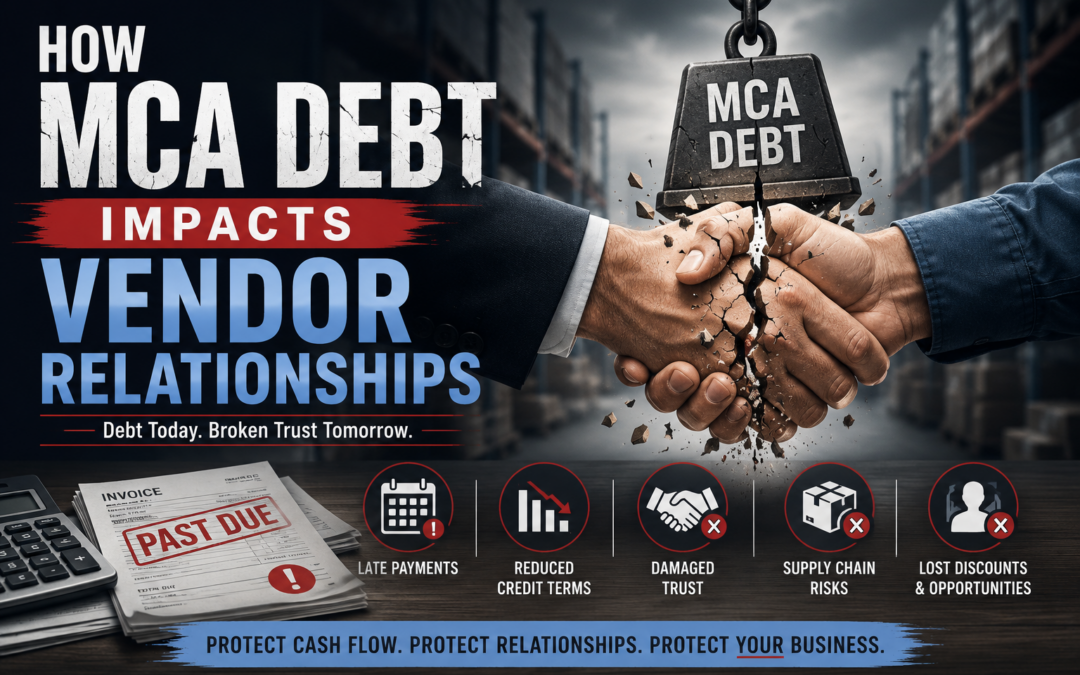
MCA debt and vendor relationships are closely connected because daily or weekly merchant cash advance payments can quickly reduce the cash available to pay suppliers on time. As cash flow tightens, businesses may begin to delay invoices, miss payment deadlines, or struggle to maintain the trust they have built with vendors over the years.
For many business owners, vendor payment problems are one of the earliest warning signs that merchant cash advance debt is becoming difficult to manage. Left unaddressed, these issues can lead to stricter payment terms, reduced credit, supply disruptions, and added financial pressure. Understanding how MCA debt impacts vendor relationships is the first step toward protecting both your business operations and the partnerships that drive your company’s success.
Schedule Your Free Consultation
Why Vendor Relationships Matter to Business Success
Healthy vendor relationships are one of the foundations of a successful business. Whether you operate a restaurant, retail store, construction company, medical practice, or service business, your vendors provide the products, materials, and services you need to serve customers every day. When MCA debt and vendor relationships become strained, the effects often reach far beyond unpaid invoices.
Vendors Keep Daily Operations Running
Most businesses depend on a network of reliable vendors to keep operations moving. Inventory, equipment, office supplies, raw materials, fuel, and specialized services all come from trusted suppliers.
When cash flow is healthy, invoices are paid on time and vendors continue delivering what your business needs. However, when merchant cash advance payments consume a large portion of daily revenue, paying vendors can become increasingly difficult. Even a few delayed payments can interrupt operations and create unnecessary stress.
Strong Supplier Relationships Create Business Stability
Strong supplier relationships offer more than dependable deliveries. They often provide valuable flexibility when unexpected challenges arise.
Businesses with long-standing vendor partnerships may benefit from:
- More favorable payment terms
- Priority during inventory shortages
- Access to better pricing or volume discounts
- Faster service and support
- Greater willingness to work through temporary cash flow issues
These advantages can make a significant difference during slower sales periods or seasonal fluctuations. Protecting these relationships helps strengthen your business over the long term.
Why Trust Is Essential Between Businesses
Trust is one of the most valuable assets in any business relationship. Vendors rely on consistent communication and timely payments to plan their own operations and manage their cash flow.
When payments become unpredictable because of merchant cash advance obligations, vendors may begin to question your company’s financial stability. Over time, they may shorten payment terms, reduce credit limits, require payment before shipment, or stop extending credit altogether.
Maintaining open communication and addressing financial challenges early can help preserve vendor confidence. By protecting trust, businesses are better positioned to maintain reliable supplier relationships, even during periods of financial pressure.
How MCA Debt Impacts Vendor Relationships
Understanding how MCA debt impacts vendor relationships begins with understanding cash flow. Merchant cash advances are typically repaid through daily or weekly withdrawals, meaning money leaves your account before many operating expenses are paid. As those payments continue, businesses often have less cash available for suppliers, creating financial pressure that can strain even long-standing vendor relationships.
Daily MCA Payments Reduce Available Cash
Unlike traditional business loans with monthly payments, merchant cash advances are commonly repaid through frequent automatic withdrawals tied to your sales or bank account.
While this repayment structure may seem manageable at first, it can quickly reduce the working capital needed to cover everyday expenses. After payroll, rent, utilities, and other essential costs are paid, there may not be enough cash left to pay vendors on schedule.
The result is a constant balancing act that leaves many business owners deciding which bills can wait.
Late Vendor Payments Become More Common
As available cash shrinks, vendor invoices are often among the first payments to be delayed. A payment that is only a few days late may not seem significant, but repeated delays can create a pattern that suppliers notice.
Late vendor payments can lead to:
- Past-due invoices
- Collection calls and payment reminders
- Delayed shipments
- Interrupted access to products or materials
- Increased stress for both businesses
When vendors begin questioning whether future invoices will be paid on time, the relationship can quickly become strained.
Vendors May Tighten Credit Terms
Suppliers work hard to manage their own cash flow. If they believe a customer is becoming a financial risk, they often take steps to protect their business.
Those changes may include:
- Reducing available credit limits
- Shortening payment deadlines
- Requiring partial or full payment before delivery
- Suspending future orders until past balances are paid
These tighter credit terms place even more pressure on businesses already struggling with merchant cash advance payments, making it harder to recover healthy cash flow.
Missed Payments Can Damage Long-Term Trust
Vendor relationships are built over months or even years through consistent communication, dependable payments, and mutual respect. Unfortunately, trust can be damaged much faster than it is built.
Repeated missed or delayed payments may cause suppliers to view your business as unreliable, even if the underlying issue is temporary cash flow pressure from MCA debt. Once that confidence is lost, rebuilding it often requires time, consistent payment history, and open communication.
Taking action early to address MCA debt and vendor relationships can help preserve supplier trust, protect important partnerships, and keep your business operating smoothly.
Warning Signs That MCA Debt Is Hurting Vendor Relationships

The effects of MCA debt and vendor relationships often appear gradually rather than all at once. Many business owners don’t realize supplier confidence is slipping until vendors begin changing how they do business with them. Recognizing these warning signs early can give you more time to protect important relationships and address cash flow challenges before they become more serious.
Suppliers Begin Requesting Payment Up Front
One of the clearest warning signs is when vendors stop offering payment terms and begin requesting payment before shipping products or performing services.
This change usually means the supplier is concerned about the risk of delayed or missed payments. Paying up front can place additional strain on your cash flow, especially when merchant cash advance withdrawals are already reducing the funds available for daily operations.
Credit Limits Are Reduced
Many suppliers extend credit to trusted customers as a way to support ongoing business. When payments become inconsistent, vendors may lower your available credit to reduce their own financial exposure.
Reduced credit limits can make it harder to:
- Purchase enough inventory
- Complete customer orders
- Manage seasonal demand
- Maintain normal business operations
Losing access to supplier credit often creates even more cash flow pressure, making recovery more difficult.
Orders Are Delayed or Put on Hold
Some vendors may continue accepting orders but delay shipping until outstanding invoices are paid. Others may place your account on hold altogether until your balance is brought current.
These interruptions can affect nearly every part of your business, including:
- Inventory availability
- Project timelines
- Customer satisfaction
- Revenue opportunities
When supplies stop arriving on time, even businesses with strong sales can struggle to meet customer expectations.
Collection Calls From Vendors Increase
As invoices remain unpaid, vendors often increase their collection efforts. What begins as a friendly payment reminder may become more frequent phone calls, emails, or formal collection notices.
While these communications are intended to recover payment, they also signal declining supplier confidence. If left unresolved, collection activity can permanently damage relationships that may have taken years to build.
Addressing MCA debt and vendor relationships before these warning signs become routine can help preserve supplier trust, maintain reliable access to inventory and services, and create more options for improving your business’s financial health.
The Long-Term Business Consequences
The effects of MCA debt and vendor relationships rarely end with a few late payments. As supplier confidence declines, businesses often experience operational challenges that affect profitability, customer satisfaction, and future growth. What begins as a cash flow problem can gradually impact nearly every part of the business.
Inventory and Supply Chain Disruptions
Reliable vendors play an important role in keeping products, materials, and equipment available when you need them. If suppliers delay shipments or place orders on hold because of unpaid invoices, your business may struggle to maintain normal operations.
Inventory and supply chain disruptions can lead to:
- Out-of-stock products
- Project delays
- Missed sales opportunities
- Higher shipping or replacement costs
- Frustrated customers
Even temporary disruptions can create lasting financial consequences, especially for businesses that rely on timely deliveries.
Lost Vendor Discounts and Better Pricing
Many vendors reward dependable customers with early payment discounts, volume pricing, or preferred rates. These savings can improve profit margins and help businesses stay competitive.
When payments become inconsistent, suppliers may remove those benefits. Losing favorable pricing often means paying more for the same products or services, reducing profitability at a time when cash flow is already under pressure.
Customer Service Can Suffer
Vendor challenges often become customer challenges. If inventory is unavailable or projects are delayed, customers may experience longer wait times, canceled orders, or inconsistent service.
Over time, these problems can result in:
- Negative customer reviews
- Lower customer retention
- Reduced referrals
- Damage to your business reputation
Protecting vendor relationships helps ensure your customers continue getting the products and reliable experience they expect.
Business Growth Becomes More Difficult
Healthy businesses grow by investing in inventory, equipment, employees, marketing, and new opportunities. When a significant portion of daily revenue is committed to merchant cash advance payments, those investments often become impossible.
Instead of planning for expansion, business owners may spend their time managing cash shortages and resolving vendor issues. As supplier relationships weaken, growth opportunities become harder to pursue.
Taking action before MCA debt and vendor relationships deteriorate further can help restore financial stability, strengthen supplier confidence, and position your business for long-term success rather than ongoing financial stress.
Practical Steps to Protect Vendor Relationships While Managing MCA Debt
If MCA debt and vendor relationships are beginning to affect your business, acting early can make a meaningful difference. While every financial situation is unique, there are practical steps you can take to preserve supplier trust, improve cash flow, and create more options for resolving merchant cash advance debt.
Communicate With Vendors Early
One of the biggest mistakes business owners make is avoiding difficult conversations. Most vendors appreciate honest, proactive communication more than unexpected missed payments.
If cash flow has become tight:
- Explain the situation before payments are overdue.
- Provide realistic payment expectations.
- Stay in regular contact if circumstances change.
- Follow through on any commitments you make.
Open communication won’t solve every problem, but it can strengthen trust and improve the likelihood that vendors will continue working with your business.
Prioritize Critical Supplier Payments
Not every vendor has the same impact on your operations. Focus first on suppliers that provide the products, materials, or services your business cannot operate without.
Ask yourself:
- Which vendors are essential to serving customers?
- Which suppliers would cause the biggest disruption if deliveries stopped?
- Which relationships have taken years to build?
Prioritizing these payments can help reduce operational disruptions while you work to improve your overall financial position.
Build a Weekly Cash Flow Plan
Merchant cash advance payments often occur daily or weekly, making it important to monitor cash flow more frequently than once a month.
A simple weekly cash flow plan should track:
- Expected revenue
- MCA withdrawals
- Payroll
- Rent and utilities
- Vendor payments
- Other essential operating expenses
Reviewing cash flow every week allows you to identify potential shortages earlier and make informed financial decisions before problems become emergencies.
Explore Merchant Cash Advance Debt Relief Before Problems Grow
If vendor relationships continue to deteriorate despite your best efforts, it may be time to explore professional assistance. Waiting until suppliers stop extending credit or place accounts on hold often limits the number of available solutions.
Seeking merchant cash advance debt relief early may help you:
- Reduce financial pressure
- Improve cash flow
- Protect important vendor relationships
- Create a more sustainable path forward
Taking action before MCA debt and vendor relationships reach a breaking point can help preserve supplier confidence, stabilize daily operations, and position your business for long-term recovery.
How MCA Shield Helps Businesses Protect Vendor Relationships
When MCA debt and vendor relationships begin affecting daily operations, finding the right solution becomes critical. At MCA Shield, we work with business owners to evaluate their merchant cash advance obligations, reduce financial pressure where possible, and develop practical strategies that help restore healthier cash flow. Our goal is to help businesses regain stability while protecting the supplier relationships they depend on every day.
Reviewing Existing Merchant Cash Advance Agreements
Every merchant cash advance agreement is different. Businesses often have multiple advances with varying repayment terms, withdrawal schedules, and balances.
Our team carefully reviews your existing MCA agreements to identify:
- Current repayment obligations
- How daily or weekly withdrawals affect cash flow
- The impact of multiple merchant cash advances
- Potential opportunities for debt resolution
Understanding the complete financial picture is the first step toward building an effective recovery strategy.
Creating a Customized Debt Resolution Strategy
There is no one-size-fits-all solution for merchant cash advance debt. That’s why MCA Shield develops a strategy based on your business’s unique financial situation, operational needs, and long-term goals.
Depending on your circumstances, your customized strategy may focus on:
- Reducing cash flow pressure
- Addressing multiple MCA obligations
- Improving financial stability
- Creating a realistic path toward long-term recovery
Every recommendation is designed to help your business move forward while minimizing additional financial strain.
Helping Restore Healthy Vendor Relationships
As cash flow improves, businesses are often in a stronger position to rebuild trust with suppliers. More consistent payments and better financial stability can strengthen important vendor relationships that support daily operations and future growth.
By addressing the underlying financial challenges, MCA Shield helps business owners work toward:
- More reliable vendor payments
- Improved supplier confidence
- Healthier cash flow management
- Greater operational stability
Protecting MCA debt and vendor relationships isn’t just about resolving today’s financial challenges. It’s about creating a stronger foundation for long-term business success and restoring the partnerships that help your business thrive.
Frequently Asked Questions About MCA Debt and Vendor Relationships
Vendor relationships are often one of the first areas affected when merchant cash advance payments begin straining cash flow. Below are answers to some of the most common questions business owners ask about MCA debt and vendor relationships.
Can MCA Debt Cause Vendors to Stop Doing Business With Me?
Yes, it can. If invoices remain unpaid or payments are consistently late, some vendors may reduce credit, require payment before delivery, delay shipments, or stop accepting new orders until outstanding balances are resolved. Acting early and communicating openly can often help preserve these important business relationships.
Will Late Payments Hurt My Business Credit With Suppliers?
Potentially, yes. Many suppliers track your payment history when deciding whether to extend credit or offer favorable payment terms. Repeated late payments can reduce your available credit, eliminate payment flexibility, or make vendors less willing to work with your business in the future.
Should I Tell Vendors About My Cash Flow Problems?
In many cases, yes. Honest, proactive communication is usually better than avoiding the conversation. If you anticipate a delayed payment, contact your vendor before the invoice becomes overdue. Many suppliers appreciate transparency and may be willing to discuss temporary payment arrangements when they understand the situation.
Can Vendor Relationships Recover After MCA Debt?
Often, they can. While rebuilding trust takes time, many vendor relationships improve once payments become consistent again. Following through on payment commitments, communicating regularly, and improving cash flow can help restore supplier confidence and strengthen long-term business partnerships.
When Should I Seek Professional Help?
If MCA debt and vendor relationships are causing missed payments, tighter credit terms, delayed orders, or increasing financial stress, it may be time to seek professional guidance. Addressing merchant cash advance debt before supplier relationships deteriorate further often creates more opportunities to improve cash flow, protect critical vendors, and position your business for long-term stability.
Protect Your Vendor Relationships Before MCA Debt Causes More Damage
Vendor relationships take years to build but can be damaged quickly when cash flow problems lead to late or missed payments. If MCA debt and vendor relationships are beginning to affect your business, taking action now can help protect the suppliers you rely on and create more opportunities to improve your financial position.
Why Acting Early Preserves More Business Options
The sooner you address merchant cash advance debt, the more flexibility you typically have. Waiting until vendors reduce credit, stop shipments, or require payment in advance can make day-to-day operations much more difficult.
By acting early, you may be able to:
- Protect important vendor relationships
- Improve cash flow before financial pressure increases
- Reduce the risk of supply chain disruptions
- Maintain access to supplier credit and favorable payment terms
- Focus on growing your business instead of managing constant financial stress
Early action often provides the best opportunity to stabilize your business before vendor issues become long-term challenges.
Schedule a Free Consultation With MCA Shield
If merchant cash advance payments are affecting your ability to pay vendors, you don’t have to face those challenges alone. MCA Shield helps business owners understand their options and develop customized debt resolution strategies designed to improve cash flow and support long-term financial recovery.
Schedule your free consultation with MCA Shield today and learn how we can help protect your vendor relationships, reduce financial pressure, and put your business on a stronger path toward long-term success.
How MCA Shield Helps Businesses Facing MCA Warning Signs
When Merchant Cash Advance warning signs begin affecting your business, having the right strategy can make a significant difference. MCA Shield helps business owners understand their current situation, evaluate available options, and create a plan designed around long-term financial stability.
Instead of relying on temporary fixes that may increase financial pressure, MCA Shield focuses on solutions that address the source of the problem.
Identifying the Source of Financial Pressure
Every business has a different financial situation. The first step is reviewing what is causing the most stress on your cash flow.
MCA Shield evaluates important factors such as:
- Current MCA balances
- Daily and weekly payment amounts
- Multiple MCA agreements
- Business revenue and expenses
- Overall cash flow challenges
Understanding the complete picture allows business owners to make informed decisions instead of reacting to constant payment pressure.
Creating a Customized MCA Relief Strategy
There is no single solution that works for every business. MCA Shield develops customized strategies based on your specific challenges, goals, and financial needs.
A personalized MCA relief strategy may focus on:
- Reducing overwhelming payment obligations
- Improving available working capital
- Negotiating more manageable terms
- Creating a realistic path toward recovery
The goal is to help businesses move away from short-term survival decisions and toward a more stable financial future.
Helping Businesses Regain Control
Facing MCA challenges can feel overwhelming, but warning signs do not mean your business is out of options. Taking action early can help create more opportunities to protect operations and rebuild financial confidence.
MCA Shield works with business owners to reduce financial pressure, improve cash flow, and develop strategies focused on lasting recovery.
If you are noticing Merchant Cash Advance warning signs, addressing them now can help your business take control before the situation becomes more difficult to manage.
Frequently Asked Questions About Merchant Cash Advance Warning Signs
Understanding Merchant Cash Advance warning signs can help business owners recognize potential problems before they become harder to manage. Below are common questions from businesses experiencing MCA payment challenges.
What Are the First Signs an MCA Is Becoming a Problem?
The first signs of MCA problems often involve changes in cash flow. Your business may still have strong sales but struggle to maintain enough available cash after daily or weekly withdrawals.
Common early warning signs include:
✓ Difficulty covering normal expenses
✓ Low bank account balances after payments
✓ Relying on new advances for cash flow
✓ Delaying vendor or supplier payments
✓ Feeling trapped in a renewal cycle
If your business is constantly adjusting around MCA payments, it may be time to review your options.
How Do I Know If My MCA Payments Are Too High?
MCA payments may be too high when they prevent your business from meeting normal financial responsibilities. A payment structure that once seemed manageable can become difficult if revenue changes or expenses increase.
Warning signs include struggling with payroll, missing payments, delaying important purchases, or having little working capital available after MCA withdrawals.
Is Taking Another MCA a Warning Sign?
Taking another MCA is not always a problem. However, using a new advance mainly to pay existing MCA obligations may be a sign of financial stress.
When businesses depend on additional funding to cover previous advances, it can create a cycle of increasing payments and reduced cash flow.
Can MCA Debt Be Reduced?
In some situations, businesses may have options to reduce MCA-related financial pressure. Solutions such as MCA debt settlement or restructuring may help create more manageable payment arrangements.
The options available depend on your MCA agreements, balances, business finances, and overall circumstances.
Can MCA Payments Be Negotiated?
Many business owners do not realize there may be options when MCA payments become difficult to manage. Depending on the situation, MCA companies may consider alternative payment arrangements.
Working with an experienced MCA debt relief company can help businesses evaluate possible solutions and create a strategy based on their financial position.
When Should I Get Help With MCA Debt?
The best time to seek help is when you first notice Merchant Cash Advance warning signs. Waiting until payments are missed, accounts are overdrawn, or collection activity begins may reduce available options.
Getting support early can help protect cash flow, reduce financial stress, and give your business a better opportunity to regain stability.
Take Action Before MCA Warning Signs Become Bigger Problems
Recognizing Merchant Cash Advance warning signs early can help protect your business from greater financial challenges. Small cash flow issues can quickly become more difficult when daily withdrawals, multiple advances, or renewal cycles continue without a clear plan.
Taking action now allows your business to explore solutions before MCA debt creates additional pressure on operations, employees, and future growth.
Why Acting Early Creates More Options
The earlier you address MCA challenges, the more opportunities your business may have to create a realistic recovery strategy. Waiting until payments are missed or collection activity begins can make the situation more stressful and limit potential solutions.
Early action can help your business:
- Understand your current MCA obligations
- Identify ways to improve cash flow
- Explore possible restructuring or settlement options
- Avoid taking additional high-pressure advances
- Build a stronger financial plan moving forward
A proactive approach gives your business a better chance to regain stability before financial problems become overwhelming.
Schedule a Free Consultation With MCA Shield
If you are seeing Merchant Cash Advance warning signs, you do not have to navigate the situation alone. MCA Shield helps business owners evaluate their options, reduce financial pressure, and create customized strategies based on their specific needs.
Our team understands the challenges caused by MCA payments and works with businesses to find practical solutions focused on long-term recovery.
Schedule a free consultation with MCA Shield today and take the first step toward improving cash flow, reducing MCA stress, and regaining control of your business finances.