
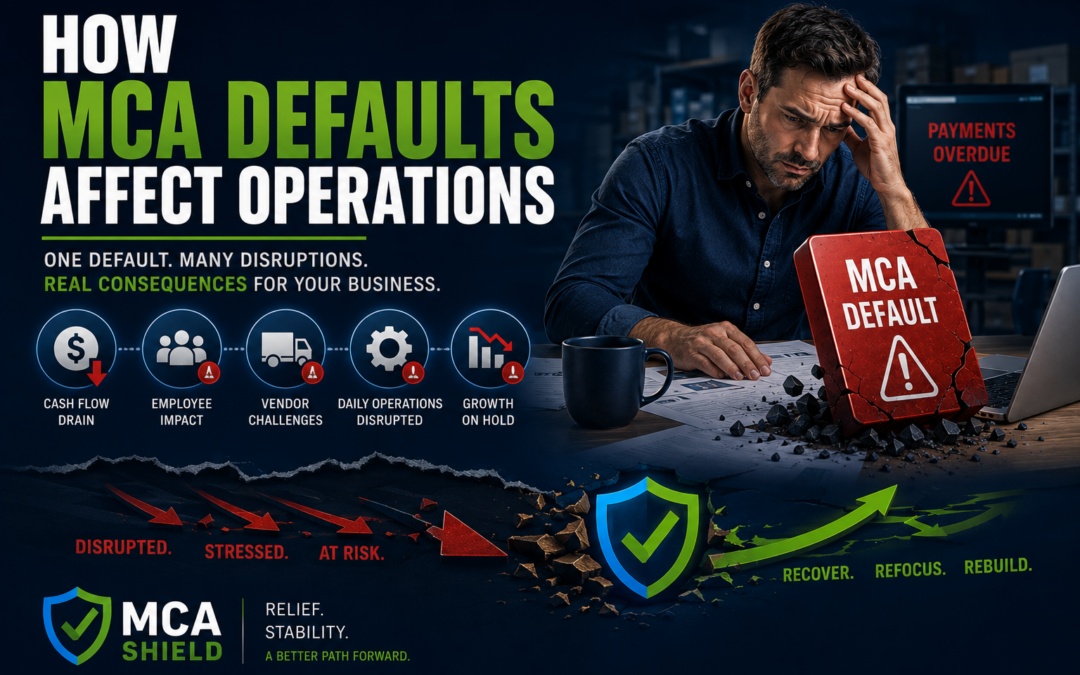
MCA default consequences can extend far beyond missed payments. When a business falls behind on a merchant cash advance, the financial pressure can begin affecting cash flow, employees, vendors, and daily operations.
Many business owners focus only on catching up with MCA payments. However, the bigger challenge is often the disruption created throughout the entire business. Limited working capital, collection pressure, and ongoing payment problems can make it harder to operate and plan ahead.
Understanding MCA default consequences early can help business owners evaluate their options before problems become more difficult to manage. MCA Shield helps businesses review their MCA debt, restructure payment obligations, and create a path toward stronger financial stability.
Schedule Your Free Consultation
What Happens When a Business Defaults on an MCA
When a business defaults on a merchant cash advance, the situation can change quickly. MCA default consequences often begin with increased communication from the funding company and pressure to resolve missed payments.
A default may occur after failed withdrawals, missed payments, or other issues outlined in the MCA agreement. Once this happens, the MCA provider may begin taking additional steps to recover the remaining balance.
Common actions after an MCA default may include:
- Increased collection calls and emails
- Requests for immediate payment arrangements
- Additional pressure on business cash flow
- Review of contract enforcement options
- Potential impacts on daily operations
For many business owners, the biggest challenge is not just the default itself. The ongoing financial pressure can make it harder to cover payroll, pay vendors, purchase inventory, and keep the business moving forward.
Understanding MCA default consequences early gives business owners more time to review their options. A structured MCA debt relief strategy may help reduce payment pressure, improve cash flow, and create a plan focused on business recovery.
How MCA Defaults Disrupt Business Cash Flow

The Impact of MCA Defaults on Payroll and Employees
One of the most stressful MCA default consequences business owners face is the impact on their employees. When cash flow becomes limited, it can become harder to manage payroll, staffing needs, and other important responsibilities.
Employees depend on a stable business. When MCA debt creates financial pressure, owners may be forced to make difficult decisions that affect the entire team.
An MCA default may contribute to challenges such as:
- Difficulty meeting payroll deadlines
- Reduced funds for hiring or employee growth
- Delays in bonuses, benefits, or other expenses
- Increased stress on owners and management
- Less flexibility when staffing needs change
For many businesses, employees are one of their greatest assets. Protecting the team often starts with protecting cash flow. Ignoring MCA problems can allow payment pressure to continue affecting daily operations.
Addressing MCA default consequences early may help business owners regain financial control. A structured MCA debt restructuring strategy can create more manageable payment terms, improve cash flow, and help businesses focus on employees, customers, and long-term stability.
How MCA Defaults Affect Vendors and Supplier Relationships
How Collection Activity Can Create Additional Business Pressure
Collection activity is one of the most challenging MCA default consequences because it can distract owners from running their business. As communication increases, many owners spend more time dealing with payment demands instead of focusing on customers, employees, and daily operations.
When MCA collection efforts begin, the pressure can affect more than finances. It may create uncertainty, make planning difficult, and add stress during an already challenging time.
MCA collection activity may lead to:
- Frequent calls, emails, or payment requests
- Additional time spent responding to funders
- Pressure to make quick financial decisions
- Concerns about contract terms and obligations
- Less focus on business growth and operations
Many business owners react by trying to find a quick solution. However, taking another advance or agreeing to unrealistic payments may create even more financial strain.
Understanding MCA default consequences and creating a clear recovery strategy can help reduce pressure. Reviewing your MCA agreements and exploring debt restructuring options may help your business regain control and focus on long-term stability.
Common Mistakes Businesses Make After an MCA Default
How MCA Debt Restructuring Can Help Stabilize Operations
Rebuilding Business Stability After an MCA Default
Recovering from an MCA default requires more than solving immediate payment problems. A strong recovery plan focuses on rebuilding cash flow, protecting daily operations, and creating a more stable financial foundation.
While MCA default consequences can create serious challenges, businesses may still have options. Taking the right steps can help owners move away from constant financial pressure and back toward running their company.
A successful recovery strategy often focuses on:
- Reducing overwhelming payment obligations
- Creating a realistic cash flow plan
- Strengthening vendor and supplier relationships
- Avoiding additional high-pressure funding
- Preparing the business for future growth
Every business situation is different. The key is creating a strategy based on current revenue, expenses, and long-term goals instead of relying on temporary solutions.
MCA Shield helps business owners address MCA default consequences through customized debt restructuring strategies. By improving payment terms and reducing financial pressure, businesses can begin moving from survival mode toward stability and growth.