ClickCease

Business owners often compare MCA funding and traditional business loans when they need fast access to capital. While both provide financing, they operate very differently. Understanding those differences is essential because the repayment structure, total cost, and impact on cash flow can vary significantly.

This guide explains how MCA funding differs from loans, outlines the advantages and disadvantages of each option, and explores what businesses can do if MCA payments become difficult to manage. By understanding your financing options, you can make more informed decisions and avoid costly financial mistakes.

Get an Instant Payment Reduction Quote

What Is MCA Funding?

Merchant Cash Advance (MCA) funding is an alternative financing solution that provides businesses with quick access to working capital. Unlike a traditional business loan, an MCA is not based on borrowing a fixed amount with interest. Instead, a funding company purchases a portion of a business’s future receivables at a discount and collects repayment through ongoing sales or scheduled ACH withdrawals.

Because MCA funding often requires less documentation and can be approved quickly, it has become a popular option for businesses that may not qualify for conventional financing. However, the convenience and speed often come with higher repayment costs and repayment structures that can place significant pressure on daily cash flow.

How Merchant Cash Advances Work

With an MCA, a funding company provides your business with a lump sum upfront. In return, you agree to repay a predetermined amount that is calculated using a factor rate rather than a traditional interest rate.

Many MCA providers collect payments through daily or weekly ACH withdrawals from your business bank account. Some agreements instead use a percentage of future credit card or debit card sales. Because payments are made frequently, business owners may notice the impact on cash flow much sooner than they would with a traditional monthly loan payment.

Why MCA Funding Is Different From Traditional Loans

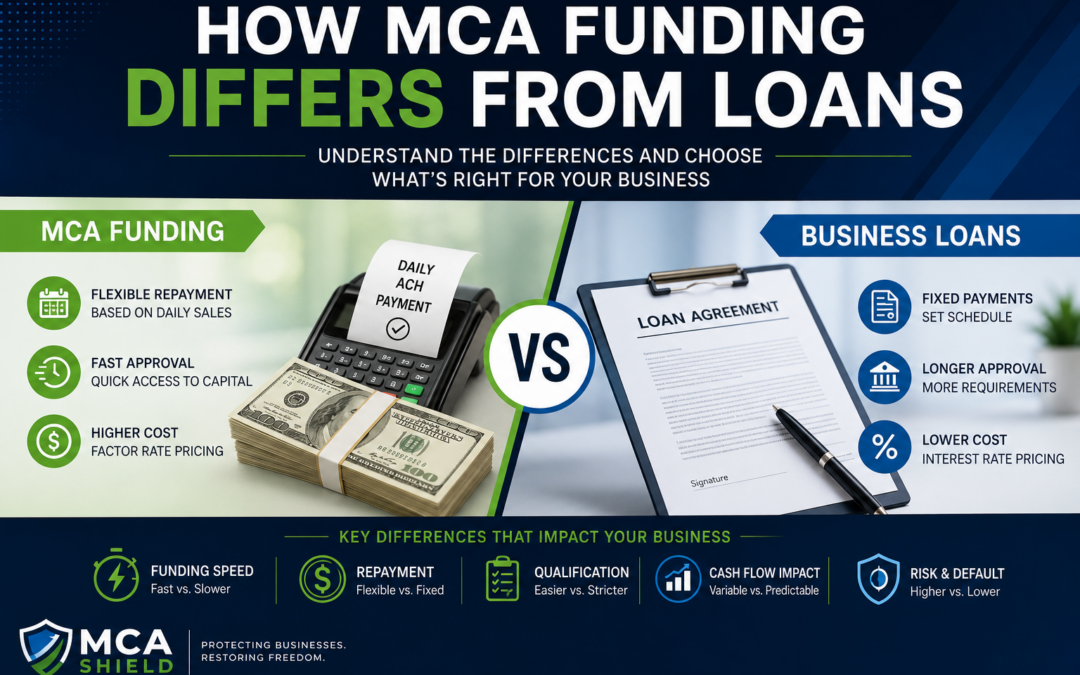
The biggest difference between MCA funding and traditional business loans is the structure of the transaction. A traditional loan involves borrowing money and repaying it with interest over a fixed period. MCA funding, on the other hand, is structured as the purchase of future business receivables rather than a conventional loan.

Other important differences include:

  • Repayment frequency: MCA payments are often collected daily or weekly, while business loans typically have monthly payments.
  • Pricing: MCAs use factor rates instead of annual interest rates, making it more difficult to compare total financing costs.
  • Approval process: MCA providers generally focus on business revenue rather than credit scores, allowing for faster approvals.
  • Funding speed: Businesses can often receive MCA funding within days, while traditional loans may take several weeks.

Understanding these differences helps business owners choose the financing option that best aligns with their operational needs and long-term financial goals.

How Repayment Is Based on Future Sales

One of the defining characteristics of MCA funding is that repayment is tied to your business’s future revenue rather than a traditional loan schedule. Depending on the agreement, repayment may be collected as a percentage of daily sales or through fixed ACH withdrawals that are designed around your anticipated cash flow.

While this structure can provide fast access to capital, it can also become challenging during periods of slower revenue. Frequent withdrawals may reduce the cash available for payroll, inventory, rent, and other operating expenses. As a result, some businesses seek MCA relief, MCA consolidation, or MCA settlement solutions when payments begin affecting their ability to operate successfully.

Understanding how repayment works before accepting MCA funding can help business owners avoid financial strain and make more informed borrowing decisions.

How Traditional Business Loans Work

Traditional business loans have long been a common financing option for companies that need capital to expand, purchase equipment, hire employees, or manage operating expenses. Unlike MCA funding, a business loan provides a fixed amount of money that is repaid over a predetermined period with scheduled monthly payments.

While the approval process for a traditional loan is often more detailed and takes longer than an MCA, borrowers typically benefit from lower borrowing costs, predictable repayment schedules, and greater long-term financial stability.

Fixed Loan Amounts

When a business is approved for a traditional loan, it receives a fixed loan amount based on the lender’s evaluation of the company’s financial health and borrowing needs. The borrower knows exactly how much money is being received and exactly how much principal must be repaid over the life of the loan.

This predictable structure allows business owners to budget more effectively because the loan balance decreases over time as payments are made. Unlike MCA funding, the repayment amount is not based on future sales or fluctuating business revenue.

Interest Rates and Repayment Terms

Traditional business loans are typically repaid through fixed monthly payments that include both principal and interest. Before accepting the loan, borrowers know the interest rate, repayment schedule, loan maturity date, and estimated total borrowing cost.

Many lenders offer repayment terms ranging from one to ten years or longer, depending on the loan type and purpose. Because payments remain consistent throughout the repayment period, businesses often find it easier to forecast expenses and manage cash flow.

Compared to MCA funding, traditional business loans generally have lower financing costs. However, qualifying for these loans is often more difficult and the funding process usually takes longer.

Typical Qualification Requirements

Banks and traditional lenders usually perform a thorough review before approving a business loan. While requirements vary, lenders commonly evaluate:

  • Business credit and owner credit history
  • Time in business
  • Annual revenue and profitability
  • Business and personal financial statements
  • Tax returns
  • Available collateral, when required
  • Debt-to-income or debt-service coverage ratios

Because lenders assume more risk over a longer repayment period, they often require stronger financial documentation than MCA providers. Businesses with established revenue, solid credit, and healthy cash flow generally have the best chance of qualifying for favorable loan terms.

Although traditional loans are not the right fit for every business, they often provide more affordable financing than MCA funding for companies that meet the lender’s qualification requirements.

Key Differences Between MCA Funding and Business Loans
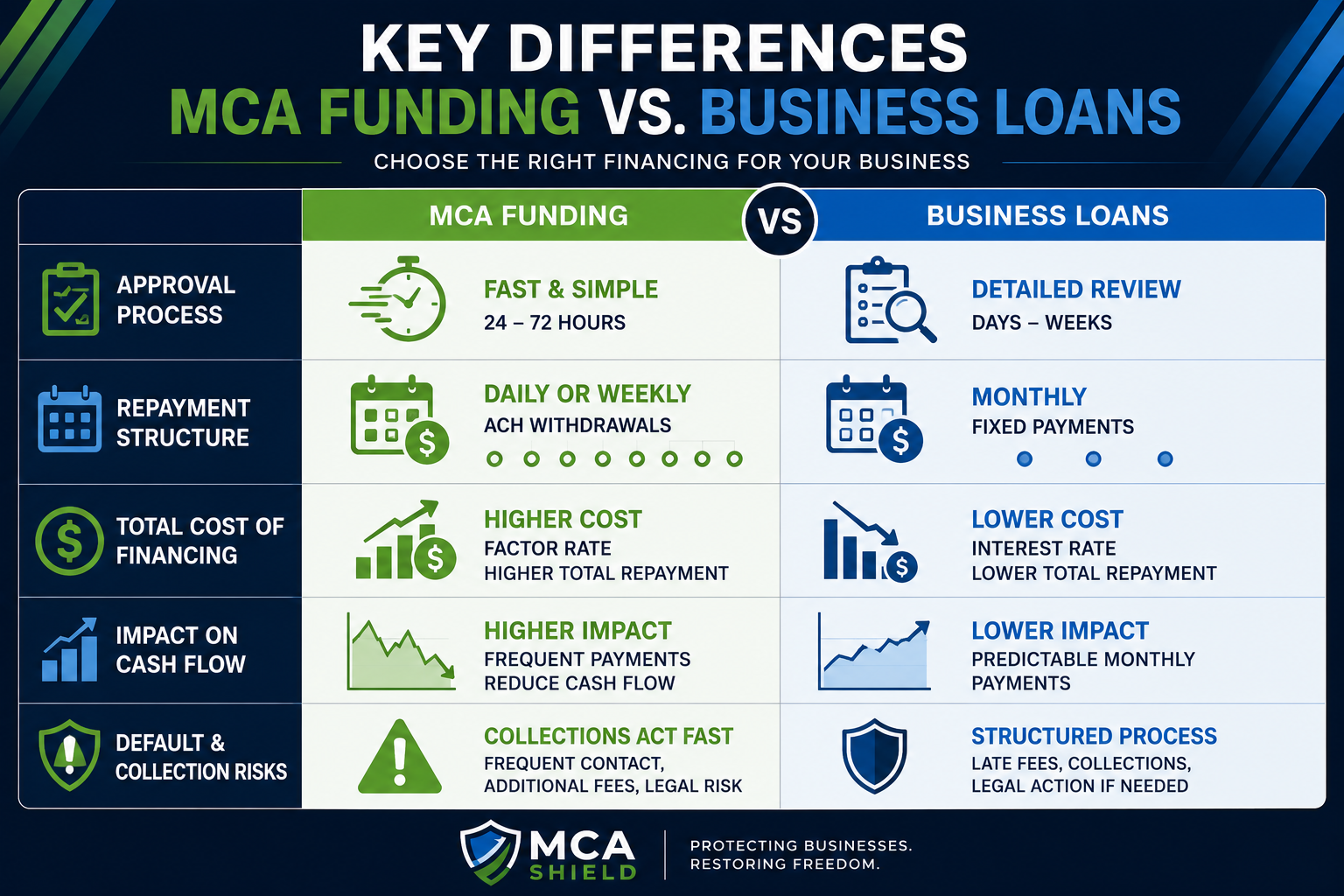
Comparison infographic showing the key differences between MCA funding and business loans, including approval process, repayment structure, financing costs, cash flow impact, and default risks for business owners.

Although MCA funding and traditional business loans both provide businesses with access to capital, they differ in several important ways. Understanding these differences can help business owners choose the financing option that best fits their financial needs while avoiding unexpected costs and cash flow challenges.

Approval Process

One of the biggest advantages of MCA funding is the speed of approval. MCA providers often focus on a business’s recent revenue rather than its credit history. As a result, many businesses receive funding within 24 to 72 hours after submitting the required documentation.

Traditional business loans generally involve a more detailed underwriting process. Lenders may review business and personal credit, tax returns, financial statements, bank records, and other supporting documents before making a lending decision. While approval often takes longer, borrowers who qualify may receive more favorable financing terms.

Repayment Structure

The repayment structure is one of the most significant differences between MCA funding and business loans.

Traditional loans typically require fixed monthly payments over a predetermined repayment period. Business owners know exactly when payments are due and how much they will owe each month.

MCA funding is structured differently. Many MCA providers collect payments through daily or weekly ACH withdrawals, while others receive a percentage of future credit card or debit card sales. This more frequent repayment schedule can place ongoing pressure on available operating cash, especially during slower sales periods.

Total Cost of Financing

Traditional business loans generally calculate borrowing costs using an interest rate, making it easier for borrowers to compare financing options.

MCA funding usually relies on a factor rate, which determines the total repayment amount upfront. While the funding process is often faster and more flexible, the total cost of financing is frequently higher than that of a traditional business loan.

Before accepting any financing, business owners should compare:

  • Total repayment amount
  • Payment frequency
  • Estimated effect on monthly cash flow
  • Overall financing costs

Understanding these factors can help businesses avoid financing that becomes difficult to manage over time.

Impact on Business Cash Flow

Cash flow is often where businesses experience the greatest difference between MCA funding and traditional loans.

With a traditional loan, businesses generally make one scheduled payment each month, making it easier to budget for payroll, inventory, rent, and other operating expenses.

By comparison, daily or weekly MCA payments continually reduce available cash throughout the month. When multiple MCA agreements are active, these withdrawals can significantly limit working capital and make it difficult to meet normal business expenses.

For this reason, many businesses experiencing payment pressure eventually begin researching MCA relief, MCA consolidation, or MCA settlement options to improve cash flow and regain financial stability.

Default and Collection Risks

Both MCA providers and traditional lenders expect borrowers to meet their repayment obligations, but the consequences of falling behind can differ.

Traditional lenders often follow a structured collections process that may include late fees, collection activity, or legal action if payments remain unpaid.

MCA providers often respond more quickly because repayments occur daily or weekly. Missed ACH withdrawals can lead to repeated collection attempts, additional fees, increased communication from the funding company, and, in some cases, legal action. Businesses with multiple stacked MCA agreements may experience these challenges even sooner as payment obligations continue to grow.

Understanding these risks before accepting financing allows business owners to make more informed decisions. If MCA payments begin overwhelming your cash flow, exploring MCA relief, MCA consolidation, or MCA settlement options early may provide more opportunities to resolve the debt before financial pressure escalates.

Although MCA funding and traditional business loans both provide businesses with access to capital, they differ in several important ways. Understanding these differences can help business owners choose the financing option that best fits their financial needs while avoiding unexpected costs and cash flow challenges.

Approval Process

One of the biggest advantages of MCA funding is the speed of approval. MCA providers often focus on a business’s recent revenue rather than its credit history. As a result, many businesses receive funding within 24 to 72 hours after submitting the required documentation.

Traditional business loans generally involve a more detailed underwriting process. Lenders may review business and personal credit, tax returns, financial statements, bank records, and other supporting documents before making a lending decision. While approval often takes longer, borrowers who qualify may receive more favorable financing terms.

Repayment Structure

The repayment structure is one of the most significant differences between MCA funding and business loans.

Traditional loans typically require fixed monthly payments over a predetermined repayment period. Business owners know exactly when payments are due and how much they will owe each month.

MCA funding is structured differently. Many MCA providers collect payments through daily or weekly ACH withdrawals, while others receive a percentage of future credit card or debit card sales. This more frequent repayment schedule can place ongoing pressure on available operating cash, especially during slower sales periods.

Total Cost of Financing

Traditional business loans generally calculate borrowing costs using an interest rate, making it easier for borrowers to compare financing options.

MCA funding usually relies on a factor rate, which determines the total repayment amount upfront. While the funding process is often faster and more flexible, the total cost of financing is frequently higher than that of a traditional business loan.

Before accepting any financing, business owners should compare:

  • Total repayment amount
  • Payment frequency
  • Estimated effect on monthly cash flow
  • Overall financing costs

Understanding these factors can help businesses avoid financing that becomes difficult to manage over time.

Impact on Business Cash Flow

Cash flow is often where businesses experience the greatest difference between MCA funding and traditional loans.

With a traditional loan, businesses generally make one scheduled payment each month, making it easier to budget for payroll, inventory, rent, and other operating expenses.

By comparison, daily or weekly MCA payments continually reduce available cash throughout the month. When multiple MCA agreements are active, these withdrawals can significantly limit working capital and make it difficult to meet normal business expenses.

For this reason, many businesses experiencing payment pressure eventually begin researching MCA relief, MCA consolidation, or MCA settlement options to improve cash flow and regain financial stability.

Default and Collection Risks

Both MCA providers and traditional lenders expect borrowers to meet their repayment obligations, but the consequences of falling behind can differ.

Traditional lenders often follow a structured collections process that may include late fees, collection activity, or legal action if payments remain unpaid.

MCA providers often respond more quickly because repayments occur daily or weekly. Missed ACH withdrawals can lead to repeated collection attempts, additional fees, increased communication from the funding company, and, in some cases, legal action. Businesses with multiple stacked MCA agreements may experience these challenges even sooner as payment obligations continue to grow.

Understanding these risks before accepting financing allows business owners to make more informed decisions. If MCA payments begin overwhelming your cash flow, exploring MCA relief, MCA consolidation, or MCA settlement options early may provide more opportunities to resolve the debt before financial pressure escalates.

When MCA Funding Can Become Difficult to Manage

MCA funding can provide fast access to capital, but it is not always a long-term financing solution. As repayment obligations grow, many businesses find that daily withdrawals begin affecting their ability to operate efficiently. What initially solved a short-term cash flow problem can eventually create ongoing financial pressure.

Recognizing these warning signs early gives business owners more options. Many companies begin exploring MCA relief, MCA consolidation, or MCA settlement after their repayment obligations interfere with day-to-day operations.

Daily ACH Withdrawals Reduce Cash Flow

Unlike traditional business loans, which are paid monthly, many MCA agreements require daily or weekly ACH withdrawals. While each payment may seem manageable on its own, the cumulative effect can steadily reduce the cash available to operate your business.

Frequent withdrawals leave less working capital for payroll, inventory, rent, marketing, and other essential expenses. During slower sales periods, these automatic deductions can create significant financial strain and make it difficult to maintain healthy cash flow.

Multiple MCA Advances Create Stacking

When one MCA payment becomes difficult to manage, some business owners accept another advance to create temporary financial relief. This practice, commonly known as MCA stacking, often increases the problem rather than solving it.

Each additional MCA introduces another repayment obligation, resulting in multiple daily or weekly withdrawals from the same business account. As repayment amounts increase, cash flow becomes tighter and the risk of missed payments, overdrafts, and defaults also grows.

Businesses caught in the stacking cycle often seek MCA consolidation or MCA settlement to reduce payment pressure and regain financial stability.

Business Expenses Become Harder to Cover

As MCA payments consume a larger portion of daily revenue, many businesses begin struggling to meet their regular operating expenses. Payroll, inventory purchases, vendor invoices, utilities, rent, and taxes may all compete for the same limited cash.

This financial pressure can affect customer service, delay business growth, strain vendor relationships, and reduce overall profitability. In some cases, owners begin using one source of financing to cover another, creating a cycle that becomes increasingly difficult to break.

If MCA payments are making it difficult to operate your business, it may be time to explore MCA relief options. Acting early often provides more opportunities to negotiate manageable solutions before collection activity or legal action begins.

Options for Businesses Struggling With MCA Debt
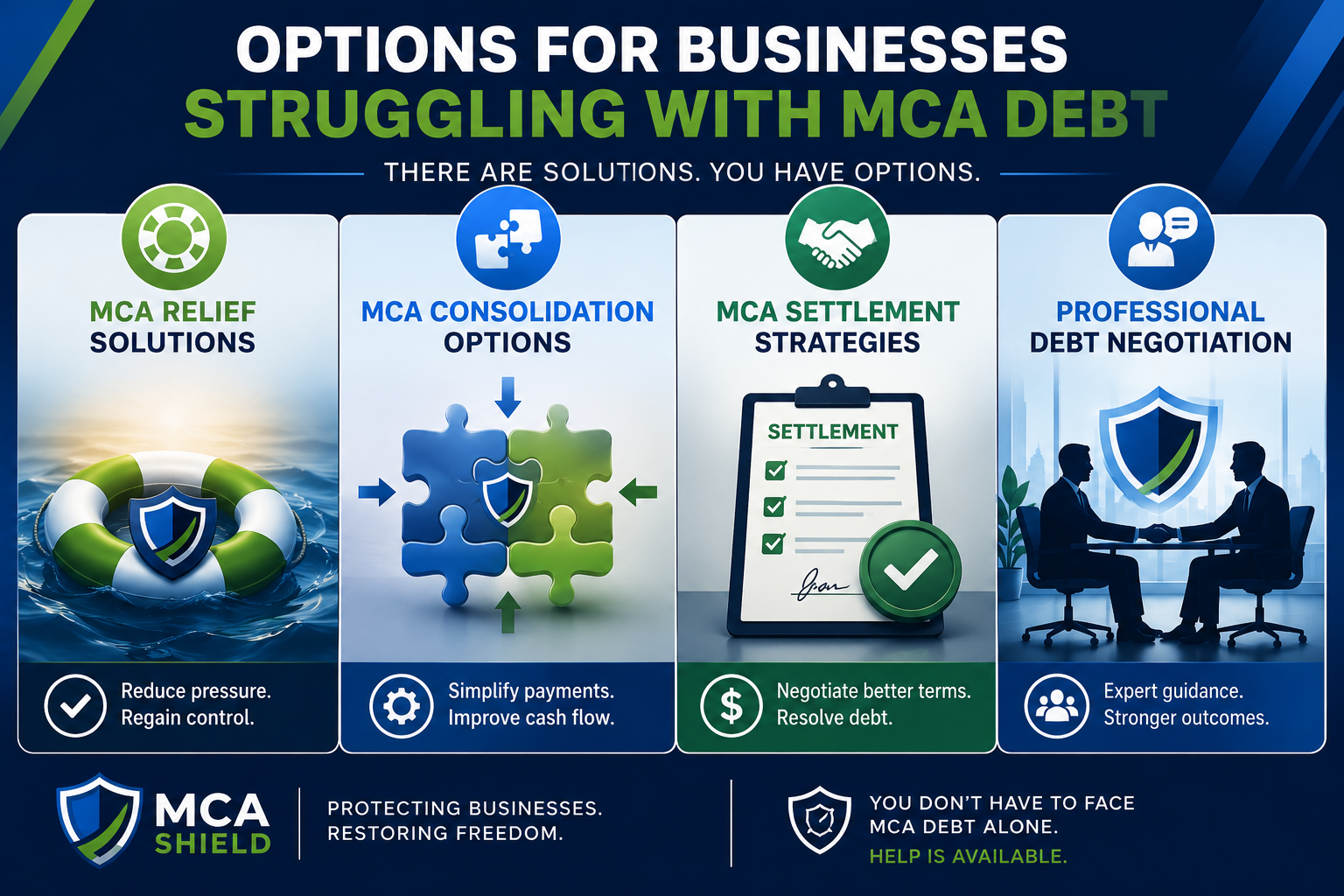
Infographic illustrating options for businesses struggling with MCA debt, including MCA relief, MCA consolidation, MCA settlement, and professional debt negotiation to improve cash flow and resolve merchant cash advance obligations.

If MCA payments have become difficult to manage, it’s important to know that you may have options beyond taking another advance or waiting until you default. The right solution depends on your business’s financial condition, the number of active MCA agreements, and your long-term goals.

Exploring your options early often provides more flexibility and can help reduce financial pressure before the situation becomes more serious.

MCA Relief Solutions

MCA relief is a broad term that describes strategies designed to help businesses regain control of overwhelming merchant cash advance obligations. Rather than relying on additional financing, MCA relief focuses on improving cash flow and creating a realistic path toward resolving existing debt.

Depending on your circumstances, an MCA relief strategy may include:

  • Reviewing all active MCA agreements
  • Evaluating your current cash flow
  • Negotiating with MCA companies
  • Reducing payment pressure
  • Developing a long-term recovery plan

The sooner you begin exploring relief options, the more opportunities you may have to protect your business and stabilize your finances.

MCA Consolidation Options

Many business owners ask about MCA consolidation after taking multiple advances. While MCA debt cannot always be consolidated the same way as traditional loans, some strategies simplify repayment and reduce financial stress.

In some situations, restructuring payment obligations or replacing multiple repayment schedules with a more manageable solution can improve cash flow. The best approach depends on your existing agreements, your revenue, and your overall financial position.

Before accepting another funding offer that promises to “solve” your debt, it’s important to understand how the proposed solution will affect your total repayment costs and future cash flow.

MCA Settlement Strategies

For some businesses, MCA settlement may provide an opportunity to resolve outstanding obligations for less than the full balance owed. Settlement typically involves negotiating directly with MCA companies to reach an agreement that both parties accept.

Successful settlements often depend on factors such as:

  • The status of each MCA agreement
  • Your business’s financial condition
  • Available settlement funds
  • The willingness of the MCA company to negotiate

Every situation is unique, so settlement is not appropriate for every business. A careful financial review can help determine whether this option aligns with your goals.

Professional Debt Negotiation

Negotiating with multiple MCA companies can be challenging, especially when daily withdrawals, collection calls, or legal concerns are already affecting your business. Working with professionals who understand the MCA industry can help you evaluate your options and develop a strategy based on your specific financial situation.

Professional debt negotiation may include:

  • Reviewing MCA contracts and repayment obligations
  • Communicating directly with MCA companies
  • Negotiating settlement or restructuring opportunities
  • Coordinating multiple MCA negotiations
  • Helping reduce financial pressure while protecting business operations

If you’re searching for how to get out of MCA loans, professional guidance can help you understand the available solutions and determine the most practical path toward financial recovery. Acting early often creates more options than waiting until the situation reaches a crisis point.

How to Get Out of MCA Loans

If you’re searching for how to get out of MCA loans, you’re not alone. Many business owners accept MCA funding to solve an immediate cash flow need, only to find that frequent payments make it difficult to keep their business running smoothly. The good news is that there are practical steps you can take to regain control of your finances and explore solutions that fit your unique situation.

The earlier you address MCA debt, the more options you may have. Waiting until payments are missed or collection efforts begin can limit your choices and increase financial stress.

Review Every MCA Agreement

Start by gathering every active MCA agreement and reviewing the terms carefully. Understanding exactly what you owe is the first step toward developing an effective debt relief strategy.

Pay close attention to:

  • Total repayment amount
  • Factor rate
  • Daily or weekly payment schedule
  • Remaining balance
  • Default provisions
  • Personal guarantee or other contractual obligations

Having a complete picture of your obligations makes it easier to evaluate potential MCA relief, MCA consolidation, or MCA settlement options.

Understand Your Cash Flow

Next, take an honest look at your business’s cash flow. Calculate how much revenue your business generates each month and compare it to your operating expenses and current MCA payments.

Ask yourself:

  • How much cash is available after MCA payments?
  • Can payroll, rent, inventory, and vendors be paid on time?
  • Are MCA withdrawals preventing business growth?
  • Is your business relying on additional financing to stay current?

Understanding your cash flow helps identify the underlying problem and allows you to make informed financial decisions moving forward.

Avoid Taking Additional MCA Funding

When cash flow becomes tight, accepting another MCA can seem like the easiest solution. Unfortunately, this often creates even greater financial pressure.

Each new advance typically adds another repayment obligation, increasing the number of daily or weekly withdrawals from your business account. This practice, known as MCA stacking, can quickly reduce available working capital and make existing debt much more difficult to manage.

Whenever possible, avoid taking additional MCA funding without fully evaluating the long-term impact on your business.

Work With an Experienced MCA Debt Relief Company

If your MCA payments have become overwhelming, working with an experienced MCA debt relief company can help you evaluate your options and develop a recovery strategy tailored to your business.

A knowledgeable team can:

  • Review your MCA agreements
  • Analyze your financial situation
  • Communicate directly with MCA companies
  • Explore MCA settlement opportunities
  • Discuss MCA consolidation strategies when appropriate
  • Help reduce payment pressure and improve cash flow

Every business faces different challenges, so there is no one-size-fits-all solution. An experienced professional can help you determine the best course of action based on your financial goals and current obligations.

Taking action early often creates more opportunities to resolve MCA debt before collection activity, legal action, or additional financial strain affects your business.

Common Mistakes Business Owners Make

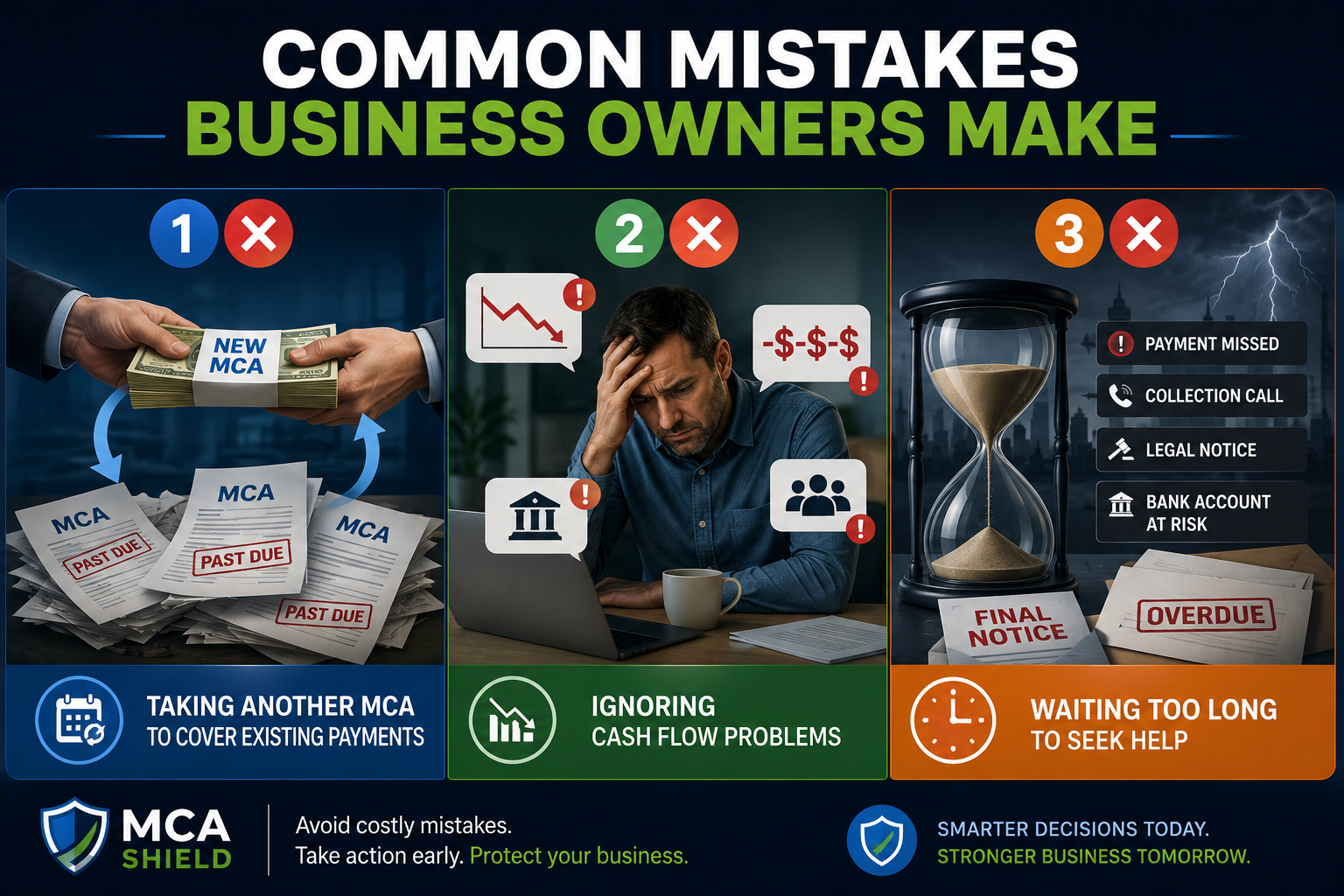
Infographic illustrating common mistakes business owners make with MCA debt, including taking another merchant cash advance, ignoring cash flow problems, and waiting too long to seek professional debt relief.

When MCA payments begin creating financial pressure, it’s natural to look for a quick solution. Unfortunately, some of the most common responses can make the situation worse. Recognizing these mistakes early can help protect your business and improve your chances of finding a successful resolution.

Taking Another MCA to Cover Existing Payments

One of the biggest mistakes business owners make is accepting another MCA to pay existing MCA obligations. While this may provide temporary relief, it often creates a cycle of debt that becomes increasingly difficult to escape.

Each new advance adds another repayment obligation, increasing the amount withdrawn from your business account each day or week. As payments accumulate, cash flow tightens, making it harder to meet operating expenses and maintain profitability.

Before accepting additional funding, carefully evaluate whether it solves the underlying problem or only postpones it.

Ignoring Cash Flow Problems

Cash flow problems rarely improve without action. If your business is consistently struggling to pay vendors, cover payroll, or maintain inventory because of MCA payments, those are signs that your financing may no longer be sustainable.

Ignoring these warning signs can lead to:

  • Missed payments
  • Overdraft fees
  • Vendor relationship issues
  • Increased collection activity
  • Greater financial stress

Regularly reviewing your cash flow allows you to identify problems early and explore solutions before they become more difficult to resolve.

Waiting Too Long to Seek Help

Many business owners wait until they have missed payments or received collection notices before looking for assistance. By that point, available options may be more limited.

Seeking professional guidance early allows you to evaluate MCA relief, MCA consolidation, or MCA settlement strategies before financial pressure escalates. Early action may also improve your ability to negotiate with MCA companies and develop a plan that supports your business’s long-term success.

The sooner you address MCA debt, the more opportunities you may have to reduce payment pressure, improve cash flow, and regain control of your business finances.

Frequently Asked Questions About MCA Funding vs Loans

Choosing between MCA funding and a traditional business loan can be confusing, especially when you’re trying to solve cash flow challenges. These frequently asked questions explain the key differences and provide guidance for businesses considering financing or looking for relief from existing MCA debt.
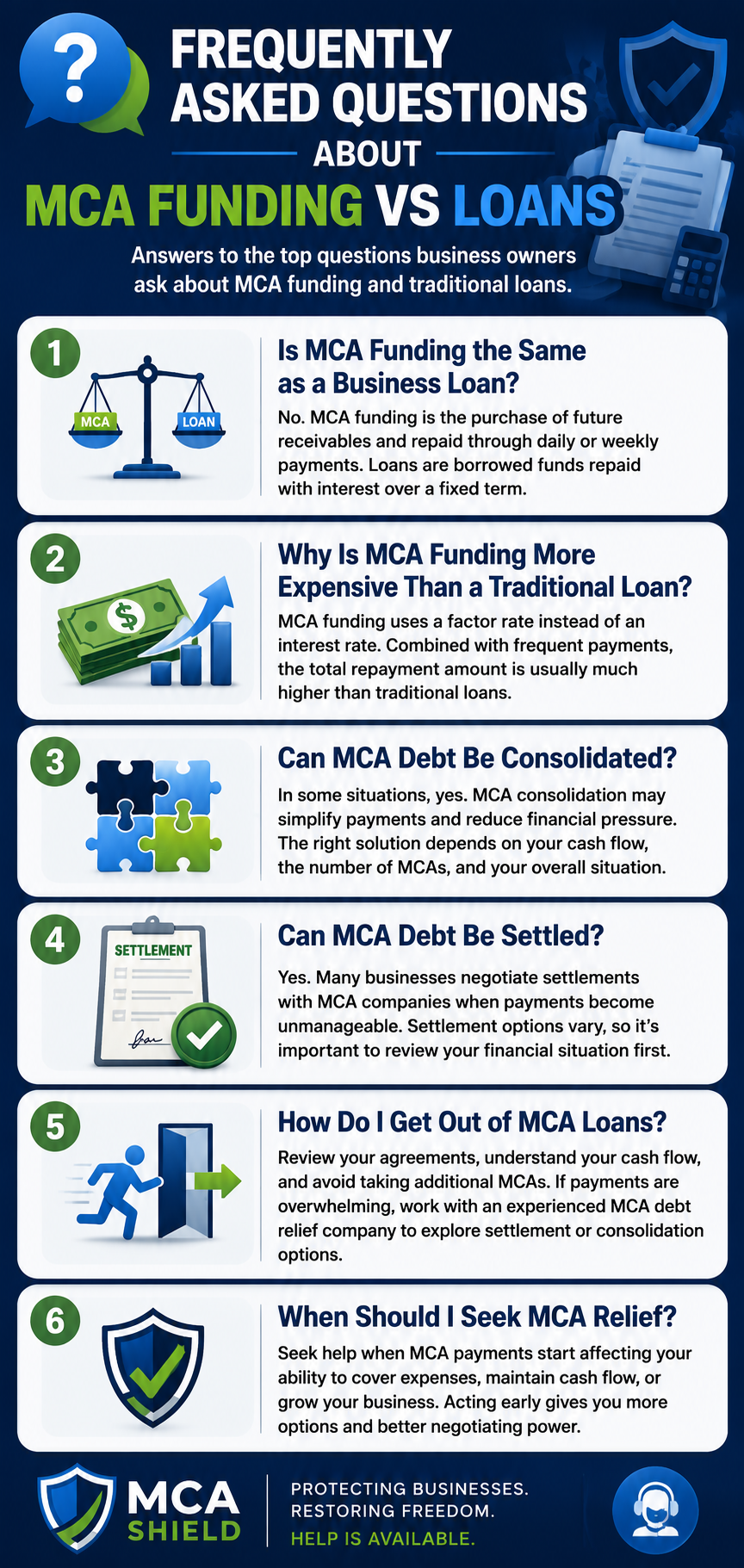
FAQ infographic answering common questions about MCA funding vs business loans, including differences between merchant cash advances and loans, MCA consolidation, MCA settlement, MCA relief, financing costs, and how to get out of MCA debt.

Take Control Before MCA Debt Gets Worse

If MCA payments are beginning to strain your cash flow, taking action now can make a meaningful difference. Many businesses wait until they’ve missed payments or collection efforts have started before seeking help. By then, available solutions may be more limited and financial pressure may be much greater.

Whether you’re exploring MCA relief, MCA consolidation, MCA settlement, or simply trying to understand how to get out of MCA loans, addressing the problem early gives you more opportunities to protect your business and improve your financial outlook.

Why Early Action Creates More Financial Options

The sooner you evaluate your MCA obligations, the more flexibility you may have to choose the solution that best fits your business. Early action can help you:

  • Reduce cash flow pressure before it becomes unmanageable.
  • Explore settlement or restructuring opportunities.
  • Avoid taking on additional MCA funding.
  • Protect vendor relationships and daily operations.
  • Develop a long-term strategy for financial stability.

Waiting rarely makes MCA debt easier to manage. Taking proactive steps today can help position your business for a stronger future.

Schedule a Free Consultation With MCA Shield

Every business has a unique financial situation, which means the right solution should be tailored to your specific needs. The experienced team at MCA Shield works with business owners to review MCA agreements, evaluate cash flow, and identify practical strategies for resolving merchant cash advance debt.

If you’re ready to regain control of your finances, schedule a free, confidential consultation with MCA Shield. We’ll help you understand your options, answer your questions, and develop a personalized plan to reduce financial pressure and move your business forward with confidence.

Get an Instant Payment Reduction Quote