
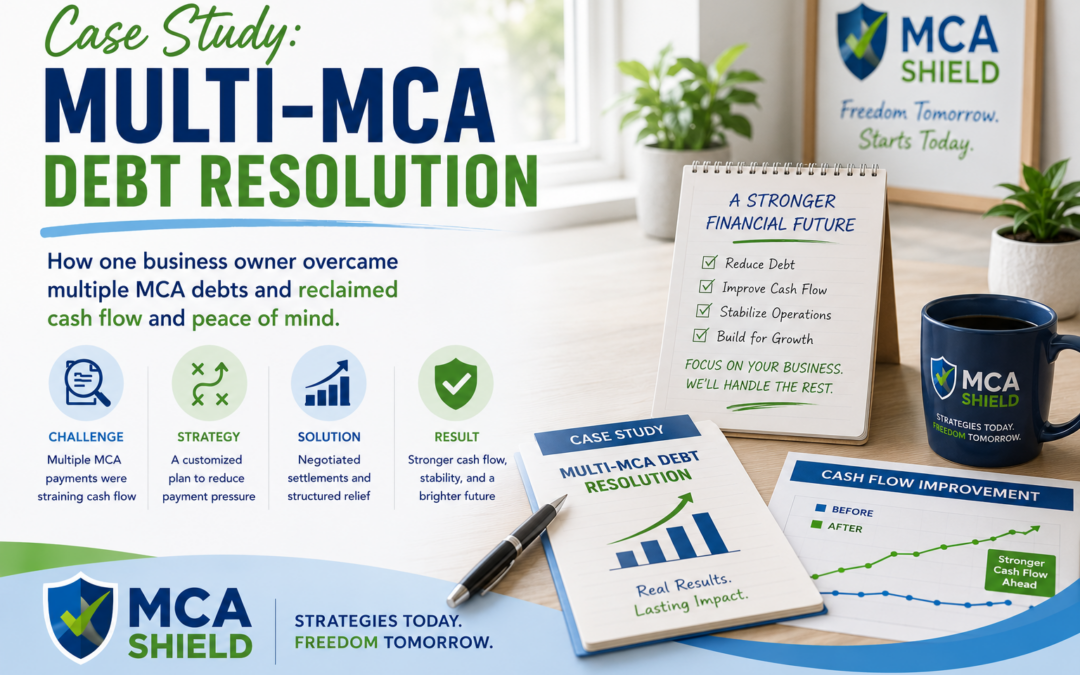
Managing one Merchant Cash Advance can be challenging. Managing several at the same time can quickly overwhelm even a successful business. As multiple daily or weekly withdrawals compete for the same revenue, cash flow often tightens, operating expenses become harder to cover, and growth plans begin to stall. Many business owners find themselves trapped in a cycle where each new MCA creates even more financial pressure.
This Multi-MCA Debt Resolution Case Study follows the experience of a business that faced mounting repayment obligations from several Merchant Cash Advances. Rather than continuing down a path of increasing debt, the company took action to evaluate its options and develop a strategy for regaining financial control. By addressing the problem early and pursuing a structured debt resolution plan, the business was able to reduce payment pressure, improve cash flow, and create a more sustainable financial future.
Every business situation is different, but the lessons from this case study demonstrate an important principle. The sooner multiple MCA obligations are addressed, the more opportunities business owners often have to protect operations, preserve working capital, and restore long-term financial stability.
Schedule Your Free Consultation
How Multiple MCA Advances Created a Cash Flow Crisis
The business initially used a Merchant Cash Advance to solve a short-term cash flow challenge. As financial pressure continued, additional MCA funding seemed like the quickest way to cover operating expenses and keep the company moving forward. Each new advance provided temporary relief, but it also added another daily repayment obligation that reduced available working capital.
Before long, several MCA payments were hitting the business account every day. Cash that should have supported payroll, inventory, rent, and vendor payments instead went toward multiple repayment schedules. The business generated revenue, yet it constantly struggled to maintain enough cash to cover essential operating expenses. Owners spent more time reacting to financial pressure than focusing on customers, employees, and growth.
The situation became increasingly difficult as repayment obligations overlapped. Instead of creating financial stability, the additional funding accelerated the cash flow crisis. Multiple MCA advances left the business with less flexibility, fewer options, and growing concern about future operations.
This case demonstrates how quickly stacked MCA obligations can overwhelm an otherwise healthy business. Without a strategy to address multiple repayment schedules, short-term funding can evolve into a long-term cash flow crisis that affects every part of the company.
Warning Signs the Business Was Trapped in a Multi-MCA Debt Cycle
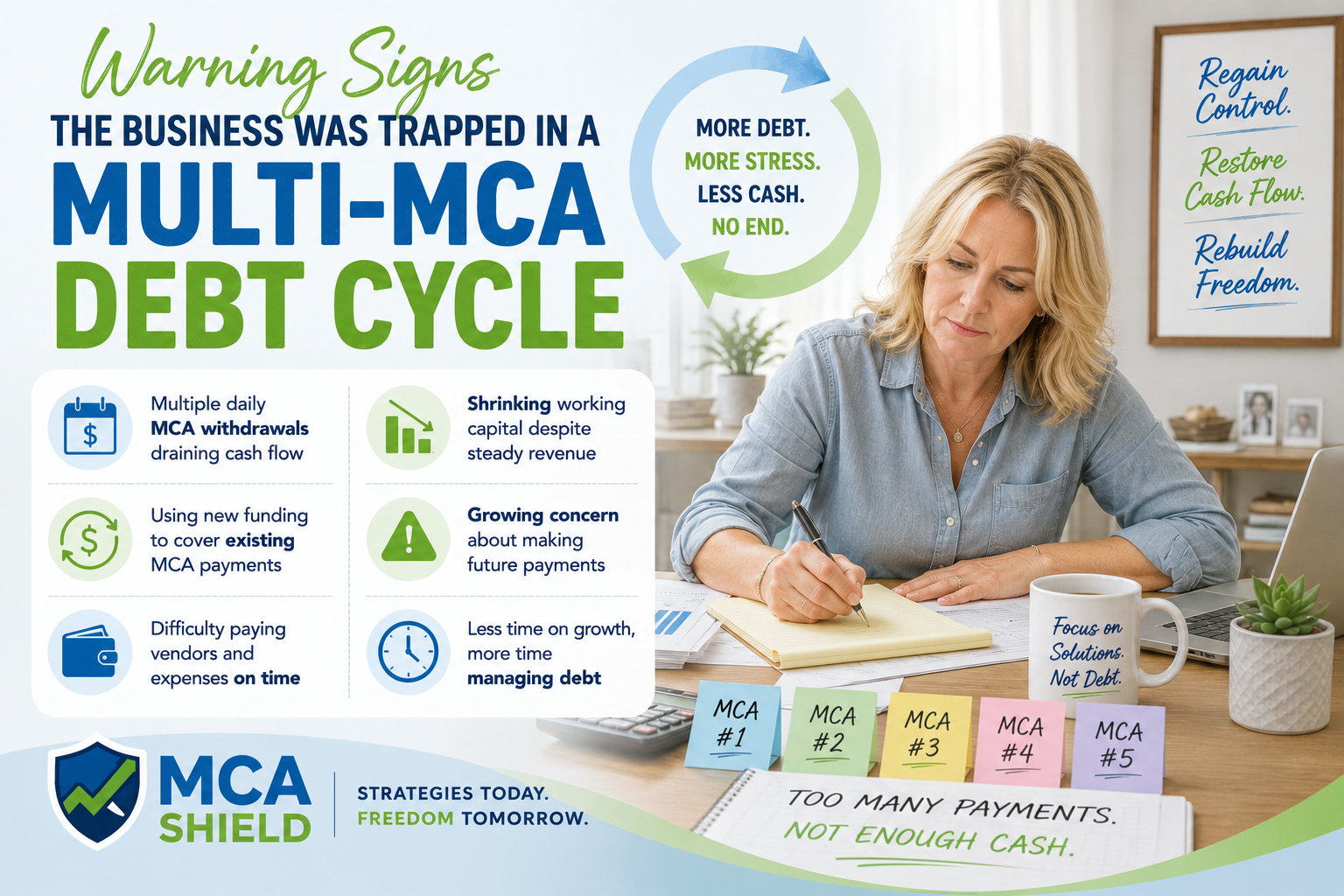
The business did not fall into a multi-MCA debt cycle overnight. The warning signs appeared gradually as each new advance placed more pressure on cash flow. What began as a manageable repayment schedule soon became a constant struggle to keep enough money in the business account. Daily operations grew more stressful, and financial flexibility continued to disappear.
Several warning signs made it clear the business needed a different strategy:
- Multiple daily MCA withdrawals draining cash flow
- Using new funding to cover existing MCA payments
- Difficulty paying vendors and operating expenses on time
- Shrinking working capital despite steady revenue
- Growing concern about making future payments
- Less time spent on growth and more time managing debt
As these challenges intensified, the business became trapped in a cycle where every financial decision revolved around repayment obligations. Cash flow problems continued to grow even though sales remained relatively stable. Instead of investing in expansion and operations, the company focused on keeping pace with multiple MCA payments.
This case highlights why early action matters. Recognizing the warning signs before additional advances accumulate can create more opportunities to regain control and avoid a deeper financial crisis.
The Financial Impact of Managing Multiple MCA Payments
Managing several Merchant Cash Advances at the same time places enormous pressure on a business’s finances. Every additional MCA introduces another daily or weekly withdrawal, leaving less working capital available for payroll, inventory, rent, marketing, and other essential expenses. Instead of using revenue to grow the business, owners often find themselves focused on keeping up with overlapping repayment schedules.
As the case study progressed, the financial impact became impossible to ignore. The business experienced several challenges that affected both daily operations and long-term planning:
- Reduced cash flow despite consistent revenue
- Difficulty covering operating expenses on time
- Limited ability to invest in business growth
- Increasing reliance on short-term funding
- Greater financial stress and uncertainty
The combination of multiple repayment obligations created a cycle that became harder to break with each passing month. Every payment reduced the flexibility needed to operate the business effectively. This case demonstrates how quickly stacked MCA payments can weaken cash flow, increase financial pressure, and shift a company’s focus from growth to survival.
Why the Business Chose MCA Debt Relief
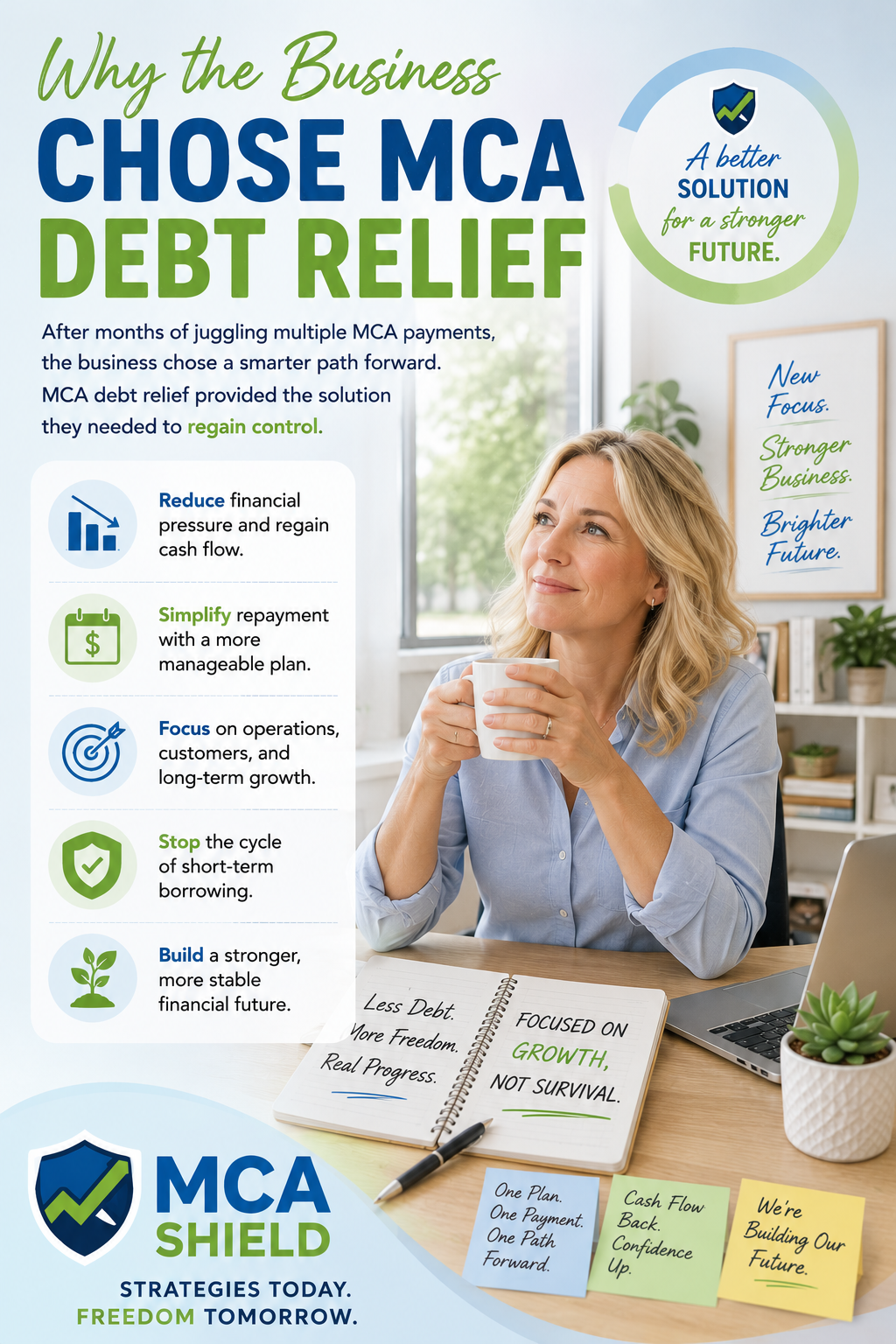
After months of juggling multiple Merchant Cash Advances, the business recognized that adding more funding would only deepen the problem. Daily repayment obligations continued to drain cash flow, leaving fewer resources for payroll, vendors, and everyday operations. The owners realized they needed a long-term solution instead of another short-term source of financing. That decision led them to explore MCA debt relief as a way to regain control of their finances.
The business chose MCA debt relief because it offered an opportunity to reduce financial pressure and create a more sustainable repayment strategy. Rather than continuing to manage several competing MCA payments, the owners focused on improving cash flow and stabilizing operations. By taking action before the situation became even more severe, the business positioned itself to rebuild financial stability and focus on long-term growth instead of constant debt management.
The Multi-MCA Debt Resolution Strategy That Was Implemented
Once the business understood the true impact of multiple Merchant Cash Advances, the focus shifted from finding more funding to creating a sustainable recovery plan. The first step involved reviewing every MCA agreement, evaluating repayment obligations, and analyzing the company’s cash flow. This process identified the greatest sources of financial pressure and helped prioritize the most effective path forward.
The debt resolution strategy centered on reducing payment pressure, improving cash flow, and restoring financial stability. Instead of allowing multiple daily withdrawals to continue draining working capital, the business pursued a structured approach designed to create more manageable repayment terms. With a clear strategy in place, the owners could redirect more revenue toward payroll, vendors, inventory, and daily operations instead of constantly reacting to overlapping MCA payments.
This case demonstrates that successful multi-MCA debt resolution requires more than simply reducing debt. It requires a thoughtful plan that addresses the underlying cash flow challenges. By implementing a structured strategy early, the business regained control of its finances and created a stronger foundation for long-term growth.
How Cash Flow Improved After MCA Debt Restructuring
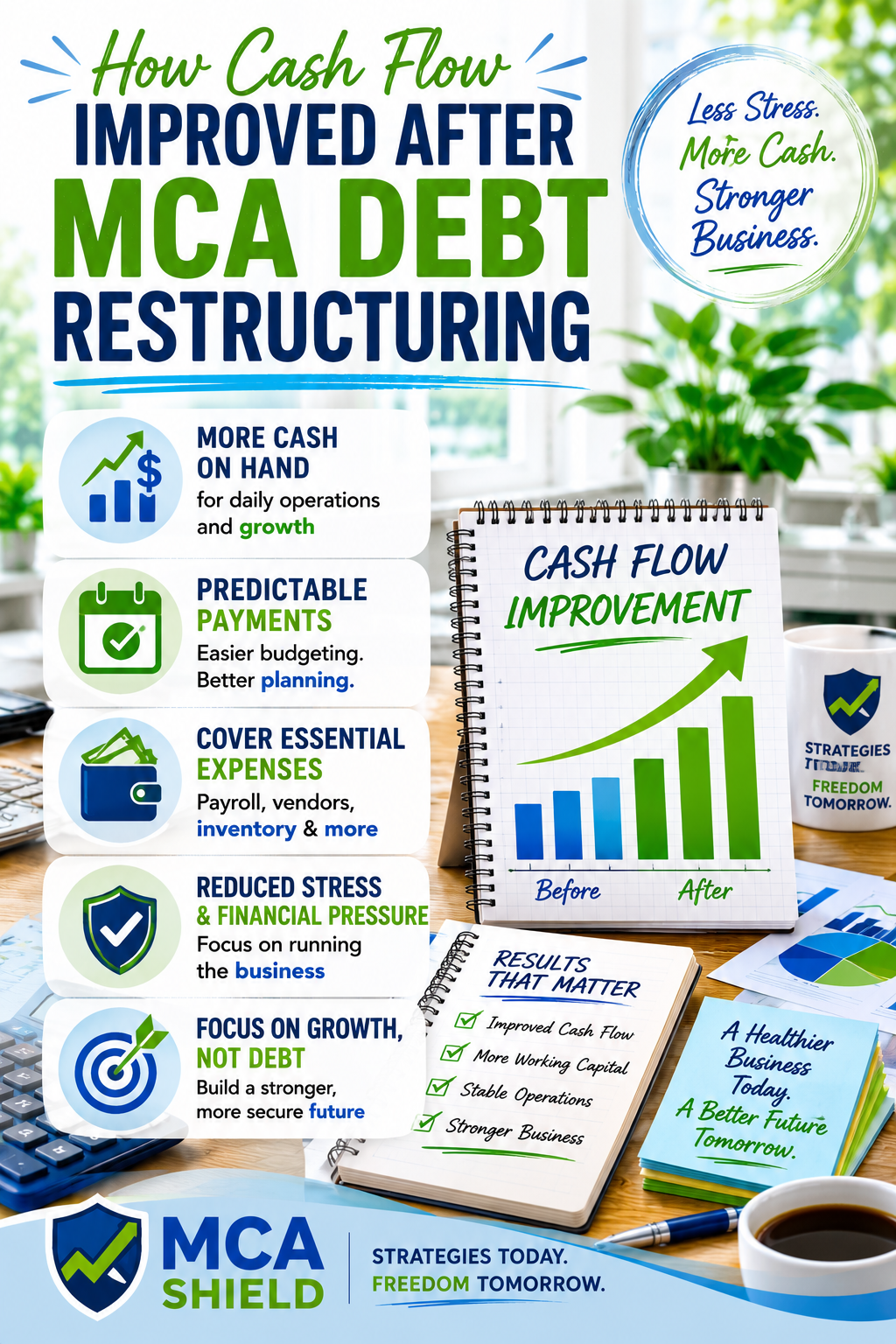
As the restructuring strategy took effect, the business began to experience meaningful improvements in day-to-day cash flow. With less revenue tied up in multiple repayment schedules, the owners gained greater flexibility to manage essential operating expenses. Instead of constantly reacting to daily withdrawals, the business could finally plan ahead with greater confidence.
The stronger cash flow created several immediate benefits:
- More working capital available for daily operations
- Improved ability to cover payroll and vendor payments
- Greater flexibility to purchase inventory and invest in the business
- Reduced financial stress for the ownership team
- More predictable budgeting and cash flow management
The improvements extended beyond the numbers. Employees, vendors, and customers all benefited from a healthier financial position. Management spent less time dealing with cash shortages and more time focusing on growth, customer service, and long-term planning. The business regained the stability needed to operate more efficiently and pursue new opportunities.
This case illustrates how MCA debt restructuring can do more than reduce payment pressure. It can restore healthy cash flow, strengthen day-to-day operations, and help a business build a more secure financial future.
Lessons Other Business Owners Can Learn From This Case Study
This case study shows that multiple Merchant Cash Advances can create serious financial challenges much faster than many business owners expect. What begins as a single funding solution can evolve into overlapping repayment obligations that strain cash flow and limit growth. The most important lesson is simple: address financial pressure early instead of waiting for the situation to become overwhelming.
Business owners facing similar challenges can learn several valuable lessons from this experience. Review every MCA agreement, monitor cash flow closely, and avoid using new advances to repay existing ones. Most importantly, explore debt relief options before missed payments, collection activity, or additional borrowing reduce your flexibility. Early action often creates more opportunities to stabilize operations and protect the long-term health of the business.
Every business has a different financial situation, but the principle remains the same. A structured plan, combined with timely action, can help restore cash flow, reduce financial pressure, and put the focus back on running a successful business instead of managing debt.
When to Seek Professional Help for Multiple MCA Debt
Managing one Merchant Cash Advance is challenging enough. Managing several at the same time often requires a different level of planning and expertise. If multiple MCA payments leave you struggling to cover payroll, vendors, rent, or other operating expenses, it may be time to seek professional help. Waiting for the situation to improve on its own often limits your options and increases financial pressure.
Professional guidance can help you understand the full impact of your MCA obligations and evaluate practical solutions. An experienced team can review your agreements, analyze cash flow, and develop a strategy tailored to your business. The goal is to reduce payment pressure, improve cash flow, and create a realistic path toward financial stability. Taking action early often gives business owners more flexibility, more MCA negotiating opportunities, and a better chance to regain control before the debt cycle becomes even more difficult to overcome.