
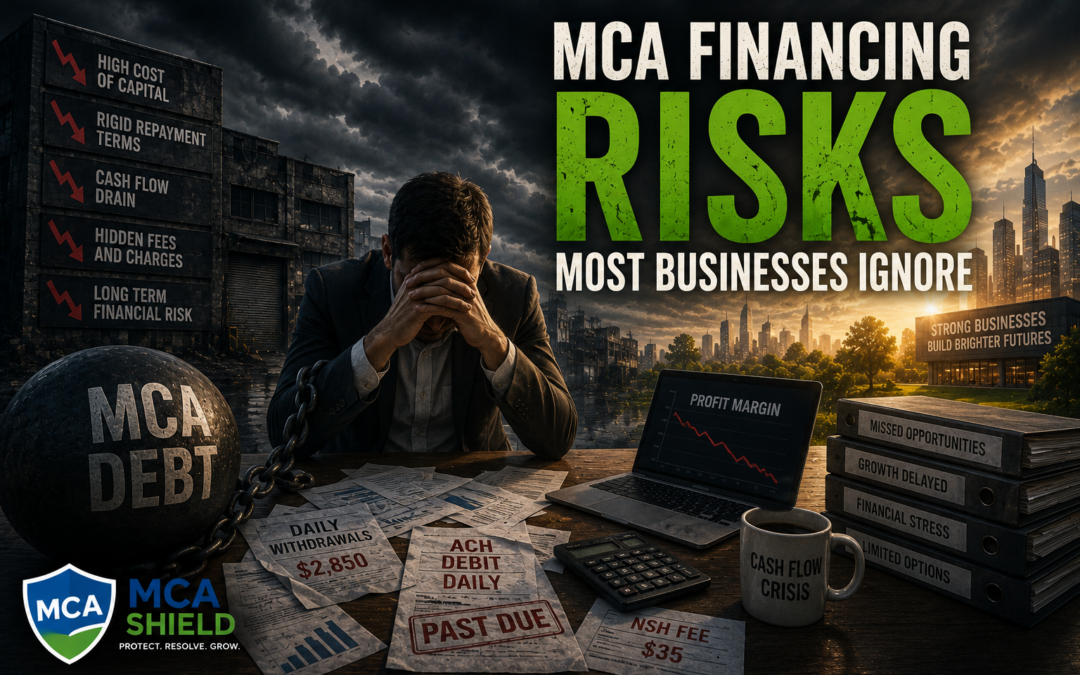
Merchant Cash Advance funding often appeals to business owners because of its speed and accessibility. When cash flow becomes tight, fast funding can seem like the perfect solution. However, many businesses focus on the immediate benefits and overlook the long-term risks that may come with MCA financing. What appears manageable at the beginning can create significant financial pressure over time.
Some of the most commonly overlooked MCA financing risks include:
- Daily or weekly payment obligations
- High total repayment costs
- Reduced working capital
- The temptation to take additional MCA funding
- Collection and default risks
- Limitations on future financing options
Understanding these risks does not mean MCA financing is always the wrong choice. It does mean business owners should carefully evaluate the potential impact before signing an agreement. The more you understand about MCA financing risks, the better prepared you will be to protect cash flow, preserve growth opportunities, and make informed financial decisions.
How MCA Repayment Structures Create Hidden Cash Flow Risks
Many business owners focus on how much funding they will receive and pay less attention to how the repayment structure affects daily operations. This is where hidden cash flow risks often emerge. MCA payments typically occur through daily or weekly withdrawals, which means money leaves the business on a constant basis regardless of other financial obligations.
At first, the payments may seem manageable. However, cash flow can change quickly due to seasonal fluctuations, unexpected expenses, or slower sales. When revenue declines, MCA withdrawals continue. As a result, businesses often have less flexibility to cover payroll, inventory purchases, rent, and vendor payments. What looks affordable during strong revenue periods can become a significant burden during slower months.
The risk becomes even greater when multiple MCA obligations exist at the same time. Each withdrawal reduces available working capital and increases pressure on future revenue. Over time, these repayment structures can force businesses into reactive financial decisions instead of strategic growth planning. Understanding these hidden cash flow risks helps business owners evaluate MCA financing more carefully before committing to long-term repayment obligations.
Why MCA Funding Can Lead to a Cycle of Additional Borrowing
Merchant Cash Advance funding often provides fast access to capital when a business needs cash quickly. For many owners, that speed can feel like a lifeline during periods of financial stress. However, the repayment structure that makes MCA funding accessible can also create challenges that increase the need for future borrowing. What begins as a short-term solution can sometimes develop into a long-term financial cycle.
As daily or weekly payments reduce available working capital, businesses may struggle to cover operating expenses and unexpected costs. When cash flow tightens, some owners seek additional funding to bridge the gap. Common reasons include:
- Covering existing MCA payments
- Meeting payroll obligations
- Purchasing inventory
- Paying vendors and suppliers
- Managing seasonal revenue fluctuations
Over time, each new funding obligation can add more pressure to future cash flow. The result is a cycle where businesses borrow to solve problems created by previous borrowing. Understanding how this pattern develops can help business owners recognize warning signs early and make more informed financing decisions before debt becomes difficult to manage.
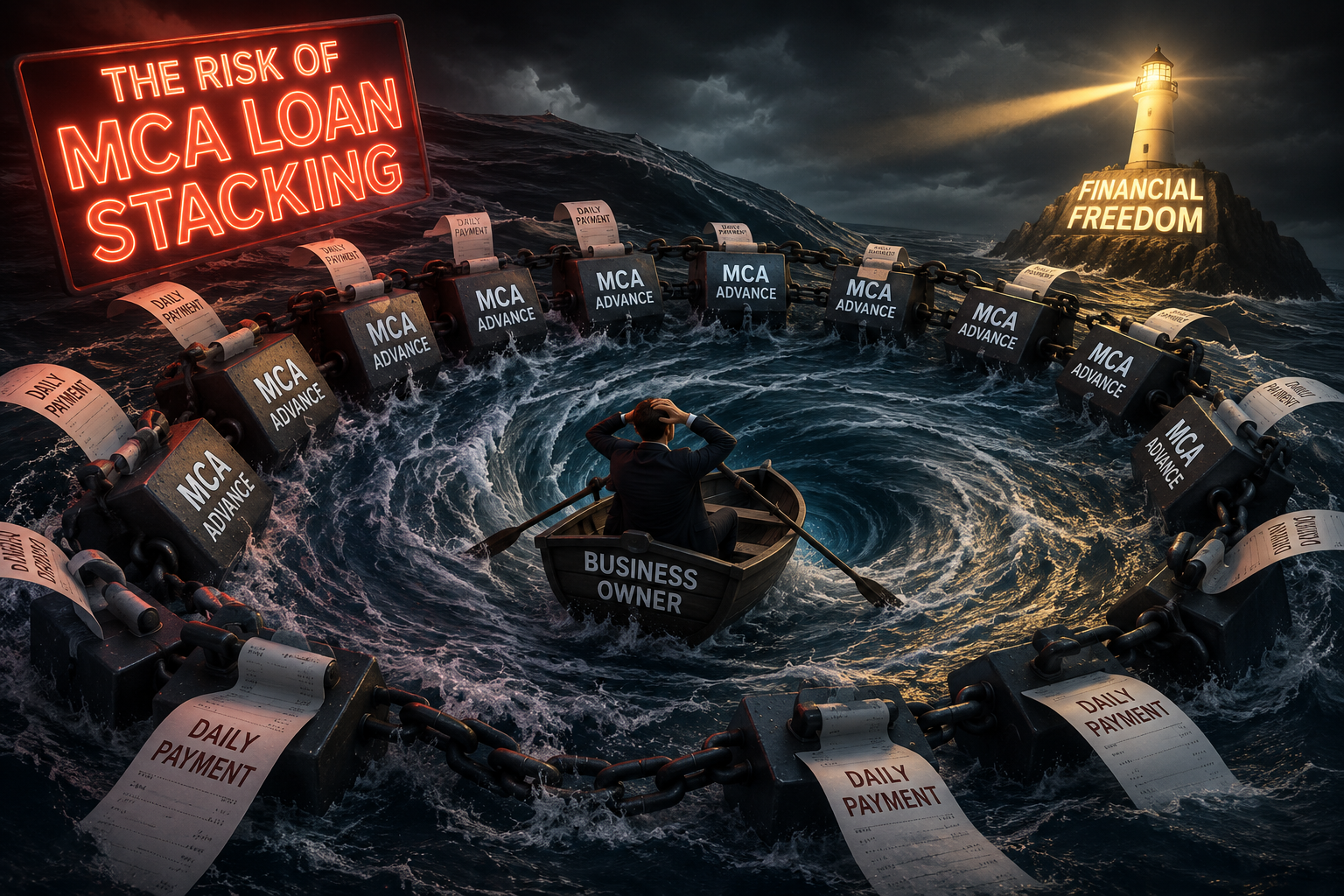
The Risk of MCA Loan Stacking
When cash flow becomes tight, taking on another Merchant Cash Advance can seem like a quick solution. Unfortunately, MCA loan stacking often creates far more problems than it solves. Each new advance introduces another repayment obligation, which reduces available working capital and increases pressure on future revenue. What starts as a temporary fix can quickly become a cycle that is difficult to escape.
Many business owners do not realize how quickly stacked MCA payments can affect daily operations. As multiple withdrawals hit the business account, cash flow becomes more difficult to manage and financial flexibility begins to disappear. Common risks of MCA loan stacking include:
- Multiple daily or weekly payment obligations
- Reduced working capital
- Increased reliance on additional borrowing
- Greater risk of payment defaults
- Growing collection pressure
- Difficulty qualifying for other financing options
The biggest danger is often the cumulative effect. Each additional MCA increases financial strain while reducing the cash available to operate and grow the business. Understanding these risks can help business owners recognize warning signs early and avoid a debt cycle that becomes increasingly difficult to manage.
How Daily ACH Withdrawals Can Disrupt Business Operations
Daily ACH withdrawals can create operational challenges that extend far beyond the repayment itself. When funds leave a business account every day, owners often have less flexibility to manage normal expenses and respond to unexpected costs. Even businesses with strong revenue can feel pressure when cash disappears before it can be used to support daily operations.
As working capital becomes tighter, routine business functions may become more difficult to manage. Owners may delay inventory purchases, postpone equipment repairs, or struggle to maintain consistent cash reserves. Daily ACH withdrawals can also make it harder to cover payroll, pay vendors on time, and take advantage of growth opportunities. Over time, this constant pressure can shift a business’s focus away from growth and toward simply keeping up with ongoing financial obligations.
Contract Terms Many Business Owners Overlook
Many business owners focus on the funding amount and approval process while paying less attention to the details buried in the agreement. Unfortunately, some of the most important MCA financing risks are found within the contract itself. Overlooking these terms can lead to unexpected costs, collection issues, and cash flow challenges long after the funding arrives.
Several contract provisions deserve careful review, including daily ACH withdrawal requirements, personal guarantee language, default provisions, reconciliation clauses, and UCC lien filings. Some agreements also contain terms that affect how disputes are handled or what actions a funding company may take if payments become difficult. What seems like standard contract language can have a significant impact on a business owner’s rights and financial flexibility.
Understanding the contract before signing can help prevent costly surprises later. Taking the time to review key provisions and ask questions may reveal risks that are easy to miss during the rush to obtain funding. For many businesses, a careful contract review is one of the most important steps in making an informed financing decision.
Why MCA Renewals Often Increase Financial Pressure
Many business owners view an MCA renewal as a way to gain additional working capital and relieve short-term cash flow challenges. While a renewal can provide immediate funds, it often adds new financial obligations before the existing advance has been fully resolved. As a result, the business may face even greater repayment pressure moving forward.
MCA renewals can increase financial strain in several ways:
- Higher total repayment obligations
- Continued daily or weekly ACH withdrawals
- Less available working capital
- Greater dependence on future funding
- Increased difficulty managing cash flow
What begins as a temporary solution can gradually create a cycle where businesses rely on new funding to offset the impact of existing payments. Each renewal may solve today’s problem while making tomorrow’s cash flow challenges more difficult. Understanding the long-term impact of MCA renewals can help business owners evaluate whether additional funding truly supports the business or simply increases financial pressure over time.
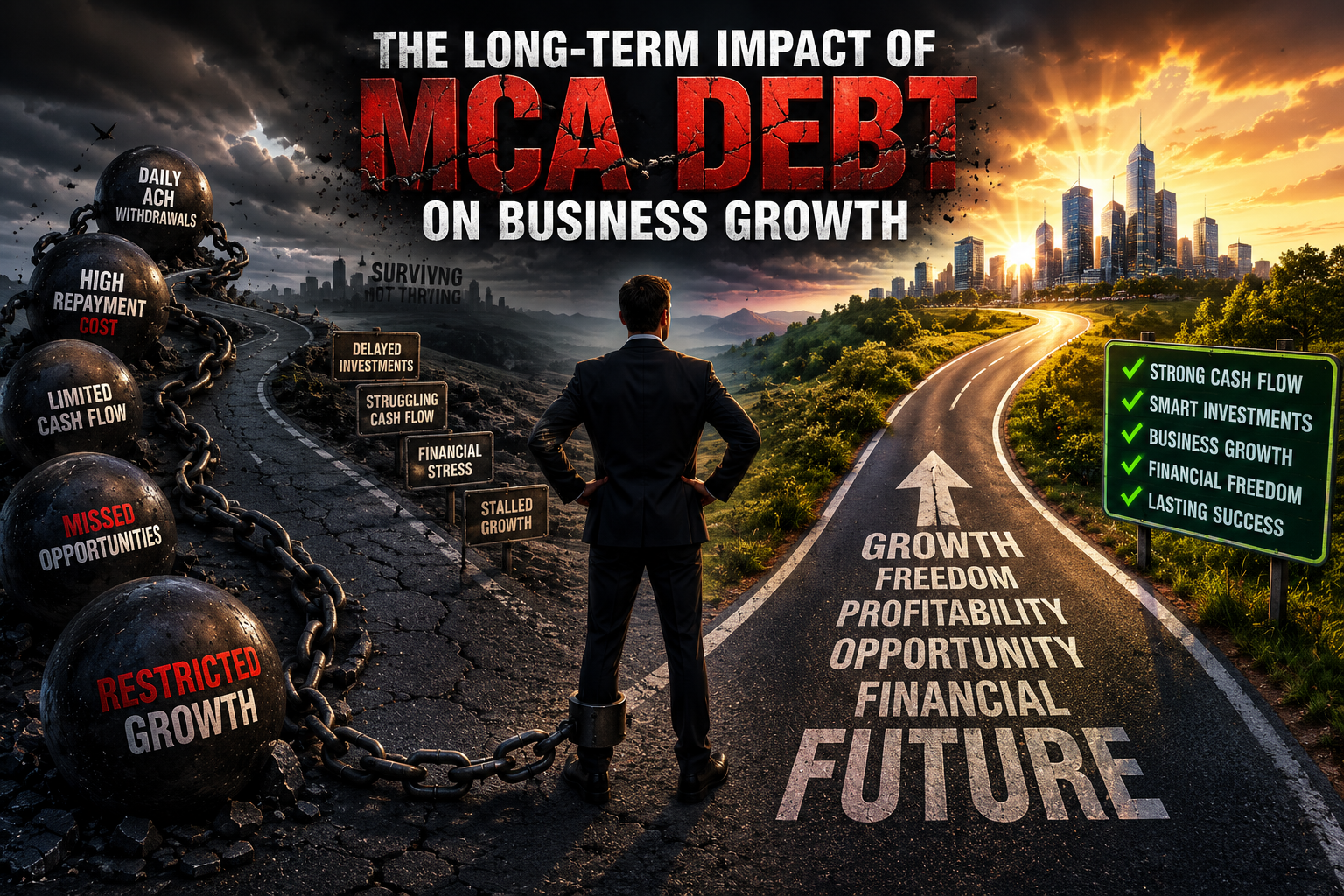
The Long-Term Impact of MCA Debt on Business Growth
MCA debt can affect a business long after the initial funding has been spent. While fast access to capital may solve an immediate cash flow problem, ongoing repayment obligations often reduce the resources available for future growth. As daily or weekly withdrawals continue, many businesses find it harder to invest in the very activities that drive long-term success.
Growth requires working capital. Businesses need available cash to hire employees, expand marketing efforts, purchase equipment, increase inventory, and pursue new opportunities. When a significant portion of revenue goes toward MCA payments, those investments often take a back seat. Over time, businesses may delay expansion plans, postpone important upgrades, and miss opportunities that could strengthen their competitive position.
The impact frequently extends beyond growth initiatives. Constant payment pressure can make it more difficult to build cash reserves and respond to unexpected challenges. Owners may spend more time managing short-term cash flow concerns and less time focusing on strategic planning. As MCA debt persists, the business can become trapped in a cycle of maintenance rather than growth.
Understanding the long-term effects of MCA debt helps business owners evaluate the true cost of financing decisions. The earlier a company addresses repayment challenges, the more opportunities it may have to protect cash flow, restore financial flexibility, and create a stronger foundation for future growth.
Warning Signs MCA Financing Is Becoming a Problem
MCA financing often becomes a problem gradually rather than all at once. Many business owners continue making payments while overlooking the growing strain on cash flow. The earlier you recognize the warning signs, the more options you may have to address the situation before it becomes unmanageable.
Several red flags can indicate that MCA financing is creating financial pressure:
- Struggling to maintain adequate cash flow
- Using one MCA to pay another
- Falling behind on vendor payments
- Delaying payroll, inventory purchases, or essential expenses
- Experiencing frequent overdrafts or bounced ACH payments
- Relying on new financing to cover operating costs
When MCA payments begin influencing daily business decisions, the situation deserves careful attention. If growth has stalled, cash reserves continue shrinking, or repayment obligations feel impossible to manage, MCA financing may have shifted from a solution to a serious financial challenge. Taking action at the first signs of trouble can help protect your business and prevent deeper financial problems from developing.
How MCA Debt Relief May Help Reduce Financial Pressure
When MCA payments consume too much of a business’s revenue, financial pressure can build quickly. Daily or weekly withdrawals often leave less cash available for payroll, inventory, rent, and other operating expenses. MCA debt relief may help create a path toward greater financial stability by addressing repayment challenges before they become more severe.
Depending on the situation, debt relief solutions may include restructuring existing obligations, negotiating more manageable terms, or exploring settlement opportunities. The goal is often to improve cash flow and reduce the burden created by aggressive repayment schedules. As payment pressure decreases, businesses may gain more flexibility to focus on operations, growth, and long-term planning.
Every business faces unique challenges, but taking action early can create more options. For many owners, MCA debt relief is not just about reducing debt—it is about regaining control of cash flow and building a stronger financial future.
Steps Businesses Can Take to Avoid Serious MCA Debt Problems
The best way to avoid serious MCA debt problems is to recognize financial pressure early and take action before the situation escalates. Many business owners wait until cash flow becomes critical, which often limits the number of available solutions. A proactive approach can help protect working capital and reduce the risk of falling into a cycle of ongoing borrowing.
Start by reviewing all MCA agreements and understanding exactly how much your business pays each day or week. Monitor cash flow closely and identify areas where repayment obligations affect operations. If MCA payments are making it difficult to cover essential expenses, address the issue before additional debt becomes necessary. Avoid taking new MCA funding simply to keep up with existing payments whenever possible.
Business owners should also maintain accurate financial records and regularly evaluate their overall debt obligations. Seeking professional guidance early can provide valuable insight into available options and potential risks. The sooner you address MCA-related challenges, the more opportunities you may have to improve cash flow, preserve growth potential, and avoid more serious financial problems.