
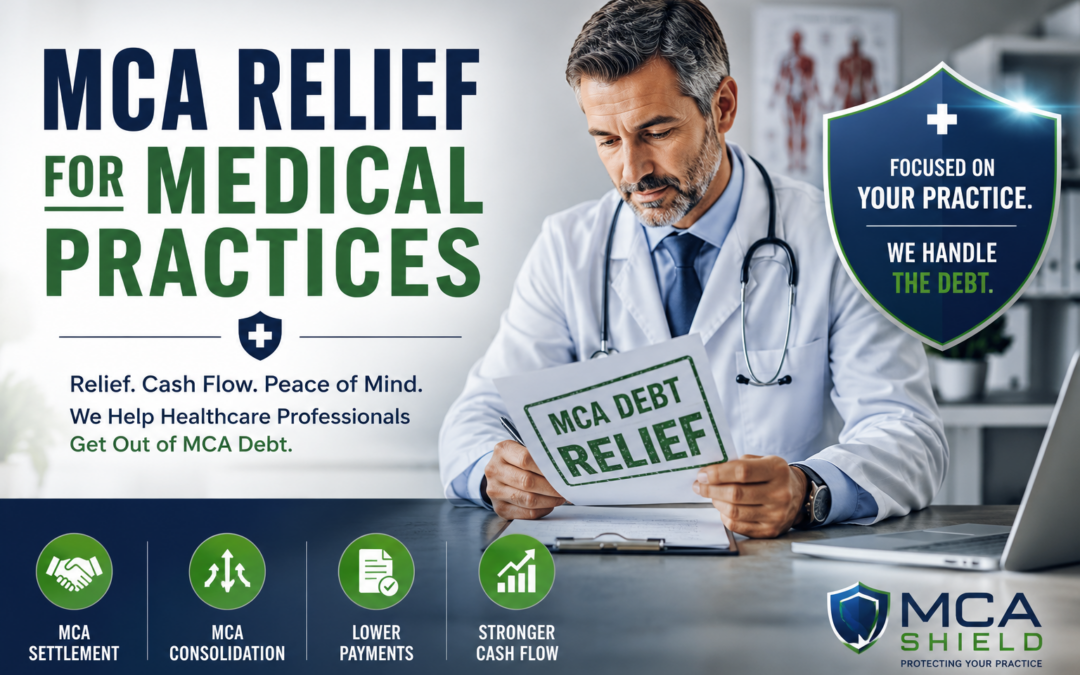
Medical practices often rely on consistent cash flow to cover payroll, equipment, supplies, and patient care. When Merchant Cash Advance (MCA) payments become overwhelming, MCA relief for medical practices can help reduce financial pressure through options like MCA settlement, MCA consolidation, and customized debt relief strategies that support long-term stability.
Why Medical Practices Turn to Merchant Cash Advances
Running a successful medical practice requires balancing patient care with the financial realities of operating a business. Even practices with steady patient volume and strong long-term revenue can experience short-term cash flow shortages that make it difficult to cover expenses. When traditional financing is unavailable or too slow, many healthcare providers turn to Merchant Cash Advances (MCAs) because funding is often approved quickly. Unfortunately, daily or weekly repayments can create even greater financial pressure, leading many practices to seek MCA relief, MCA settlement, or MCA consolidation to regain financial stability.
Cash Flow Gaps Despite Strong Revenue
Many medical practices generate healthy annual revenue but still experience periods where cash on hand is limited. Patient appointments may be fully booked, yet cash flow can fluctuate due to delayed reimbursements, seasonal demand, or rising operating expenses. When immediate funds are needed for payroll, rent, or supplies, an MCA may appear to be a convenient solution.
The challenge is that MCA payments typically begin almost immediately through automatic ACH withdrawals. Instead of solving the underlying cash flow issue, these frequent deductions can reduce working capital and make it harder to keep the practice operating smoothly.
Insurance Payment Delays Create Financial Pressure
Insurance reimbursements rarely arrive on the same schedule as business expenses. Medical practices often wait weeks or even months for payments from insurance companies while continuing to pay employees, purchase medical supplies, and maintain daily operations.
When reimbursement delays create a temporary cash shortage, some practice owners use Merchant Cash Advances to bridge the gap. While this may provide immediate funding, the added daily repayment obligation can quickly consume incoming revenue. Over time, many practices find themselves searching for MCA relief or MCA settlement to reduce payment pressure and restore healthier cash flow.
Unexpected Equipment and Staffing Costs
Medical practices regularly face unexpected expenses that cannot be postponed. Diagnostic equipment may require emergency repairs, technology systems need upgrading, or additional staff may be necessary to accommodate patient demand. These costs often arise without warning and require immediate funding.
Because MCAs can provide fast access to capital, they may seem like the easiest option during a financial emergency. However, if repayments become difficult to manage, practices may end up taking additional advances to cover existing obligations. Exploring MCA consolidation, MCA debt relief, or other professional solutions early can help medical practices avoid a cycle of increasing debt while protecting both their financial health and their ability to deliver quality patient care.
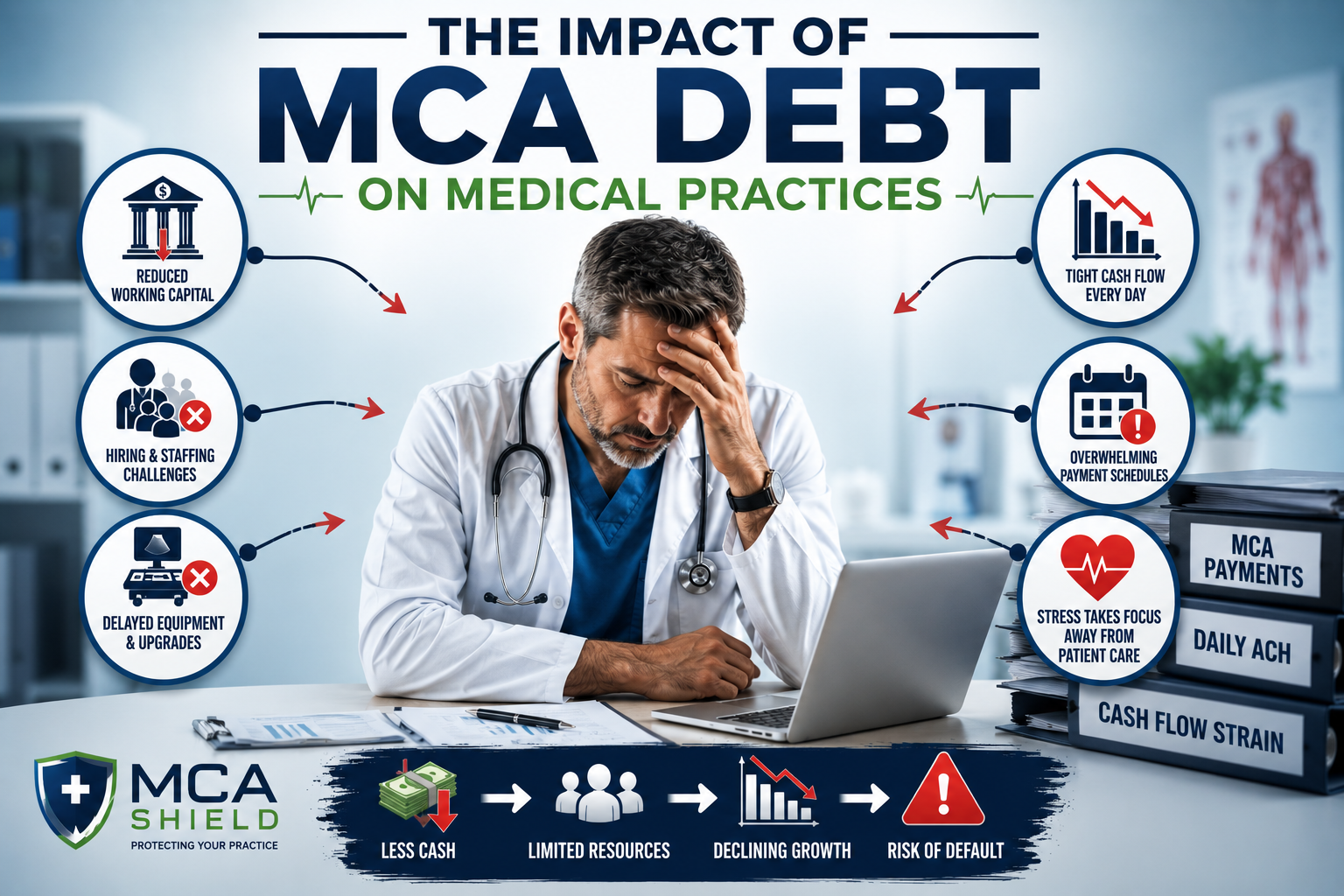
How MCA Debt Affects Medical Practices
MCA Relief Options for Medical Practices
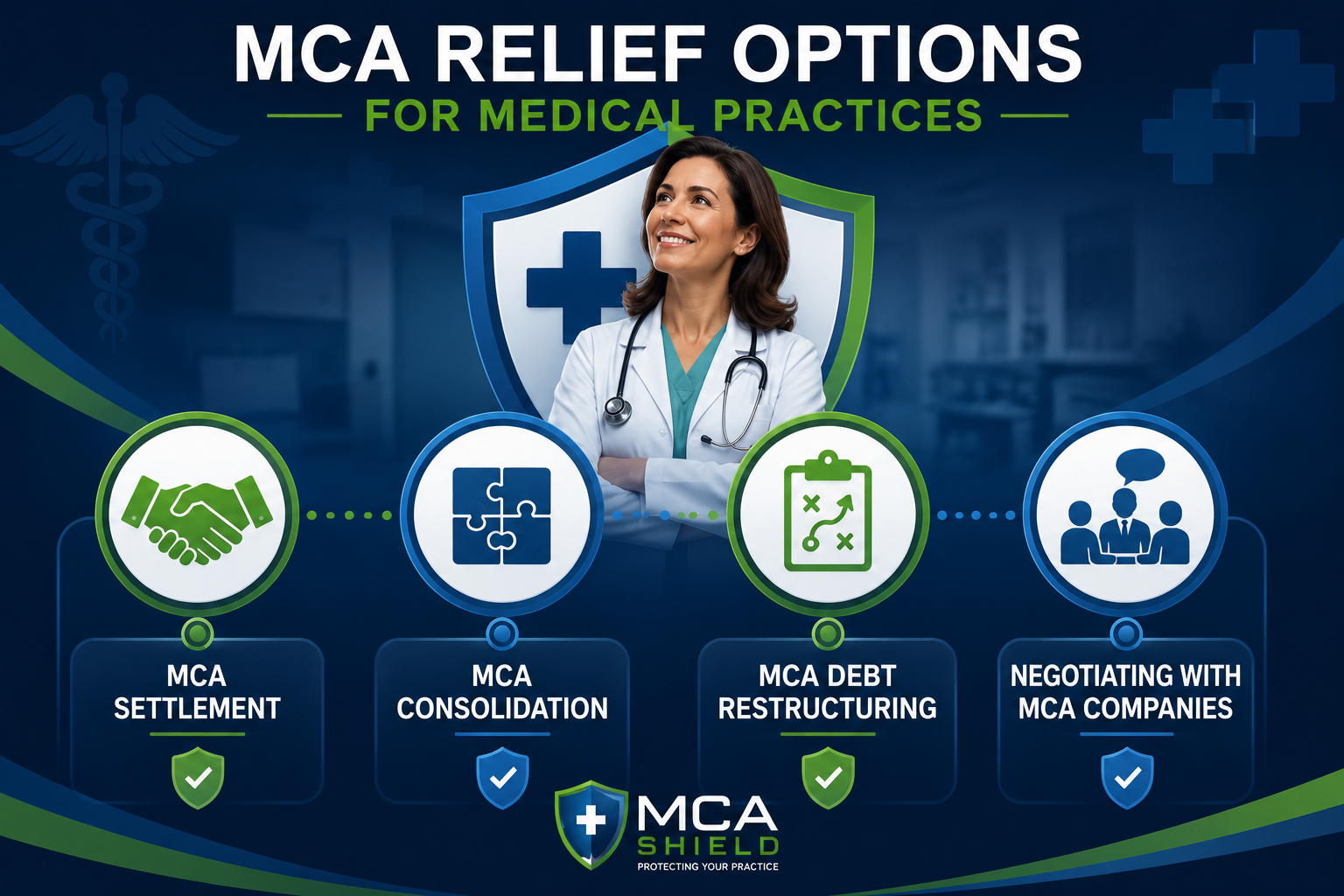
Medical practices facing overwhelming Merchant Cash Advance payments have several options to regain control of their finances. The right solution depends on factors such as the number of active MCAs, the practice’s cash flow, overall debt obligations, and long-term financial goals. Exploring MCA relief early can help reduce payment pressure, improve cash flow, and position your practice for sustainable recovery.
MCA Settlement
MCA settlement involves negotiating with Merchant Cash Advance companies to resolve outstanding balances for less than the full amount owed. Settlement may be an option for medical practices experiencing significant financial hardship or those that can no longer maintain their current payment schedule.
Successful settlements often require careful planning, financial documentation, and negotiations with each MCA company. Because every situation is unique, working with experienced professionals can improve the likelihood of reaching favorable settlement agreements while minimizing business disruption.
MCA Consolidation
MCA consolidation is designed to simplify multiple Merchant Cash Advance obligations into a more manageable repayment plan. By reducing the burden of numerous daily or weekly ACH withdrawals, medical practices can improve cash flow, strengthen financial stability, and focus more on delivering quality patient care.
For medical practices with stacked MCA debt, consolidation may help decrease payment pressure, improve budgeting, and make it easier to meet essential operating expenses such as payroll, medical supplies, rent, and equipment maintenance.
MCA Debt Restructuring
MCA debt restructuring is designed to modify repayment arrangements so they better align with your practice’s current financial situation. Instead of continuing with repayment terms that may no longer be sustainable, restructuring aims to develop a realistic payment strategy that supports ongoing business operations.
Debt restructuring may include adjusting payment schedules, negotiating revised repayment terms, or implementing other solutions that improve cash flow and allow the practice to continue serving patients without financial strain.
Negotiating With MCA Companies
Negotiating directly with Merchant Cash Advance companies can be challenging, especially when multiple MCA providers are involved. Every lender has its own policies, collection procedures, and negotiation strategies, making the process both time-consuming and stressful for busy healthcare professionals.
An experienced MCA relief company understands how Merchant Cash Advance companies operate and can often communicate with funders on your behalf. Professional negotiation helps organize financial information, develop a practical strategy, and pursue solutions such as MCA settlement, MCA consolidation, or MCA debt restructuring that are tailored to your medical practice’s financial needs.
By addressing MCA debt before the situation worsens, medical practices can reduce financial pressure, strengthen cash flow, and devote more time and resources to providing exceptional patient care.
How to Get Out of MCA Loans
If your medical practice is struggling with Merchant Cash Advance payments, taking the right steps early can help prevent the situation from becoming worse. Many healthcare providers search for how to get out of MCA loans after daily ACH withdrawals disrupt cash flow. While every practice’s financial situation is different, carefully evaluating your debt and exploring professional MCA relief options can help you regain control and build a path toward long-term financial stability.
Review Every MCA Agreement
Begin by gathering every Merchant Cash Advance agreement your practice has signed. Review the repayment amounts, remaining balances, daily or weekly ACH withdrawals, payment schedules, and any default provisions. Understanding the full scope of your obligations makes it easier to evaluate potential solutions such as MCA settlement, MCA consolidation, or MCA debt restructuring.
Analyze Your Practice’s Cash Flow
Take a close look at how money moves through your practice each month. Compare incoming revenue with fixed expenses such as payroll, rent, insurance, medical supplies, and equipment costs. This analysis helps identify whether your current MCA payments are sustainable and provides valuable information when developing an effective relief strategy.
Stop Taking Additional MCA Funding
When cash flow becomes tight, accepting another Merchant Cash Advance can seem like the quickest solution. However, additional funding often creates another daily payment obligation, increasing financial pressure instead of solving the underlying problem. Avoiding new MCA funding can help prevent stacked MCA debt and preserve more options for resolving your existing obligations.
Work With an Experienced MCA Relief Company
Medical professionals already have demanding schedules focused on patient care. Managing negotiations with multiple MCA companies can be time-consuming and stressful, especially when collection activity has begun. An experienced MCA relief company can evaluate your financial situation, explain available options, and develop a strategy that may include MCA settlement, MCA consolidation, or MCA debt restructuring.
The sooner you seek help, the more opportunities you may have to reduce payment pressure, improve cash flow, and protect the long-term financial health of your medical practice.
Warning Signs Your Medical Practice Needs MCA Relief
Financial challenges rarely appear overnight. In many cases, the warning signs develop gradually as Merchant Cash Advance payments consume more of your practice’s revenue. Recognizing these indicators early can help you explore MCA relief before financial pressure affects patient care, staff morale, or the long-term success of your practice.
Payroll Is Becoming Difficult
Payroll should never be a monthly source of stress. If your practice is struggling to pay physicians, nurses, administrative staff, or other employees on time because of MCA payments, it is a strong indication that cash flow is becoming unsustainable.
When Merchant Cash Advance debt begins interfering with payroll, it’s time to evaluate solutions such as MCA settlement, MCA consolidation, or MCA debt restructuring before the situation worsens.
Vendor Bills Are Falling Behind
Medical practices rely on consistent access to medications, medical supplies, laboratory services, equipment maintenance, and office essentials. If vendor invoices are being paid late or you’re postponing purchases due to limited cash flow, MCA debt may be placing too much strain on your finances.
Falling behind with vendors can damage important business relationships and disrupt your ability to provide quality patient care.
Daily Withdrawals Are Draining Cash Flow
One of the most common signs that your practice needs MCA relief is when daily or weekly ACH withdrawals leave little cash available for normal operations. As these automatic payments continue, covering routine expenses such as rent, utilities, insurance, and equipment maintenance becomes increasingly difficult.
When daily MCA payments consistently drain your business account, it’s a clear sign that it’s time to explore professional MCA relief before financial pressure becomes even more difficult to overcome.
You’re Considering Another MCA
If you’re thinking about taking another Merchant Cash Advance to cover existing MCA payments or everyday operating expenses, your practice may already be caught in the cycle of stacked MCA debt.
While another advance may provide temporary relief, it often creates additional payment obligations that increase financial pressure. Seeking professional MCA relief before accepting more funding can help you evaluate alternatives that support long-term financial stability instead of adding to your debt burden.
Common Mistakes Medical Practices Make
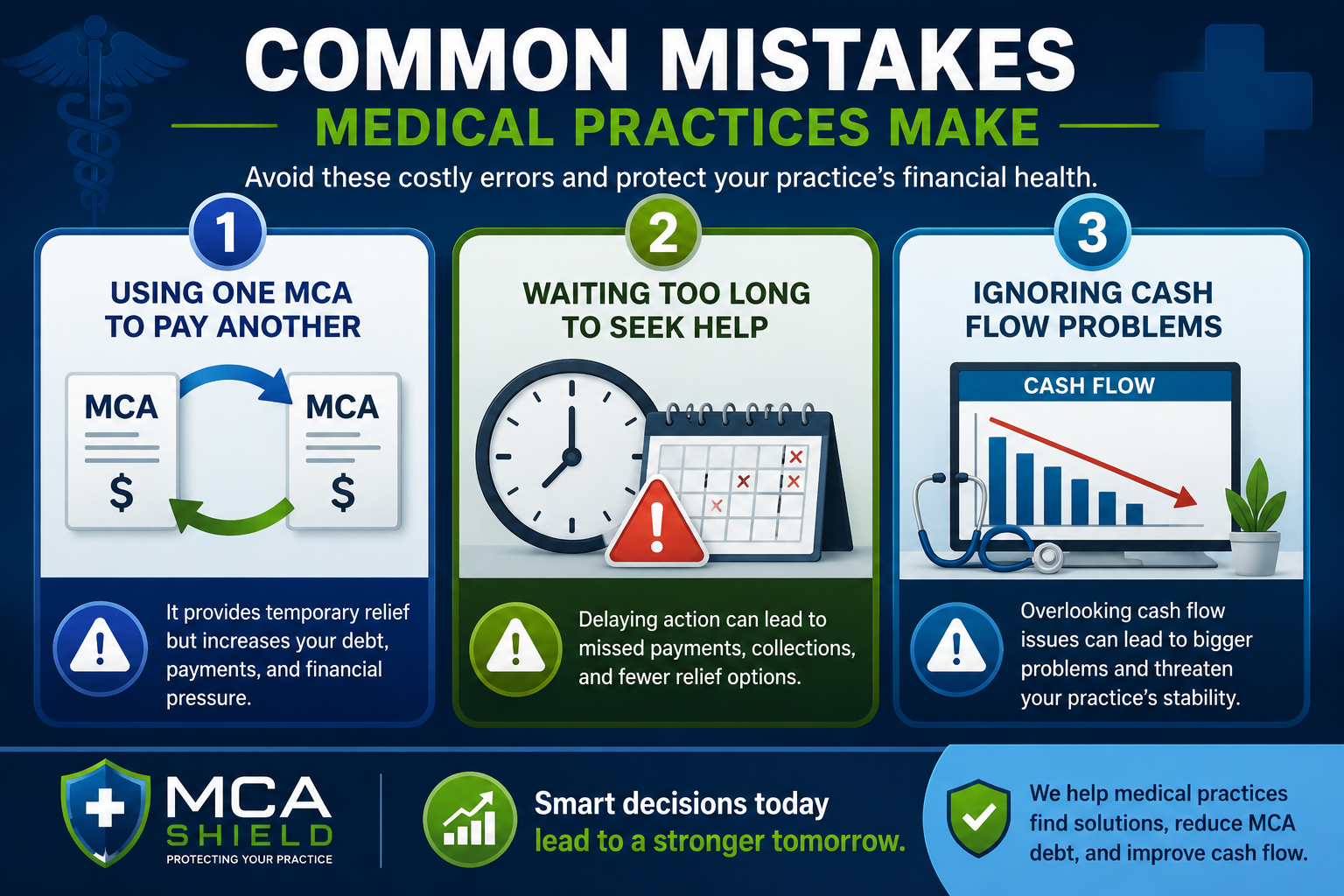
When financial pressure begins to build, it’s easy to make decisions that provide temporary relief but create larger problems over time. Many medical practices facing Merchant Cash Advance debt unknowingly take steps that increase payment obligations and make recovery more difficult. Recognizing these common mistakes can help you protect your practice and identify the right path toward MCA relief.
Using One MCA to Pay Another
One of the most common mistakes is accepting another Merchant Cash Advance to cover existing MCA payments. While this may temporarily relieve immediate cash flow pressure, it often leads to stacked MCA debt, where multiple daily or weekly ACH withdrawals place even greater strain on the practice’s finances.
Instead of solving the underlying problem, each new advance increases repayment obligations and reduces the working capital available for payroll, medical supplies, equipment, and other essential operating expenses.
Waiting Too Long to Seek Help
Many healthcare providers hope that patient volume will increase or that future revenue will eventually solve their cash flow problems. Unfortunately, delaying action often allows Merchant Cash Advance debt to grow more difficult to manage.
Seeking professional MCA relief early typically provides more options, whether through MCA settlement, MCA consolidation, or MCA debt restructuring. Addressing financial challenges before missed payments or collection activity begins can improve the likelihood of a successful outcome.
Ignoring Cash Flow Problems
Cash flow is the financial foundation of every successful medical practice. When recurring shortages become the norm, simply covering immediate expenses without addressing the underlying cause can allow financial problems to worsen over time.
Regularly monitoring revenue, operating expenses, and MCA payment obligations helps identify potential issues before they become a crisis. If your practice is consistently struggling to maintain healthy cash flow, it may be time to explore professional solutions that reduce financial pressure and support long-term stability.
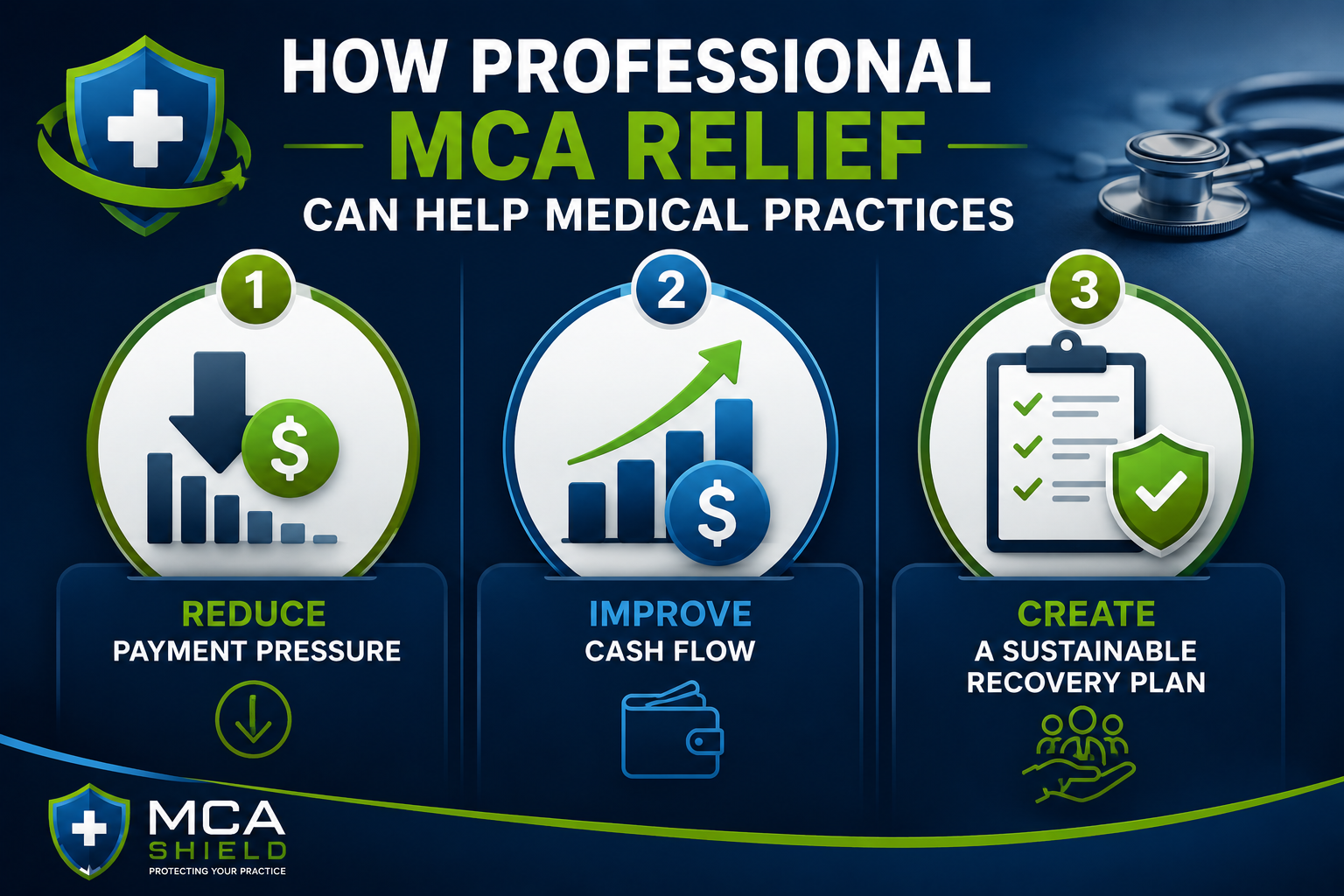
How Professional MCA Relief Can Help Medical Practices
Managing Merchant Cash Advance debt while running a busy medical practice can be overwhelming. Between caring for patients, supervising staff, and overseeing daily operations, most healthcare providers have little time to negotiate with multiple MCA companies or develop a long-term financial strategy. Professional MCA relief helps medical practices address overwhelming debt while creating a plan that supports financial recovery and continued patient care.
Reduce Payment Pressure
One of the primary goals of professional MCA relief is to reduce the financial burden created by daily or weekly ACH withdrawals. Depending on your practice’s circumstances, this may involve MCA settlement, MCA consolidation, or MCA debt restructuring to create a more manageable repayment strategy.
Lower payment pressure allows more revenue to remain in your practice, making it easier to cover essential operating expenses without constantly struggling to keep up with MCA payments.
Improve Cash Flow
Healthy cash flow is critical for every medical practice. Professional MCA relief strategies are designed to improve financial flexibility by reducing the strain that Merchant Cash Advance payments place on your business.
As cash flow improves, your practice is better positioned to meet payroll, purchase medical supplies, maintain equipment, pay vendors on time, and continue delivering high-quality patient care without unnecessary financial stress.
Create a Sustainable Recovery Plan
Resolving Merchant Cash Advance debt is about more than addressing today’s financial challenges. An experienced MCA relief company works with your practice to develop a long-term strategy that supports lasting financial stability.
Rather than relying on additional Merchant Cash Advances to solve short-term cash shortages, a sustainable recovery plan focuses on strengthening cash flow, reducing debt pressure, and helping your medical practice move forward with greater financial confidence.
Frequently Asked Questions About MCA Relief for Medical Practices
Medical professionals often have questions about MCA relief, MCA settlement, and MCA consolidation before deciding on the best solution. Here are answers to some of the questions we hear most often.
❓ Can Medical Practices Qualify for MCA Settlement?
Yes. Many medical practices may qualify for MCA settlement, especially when daily or weekly Merchant Cash Advance payments have become difficult to manage. Eligibility depends on factors such as your practice’s financial condition, the number of active MCAs, and overall cash flow. A professional review can help determine whether settlement is the right option.
❓ Is MCA Consolidation Better Than Taking Another Advance?
In many cases, yes. Taking another Merchant Cash Advance often increases payment obligations and contributes to stacked MCA debt. MCA consolidation focuses on creating a more manageable repayment strategy rather than adding additional debt.
❓ How Long Does MCA Relief Take?
Every case is different. The timeline depends on the number of MCA companies involved, your financial circumstances, and the negotiation process. While some cases are resolved relatively quickly, more complex situations may require additional time.
❓ Can I Keep My Practice Operating During MCA Relief?
Usually, yes. The goal of professional MCA relief is to help your medical practice remain operational while reducing the financial burden of Merchant Cash Advance debt. Improving cash flow allows many providers to continue caring for patients throughout the process.
❓ Will MCA Relief Affect My Patients?
Generally, no. MCA relief focuses on improving your practice’s financial position—not changing the care your patients receive. In many cases, reducing financial stress allows providers to devote even more attention to patient care.
❓ When Should I Contact an MCA Relief Company?
The sooner, the better. If MCA payments are creating cash flow problems, making payroll difficult, delaying vendor payments, or causing you to consider another Merchant Cash Advance, it’s time to explore your options. Acting early often provides more flexibility and a wider range of potential solutions.