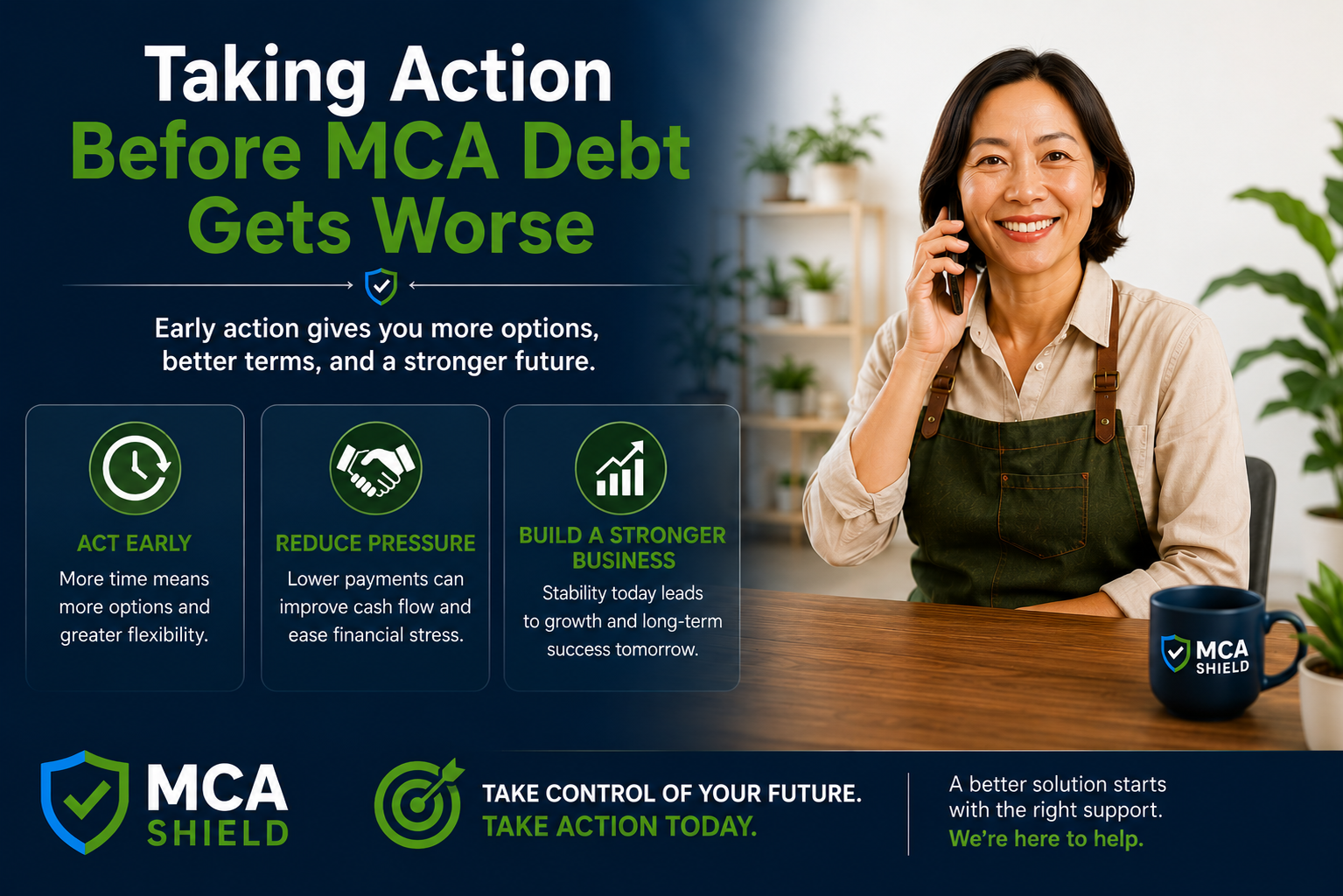

MCA relief options for small businesses can provide a path toward financial stability when Merchant Cash Advance payments begin overwhelming cash flow. Many owners accept MCA funding to solve an immediate need, but daily or weekly withdrawals can quickly make it harder to cover payroll, inventory, rent, and other operating expenses. Without a plan, short-term funding can turn into long-term financial pressure.
Small businesses have several potential options for addressing MCA debt, depending on their financial situation. Common relief strategies may include:
- MCA debt restructuring
- MCA debt settlement
- Cash flow analysis and repayment planning
- Professional negotiation with MCA companies
- Strategies to avoid additional MCA borrowing
Every business faces different challenges, so there is no one-size-fits-all solution. Understanding your relief options early can help you reduce payment pressure, improve cash flow, and regain control of your business finances before the situation becomes more difficult to manage.
Schedule Your Free Consultation
When Small Businesses Should Consider MCA Debt Relief
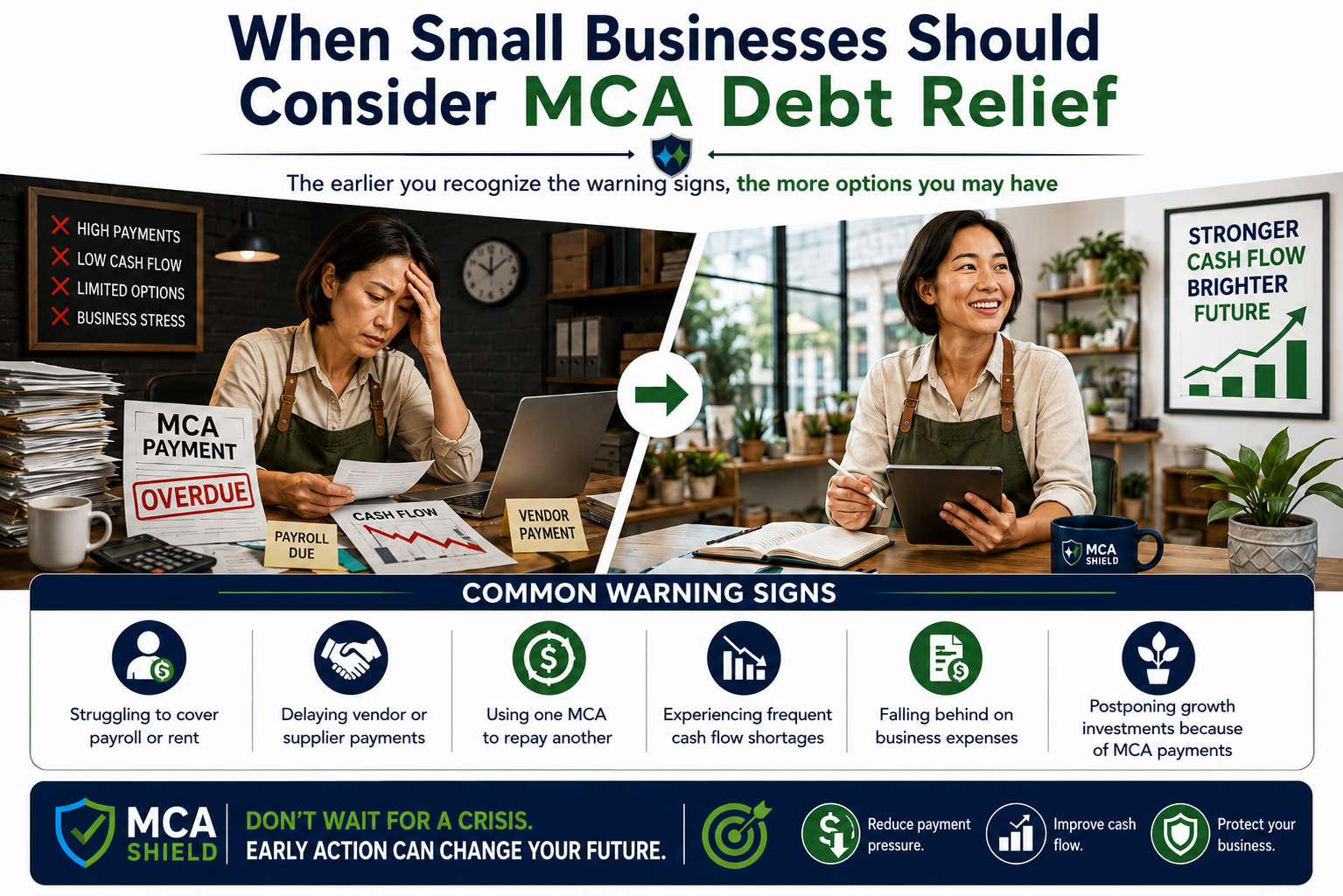
Many business owners wait too long before exploring MCA debt relief. They hope sales will improve or that a temporary cash flow problem will resolve itself. Unfortunately, ongoing Merchant Cash Advance payments often make recovery more difficult by reducing the cash available for everyday operations. The earlier you recognize the warning signs, the more options you may have to improve your financial situation.
Small businesses should consider MCA debt relief when repayment obligations begin affecting normal operations. Common warning signs include:
- Struggling to cover payroll or rent
- Delaying vendor or supplier payments
- Using one MCA to repay another
- Experiencing frequent cash flow shortages
- Falling behind on business expenses
- Postponing growth investments because of MCA payments
You do not have to wait until your business reaches a financial crisis. Seeking help while you still have flexibility often leads to better outcomes. Early action can provide more opportunities to reduce payment pressure, improve cash flow, and avoid the cycle of taking on additional MCA debt.
Every business faces different challenges, and the right solution depends on your specific circumstances. Reviewing your options before financial pressure becomes overwhelming can help protect your business, preserve working capital, and position your company for long-term success.
Common Signs Your Business Needs MCA Relief
Many business owners do not realize they need MCA relief until cash flow problems begin affecting daily operations. The warning signs often start small, but they can escalate quickly as Merchant Cash Advance payments consume more of your revenue. Recognizing these issues early gives you a better chance to regain control before financial pressure becomes overwhelming.
Some of the most common signs include:
- Daily or weekly MCA payments draining your cash flow
- Struggling to cover payroll, rent, or vendor payments
- Using one MCA to repay another
- Frequent overdrafts or cash shortages
- Delaying inventory purchases or business investments
- Spending more time managing debt than growing your business
If several of these warning signs sound familiar, it may be time to explore your options. Seeking MCA relief before the situation worsens can help reduce payment pressure, improve cash flow, and put your business back on a more stable financial path.
MCA Debt Restructuring Options
MCA debt restructuring can help small businesses regain control when Merchant Cash Advance payments create ongoing cash flow problems. Instead of continuing to struggle with multiple daily or weekly withdrawals, restructuring focuses on creating a more manageable repayment strategy. The goal is to reduce financial pressure while giving the business more room to operate and grow.
Depending on the situation, restructuring may include several approaches:
- Reviewing all existing MCA agreements
- Negotiating more manageable repayment terms
- Prioritizing the most urgent financial obligations
- Developing a realistic cash flow plan
- Reducing the need for additional MCA borrowing
Every business has unique financial challenges, so the right solution depends on its specific circumstances. A well-planned restructuring strategy can improve cash flow, stabilize day-to-day operations, and help business owners focus on serving customers instead of managing constant payment pressure. Acting early often provides the greatest flexibility and the best opportunity for long-term financial recovery.
MCA Debt Negotiation and Payment Reduction Strategies
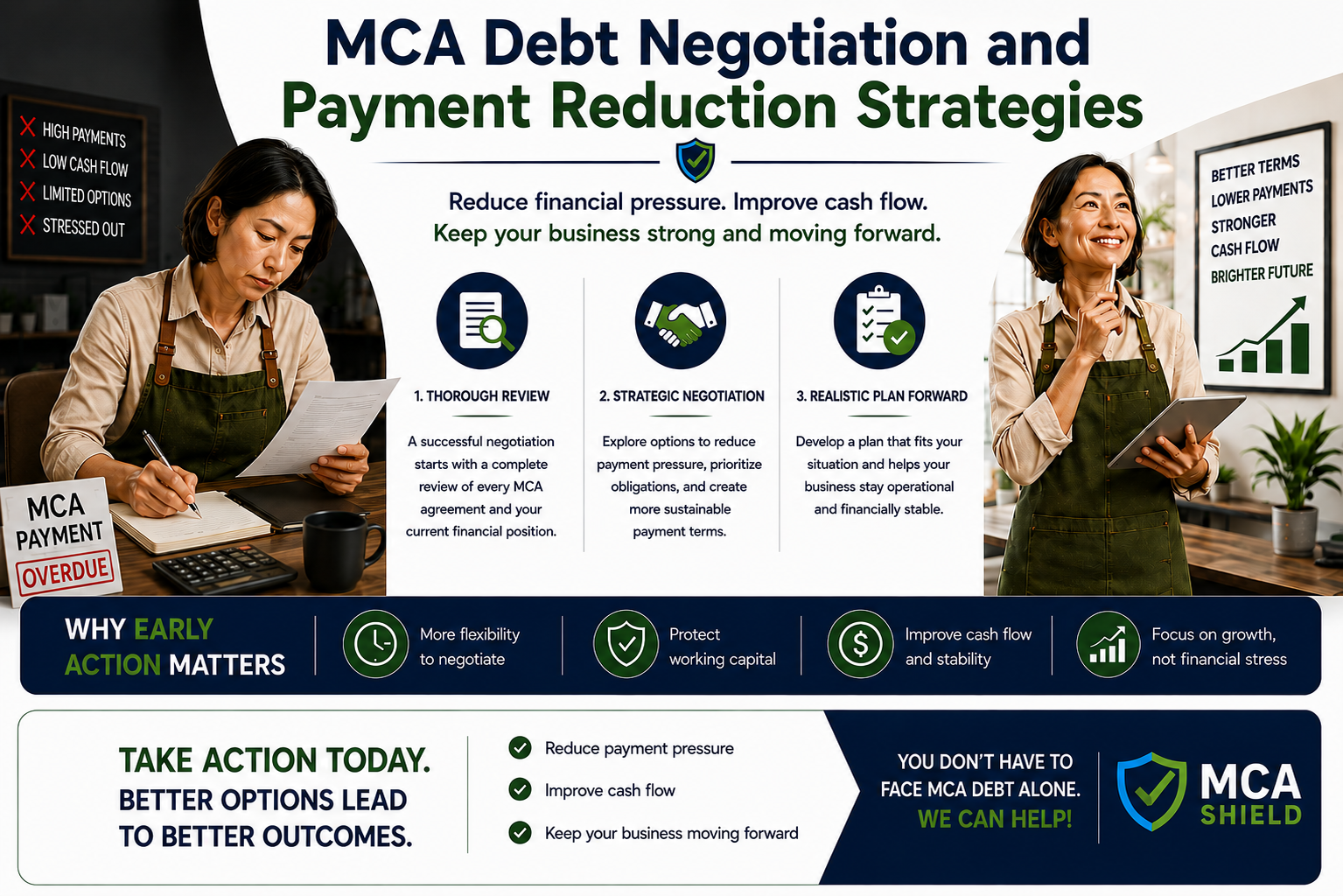
MCA debt negotiation can provide small businesses with an opportunity to reduce financial pressure before cash flow problems become unmanageable. Rather than continuing to struggle with aggressive repayment schedules, business owners may be able to pursue strategies that create more sustainable payment terms. The objective is to improve cash flow while helping the business remain operational and financially stable.
A successful negotiation strategy often begins with a thorough review of every Merchant Cash Advance agreement and the company’s current financial position. From there, business owners can explore options to reduce payment pressure, prioritize repayment obligations, and develop a realistic plan for moving forward. Every situation is different, so the most effective approach depends on the number of MCA obligations, available cash flow, and the business’s overall financial health.
Taking action early often leads to better outcomes. When business owners address payment challenges before they escalate, they usually have more flexibility to negotiate, protect working capital, and focus on rebuilding the business instead of managing constant financial stress.
When MCA Debt Settlement May Be an Option
MCA debt settlement may become an option when your business can no longer keep pace with multiple Merchant Cash Advance payments and traditional repayment methods are no longer realistic. If daily or weekly withdrawals continue to drain cash flow, settlement discussions may offer an opportunity to reduce financial pressure and help your business move toward a more sustainable future. Every situation is different, so the right solution depends on your financial position, the number of MCA obligations, and your long-term business goals.
Businesses often consider MCA debt settlement after experiencing recurring cash flow shortages, missed payments, or difficulty covering essential operating expenses. In many cases, owners reach a point where continuing to make full payments prevents them from investing in inventory, payroll, marketing, or business growth. Rather than allowing the situation to worsen, settlement negotiations may provide a structured path toward resolving outstanding obligations while preserving the business’s ability to operate.
The settlement process typically begins with a detailed review of your MCA agreements, outstanding balances, cash flow, and overall financial condition. From there, a customized strategy can be developed to determine whether settlement is appropriate and how negotiations should proceed. The objective is not simply to reduce debt. The goal is to create a realistic solution that improves cash flow and gives your business the opportunity to recover.
Taking action before financial pressure becomes overwhelming often creates more opportunities for a successful outcome. By exploring MCA debt settlement early, business owners may gain greater negotiating flexibility, reduce payment stress, and begin building a stronger financial foundation for the future.
How MCA Relief Can Improve Cash Flow
One of the biggest benefits of MCA relief is the opportunity to improve cash flow. When Merchant Cash Advance payments consume a large portion of your daily revenue, it becomes difficult to cover essential business expenses. Reducing payment pressure gives your business more flexibility to manage day-to-day operations and plan for future growth.
As cash flow improves, business owners often regain the ability to make important financial decisions with greater confidence. More available working capital can help support:
- Payroll and employee wages
- Inventory and supply purchases
- Vendor and supplier payments
- Marketing and business growth initiatives
- Emergency expenses and cash reserves
Improved cash flow does more than ease financial stress. It helps create a stronger, more stable business. Instead of focusing on daily MCA withdrawals, owners can devote more time to serving customers, growing revenue, and building a healthier financial future. Early action often creates the greatest opportunity to restore stability and regain control.
Mistakes Small Businesses Make When Facing MCA Debt
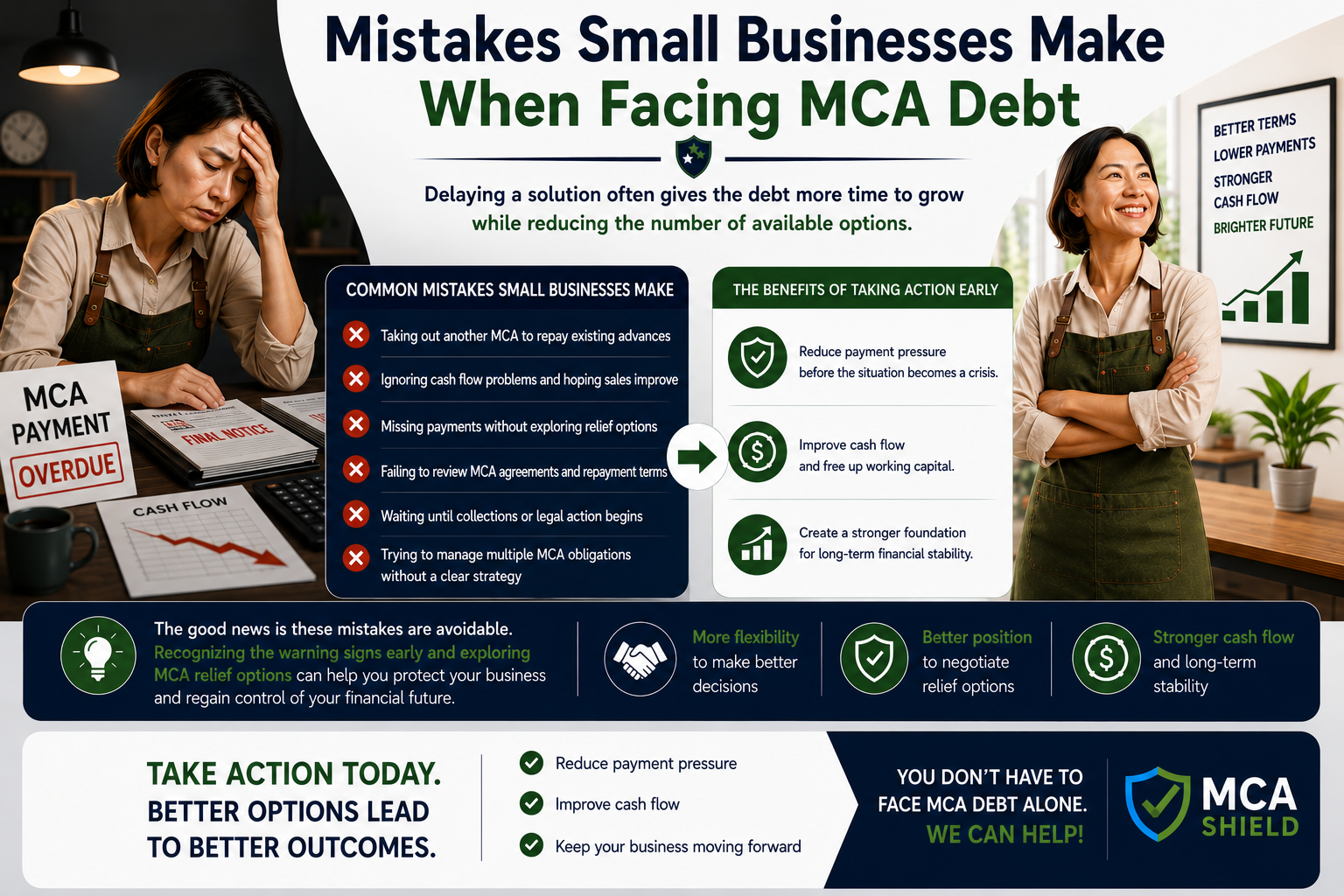
When MCA debt begins affecting cash flow, many small business owners make decisions that unintentionally increase financial pressure. The most common mistake is waiting too long to take action. Delaying a solution often gives the debt more time to grow while reducing the number of available options.
Other mistakes can make the situation even more difficult, including:
- Taking out another MCA to repay existing advances
- Ignoring cash flow problems and hoping sales improve
- Missing payments without exploring relief options
- Failing to review MCA agreements and repayment terms
- Waiting until collections or legal action begins
- Trying to manage multiple MCA obligations without a clear strategy
The good news is that these mistakes are avoidable. Recognizing the warning signs early and exploring MCA relief options can help reduce payment pressure before the situation becomes a crisis. A proactive approach gives small business owners more flexibility, improves cash flow, and creates a stronger foundation for long-term financial stability.
How to Choose the Right MCA Relief Solution
Many MCA relief solutions promise fast results, but not every option fits every business. The right approach depends on your cash flow, the number of MCA obligations, your repayment history, and your long-term business goals. Choosing a solution based on your specific situation often produces better results than applying a one-size-fits-all strategy.
Some businesses benefit from MCA debt restructuring, while others may qualify for debt negotiation, payment reductions, or another customized relief strategy. Before making a decision, review every MCA agreement, identify your total payment obligations, and understand how each option could affect your daily operations. The goal is to reduce financial pressure while keeping your business stable and positioned for future growth.
When comparing MCA relief options, look for providers who:
- Review your complete financial situation, not just one MCA agreement.
- Explain every available option before recommending a solution.
- Develop a customized strategy based on your cash flow.
- Communicate clearly about the negotiation process and expected outcomes.
- Focus on long-term financial stability, not temporary fixes.
Choosing the right MCA relief solution early can create more flexibility and better outcomes. The sooner you evaluate your options, the more opportunities you may have to reduce payment pressure, improve cash flow, and regain control of your business finances.
What to Expect During the MCA Relief Process
Taking Action Before MCA Debt Gets Worse