ClickCease

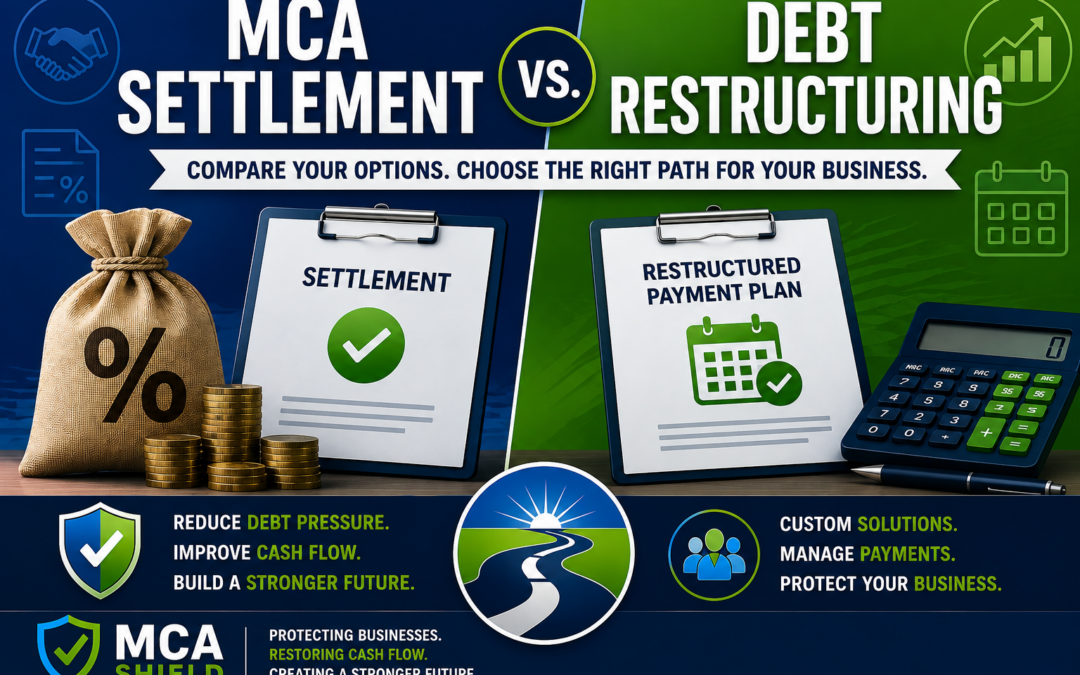
When MCA payments begin overwhelming your cash flow, many business owners ask the same question: Should I pursue MCA settlement or debt restructuring? Both strategies reduce financial pressure, but they work in different ways. They also serve different business needs. Choosing the right option starts with understanding your financial situation, cash flow, and long-term goals. It should never be based solely on finding the quickest solution.

MCA debt restructuring typically creates more manageable repayment terms so your business can continue operating. MCA settlement, on the other hand, usually involves negotiating to resolve eligible obligations for less than the full balance owed. The right path depends on your number of MCA agreements, available working capital, current revenue, and collection activity. It also depends on your ability to make future payments. A careful financial review helps identify the strategy that offers the greatest opportunity for long-term stability.

The MCA relief process usually begins with a detailed review of every Merchant Cash Advance agreement. Your payment schedule, cash flow, and overall financial condition are also evaluated. Financial professionals then identify the obligations creating the most pressure. Next, they develop a customized relief strategy for your business. If restructuring makes the most sense, negotiations focus on creating sustainable repayment terms. If settlement is the better option, negotiations focus on resolving qualifying obligations while helping protect your business. Throughout the process, you should expect clear communication, organized documentation, regular updates, and realistic expectations.

The goal is not simply to reduce debt—it is to restore financial stability. Whether your business benefits more from MCA settlement or debt restructuring, acting early often creates more options and better outcomes. With the right strategy in place, you can improve cash flow, reduce payment pressure, and build a stronger financial future.

What Is the Difference Between MCA Settlement and Debt Restructuring?

When Merchant Cash Advance payments begin overwhelming your business, it’s important to understand the difference between MCA settlement and MCA debt restructuring. While both options aim to reduce financial pressure, they take very different approaches. MCA debt restructuring creates more manageable payment terms. This allows your business to continue operating while meeting its obligations. MCA settlement involves negotiating to resolve eligible MCA balances for less than the full amount owed when repayment is no longer realistic. The right solution depends on your cash flow, the number of MCA obligations, collection activity, and your long-term business goals.

The MCA relief process begins with a detailed review of your financial situation. A professional typically evaluates every MCA agreement, payment schedule, outstanding balance, cash flow, operating expenses, and collection activity. They then develop a customized strategy to strengthen your financial position. If restructuring offers the best opportunity for recovery, negotiations focus on creating sustainable repayment terms that match your cash flow. If settlement is the better option, negotiations focus on resolving qualifying obligations while helping your business continue operating. Throughout the process, you should expect regular communication, careful planning, and a strategy built around your financial circumstances instead of a one-size-fits-all solution.

The ultimate goal is to restore financial stability and give your business room to grow again. Choosing between MCA settlement and debt restructuring is not about finding the fastest solution. It is about selecting the strategy that gives your business the best opportunity to improve cash flow, reduce financial stress, and build a healthier financial future.

How MCA Debt Restructuring Works

MCA debt restructuring helps businesses regain control of overwhelming Merchant Cash Advance payments without taking on additional debt. The process starts with a comprehensive review of your financial situation. Professionals examine every MCA agreement, payment schedule, outstanding balance, cash flow, operating expenses, and any collection activity. They identify the obligations creating the greatest financial strain. They then develop a strategy that better aligns repayment with your current financial reality. The goal is to reduce payment pressure, improve cash flow, and help your business regain long-term financial stability.

During the MCA debt restructuring process, professionals work directly with your MCA providers to negotiate more manageable repayment terms. You can expect regular updates, organized documentation, and a strategy tailored to your business. The plan may evolve as your financial situation changes or negotiations progress. Every business faces different challenges, so there is no one-size-fits-all solution. A successful restructuring strategy protects working capital, supports daily operations, and creates a realistic path toward stronger financial health. By taking action early, many business owners reduce financial stress, gain flexibility, and position their businesses for future growth.

How MCA Settlement Works

MCA settlement is a strategy that may help businesses resolve eligible Merchant Cash Advance obligations when full repayment is no longer realistic. Instead of struggling with overwhelming daily or weekly withdrawals, settlement focuses on negotiating a resolution for qualifying debt. The goal is not simply to reduce what you owe. It is to relieve financial pressure, improve cash flow, and create a realistic path toward long-term business stability. Whether settlement makes sense depends on your financial condition, the number of MCA obligations you have, your available cash flow, and current collection activity.

The MCA settlement process starts with a comprehensive review of your business finances and every active Merchant Cash Advance agreement. A professional reviews outstanding balances, payment schedules, factor rates, operating expenses, and available working capital. They also evaluate collection efforts and your overall cash flow before developing a settlement strategy. Once the review is complete, negotiations with MCA companies begin. The goal is to reach mutually acceptable settlement terms. Throughout the process, you should expect regular updates and requests for financial documentation. You should also receive guidance before accepting any settlement offer. Every decision should support your business’s recovery instead of creating new financial challenges.

Successful MCA settlement is about rebuilding your business, not just resolving debt. When combined with a thoughtful financial strategy, settlement can free up working capital and reduce ongoing payment pressure. It can also help you focus on serving customers, supporting employees, and growing your business again. Taking action early often creates more options, strengthens your negotiating position, and leads to a smoother path toward financial recovery.

Comparing the Benefits and Trade-Offs of Each Approach

Both MCA debt restructuring and MCA settlement can help businesses reduce financial pressure. However, each option offers different advantages. Debt restructuring focuses on creating more manageable repayment terms so your business can continue operating. MCA settlement may be a better fit when repayment has become unsustainable. It can help resolve eligible MCA balances when that is the most realistic path forward. The right solution depends on your cash flow, outstanding MCA obligations, financial goals, and overall business health. Choosing the best option requires a careful review of your unique situation instead of assuming one approach fits every business.

The MCA relief process starts with a detailed financial review. Financial professionals examine every Merchant Cash Advance agreement, payment schedule, outstanding balance, cash flow, and operating expense. They also review any collection activity and your ability to continue normal business operations. This information helps determine which strategy offers the strongest chance of success. From there, they build a customized plan for your business. They also explain each stage of the process. You should know what documents to provide, how negotiations typically work, expected timelines, and the possible outcomes before moving forward. Clear communication helps you make informed decisions instead of reacting under financial pressure.

Every option involves trade-offs. Debt restructuring may help preserve business relationships while creating more sustainable payments. MCA settlement may offer an opportunity to resolve qualifying obligations when repayment is no longer practical. Neither option is automatically better. The best solution is the one that improves cash flow, protects your business, and supports long-term financial recovery.

The ultimate goal is not simply to reduce debt. It is to restore financial stability and position your business for future growth. With the right strategy and experienced guidance, business owners can reduce payment pressure, strengthen daily operations, serve customers with confidence, and build a healthier financial future.

Comparison infographic explaining the differences between MCA debt restructuring and MCA settlement for businesses with Merchant Cash Advance debt. The chart compares primary goals, payment structure, business operations, ideal use cases, and cash flow impact, helping business owners choose the right MCA debt relief strategy to improve cash flow and restore financial stability.

Which Option May Be Better for Your Business?

Choosing between MCA settlement and MCA debt restructuring depends on your business’s financial condition, not a one-size-fits-all formula. If your business still generates steady revenue but struggles with overwhelming daily or weekly payments, MCA debt restructuring may provide the flexibility needed to stabilize cash flow. It also helps your business continue normal operations. If repayment has become unrealistic because of severe financial hardship, MCA settlement may offer a path to resolving qualifying obligations for less than the full balance. The right solution depends on your cash flow, the number of MCA agreements, collection activity, available working capital, and your long-term business goals.

The MCA relief process begins with a thorough evaluation of your financial picture. Financial professionals review every Merchant Cash Advance agreement, payment schedule, outstanding balance, operating expense, and source of revenue. This review identifies where the greatest financial pressure exists. Based on that analysis, they develop a customized strategy designed to improve your financial position. If restructuring is the better fit, negotiations focus on creating sustainable repayment terms. If settlement makes more sense, negotiations focus on resolving eligible obligations while helping your business remain operational.

You should also expect ongoing communication throughout the process. As negotiations progress, your strategy may change based on lender responses, cash flow improvements, or new financial developments. An experienced professional can explain your options, answer your questions, and help you understand the advantages and potential tradeoffs of each approach. The ultimate goal is to restore financial stability, reduce payment pressure, and position your business for long-term success—not simply solve today’s cash flow problem.

Questions to Ask Before Choosing an MCA Debt Solution

Choosing the right MCA debt solution starts with asking the right questions. Every business faces different financial challenges. The best strategy depends on your cash flow, the number of Merchant Cash Advances you have, your payment obligations, and your long-term goals. Before committing to any solution, make sure you understand how it will affect your business today and in the future. A thoughtful decision can improve cash flow and strengthen your financial position, while the wrong approach may create additional challenges.

You should also understand what to expect throughout the MCA relief process. A reputable debt relief provider will begin by reviewing every MCA agreement, analyzing your cash flow, and evaluating your operating expenses. They should also assess your overall financial health. From there, they should explain why they recommend MCA debt restructuring, settlement, or another strategy for your specific circumstances. Ask how negotiations will be handled, how often you will receive updates, what documentation you must provide, and what realistic outcomes you can expect. Clear communication helps you make informed decisions and avoid unnecessary surprises.

The right MCA debt solution should support your business’s long-term success, not just provide temporary relief. Before moving forward, understand the benefits, potential risks, expected timeline, and how the strategy supports your business goals. When you work with experienced professionals and ask the right questions, you can move through the process with greater confidence, reduce financial pressure, and build a stronger foundation for future growth.

Common Mistakes Businesses Make When Comparing Relief Options

Many business owners focus on finding the fastest solution instead of the right solution. When financial pressure continues to build, it is easy to make decisions based on urgency rather than strategy. Choosing between MCA settlement and debt restructuring requires a clear understanding of your business’s financial condition, not just the size of your payments. Comparing relief options without reviewing your cash flow and long-term goals can create new challenges instead of solving existing ones.

Some of the most common mistakes include:

  • Choosing a solution based only on monthly payment amounts
  • Failing to review every MCA agreement before making a decision
  • Accepting another MCA instead of exploring relief options
  • Not asking about the full MCA relief process or expected timeline
  • Waiting until collection activity or cash flow problems become severe
  • Working with providers who offer generic solutions instead of customized strategies

The MCA relief process should never feel rushed or confusing. A reputable provider will begin by reviewing your Merchant Cash Advance agreements, cash flow, operating expenses, and overall financial position. They use this information to recommend the strategy that best fits your business. They should explain why MCA settlement, debt restructuring, or another relief option fits your situation and outline each step of the process. You should also receive regular updates as negotiations progress. The strongest outcomes usually come from careful planning, realistic expectations, and a customized strategy that supports long-term financial stability instead of simply lowering today’s payments.

How the Right MCA Relief Strategy Can Improve Cash Flow

The right MCA relief strategy does more than lower financial stress. It helps restore healthy cash flow so your business can operate with greater confidence. When daily or weekly Merchant Cash Advance payments consume too much of your revenue, it becomes difficult to cover payroll, purchase inventory, pay vendors, or invest in growth. A well-designed relief strategy focuses on improving your overall financial position, not simply reducing one payment. Whether the best solution is MCA debt restructuring, settlement, or another customized approach, the goal is to support both your current operations and your future growth.

The MCA relief process begins with a detailed review of every Merchant Cash Advance agreement, repayment obligation, cash flow, operating expense, and key financial record. Experienced professionals then identify the factors creating the greatest financial pressure. They develop a strategy tailored to your business and financial goals. As negotiations move forward, you should receive regular updates and clear explanations of each step. A quality relief provider also adjusts the strategy when your financial situation changes to improve your chances of long-term success.

When cash flow improves, your entire business benefits. More working capital becomes available for daily operations. Vendor relationships become easier to manage, and future growth opportunities become more attainable. The right MCA relief strategy gives your business the breathing room it needs to recover, strengthen its financial foundation, and build a more profitable future.

Infographic explaining how the right MCA relief strategy can improve cash flow through a five-step Merchant Cash Advance debt relief process: financial review, strategy development, negotiation, agreement finalization, and ongoing support. The graphic highlights lower payment pressure, improved working capital, stronger vendor relationships, reduced financial stress, and long-term business growth, with MCA Shield branding throughout.

Choosing the Right Path Forward

Choosing the right solution for your MCA debt starts with understanding where your business stands today. You also need a clear vision of where you want it to be tomorrow. Every business faces different financial challenges. The best strategy depends on your cash flow, outstanding Merchant Cash Advance obligations, operating expenses, and long-term goals. The right path is not always the fastest one. It is the one that gives your business the greatest opportunity to recover, stabilize, and grow. Whether that means MCA debt restructuring, settlement, or another customized solution, your decision should support both your immediate financial needs and your future success.

The MCA relief process begins with a detailed review of your financial picture. Every MCA agreement, payment schedule, outstanding balance, and source of business income should be carefully evaluated. This review identifies the factors placing the greatest strain on your cash flow. Based on that information, professionals develop a customized strategy for your business. As negotiations move forward, you should expect regular communication, ongoing updates, and clear explanations of each step. Your strategy may evolve as discussions progress to remain aligned with your financial condition and recovery goals.

Moving forward with confidence comes from having the right plan and the right guidance. A thoughtful MCA relief strategy does more than reduce payment pressure. It helps improve cash flow, protect working capital, strengthen financial stability, and position your business for future opportunities. Taking action before financial challenges become more severe