
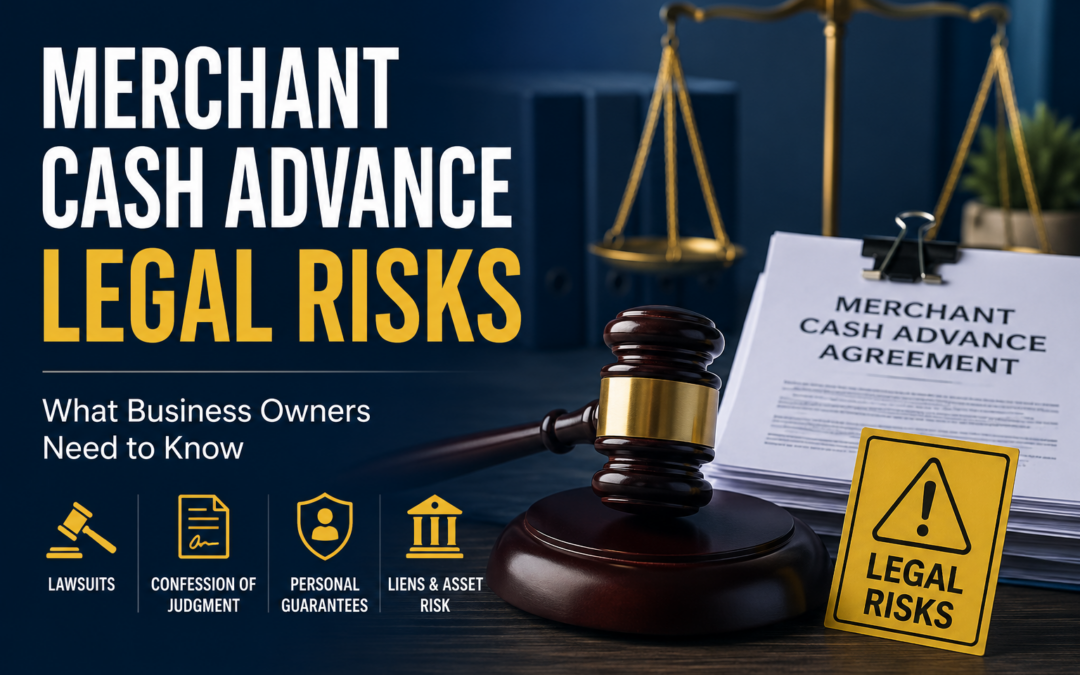
Understanding Merchant Cash Advance legal risks is essential before signing an MCA agreement or responding to collection efforts. Knowing the potential legal consequences, warning signs, and available MCA debt relief options can help protect your business, finances, and future.
Schedule Your Free Consultation
What Are Merchant Cash Advance Legal Risks?
Many business owners focus on securing fast funding and don’t consider what could happen if repayment becomes difficult. Understanding Merchant Cash Advance legal risks before signing an agreement can help you make better financial decisions and avoid costly surprises later.
Unlike many traditional business loans, merchant cash advances often include contract terms that give the funding company additional collection options if payments stop. Legal risks can escalate quickly when cash flow slows or a business defaults, making early action especially important.
How Merchant Cash Advances Differ From Traditional Business Loans
A merchant cash advance (MCA) is not typically structured like a conventional business loan. Instead of lending money with a fixed interest rate and a monthly payment, an MCA provider purchases a portion of your future business receivables for a lump-sum payment.
Repayment usually occurs through daily or weekly withdrawals from your business bank account or a percentage of your credit card sales. While this structure can provide fast access to capital, it may also include contract provisions that differ significantly from those found in traditional financing agreements.
Some MCA agreements may contain:
- Personal guarantees
- UCC liens on business assets
- Confession of judgment provisions (where permitted)
- Default clauses that can accelerate the full balance due
- Collection rights that activate after missed payments
Because every agreement is different, it is important to understand the terms before signing and to review them carefully if repayment becomes difficult.
Why Legal Risks Can Increase After Default
Missing one or more MCA payments can trigger several contractual remedies available to the funding company. Depending on the agreement, the company may begin collection efforts, demand immediate payment of the remaining balance, or pursue other legal actions allowed under the contract and applicable law.
As financial pressure grows, many business owners make the mistake of taking out another merchant cash advance to cover existing payments. While this may provide temporary relief, it often increases debt and may create additional legal and financial complications.
The sooner you address repayment problems, the more options you may have to negotiate a resolution, reduce financial pressure, and avoid more serious legal consequences. Acting early often gives business owners greater flexibility than waiting until collection activity or legal action has already begun.
Common Merchant Cash Advance Legal Risks

Warning Signs That Legal Problems May Be Developing
Legal issues rarely happen without warning. In many cases, businesses experience weeks or even months of increasing financial pressure before legal action becomes a possibility. Recognizing these warning signs early can help you address Merchant Cash Advance legal risks before they become more difficult and expensive to resolve.
Missed or Returned Payments
One of the earliest warning signs is missing a scheduled payment or a returned ACH withdrawal because of insufficient funds. Even a single missed payment may trigger default provisions outlined in your merchant cash advance agreement.
As payments continue to be missed, the funding company may increase collection efforts or exercise additional rights allowed under the contract. Addressing payment problems early often provides more flexibility than waiting until multiple payments have been missed.
Collection Calls and Demand Letters
If you’re receiving frequent phone calls, emails, or formal demand letters from an MCA provider or collection agency, it’s a sign that the situation is becoming more serious.
Demand letters often request immediate payment or warn that additional collection actions may follow if the balance remains unpaid. While receiving a demand letter does not necessarily mean a lawsuit is imminent, it should never be ignored.
Notices From Attorneys
When communications begin coming from attorneys instead of the funding company, legal action may be under consideration. These notices often request payment, explain the alleged default, or describe the next legal steps the creditor may pursue.
Receiving a letter from an attorney does not always mean a lawsuit has been filed, but it is a strong indication that the matter deserves immediate attention. Acting promptly may help preserve more options for resolving the debt.
Multiple Merchant Cash Advances Creating Greater Risk
Many businesses respond to cash flow problems by taking out another merchant cash advance to cover existing payments. While this may temporarily relieve financial pressure, it often increases overall debt and raises the risk of default.
Multiple daily or weekly withdrawals can quickly overwhelm cash flow, making it harder to pay vendors, employees, rent, and taxes. As financial obligations grow, the likelihood of missed payments, collection activity, and potential legal disputes also increases.
If you have more than one merchant cash advance, reviewing your options sooner rather than later may help reduce both financial stress and legal risk before the situation becomes more difficult to manage.
How Merchant Cash Advance Legal Risks Can Affect Your Business
Steps to Reduce Merchant Cash Advance Legal Risks
How MCA Shield Helps Businesses Address Merchant Cash Advance Legal Risks
Facing Merchant Cash Advance legal risks can feel overwhelming, especially when collection efforts are increasing and cash flow is already under pressure. MCA Shield works with business owners to evaluate their situation, explain available options, and develop a practical strategy for moving forward.
Every business is different. That’s why the first step is understanding your existing agreements and financial circumstances before recommending a path toward debt resolution.
Reviewing Existing MCA Agreements
Merchant cash advance agreements often contain complex terms that business owners may not fully understand when funding is received. MCA Shield carefully reviews your existing agreements to identify important provisions that could affect your options.
This review may include evaluating:
- Default provisions
- Personal guarantees
- UCC liens
- Repayment obligations
- Collection language
- Other contractual terms that may affect your business
Understanding these details provides a stronger foundation for making informed financial decisions.
Developing a Customized Debt Resolution Strategy
No two businesses face the same financial challenges. MCA Shield develops a customized debt resolution strategy based on your company’s cash flow, existing obligations, business goals, and overall financial condition.
Depending on your circumstances, the strategy may focus on:
- Reducing financial pressure
- Improving cash flow
- Addressing multiple merchant cash advances
- Exploring settlement opportunities
- Creating a realistic path toward long-term financial stability
The goal is to identify solutions that support your business while helping you move toward a healthier financial future.
Helping Reduce Financial and Legal Pressure
Waiting until legal problems escalate often limits the options available. MCA Shield encourages business owners to seek help before collection activity becomes more serious.
By taking action early, many businesses are better positioned to reduce financial pressure, improve cash flow, and work toward resolving merchant cash advance obligations before legal issues become more difficult to manage.
If your business is struggling with Merchant Cash Advance legal risks, a professional review of your situation can help you better understand your options and begin developing a recovery plan.
Frequently Asked Questions About Merchant Cash Advance Legal Risks
Legal questions can be stressful—but knowing the answers can help you make smarter decisions. Here are some of the most common questions business owners ask about Merchant Cash Advance legal risks.
⚖️ Can an MCA Company Sue My Business?
Yes. If your business defaults on a merchant cash advance agreement, the funding company may file a lawsuit to recover the amount it believes is owed. Whether that happens depends on the terms of your agreement, the circumstances of the default, and applicable state law.
The good news is that many business owners have options before legal action becomes necessary. Addressing repayment issues early may provide more opportunities to resolve the debt.
🛡️ Can I Be Personally Responsible for MCA Debt?
It depends on your agreement.
Many merchant cash advance contracts include a personal guarantee, which may make the business owner personally responsible for certain obligations if the business cannot meet the terms of the agreement.
Because every contract is different, reviewing your agreement is the best way to understand your potential responsibilities.
📄 What Is a Confession of Judgment?
A Confession of Judgment (COJ) is a contract provision that has been included in some merchant cash advance agreements. Where permitted by law, it may allow a judgment entered without a traditional court trial if a default occurs.
Not every MCA agreement contains a COJ, and many states have changed or limited how these provisions can be used. Whether a COJ applies depends on your specific contract and the laws that govern it.
🤝 Can Merchant Cash Advance Debt Be Settled?
In many situations, yes.
Depending on the circumstances, businesses may be able to negotiate a settlement or pursue another form of debt resolution. Every case is unique, and the available options depend on factors such as your financial condition, the number of merchant cash advances you have, and the terms of your agreements.
Seeking guidance early often creates more flexibility than waiting until legal action has already begun.
⏰ When Should I Seek Help With Merchant Cash Advance Legal Risks?
As soon as you notice trouble.
You don’t have to wait for a lawsuit or attorney letter before asking for help. If you’re experiencing missed payments, increasing collection calls, multiple merchant cash advances, or mounting cash flow problems, it’s a good time to evaluate your options.
Early action can often:
- ✅ Reduce financial pressure
- ✅ Create more debt resolution opportunities
- ✅ Help avoid additional legal complications
- ✅ Improve your chances of long-term business recovery
The sooner you understand your situation, the more choices you may have to protect your business and move forward with confidence.
Take Action Before Merchant Cash Advance Legal Risks Grow
Ignoring financial problems rarely makes them disappear. In many cases, Merchant Cash Advance legal risks become more difficult to manage the longer they are left unaddressed. Taking action early can help protect your business, preserve more financial options, and reduce the likelihood of more serious legal challenges.
Why Acting Early Creates More Financial Options
The earlier you respond to repayment problems, the more flexibility you often have to explore possible solutions. Waiting until collection activity, attorney notices, or lawsuits begin may limit your available options and increase financial pressure.
By addressing concerns early, you may be able to:
- Improve cash flow before financial strain worsens
- Explore debt resolution opportunities
- Reduce the risk of additional legal action
- Avoid taking on more merchant cash advances
- Focus on rebuilding your business instead of reacting to ongoing financial problems
Early action won’t change the past, but it can help shape a stronger path forward.
Schedule a Free Consultation With MCA Shield
If your business is struggling with Merchant Cash Advance legal risks, you don’t have to navigate the situation alone. MCA Shield works with business owners to review existing MCA agreements, evaluate available debt resolution options, and develop a strategy to address their unique financial circumstances.
A free consultation can help you better understand your situation and identify practical next steps before legal and financial pressure continues to grow.
The sooner you act, the more opportunities you may have to protect your business and move toward long-term financial stability.